K-shopping is officially a thing. In 2026, foreign tourists in Korea are spending record amounts of money — but not on the Chanel and Hermès runs that defined earlier tourism waves. The new obsession is Korean brands themselves: K-fashion labels, K-beauty counters, and even supermarket aisles. Korean media is calling it the biggest department store boom in 20 years, and the numbers behind it are startling. Here’s what’s happening, why it started, and what it means if you’re planning a Seoul shopping trip.
Table of Contents
- What’s Happening in Korea Right Now?
- The Numbers: A Record-Breaking Spending Wave
- The Background: Why Tourists Ditched Luxury for K-Brands
- What Are Koreans Saying About the K-Shopping Boom?
- How Does This Compare Internationally?
- K-Shopping Tips for Your Seoul Trip (Conclusion)
What’s Happening in Korea Right Now?
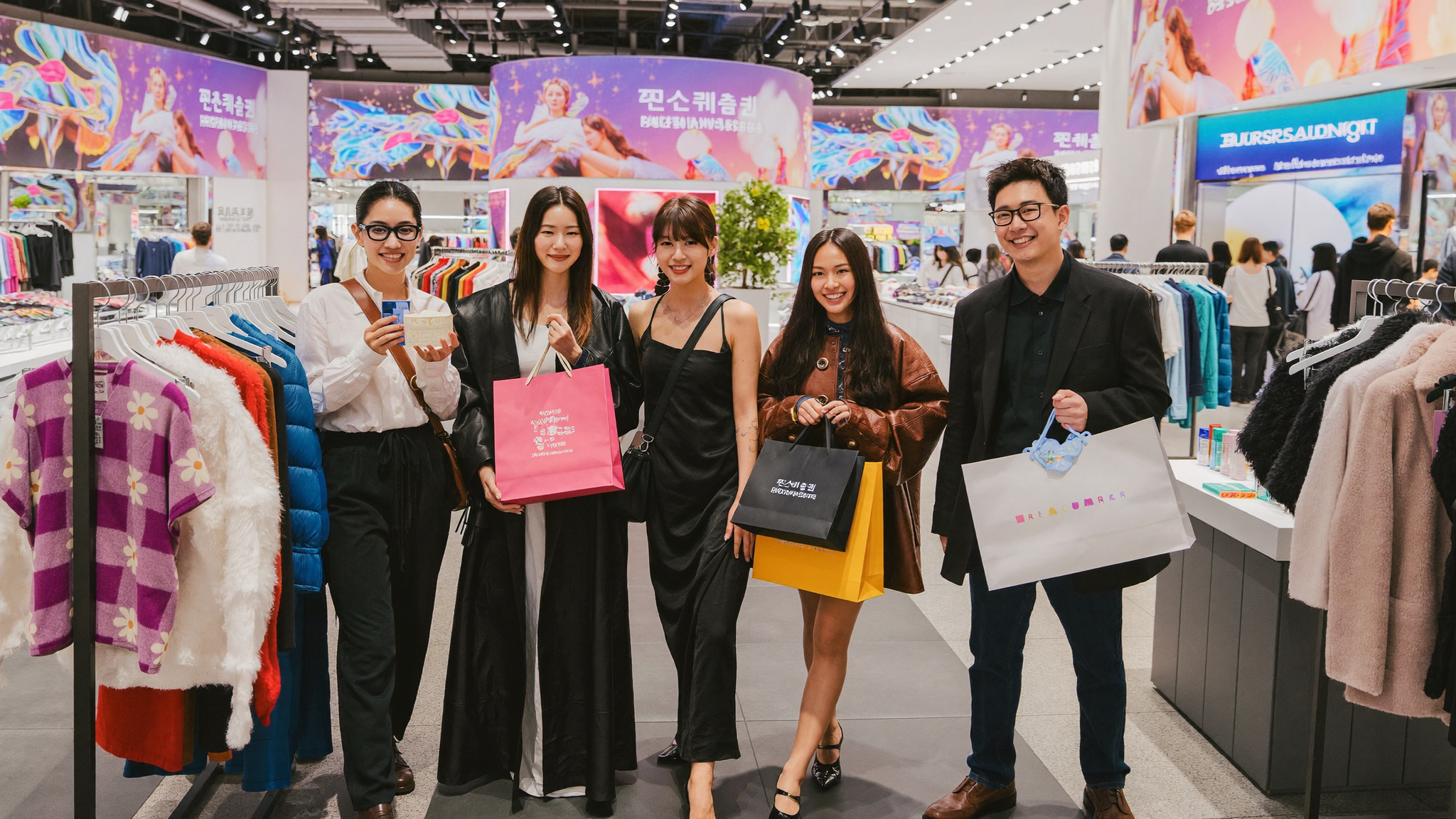
Korea’s three big department store chains — Lotte, Shinsegae, and Hyundai — all posted their highest-ever sales to foreign customers in the first half of 2026, according to The Asia Business Daily. The engine isn’t luxury: at Hyundai Department Store, foreign customers’ K-fashion purchases jumped 131% in the first quarter, far outpacing luxury goods (63%) and food (39%), as reported by Seoul Economic Daily.
The Numbers: A Record-Breaking Spending Wave
The scale is remarkable. Monthly credit card spending by international visitors hit 1.41 trillion won (about $911 million) in May 2026 — up 73.7% from a year earlier — with shopping accounting for 39.1% of the total. Earlier in June, The Korea Times reported that foreign tourist card spending had topped $1.3 billion in a single period for the first time. A July report from Lotte Members added another twist: visitor spending is now expanding beyond luxury and global brands into local fashion labels and even everyday groceries.
The Background: Why Tourists Ditched Luxury for K-Brands
Three forces converged. First, content: years of K-pop, K-dramas, and K-beauty tutorials taught global consumers to want what Koreans actually wear and use — not what global luxury houses sell in every airport. Second, the weak won made Korean-brand price tags feel like a permanent sale for travelers holding dollars, yen, or euros. Third, Korean retailers leaned in hard: department stores rebuilt entire floors around K-fashion designers, pop-up culture, and K-pop collaborations, turning shopping trips into content-worthy experiences.
The result is a reversal of the old formula. A decade ago, tour buses unloaded shoppers at duty-free luxury counters. In 2026, visitors line up for Seongsu pop-ups, Musinsa standard stores, and Olive Young flagships — the same places young Koreans shop. We covered the earlier phase of this story in our post on Korea’s luxury shopping boom; this new data shows the trend has now decisively shifted toward Korean brands.
What Are Koreans Saying About the K-Shopping Boom?
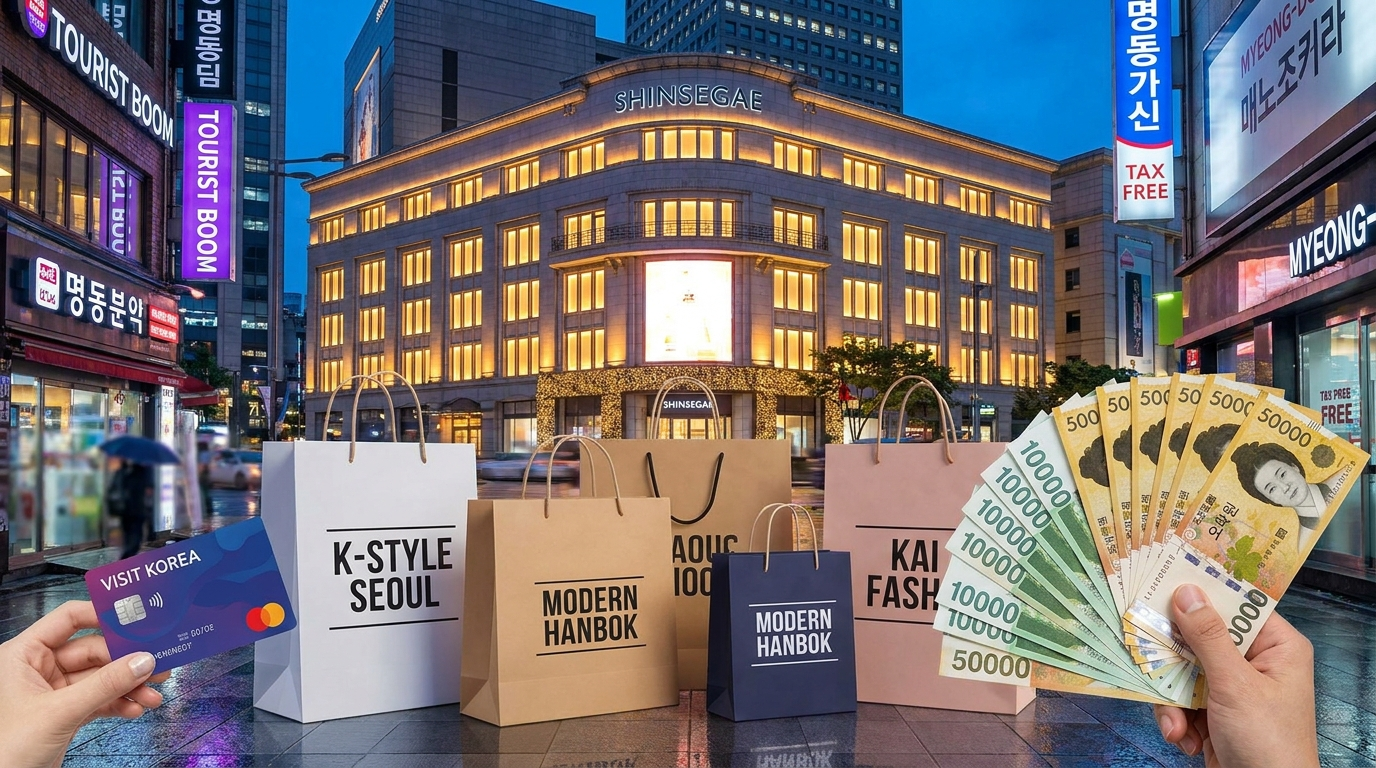
Korean reactions mix pride with wry amusement. Retail workers post about foreign customers asking for exact items worn by idols or drama leads — down to the episode number. Online commenters joke that Myeongdong has completed its transformation into a global open-air mall, while some Seoulites grumble that their favorite local brands now have tourist queues. Retail analysts, meanwhile, celebrate: after years of worrying that Chinese group tourism would never return to pre-pandemic form, the industry has found a broader, more diverse customer base — visitors from Southeast Asia, Japan, the US, and Europe all spending on Korean labels.
How Does This Compare Internationally?
Tourist shopping booms usually center on tax-free luxury — think Japan’s duty-free surge or Europe’s VAT-refund economy. Korea’s 2026 boom is different in kind: visitors are buying the domestic culture itself. It’s closer to what happened with Japanese beauty and stationery in the 2010s, but supercharged by Hallyu content and social media. When a tourist buys a Korean designer jacket or a convenience-store snack haul, they’re buying a piece of the lifestyle they’ve been streaming for years. That’s a moat no luxury conglomerate can copy.
K-Shopping Tips for Your Seoul Trip (Conclusion)
Practical advice: hit department store K-fashion floors on weekday mornings, check Musinsa and Åland for multi-brand hauls, and don’t skip the basement food halls — K-food souvenirs are the fastest-growing category. Start with our Myeongdong shopping guide and our honest take on whether Myeongdong is worth visiting.
One warning: K-shopping hauls outgrow suitcases fast. Unboxing Korea delivers luggage between your hotel and the airport — and can even get a new suitcase to your hotel within hours — so you can keep shopping hands-free until the last minute.