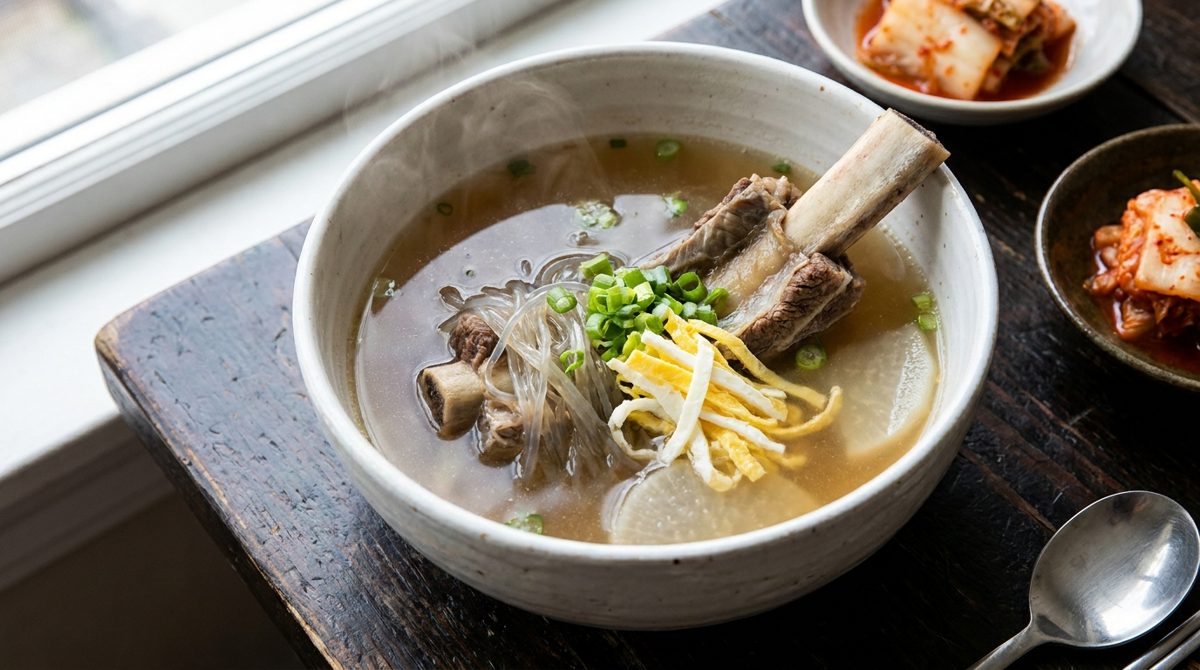
Ordering soup in a Korean restaurant and not sure what galbitang actually is? Galbitang (갈비탕) is a clear, deeply savory Korean soup made by long-simmering bone-in beef short ribs and beef bone broth for hours until the meat turns fork-tender, then served with a full short rib still on the bone, glass noodles, sliced radish, and shredded egg garnish on top. It’s mild, filling, and one of Korea’s classic celebration and cold-weather comfort dishes. This decoder page covers everything: taste, spice level, allergens, halal and vegetarian status, real 2026 prices, and exactly how to order it in Korean.
Table of Contents
- Galbitang Quick Facts
- What Is Galbitang, Exactly?
- What Does Galbitang Taste Like?
- Dietary Guide: Vegetarian, Vegan, Halal & Allergens
- How to Order Galbitang in Korean (+ 2026 Prices)
- How to Eat Galbitang Like a Local
- Types of Galbitang
- Where to Try Galbitang
- Galbitang FAQ
Galbitang Quick Facts
| Item | Details |
|---|---|
| Korean name | 갈비탕 (galbitang) — “rib soup” |
| Pronunciation | gal-bee-tahng |
| Type | Clear beef short rib soup (guk/tang category) |
| Spice level | 🌶️ 0 / 5 — completely mild, no chili at all |
| Price (2026) | ₩15,000–₩19,000 at regular Seoul restaurants |
| Vegetarian | ❌ No — beef short ribs and beef bone broth are the base of the dish |
| Vegan | ❌ No — same reason, plus an egg garnish on top |
| Halal-friendly | ⚠️ Conditional — beef-based (halal-friendly in principle) but rarely halal-certified in Korea |
| Main allergens | Egg (garnish), soy (seasoning); glass noodles are typically sweet-potato starch (gluten-free) |
| Best for | Family meals, birthdays and celebrations, cold-weather comfort food |
What Is Galbitang, Exactly?
Galbitang gets its name from two simple words: galbi (rib) and tang (soup, from the Sino-Korean word for a broth-based dish). Unlike Korean BBQ galbi, which is grilled fast over charcoal, galbitang cooks the same cut low and slow — beef short ribs simmered for hours in water with garlic, radish, and aromatics until the broth turns clear, golden, and rich with collagen. The bone stays in; the meat falls away with a light tug of your chopsticks.
Soup is central to Korean dining — a proper Korean meal almost always includes a guk or tang alongside rice and banchan. Galbitang sits at the fancier end of that spectrum. Because short ribs cost more than the bones used for everyday soups, galbitang has long been reserved for special occasions: birthdays, family gatherings, and the kind of meal you order when you want to treat someone well. It’s a step up from the humble seaweed soup (miyeokguk) traditionally eaten on birthdays, and many families and restaurants serve galbitang instead for a more generous, celebratory version of the same idea.
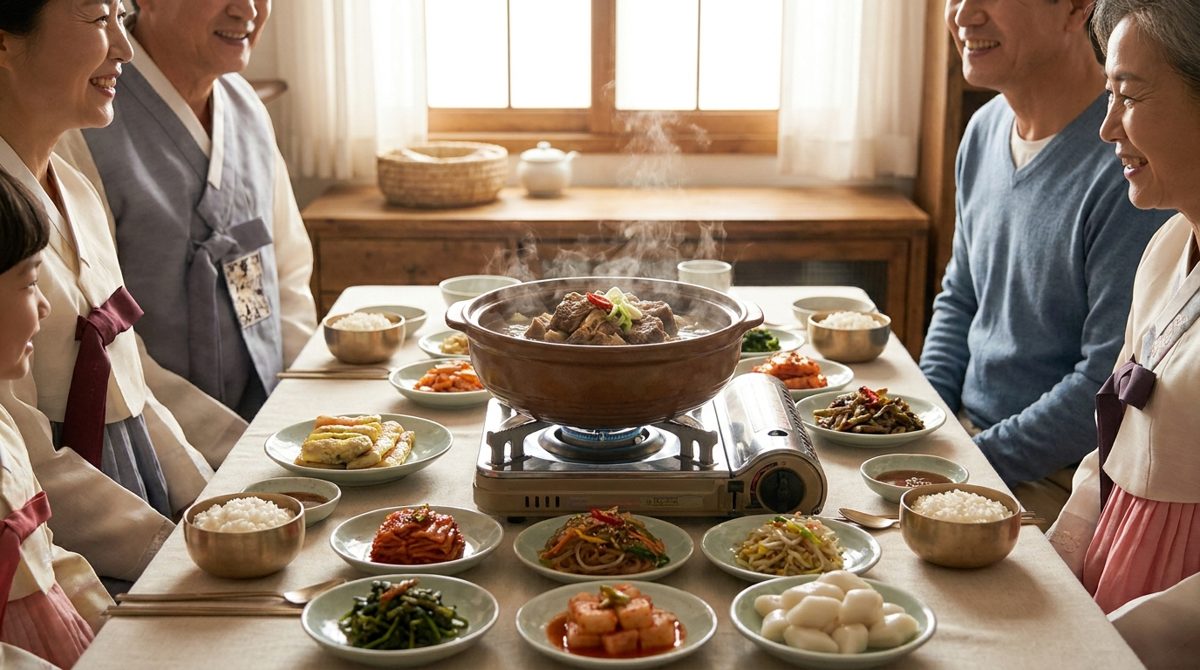
Today you don’t need a special occasion to order it. Galbitang is on menus everywhere from train station food halls to dedicated soup restaurants that do nothing else, and it’s also a beloved hangover-recovery meal (haejangguk) thanks to its rich, restorative broth. It’s a common order for anyone who wants something warm, filling, and non-spicy after a stretch of spicier Korean food, and it travels well as a “safe” order for guests who aren’t sure what else to try.
One more thing worth knowing: the same word “galbi” shows up on Korean BBQ menus too, referring to the raw short rib cut before it’s grilled. Galbitang and grilled galbi (or the braised version, galbi-jjim) all start from the same rib section of the cow, just prepared in completely different ways — one charred and smoky, one boiled into a clear, gentle broth, one glazed and braised.
What Does Galbitang Taste Like?
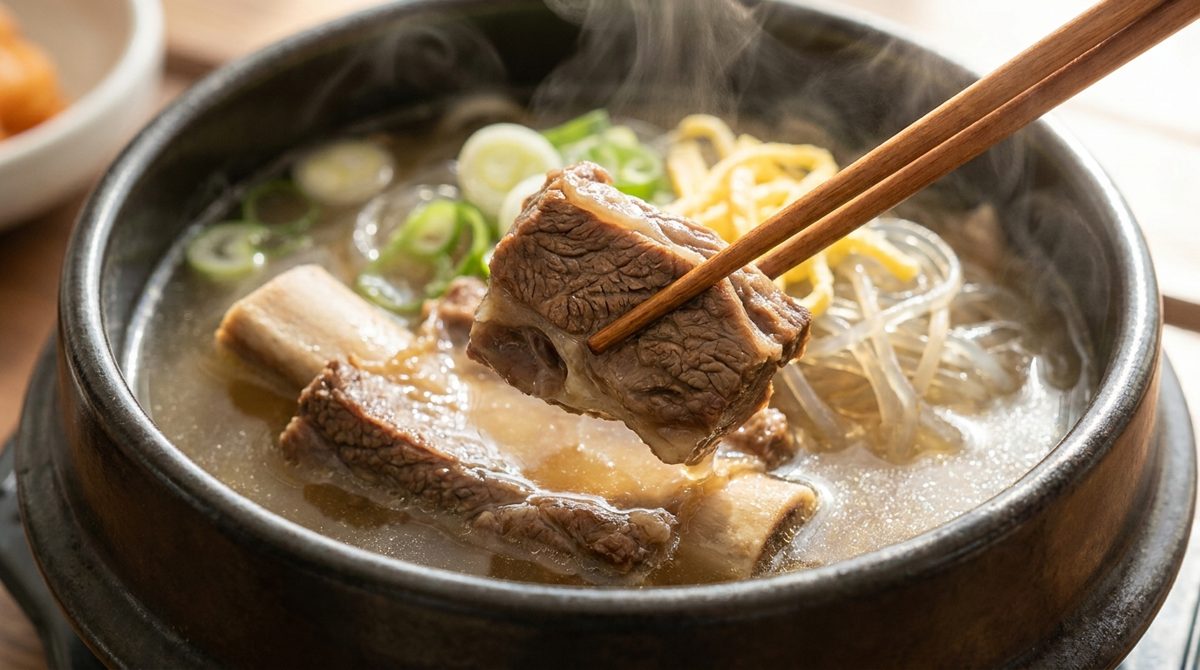
Galbitang tastes clean and deeply savory rather than heavy — the broth is clear, not milky like seolleongtang, and carries a light natural sweetness from radish and garlic rather than heavy spice or fat. The short rib meat is tender enough to pull apart with chopsticks, the glass noodles add a slippery, satisfying chew, and the shredded egg garnish on top brings a soft richness that ties the whole bowl together. Season it yourself at the table with salt, pepper, or a drop of soy sauce — most restaurants leave the broth mild by default so you can adjust it to your own taste.
If you’ve had Western oxtail soup or a rich bone broth before, galbitang will feel familiar in spirit but noticeably lighter and cleaner on the palate. It’s high in protein and collagen from the long simmer, which is part of why it’s considered a restorative, nourishing dish in Korean food culture rather than just a comfort food.
Is Galbitang Spicy?
No — galbitang is one of the least spicy dishes in the entire Korean food canon. There’s no gochujang, no gochugaru, and typically not even a hint of chili in the broth itself. If you want some heat, dip the meat in the soy-vinegar-mustard sauce (gyeoja-jang) some restaurants provide, or order a side of kkakdugi (cubed radish kimchi) — the classic galbitang pairing that adds crunch and a little spice on the side without touching the soup itself.
Galbitang Dietary Guide: Vegetarian, Vegan, Halal & Allergens
Galbitang is a straightforward dish for allergy purposes, but it’s not a flexible one for vegetarians, vegans, or travelers who need halal-certified food — here’s the honest breakdown.
| Ingredient concern | In standard galbitang? | How to handle |
|---|---|---|
| Beef | Yes — the entire dish is built on it | No workaround; this is a beef dish through and through |
| Pork | No | Not used in traditional galbitang |
| Egg | Yes — shredded egg garnish (jidan) on top | “Gyeran ppaego juseyo” (계란 빼고 주세요) = no egg |
| Wheat / gluten | Usually minimal | Glass noodles (dangmyeon) are made from sweet potato starch, not wheat — a rare gluten-friendly win in Korean food; still check the soy sauce seasoning |
| Soy | Yes | Soy sauce is used in seasoning and often provided as a side condiment |
| Sesame | Often | Sesame oil or seeds are a common garnish — ask to leave it off if needed |
| Shellfish / fish | No | Pure beef broth — no seafood in standard versions |
| Dairy / nuts | No | Not part of the traditional recipe |
Is Galbitang Vegetarian or Vegan?
No, and there’s no easy workaround. Galbitang’s entire identity is the beef short rib and the hours-long beef bone broth beneath it — removing the meat still leaves you with a beef-based liquid, not a vegetarian soup. There is no widely available vegetarian version on Korean menus, unlike bibimbap or sundubu-jjigae, which can be made meat-free on request. If you’re vegetarian or vegan and craving a warm soup, look instead to sundubu-jjigae (soft tofu stew, can be made without meat) or a vegetable-forward version of doenjang-jjigae. Galbitang itself should simply be skipped by vegetarian and vegan travelers.
Is Galbitang Halal?
Galbitang is beef-based with no pork and no alcohol in the traditional recipe, which puts it in the same halal-friendly category as bulgogi and Korean beef BBQ — in principle. The catch: the beef itself is not halal-certified at the vast majority of Korean restaurants, since Korea’s halal food infrastructure is still limited outside a handful of certified establishments. Muslim travelers should look specifically for halal-certified Korean restaurants (concentrated in Itaewon and a few other areas) rather than assuming any galbitang restaurant automatically qualifies. The Korea Tourism Organization’s VisitKorea site maintains listings of Muslim-friendly restaurants if you want to double-check before you go.
How to Order Galbitang in Korean (+ 2026 Prices)
Galbitang restaurants are used to straightforward orders — most menus are one or two items deep, and staff at popular spots are accustomed to foreign guests. These phrases still help, especially if you want to customize your bowl:
| What you want | Say this | Romanized |
|---|---|---|
| One galbitang, please | 갈비탕 하나 주세요 | galbitang hana juseyo |
| Extra meat | 고기 많이 주세요 | gogi mani juseyo |
| No egg | 계란 빼고 주세요 | gyeran ppaego juseyo |
| Less fat / skim the fat | 기름 빼고 주세요 | gireum ppaego juseyo |
| Extra rice refill | 공기밥 추가 주세요 | gonggibap chuga juseyo |
What it costs in 2026: a standard bowl of galbitang runs ₩15,000–₩19,000 at a regular Seoul restaurant — noticeably pricier than bibimbap or a simple gukbap, because short ribs cost more than the bones used in cheaper soups. Rice usually comes included or for a small extra charge, and banchan is free and refillable. Specialty galbitang restaurants using premium hanwoo (Korean native beef) can run ₩20,000 or more per bowl, especially in tourist-heavy districts. See our Korean dining etiquette guide for how the banchan and rice-refill system works if you’re new to sit-down Korean restaurants.
How to Eat Galbitang Like a Local
Use your spoon for the broth and rice, chopsticks for the meat and noodles — the two utensils work in rotation throughout the meal, which is standard Korean table practice. Taste the broth first before seasoning it; it usually arrives mild, and a pinch of salt or pepper from the table condiments brings it into balance without overpowering the beef flavor underneath.
Pick up the short rib bone with your chopsticks (or your hands, if you’re at a casual spot) and work the meat free — it should come away easily if the kitchen simmered it long enough. Some locals pour a little rice directly into the broth near the end of the meal, turning the last few spoonfuls into a light beef-rice porridge that soaks up every bit of flavor left in the bowl.
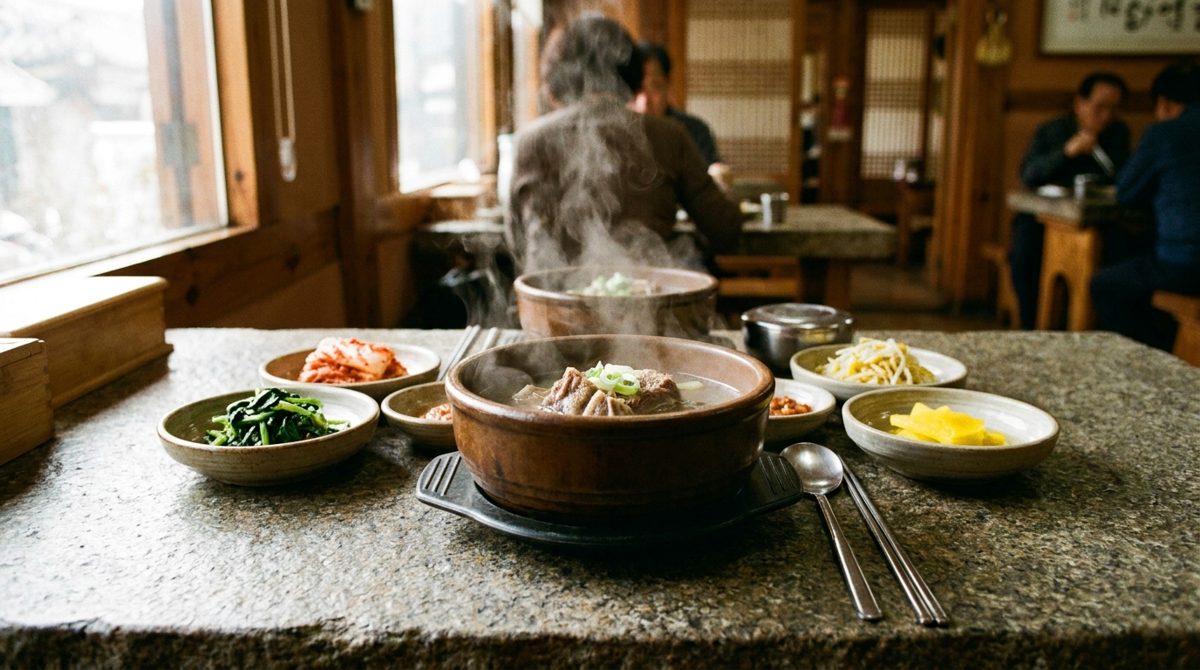
Pair it with kkakdugi radish kimchi for crunch and a little spice, and don’t hesitate to ask for banchan refills — they’re free at nearly every sit-down Korean restaurant. Because galbitang is often a shared, family-style order, it’s also common to see everyone at the table order the same bowl rather than mixing dishes, which keeps things simple and communal.
Types of Galbitang You’ll See on Menus
Standard galbitang (갈비탕) — the default clear broth with one or two short rib pieces, glass noodles, and egg garnish; what you’ll get unless you specify otherwise. Hanwoo galbitang (한우갈비탕) — made with premium native Korean beef, priced noticeably higher, sold at specialist restaurants that focus on this one dish and do it very well. Yangnyeom galbitang — a seasoned, slightly spicier modern variant for travelers who find the original too mild, though this isn’t the traditional style and won’t appear on every menu. Galbi-mandu-tang — the same broth served with dumplings added, a heartier combination found at some traditional restaurants that also make their own mandu.
It’s easy to confuse galbitang with its soup cousins, so here’s the quick distinction: seolleongtang (설렁탕) uses ox bones simmered for a very long time into a milky-white broth with thin sliced beef, while gomtang (곰탕) is a similar milky bone broth typically served with sliced brisket. Galbitang is the odd one out — clear rather than milky, and built specifically around the short rib bone and its meat rather than bones alone. If a menu photo shows a cloudy white soup, that’s not galbitang; if it shows a clear golden broth with a visible rib bone standing up in the bowl, that’s the real thing.
Where to Try Galbitang
Galbitang is reliably good almost everywhere because it’s a simple, honest dish built on quality ingredients rather than complicated technique — but a few settings stand out. Traditional galbitang specialist restaurants near Seoul’s older neighborhoods and meat-market districts serve some of the most respected bowls in the city, often run by families who’ve made nothing else for decades and have the simmering process down to a science.
Department store basements and train station food halls do a dependable, faster version if you’re short on time between sightseeing stops — check our Seoul food guide for market picks nearby. If you’re already doing a Korean BBQ night and curious how the same cut of meat tastes prepared totally differently, order galbitang the next day — it’s the low-and-slow answer to grilled galbi’s high-heat char. And if you enjoyed the birthday-soup tradition behind galbitang, its ginseng-chicken cousin samgyetang is the other classic Korean celebration soup worth trying on your trip.
Galbitang FAQ
What does galbitang mean in English?
“Rib soup.” Galbi means rib, tang means soup — a literal, no-nonsense name for a literal, no-nonsense dish that’s been served at Korean tables for generations.
Is galbitang spicy?
No. Galbitang contains no chili and is one of the mildest well-known Korean dishes, rated 0 out of 5 for spice. Add kkakdugi radish kimchi on the side if you want a little heat without touching the soup itself.
Is galbitang halal or vegetarian?
Neither. It’s a pure beef dish with no vegetarian or vegan version available, and while it contains no pork or alcohol, the beef is rarely halal-certified in Korea — look specifically for certified halal restaurants rather than assuming any galbitang spot qualifies.
What’s the difference between galbitang and seolleongtang?
Galbitang uses beef short ribs in a clear, golden broth; seolleongtang uses ox bones simmered for hours into a milky white broth. Different cuts, different color, different texture — though both are comforting, mild beef soups that Korean diners eat year-round.
How much does galbitang cost in Korea in 2026?
₩15,000–₩19,000 at a standard Seoul restaurant, with premium hanwoo-beef versions running ₩20,000 or more, especially at specialist restaurants or in tourist-heavy areas.
The Verdict: Should You Order It?
Yes — especially if you want a warm, filling, zero-spice meal that still feels special. Galbitang delivers rich beef flavor without the fire of gochujang-based dishes, works equally well on cold days and hangover mornings, and gives you the small, satisfying ritual of picking meat off a bone with chopsticks. It’s pricier than a bowl of bibimbap, but the depth of flavor and the sense of occasion make it worth ordering at least once on any trip to Korea. Hungry for the next dish? Decode the whole menu with our Korean Food Decoder — every major Korean dish explained with spice levels, allergens, and ordering phrases.