If you’re planning a Yeosu travel guide trip for 2026, you’re about to discover one of South Korea’s most underrated coastal cities. Yeosu sits on a peninsula in Jeollanam-do, wrapped by the sea on three sides, and it’s home to the country’s most famous night view, an ocean-crossing cable car, a sunrise temple perched on a cliff, and seafood you genuinely can’t get anywhere else. Most foreign tourists fly straight past Yeosu on their way from Seoul to Busan or Jeju, which is exactly why it still feels undiscovered compared to Korea’s bigger cities.
This Yeosu travel guide covers the 9 spots you shouldn’t miss, how to get here from Seoul by KTX, the best time of year to visit, a realistic 2-day itinerary, and the mistakes first-time visitors keep making. Yeosu is especially popular with Japanese and Chinese travelers who want a slower, more romantic side of Korea — legendary night views, fresh seafood, and none of the crowds you’ll find in Myeongdong or Hongdae.
Table of Contents
- 1. Getting to Yeosu from Seoul (KTX)
- 2. Yeosu Night Sea & Ocean Cable Car
- 3. Odongdo Island & Camellia Garden
- 4. Hyangiram Hermitage Sunrise Temple
- 5. Dolsan Bridge & Dolsan Park
- 6. Jinnamgwan Pavilion & Yi Sun-sin History
- 7. Yeosu Expo Ocean Park & Aquarium
- 8. Gejang Seafood & Local Food Alley
- 9. Where to Stay & Practical Tips
- Best Time to Visit Yeosu
- 2-Day Yeosu Itinerary
- FAQ
- Common Mistakes
- Conclusion
1. Getting to Yeosu from Seoul (KTX)
The KTX high-speed train changed Yeosu from a grueling 5-hour bus ride into an easy day trip. Trains leave Seoul Station or Suseo Station and arrive at Yeosu-Expo Station in roughly 2 hours 40 minutes to 3 hours, covering about 400km. Standard-class tickets run around ₩46,800 one-way, with several departures daily and extra services on weekends and holidays. Book through Korail’s official site or the Korail Talk app — weekend trains and anything during the October coffee and foliage season fill up fast, so reserving 3-5 days ahead is smart.
The best part about Yeosu-Expo Station is the location: it sits right beside the old 2012 Expo grounds and the waterfront, so you can walk from the platform to the ocean cable car station in about 10 minutes. No taxi required on arrival. If you’re coming from other regional cities, buses also connect this coastal city with Suncheon, Gwangju, and Busan, making it easy to fold into a wider Jeollanam-do route.
For travelers who’d rather skip the train, express buses run from Seoul’s Central City Terminal in about 4.5 hours, and a small domestic airport connects to Gimpo and Jeju with a handful of daily flights — useful if you’re combining this trip with a Jeju leg. Renting a car is also worth considering if you plan to visit Hyangiram Hermitage and Dolsan Park on the same day, since public transit between the two islands and the mainland can involve some waiting for connecting buses.
2. Yeosu Night Sea & Ocean Cable Car
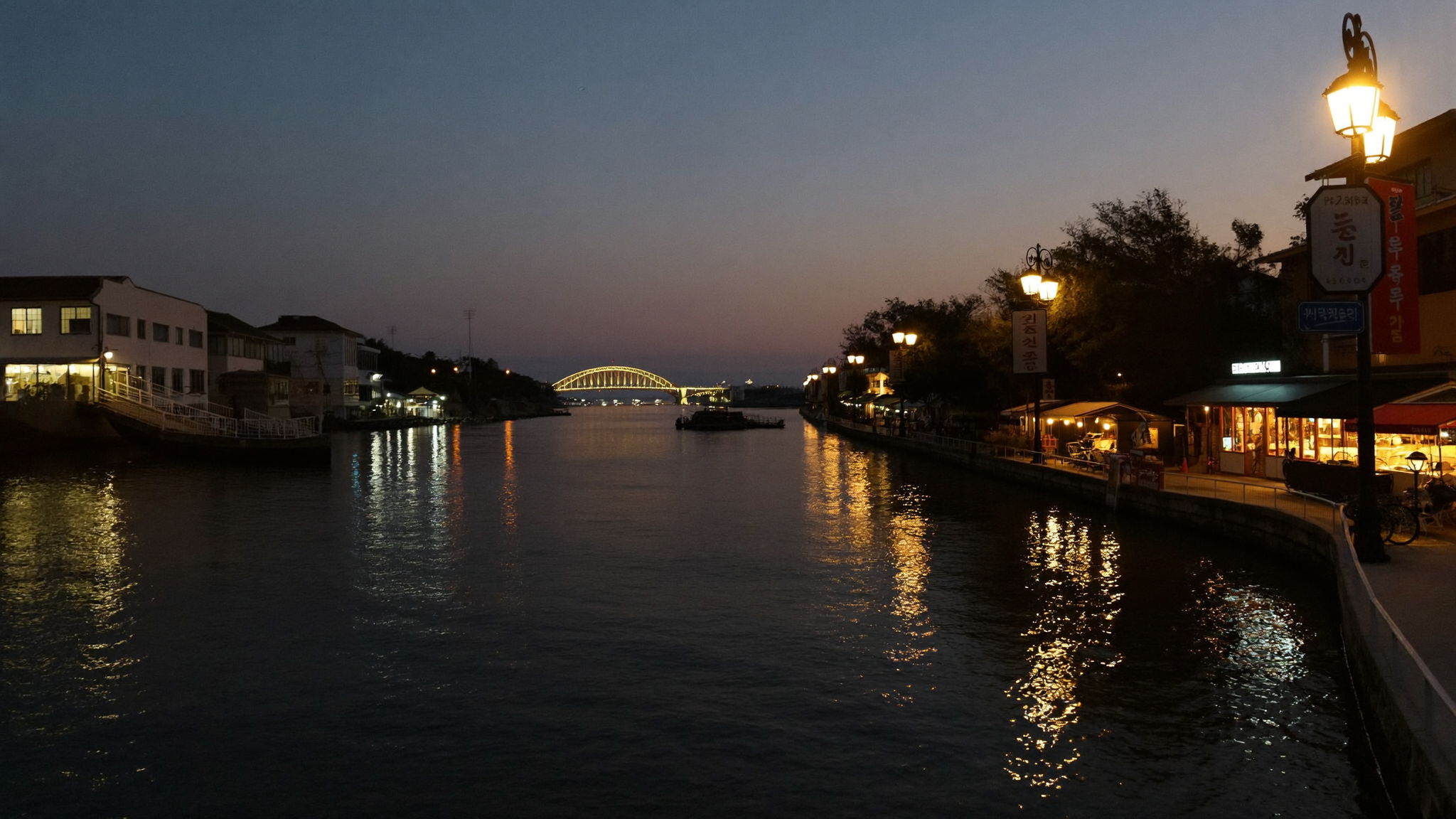
“Yeosu Night Sea” isn’t just a nickname — it’s become shorthand across Korea for a very specific kind of evening: walking the harbor promenade after dark, watching colored lights ripple across the water, and grabbing something warm from a street cart while the sea breeze rolls in. The waterfront around the old Expo site is where this experience is best, with wide walkways, a musical fountain show, and unbroken water views in every direction.
The centerpiece is the Yeosu ocean cable car, which crosses open water between the mainland station near Jaseungdang Park and Dolsan Island — one of the only cable cars in Korea that crosses the sea rather than a valley or mountain. The ride takes about 13 minutes each way, and glass-bottom “crystal cabins” are available for an extra fee if you want the added thrill of watching the water pass beneath your feet. Time your ride around sunset: board just as the sky starts turning gold, and you’ll catch the sunset on the way over and the full glittering Night Sea view on the way back.
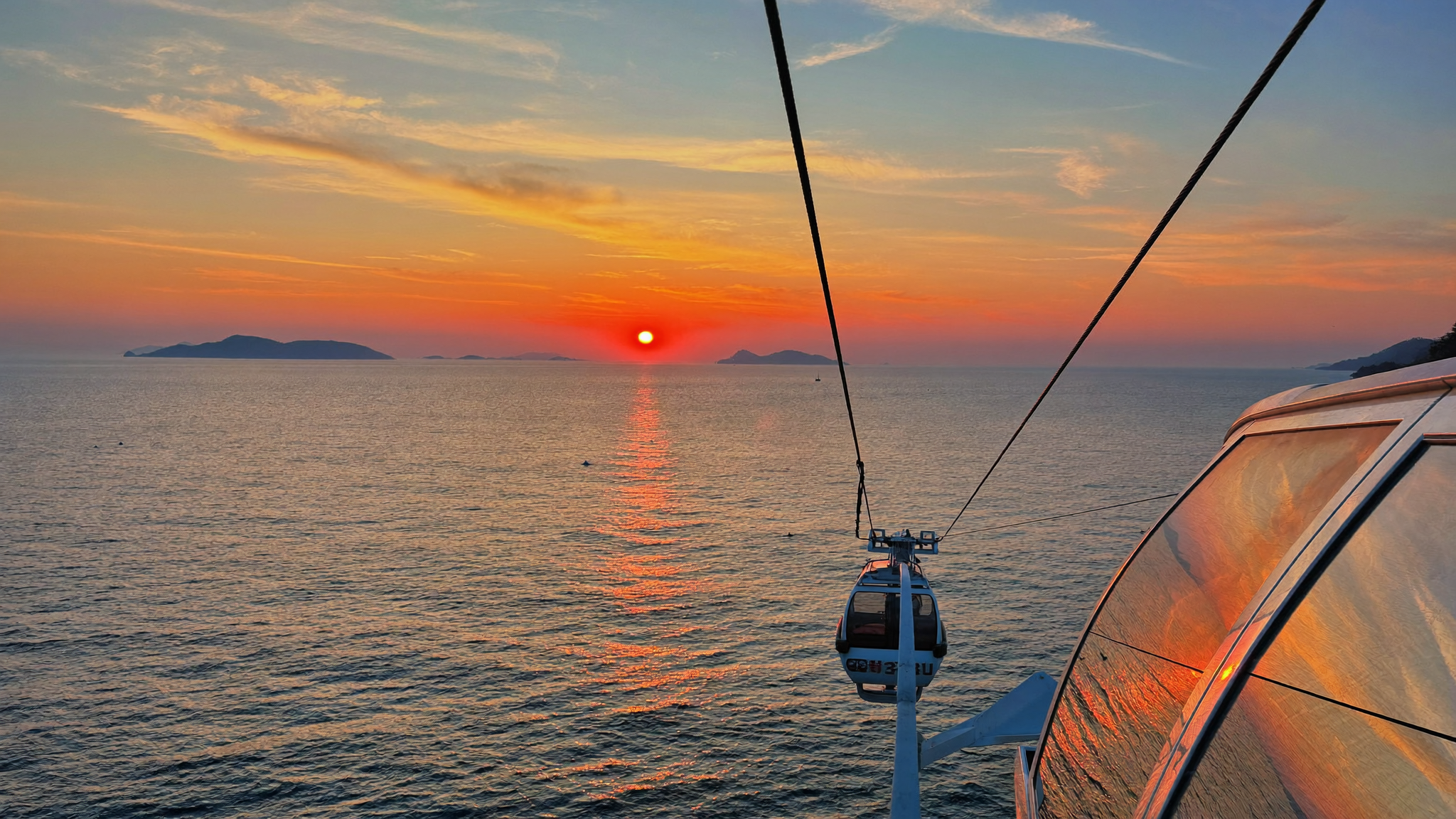
Once you’re back on land, the promenade itself is worth lingering on well past dark. Vendors set up along the water selling grilled squid and hotteok, benches face straight out toward the harbor lights, and on weekends the musical fountain runs several shows an hour, timed to pop songs and classical scores alike. It’s the kind of low-key evening that keeps couples and solo travelers alike coming back to this stretch of coastline more than once during a trip.
3. Odongdo Island & Camellia Garden
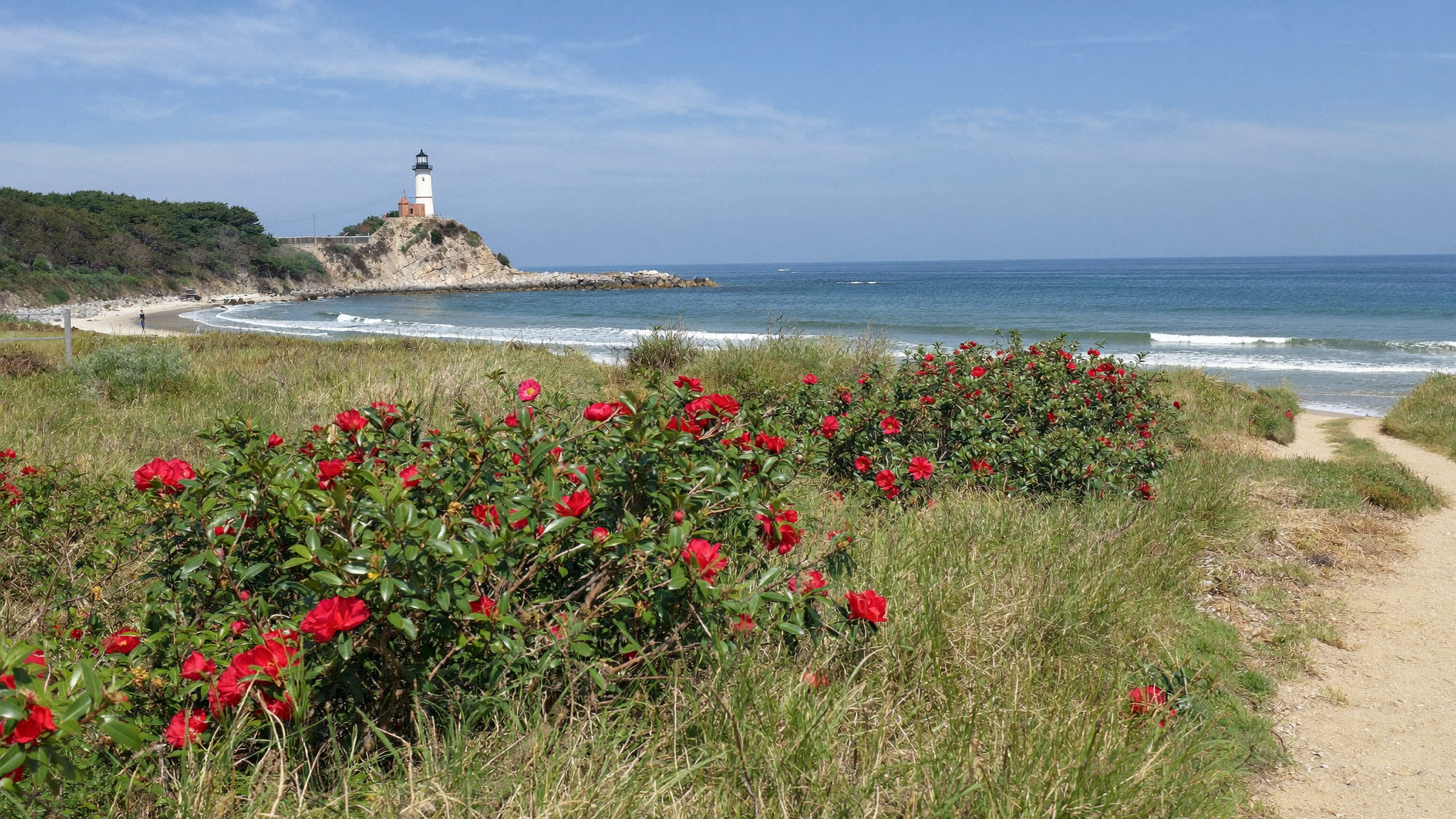
Odongdo is a tiny island — barely 700 meters across — connected to the Yeosu mainland by a 768-meter breakwater causeway you can walk or ride a small tram across. The name means “paulownia tree island,” but today it’s far more famous for its roughly 3,000 camellia trees, which explode into deep red blooms from January through March, drawing photographers from across the country. Even outside camellia season, the island’s dense bamboo groves, coastal walking trail, and lighthouse at the tip make for an easy 45-60 minute loop.
Near the entrance you’ll find a small aquarium and a musical fountain that runs light-and-water shows in the evening, so Odongdo works well as either a morning walk or an early-evening stop before dinner. The causeway itself gets busy on weekends, so arriving before 10am gives you the quietest photos, especially if camellias are in bloom.
4. Hyangiram Hermitage Sunrise Temple
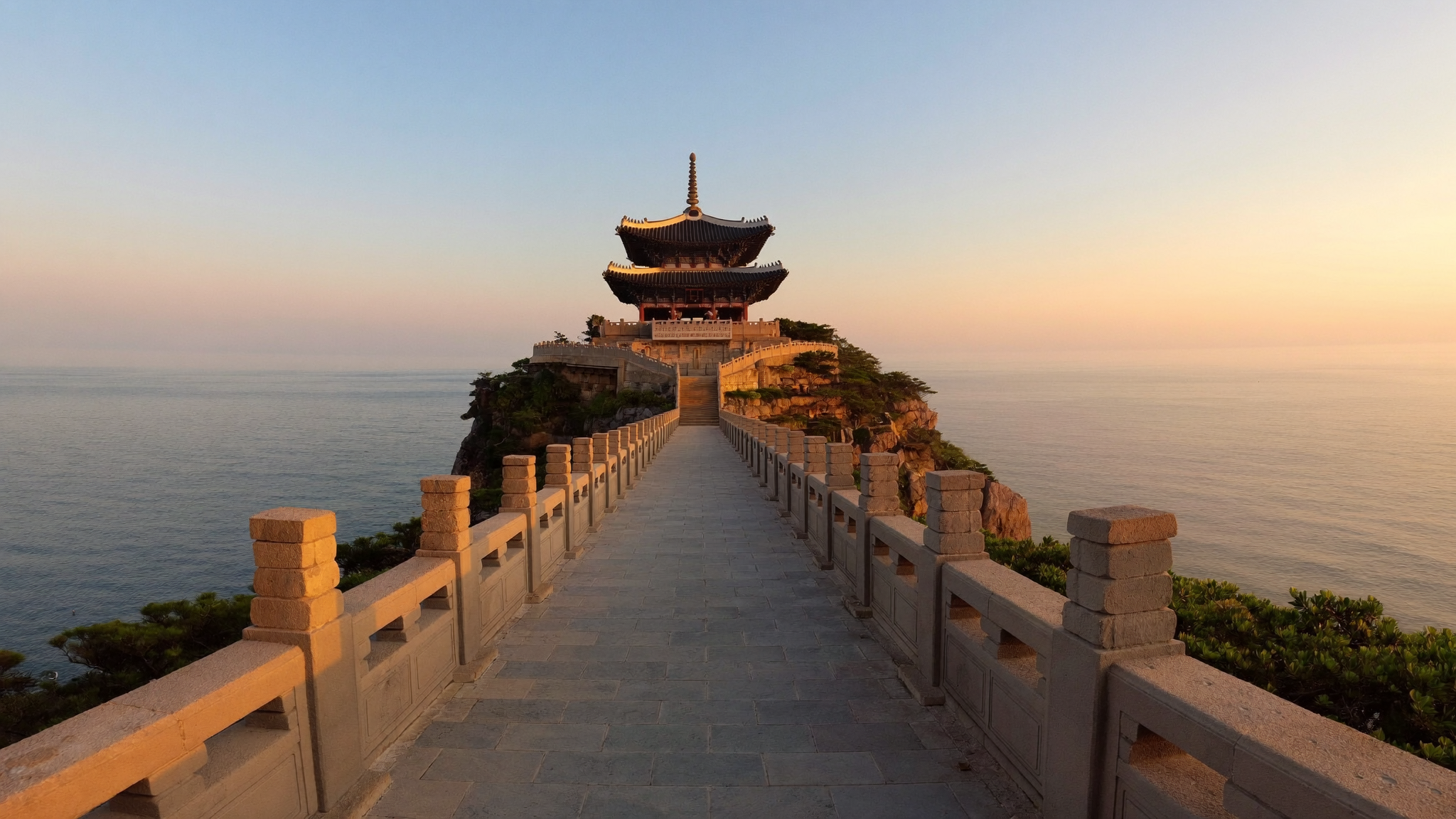
Hyangiram literally translates to “watching the sun,” and it’s ranked among Korea’s four best sunrise spots — so popular for New Year’s Day sunrise-watching that the road up gets closed to regular traffic on December 31st. The hermitage clings to a cliff on the southern tip of Dolsan Island, and reaching it means passing through seven narrow stone passageways carved between huge boulders. Local tradition says if you make it through all seven without turning back, your wish will come true.
Beyond the novelty, the setting itself is worth the trip: whitewashed temple buildings perched above open ocean, with nothing between you and the horizon. Sunrise is the classic time to visit, but the temple is peaceful in the late afternoon too, when the crowds thin out and the light turns soft gold over the water. It’s about a 30-40 minute drive or taxi ride from central Yeosu.
5. Dolsan Bridge & Dolsan Park
Dolsan Bridge connects the mainland to Dolsan Island and was, for years, Korea’s longest cable-stayed bridge — it’s still one of Yeosu’s defining landmarks, especially when it’s lit up at night as part of the Night Sea view. Just beside it, Dolsan Park sits on a hill overlooking the harbor, with hiking trails, an observatory, and a giant turtle ship statue commemorating Admiral Yi Sun-sin’s naval victories in these waters during the Imjin War.
The walk up to the park takes about 20 minutes and rewards you with one of the widest panoramic views in the city — the bridge, the cable car line, and the full sweep of the harbor in a single frame. It’s a good stop to pair with Hyangiram, since both are on Dolsan Island and easily combined into one afternoon.
6. Jinnamgwan Pavilion & Yi Sun-sin History
Jinnamgwan is the largest single-story wooden building in Korea and a designated national treasure, built on the site of the naval command post where Admiral Yi Sun-sin coordinated Korea’s turtle ship fleet against Japanese invasions in the 1590s. The current structure, rebuilt in 1719, spans 75 kan (traditional building bays) and its name literally means “suppressing the Japanese of the south” — a direct reference to that history.
Unlike some restored historical sites in Korea, Jinnamgwan feels genuinely old: massive wooden pillars, an open hall you can walk straight into, and English signage that explains the naval history without needing a guide. It’s a 45-minute stop at most, and it sits close enough to the harbor that you can easily combine it with a walk along the Night Sea promenade.
7. Yeosu Expo Ocean Park & Aquarium
Yeosu hosted the 2012 World Expo, and the legacy is a genuinely well-designed waterfront: wide promenades, a musical fountain, the striking Skytower (built from repurposed cement silos), and one of Korea’s larger aquariums, home to beluga whales, sea otters, and a walk-through ocean tunnel. The Expo Digital Gallery next door runs immersive light shows that are popular with families and couples alike.
Because the Expo grounds sit right next to Yeosu-Expo Station and the cable car terminal, this is naturally where most itineraries start and end. Budget 2-3 hours if you want to see the aquarium properly, or just 30 minutes if you’re passing through for the fountain show and skyline views.
A short taxi ride away, Manseongri Beach is known for its dark, mineral-rich sand rather than the usual white-sand look, and locals have used it for centuries as a natural mud and heat therapy — visitors bury themselves in the warm black sand at the shoreline, said to help with joint and skin conditions. It’s a quieter, more offbeat stop than the main harbor attractions, and a nice half-day add-on if you have extra time before your train back.
8. Gejang Seafood & Local Food Alley
Yeosu’s must-eat dish is gejang baekban — a full set meal built around marinated crab. Soy-marinated crab (ganjang gejang) and spicy chili-marinated crab (yangnyeom gejang) are both on the table, but what makes Yeosu’s version special is dolge, a local stone crab used almost nowhere else in Korea, giving the dish a sweeter, more delicate flavor than the blue crab versions served in Seoul. Order it as a set and it comes with a dozen small side dishes, rice, and soup.
Beyond crab, look for godori-hoe (young pollock sashimi, a local specialty in winter), hamtaek (an assorted raw fish platter), and Dolsan gat-kimchi — a tangy, slightly spicy mustard-leaf kimchi grown specifically on Dolsan Island and sold as a souvenir across the city. The alleys near the harbor and around Gyodong Market are the best hunting ground for all of it, and prices are noticeably lower than similar seafood in Seoul.
Gyodong Market itself is worth a slow browse even if you’re not hungry — it’s a traditional wet market with dried seafood stalls, banchan vendors, and small food stands selling grilled fish straight off the coals. Vacuum-packed gat-kimchi and dried anchovies travel well, making them popular souvenirs for visitors heading back to Seoul or flying home. If your trip lines up with October, the city also runs a seafood and turtle ship festival around the harbor, with tastings, boat parades, and a recreation of the historic naval battles fought in these waters — a fun bonus for anyone already interested in the Jinnamgwan history.
9. Where to Stay & Practical Tips
Most first-time visitors base themselves near Yeosu-Expo Station or the Jungang-dong harbor area, both within walking distance of the Night Sea promenade, the cable car, and Gyodong Market. Budget guesthouses and mid-range hotels cluster around the station, while a handful of ocean-view hotels sit closer to the Expo grounds if you want to wake up to the harbor. Dolsan Island, across the bridge, has quieter stays with better sunrise access if Hyangiram is a priority.
Korea’s nationwide T-money transit card works on Yeosu’s local buses, so it’s worth topping up before you arrive rather than buying single tickets — see our T-money card guide for how it works. Credit cards are accepted almost everywhere except the smallest street food stalls, and having a local eSIM makes navigating this city’s spread-out attractions far easier — our Korea eSIM guide covers the best options for short trips.
Getting around once you’re here is straightforward: local buses connect the station, the harbor, and both islands, but they can run infrequently outside rush hour, so budget extra waiting time if you’re relying on them for a tight schedule. Taxis are inexpensive by international standards and the easiest way to hop between Odongdo, Dolsan Island, and the Expo grounds without losing daylight. Kakao T, Korea’s ride-hailing app, works here too and takes the guesswork out of addresses if your Korean is limited — just show the driver the destination in the app and you’re set.
Best Time to Visit Yeosu
Spring (March-May) and fall (September-November) offer the mildest weather and are the most comfortable seasons for walking the promenades and hiking up to Dolsan Park. Camellia season at Odongdo peaks from January to March, so a winter trip trades warmth for the island’s most famous photo opportunity. Summer (July-August) is peak seafood and beach season but also the busiest and most humid, especially around the Night Sea waterfront on weekends. The Night Sea view itself and the cable car ride are worth doing in any season — clear winter air often produces the sharpest night views of all.
2-Day Yeosu Itinerary
Day 1: Arrive by KTX at Yeosu-Expo Station and walk straight to the Expo Ocean Park for the aquarium and Skytower. In the late afternoon, head to the cable car station and time your ride for sunset. Finish the evening walking the Night Sea promenade, catching the musical fountain, and grabbing street food or a gejang dinner near the harbor.
Day 2: Start early at Odongdo Island before the crowds arrive, then cross to Dolsan Island for Hyangiram Hermitage and Dolsan Park. Have lunch at a gejang restaurant on the way back, stop at Jinnamgwan for the naval history, and pick up Dolsan gat-kimchi at Gyodong Market before your KTX back to Seoul.
If you’re building a longer Jeollanam-do route, this coastal city pairs naturally with the wetlands at Suncheon Bay (about 40 minutes away), the tea fields of Boseong, or the bamboo forests of Damyang — all reachable within a half-day’s travel and easy to combine into a single southern coast itinerary.
If you have 3 days: Add Manseongri Beach for a relaxed mud-therapy afternoon, or take a short ferry from the harbor out to one of the smaller nearby islands like Odongdo’s neighboring Geomundo or Baekdo for a boat tour past dramatic sea cliffs and rock formations. This third day is also a good buffer for bad weather, since the cable car and Hyangiram views depend heavily on clear skies — building in a spare afternoon means a cloudy morning won’t ruin your only shot at the Night Sea.
FAQ
Can I visit Yeosu as a day trip from Seoul? Yes — the KTX makes it possible to see the cable car, Odongdo, and the Night Sea in a single long day, but staying one night lets you catch both a sunset cable car ride and an unrushed sunrise at Hyangiram.
How many days do you need in Yeosu? Two days covers the 9 main highlights comfortably. One day works if you’re selective, and three days gives room to add a Suncheon Bay or Boseong day trip.
Is Yeosu good for solo travelers? Very much so — the promenade, cable car, and Odongdo are all easy to navigate alone, English signage is common at major sites, and the compact layout means you rarely need more than a taxi or local bus.
Is Yeosu safe? Yes, like most Korean cities Yeosu is very safe, including walking the Night Sea promenade after dark, though it’s always sensible to keep valuables secure in crowded spots.
What if I don’t speak Korean? Major attractions, the KTX station, and most restaurants near tourist areas have English menus or signage. A translation app covers the rest, especially at smaller seafood restaurants.
Is this trip family-friendly? Yes — the aquarium, Odongdo’s flat walking paths, and the cable car are all comfortable with kids, though strollers may struggle on the Dolsan Park hiking trail and the stone passageways at Hyangiram.
Is it an expensive destination? No, it’s noticeably cheaper than Seoul for both food and lodging. A gejang set meal typically costs less than similar seafood dishes in the capital, and mid-range hotels near the station are affordably priced even in peak season.
Common Mistakes
The biggest mistake is treating Yeosu as a quick stopover between Suncheon and Busan — the Night Sea and sunset cable car alone deserve a full evening, not a rushed hour. Skipping the cable car’s sunset timing is another common regret; riding it midday still looks nice, but you miss the signature golden-hour-to-night-view transition that makes it famous. Visitors who only eat near the KTX station also miss out on the better, cheaper gejang restaurants clustered around Gyodong Market. Finally, don’t underestimate weekend crowds on the Odongdo causeway and cable car line in summer — arriving early or visiting on a weekday avoids most of the wait. Some travelers also forget to reserve the glass-bottom cable car cabins in advance during holidays, only to find every crystal cabin booked out by the time they arrive at the terminal.
Conclusion
This Yeosu travel guide only scratches the surface of what makes this southern coastal city special, but the core experience is simple: ride the ocean cable car at sunset, walk the Night Sea promenade after dark, eat gejang you can’t get anywhere else in Korea, and watch the sun rise over Hyangiram’s cliffside temple. It’s a slower, more romantic version of a Korean coastal trip, and one that rewards visitors who give it more than a passing glance on the way to somewhere else.
Book your KTX tickets in advance through Korea Trains, and check current event and festival dates on the official Yeosu tourism site before you go. For more background on the city’s history, the Wikipedia entry on Yeosu is a solid starting point. Add this coastal city to your next Korea itinerary — the Night Sea alone is worth the trip.