Seeing mandu everywhere in Korea — on street steamers, menus, and convenience store freezers — and wondering what it is? Mandu (만두) are Korean dumplings: thin wheat wrappers folded around a savory filling of pork, tofu, vegetables, and glass noodles, then steamed, fried, boiled, or dropped into soup. They’re cheap, comforting, and almost never spicy. This decoder covers every style — gun-mandu, jjin-mandu, mul-mandu, wang-mandu, mandu-guk — plus taste, allergens, the important pork and halal facts, real 2026 prices, and how to order mandu in Korean.
Table of Contents
- Mandu Quick Facts
- What Is Mandu, Exactly?
- What Does Mandu Taste Like?
- Dietary Guide: Vegetarian, Vegan, Halal & Allergens
- How to Order Mandu in Korean (+ 2026 Prices)
- How to Eat Mandu Like a Local
- Types of Mandu
- Where to Try Mandu
- Mandu FAQ
Mandu Quick Facts
| Item | Details |
|---|---|
| Korean name | 만두 (mandu) — Korean dumplings |
| Pronunciation | MAHN-doo |
| Type | Dumplings — snack, side dish, or full meal (in soup) |
| Spice level | 🌶️ 0–1 / 5 — mild; kimchi mandu has a gentle tang at most |
| Price (2026) | ₩5,000–₩8,000 per portion (8–10 pieces); wang-mandu ₩2,000–₩3,000 each |
| Vegetarian | ⚠️ Most fillings contain pork — but vegetable (yachae) mandu exists at many shops |
| Vegan | ⚠️ Vegetable mandu can be vegan — confirm no egg in wrapper or filling |
| Halal-friendly | ❌ Default filling is pork — even kimchi mandu is usually pork; look for beef, shrimp, or vegetable versions |
| Main allergens | Pork, wheat (wrapper), soy, egg, sesame, sometimes shrimp |
| Best for | Comfort-food lovers, cold days, cheap filling meals, dumpling connoisseurs |
What Is Mandu, Exactly?
Mandu is Korea’s branch of the great Asian dumpling family — cousin to Chinese jiaozi and Japanese gyoza, but with its own personality. The dish arrived on the peninsula around the 14th century during the Goryeo dynasty, along trade routes from Central Asia and China, and Koreans have been folding their own versions ever since.
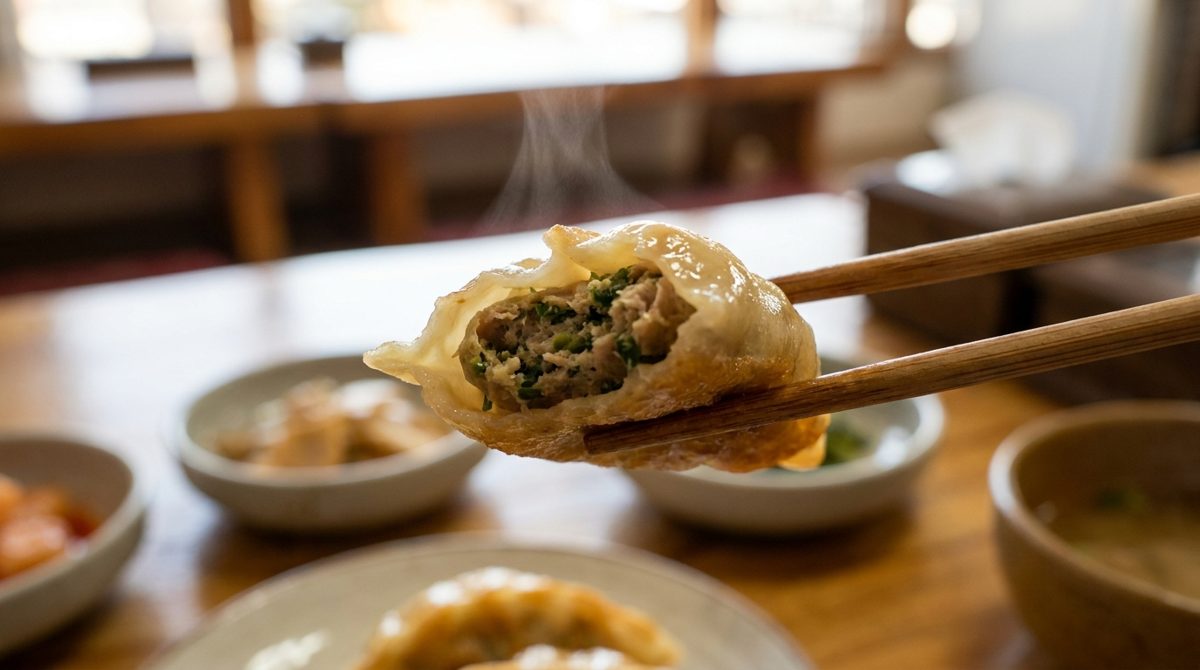
What makes a dumpling a mandu? The filling, mostly. A classic Korean filling combines minced pork with tofu, garlic chives, cabbage or kimchi, and — the Korean signature — chopped dangmyeon glass noodles, which keep everything juicy and light. The tofu and noodles mean mandu tend to be less dense and meat-heavy than gyoza or jiaozi, with a softer, rounder flavor.
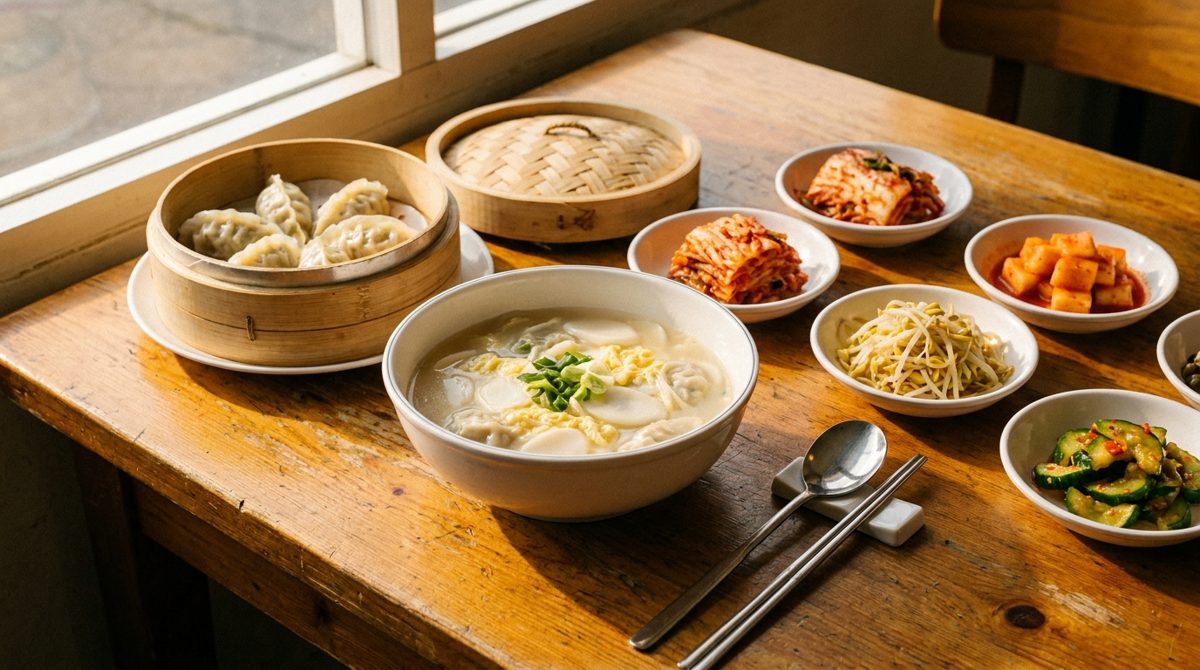
Mandu culture runs deepest in northern Korean cuisine — Pyongyang and Kaesong families traditionally ate big handmade dumplings in soup for Lunar New Year, and many of Seoul’s most famous mandu houses were founded by families who came south. Eating a bowl of mandu-guk (dumpling soup) on New Year’s Day remains a beloved tradition, symbolizing good fortune wrapped up like a purse.
Today mandu spans every price point in the country: street-stall wang-mandu for pocket change, bunsik-shop fried dumplings next to the tteokbokki, handmade specialist restaurants with sixty-year histories, and the frozen aisle — Korean brands sell billions of won of frozen mandu worldwide, so the dumpling in your supermarket back home may well be Korean.
Mandu-making is also a family ritual. Before big holidays, three generations sit around a table folding hundreds of dumplings together — grandmothers judging pleat quality, kids making the lumpy ones everyone politely eats anyway. Some families tuck a coin or extra-lucky filling into one dumpling of the New Year batch; whoever gets it claims the year’s good fortune. When you eat handmade mandu in Korea, you’re tasting a skill most Koreans learned at that table.
What Does Mandu Taste Like?
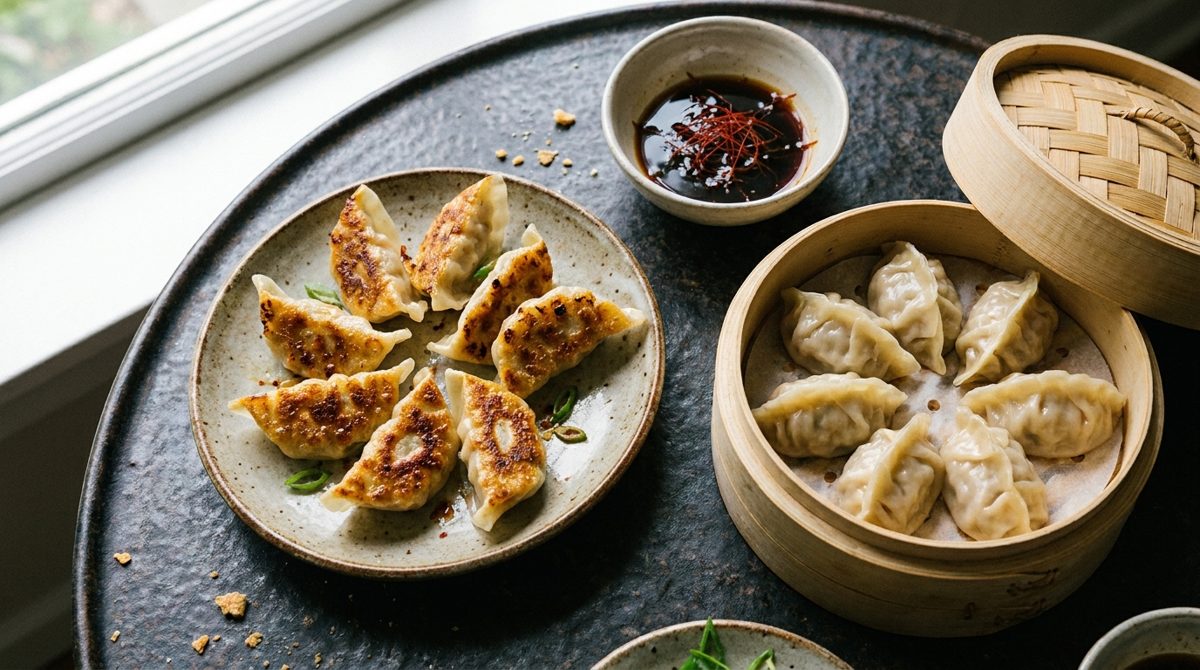
Savory, juicy, and gently garlicky. The pork-tofu filling is seasoned with soy, sesame, and chives rather than strong spices, so the flavor is comfort-food mild — closer to a good potsticker than to anything fiery. Kimchi mandu adds a pleasant sour-savory tang (the kimchi is chopped fine and mellowed), and the glass noodles give the filling a soft, springy juiciness that surprises first-timers.
Texture depends entirely on the cooking method, which is why Koreans order mandu by verb. Fried gun-mandu shatters crisply and gives way to steamy filling. Steamed jjin-mandu is all pillowy softness. Boiled mul-mandu has delicate, slippery skins that practically dissolve. Same dumpling, three different experiences — trying them side by side is half the fun.
The dipping sauce completes the experience: a simple mix of soy sauce and vinegar, sometimes with chili flakes, raw onion, or a dab of mustard. The vinegar matters more than you’d expect — its sharpness cuts through the rich filling and resets your palate, which is the quiet reason a plate of ten dumplings disappears so easily.
Is Mandu Spicy?
Barely — 0 to 1 out of 5. Standard fillings contain no chili, and even kimchi mandu is tangy rather than hot. The only heat is optional: the soy-vinegar dipping sauce sometimes comes with a spoonful of chili flakes or slivered peppers, and you control that entirely. If a menu lists “spicy mandu” (매운만두), that’s clearly labeled and still moderate by Korean standards.
Mandu Dietary Guide: Vegetarian, Vegan, Halal & Allergens
Mandu is where travelers with dietary restrictions need to pay real attention, because the friendly-looking dumpling hides more than most Korean dishes:
| Ingredient concern | In standard mandu? | How to handle |
|---|---|---|
| Pork | Yes — the default filling | Assume pork unless labeled beef (소고기), shrimp (새우), or vegetable (야채) |
| Wheat / gluten | Yes | The wrapper is wheat flour — no gluten-free version at normal restaurants |
| Soy | Yes | In the filling seasoning, the tofu, and the dipping sauce |
| Egg | Often | Used as a binder in fillings and some wrappers |
| Sesame | Usually | Sesame oil in the filling and dipping sauce |
| Shrimp / seafood | Sometimes | Saeu (shrimp) mandu is popular; cross-contact possible at shops that make both |
| Beef | Sometimes | Galbi or bulgogi mandu use beef — often mixed with pork, so ask |
| Dairy / nuts | Rarely | Traditional recipes contain neither; fusion versions may add cheese |
Is Mandu Vegetarian or Vegan?
Not by default — the standard filling is pork. But yachae mandu (야채만두, vegetable dumplings) is a real and reasonably common menu item, filled with tofu, glass noodles, cabbage, chives, and mushrooms. Frozen vegetable and even certified-vegan mandu are easy to find in Korean supermarkets, and temple-cuisine restaurants make beautiful meat-free versions. Two cautions for strict eaters: some “vegetable” mandu at casual shops still include a little pork for juiciness (ask: “gogi deureogayo?” — does it contain meat?), and egg sometimes binds the filling, which matters for vegans.
Is Mandu Halal?
Here’s the plain answer: standard mandu is not halal — the default filling is pork, and this includes kimchi mandu, which is usually kimchi plus pork, not kimchi alone. Never assume a mandu is pork-free because it doesn’t say “pork” — in Korea, pork is the unstated default for dumplings, the way beef is for bulgogi. Muslim travelers have three workable routes: clearly labeled shrimp (새우) or vegetable (야채) mandu with a confirmation question; halal-certified Korean restaurants around Itaewon, several of which serve beef mandu; and Muslim-friendly listings on VisitKorea. When in doubt, skip it — Korea has plenty of safer comfort food.
How to Order Mandu in Korean (+ 2026 Prices)
Mandu menus organize by cooking method and filling. These phrases cover the whole board:
| What you want | Say this | Romanized |
|---|---|---|
| One portion of fried mandu | 군만두 하나 주세요 | gun-mandu hana juseyo |
| Steamed mandu | 찐만두 주세요 | jjin-mandu juseyo |
| Dumpling soup | 만두국 주세요 | mandu-guk juseyo |
| Vegetable mandu (no meat) | 야채만두 있어요? | yachae-mandu isseoyo? (do you have…?) |
| Does it contain meat? | 고기 들어가요? | gogi deureogayo? |
Practical ordering notes: portions are generous, so two people sharing two different styles (say, fried plus steamed) is the classic move — many shops sell a half-and-half plate (반반, banban) for exactly this. At specialist restaurants, expect a short menu done perfectly rather than endless options; that’s a good sign. And takeout is universal — “pojang-hae juseyo” gets your dumplings packed with sauce cups for a hotel-room feast.
What it costs in 2026: a standard portion of 8–10 dumplings runs ₩5,000–₩8,000 at bunsik shops and mandu specialists. Street-stall and market wang-mandu (king dumplings) cost ₩2,000–₩3,000 each — one or two make a snack-meal. Mandu-guk (soup with rice-cake slices, egg, and seaweed) is a full meal at ₩8,000–₩11,000. Convenience stores and supermarkets sell steamer-ready frozen packs from about ₩6,000 — the classic budget dinner for travelers with hostel kitchens; our convenience store food guide covers what else to grab with them.
How to Eat Mandu Like a Local
Build the dipping sauce first: soy sauce, a splash of vinegar, and chili flakes if you like — most shops set out the three components and let you mix. Dip lightly on the wrapper side (not the filling seam, which falls apart), and eat smaller mandu in one bite so the juice stays where it belongs. For wang-mandu, bite a corner first and let the steam out — the interior is lava-hot, and every Korean has a burned-palate memory to prove it.
Mandu rarely travels alone. At bunsik shops the holy pairing is fried mandu dunked in tteokbokki sauce — order both and use the dumplings as spicy-sauce vehicles. At noodle houses, half a portion of mandu alongside kalguksu (knife-cut noodle soup) is the standard set. And in winter, mandu-guk is the move: dumplings and chewy rice-cake slices in a gentle beef or anchovy broth, finished with egg ribbons and toasted seaweed.
If you’re eating at a handmade specialist, watch the folding station — mandu shaped in front of you is the quality signal, the same way rolling-to-order marks a good kimbap shop. A skilled folder pleats a dumpling in three seconds, and the ones made an hour ago were made too early.
Types of Mandu You’ll See on Menus
Korean menus sort mandu by cooking method first. Gun-mandu (군만두) — pan-fried or deep-fried; crispy, golden, the beer-friendly one. Jjin-mandu (찐만두) — steamed in bamboo or metal steamers; soft, pillowy, the purist’s choice for tasting the filling. Mul-mandu (물만두) — boiled; delicate thin skins, often smaller, served glistening. Wang-mandu (왕만두) — “king” dumplings the size of your fist, with thick fluffy bun-like wrappers, sold from street steamers. Mandu-guk (만두국) — dumpling soup, often combined with rice cakes as tteok-mandu-guk.
Then by filling: gogi-mandu (고기만두) — the pork classic. Kimchi-mandu (김치만두) — tangy kimchi with (almost always) pork. Saeu-mandu (새우만두) — shrimp. Yachae-mandu (야채만두) — vegetable. Newer shops fold in galbi, bulgogi, curry, even cheese. Traditionalists should also hunt down Kaesong-style pyeonsu — square summer dumplings — at northern-cuisine restaurants (the Wikipedia entry on mandu maps the full family tree).
Where to Try Mandu
Seoul’s mandu scene has real depth. The famous handmade-dumpling institutions around Myeongdong and Insadong — several founded by families from Pyongyang and Kaesong — serve the definitive mandu-guk and steamed pork mandu, with queues to match. Traditional markets are wang-mandu territory: follow the steam columns at Gwangjang or Namdaemun and eat one straight from the paper cup, then work through the rest of the stalls with our Korean street food guide. Every bunsik shop fries a solid gun-mandu; every Korean-Chinese restaurant serves them as a side. In winter, any place with 만두국 on the window is doing the season correctly. And if all else fails at midnight: the convenience store freezer and a microwave will not let you down.
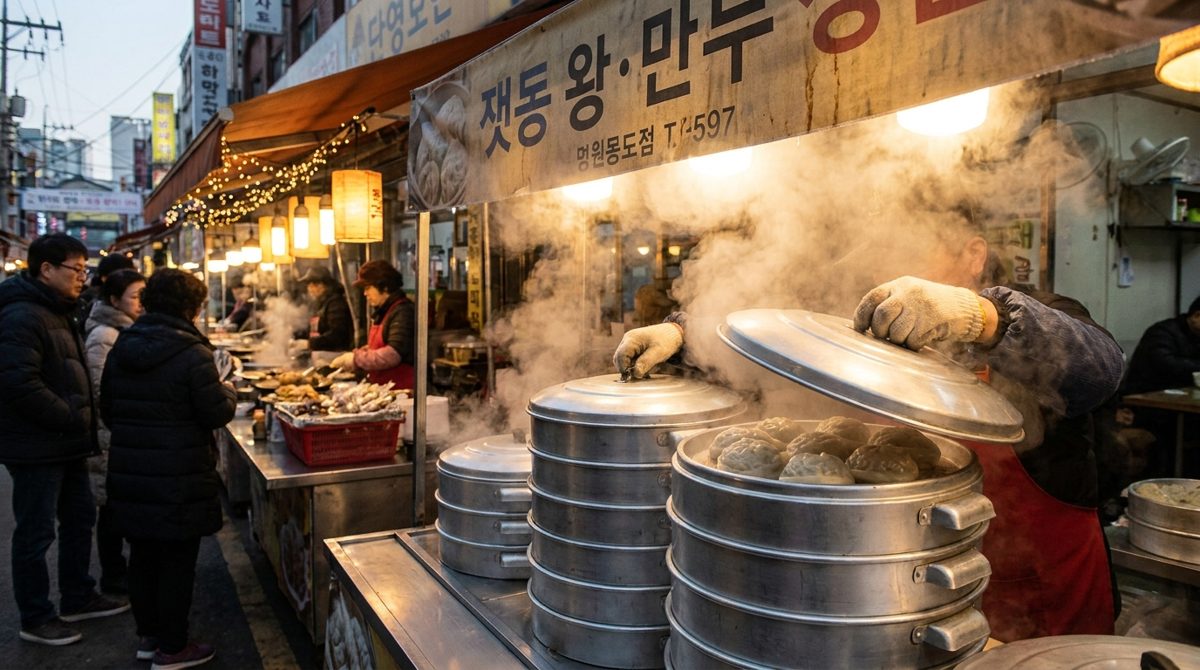
Season matters too. Mandu is technically year-round food, but Korea eats it hardest from November to February, when steamer clouds mark every market alley and mandu-guk appears on daily-special boards. Summer travelers shouldn’t skip it though — mul-mandu served barely warm with a sharp vinegar sauce is a legitimate hot-weather dish, and air-conditioned mandu specialists queue just as long in July.
Mandu FAQ
What’s the difference between mandu and gyoza?
Filling and build. Korean mandu typically mix pork with tofu and glass noodles, making them lighter and juicier than the denser, garlic-chive-forward Japanese gyoza. Mandu also come in more formats — steamed, boiled, fried, king-size, and in soup — while gyoza almost always means pan-fried.
Is mandu halal?
Not by default — standard mandu filling is pork, including most kimchi mandu. Muslim travelers should choose clearly labeled shrimp or vegetable mandu (and confirm no meat), or visit halal-certified Korean restaurants in areas like Itaewon that serve beef mandu.
Is mandu vegetarian?
Usually not — pork is the standard filling. But yachae (vegetable) mandu filled with tofu, glass noodles, and vegetables is a common menu item, and supermarkets sell certified vegan frozen mandu. Always confirm, since some casual shops add a little pork even to “vegetable” dumplings.
How much does mandu cost in Korea in 2026?
₩5,000–₩8,000 for a standard portion of 8–10 dumplings, ₩2,000–₩3,000 per giant wang-mandu at markets and street stalls, and ₩8,000–₩11,000 for a bowl of mandu-guk soup.
What is mandu-guk?
Korean dumpling soup: mandu simmered in a light beef or anchovy broth, usually with sliced rice cakes (as tteok-mandu-guk), egg ribbons, and toasted seaweed. It’s the traditional Lunar New Year dish in northern Korean families and a beloved winter meal everywhere.
One last budget trick: markets sell mandu by the tray to take away — a dozen mixed dumplings for roughly the price of two coffees. Grab a tray before a train ride or a Han River evening, and you’ve solved dinner the Korean way.
The Verdict: Should You Order It?
Yes — mandu is Korea’s most reliable comfort food, and the method-based menu makes it three dishes in one: crispy, pillowy, or brothy depending on your mood. Start with a mixed platter of gun-mandu and jjin-mandu, graduate to a market wang-mandu, and finish your trip with mandu-guk on a cold morning. Just remember the one rule: assume pork unless proven otherwise. Hungry for the next dish? Decode the whole menu with our Korean Food Decoder — every major Korean dish explained with spice levels, allergens, and ordering phrases.