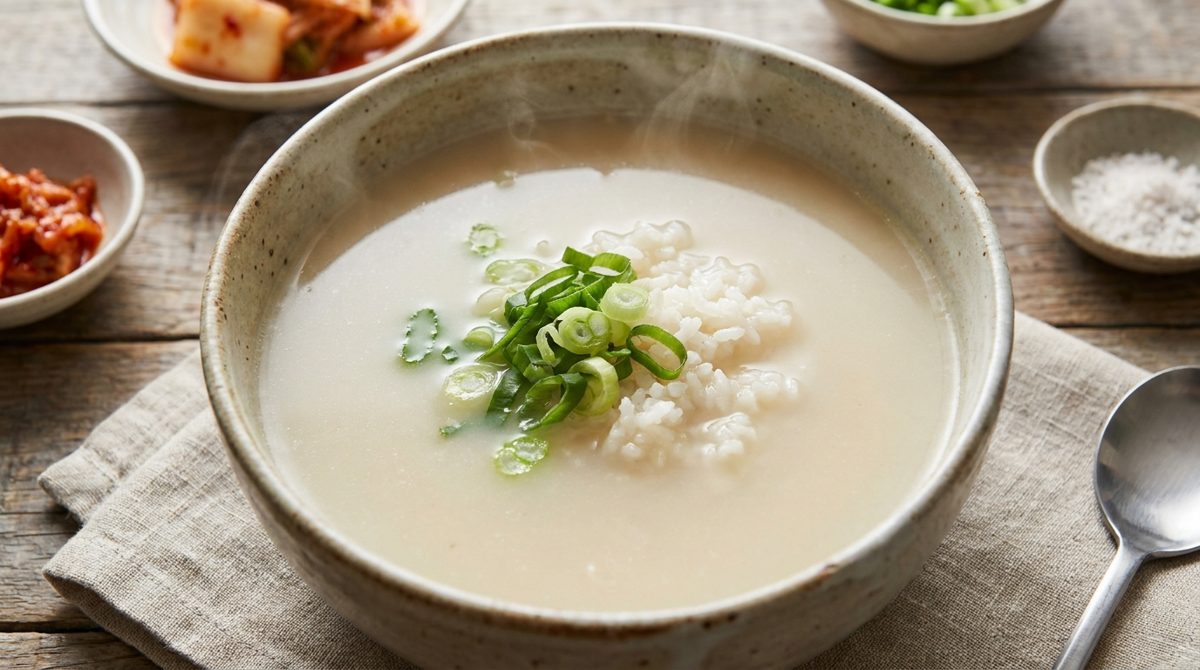
Staring at a bowl of pale, milky-white soup on a Korean menu and wondering what it is? Seolleongtang (설렁탕) is a traditional Korean ox bone broth, simmered for many hours until the water turns opaque and creamy — served plain, with rice, and completely unseasoned so you salt it yourself at the table. It looks like it might be dairy-based, but it isn’t: this is pure bone broth, nothing else. This decoder page covers taste, allergens, halal status, 2026 prices, and exactly how to order and eat it like a local.
Table of Contents
- Seolleongtang Quick Facts
- What Is Seolleongtang, Exactly?
- What Does Seolleongtang Taste Like?
- Dietary Guide: Vegetarian, Vegan, Halal & Allergens
- How to Order Seolleongtang in Korean (+ 2026 Prices)
- How to Eat Seolleongtang Like a Local
- Types of Seolleongtang
- Where to Try Seolleongtang
- Seolleongtang FAQ
Seolleongtang Quick Facts
| Item | Details |
|---|---|
| Korean name | 설렁탕 (seolleongtang) — milky ox bone soup |
| Pronunciation | suhl-lung-tahng |
| Type | Long-simmered bone broth soup, usually with rice |
| Spice level | 🌶️ 0 / 5 — the broth itself has zero heat; you add it yourself via kkakdugi |
| Price (2026) | ₩11,000–₩14,000 in Seoul |
| Vegetarian | ❌ No — pure beef bone broth, no vegetarian version exists |
| Vegan | ❌ No |
| Halal-friendly | ⚠️ Beef-based, so halal in principle — but restaurants are rarely halal-certified in practice |
| Main allergens | None major in the plain broth; soy sauce for seasoning; wheat/gluten if noodles added; NOT dairy despite the white color |
| Best for | Comfort food, cold or rainy days, 24-hour diners, budget meals, solo diners |
What Is Seolleongtang, Exactly?
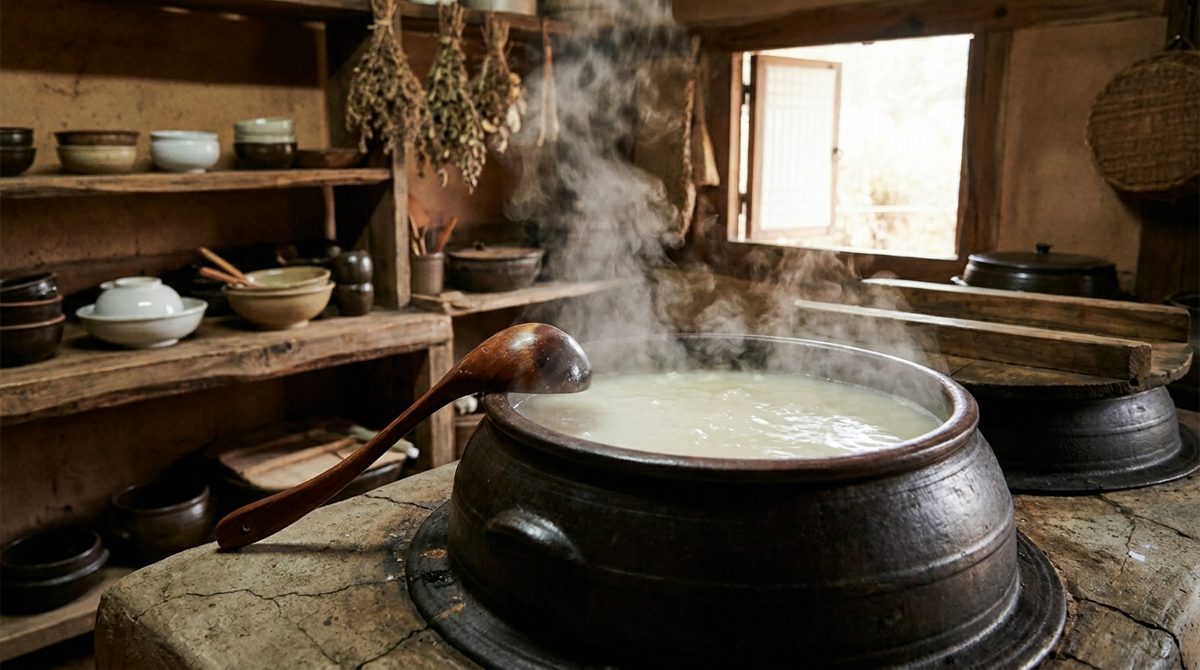
Seolleongtang is Korea’s original slow food: ox leg bones, knee joints, and sometimes brisket are simmered in water for eight to eighteen hours, often overnight, until collagen and marrow break down into the broth and turn it a cloudy, milky white. No dairy is involved at any stage — the color comes purely from emulsified bone fat and collagen, the same chemistry behind Japanese tonkotsu or Vietnamese pho broths made with bones instead of meat cuts.
The dish traces back to Seonnongdan, a royal ritual altar in Joseon-era Seoul where the king prayed for good harvests and, according to legend, fed the gathered crowd a large ox-bone stew afterward. Whether or not that origin story is fully accurate, seolleongtang has been a working-class staple in Seoul for over a century — the kind of dish sold at markets and 24-hour diners near bus terminals, train stations, and hospitals, because it’s cheap, filling, and easy on the stomach at any hour.
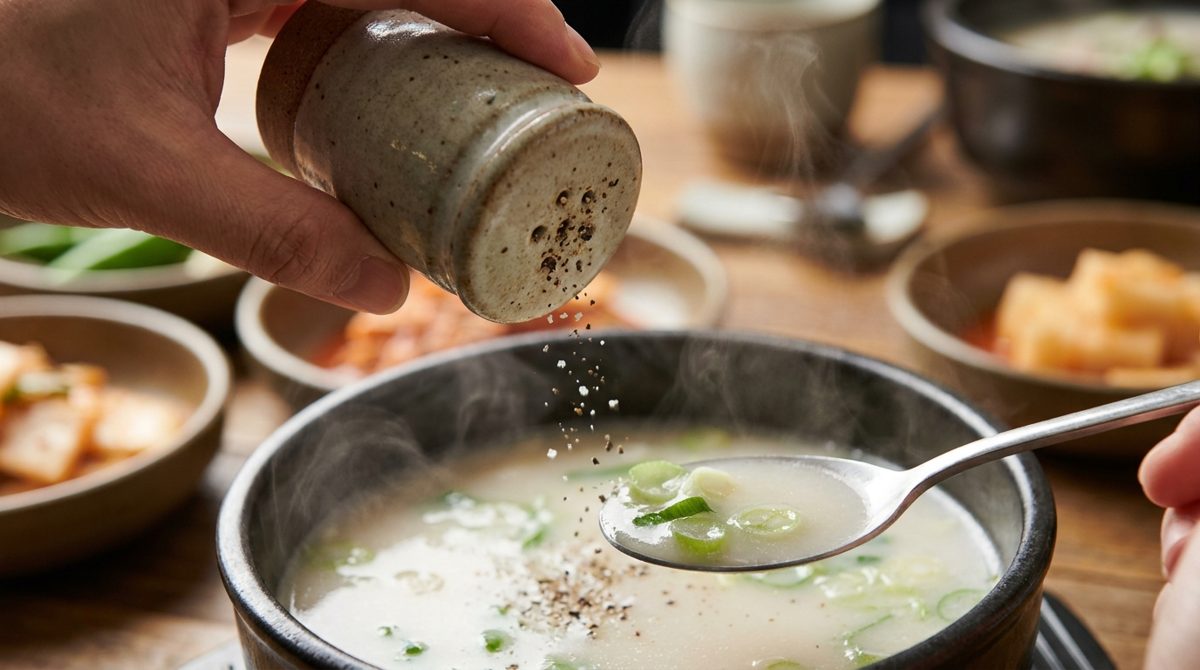
Unlike most Korean soups, seolleongtang arrives completely unseasoned. The broth is deliberately bland when it reaches your table — you are expected to add salt, ground black pepper, and chopped scallion yourself, adjusting it exactly to your taste. This is normal, not a kitchen mistake, and it’s one of the first things that surprises first-time visitors.
Seolleongtang also carries a specific cultural role that goes beyond simple nourishment. It’s considered a classic hangover cure and a recovery food for the sick, prescribed by grandmothers the way chicken soup is prescribed in the West. Hospitals near major medical centers in Seoul are often surrounded by seolleongtang diners for exactly this reason, and it’s common to see solo diners, night-shift workers, and elderly regulars eating quietly at the counter at any hour. There’s no ceremony to it — it’s the opposite of a special-occasion dish, which is part of its charm.
What Does Seolleongtang Taste Like?
On its own, plain seolleongtang tastes mild, faintly nutty, and deeply savory — closer to a clean beef stock than anything sharp or gamey. It has body and richness from the collagen but almost no salt. Once you season it with salt, pepper, and scallion, it becomes warm, comforting, and rounded, similar in spirit to a good pho or a Japanese tonkotsu ramen broth, but simpler and less sweet.
The texture is what surprises most first-timers: the broth feels almost silky or slightly thick on the tongue, from all that dissolved collagen, without ever tasting fatty or heavy. Thin slices of boiled brisket or other beef cuts float in the bowl, tender enough to cut with a spoon. There’s no sharp seasoning fighting for attention — the appeal is subtlety, warmth, and the sense that you’re eating something that took real time to make.
Is Seolleongtang Spicy?
No — seolleongtang itself has zero spice. It is one of the mildest hot dishes in Korean cuisine, which is exactly why it’s a favorite for hangovers, cold weather, and upset stomachs. Any heat you experience comes entirely from the kkakdugi (cubed radish kimchi) served on the side, which you eat between spoonfuls rather than mix into the broth. If you want it fully mild from start to finish, simply skip the kkakdugi or ask for less.
Seolleongtang Dietary Guide: Vegetarian, Vegan, Halal & Allergens
Seolleongtang is one of the most allergen-simple dishes in Korean cuisine in its base form, but it fails hard on vegetarian, vegan, and — usually — halal certification. Here’s the honest breakdown.
| Ingredient concern | In standard seolleongtang? | How to handle |
|---|---|---|
| Beef | Yes — the entire dish is beef bone broth | No substitute exists; this is not a dish you can order meat-free |
| Pork | No | Not used in traditional recipes |
| Dairy | No — despite the milky white appearance | The color is from bone collagen and marrow fat, not milk or cream; safe for dairy-allergic and lactose-intolerant travelers |
| Soy | Often, via the dipping soy sauce you add yourself | Ask for “ganjang ppaego juseyo” (soy sauce on the side, or skip it) if avoiding soy |
| Wheat / gluten | Only if noodles (dangmyeon or wheat noodles) are added | Order the plain rice version, not the noodle variant, to avoid wheat |
| Egg | Rarely | Not a standard ingredient |
| Sesame | Sometimes, as a light garnish | Ask for no sesame oil if needed |
| Shellfish / fish | No | Purely a beef-based broth |
| Alcohol | No | None used in preparation |
Is Seolleongtang Vegetarian or Vegan?
No, and there’s no workaround. Seolleongtang’s entire identity is the ox bone broth — remove that and there is no dish left. Unlike bibimbap or japchae, you cannot simply ask the kitchen to leave out the meat, because the “meat” here is the broth itself, extracted over many hours of simmering. Vegetarian and vegan travelers should skip seolleongtang entirely and look for plant-based Korean soups instead, or a vegetable-forward dish like bibimbap.
Is Seolleongtang Halal?
Conditionally, in principle, but rarely in certified practice. Seolleongtang contains no pork, no alcohol, and no non-halal animal products by recipe — it’s beef bones and water, plus salt, pepper, and scallion added at the table. If the beef itself is halal-slaughtered, the dish itself has no religious obstacle. The catch: almost no traditional seolleongtang restaurant in Korea sources halal-certified beef or holds halal kitchen certification, so you cannot assume any given bowl is halal-compliant just because the recipe allows it. Muslim travelers should look specifically for restaurants with halal certification or a halal-friendly rating on the Korea Tourism Organization’s VisitKorea site rather than assuming any seolleongtang shop qualifies.
How to Order Seolleongtang in Korean (+ 2026 Prices)
Seolleongtang shops are usually simple, fast-turnover diners, often open 24 hours. Ordering is quick and the staff are used to solo diners.
| What you want | Say this | Romanized |
|---|---|---|
| One seolleongtang, please | 설렁탕 하나 주세요 | seolleongtang hana juseyo |
| Rice on the side (not mixed in) | 밥 따로 주세요 | bap ttaro juseyo |
| Extra rice | 공기밥 추가요 | gonggibap chuga-yo |
| Less salty / no salt added | 싱겁게 해주세요 | singeopge haejuseyo |
| No soy sauce | 간장 빼고 주세요 | ganjang ppaego juseyo |
What it costs in 2026: a standard bowl of seolleongtang runs ₩11,000–₩14,000 in Seoul, making it one of the cheaper hot, filling meals in the city — often less than a coffee-and-pastry combo. Rice and kkakdugi are typically included in the price, and kkakdugi refills are usually free. Some diners charge slightly extra for brisket-heavy or premium bowls. Since these shops move fast and serve solo diners constantly, tipping isn’t expected — see our Korean dining etiquette guide for more on that.
How to Eat Seolleongtang Like a Local
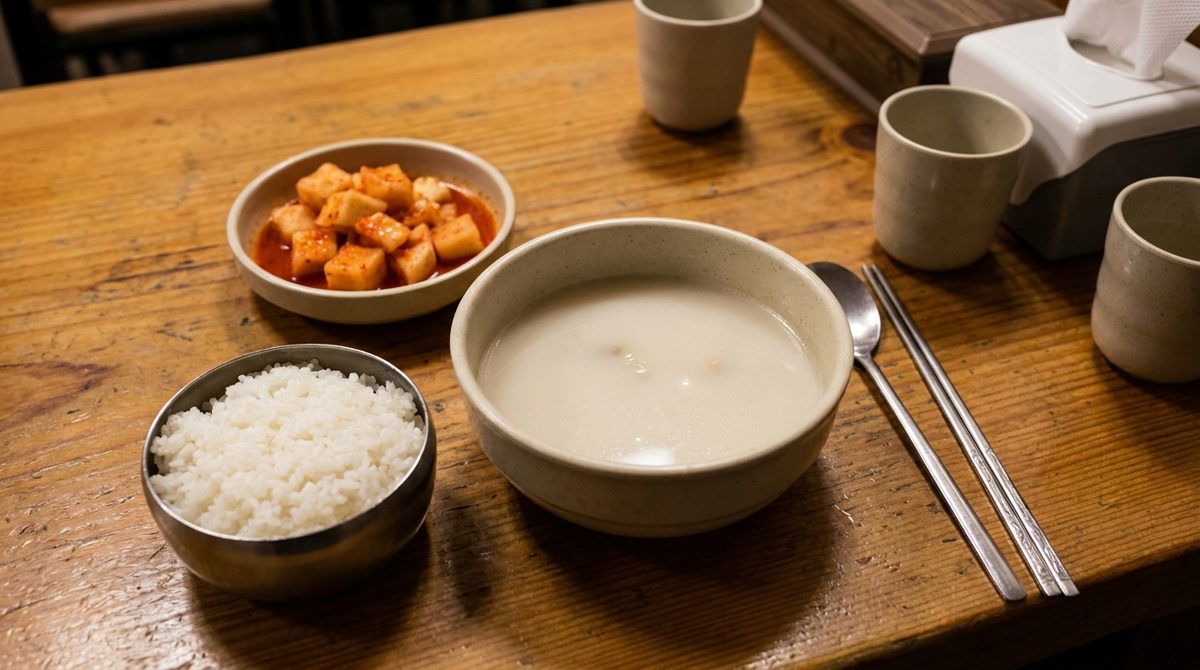
The bowl arrives bland on purpose. Add a pinch of salt, a shake of black pepper, and the chopped scallion provided (either already in the bowl or on the side), then stir and taste as you go — Koreans season to their own preference rather than eating it as-is. Some diners serve the rice already submerged in the broth; others serve it separately in a small bowl so you control how much goes in, called “tarodapbap” style — either is normal, and you can ask for whichever you prefer.
Eat the kkakdugi (cubed radish kimchi) as a bite between spoonfuls of soup rather than mixing it in — its crunch and mild heat cut through the richness of the broth. Some regulars pour a splash of the kkakdugi brine into the soup for extra tang; it’s a common local habit, not a mistake if you see someone doing it. Don’t be shy about asking for more banchan or scallion — refills are free.
Seolleongtang is also a genuinely comfortable solo meal. Counter seating and single-portion bowls mean nobody looks twice at a party of one, which makes it one of the least awkward restaurant experiences for travelers eating alone in Korea. Because it’s simmered and reheated rather than cooked to order, service tends to be fast — you can be in and out within twenty minutes, which is part of why it’s so popular near transit stations and workplaces.
Types of Seolleongtang You’ll See on Menus
Seolleongtang (설렁탕) — the classic version, pure ox bone broth with rice, unseasoned at the table. Tojongtang / gomtang (곰탕) — a close cousin, sometimes made with a shorter simmer time or a mix of bone and meat cuts, often lighter and clearer than seolleongtang, though the two names are frequently used interchangeably by restaurants. Ttarodapbap-style seolleongtang — rice served separately from the broth so you control how much rice goes in, versus versions where rice is already mixed into the bowl. Seolleongtang with noodles (dangmyeon or somyeon added) — a heartier variant found at some diners, adding glass or wheat noodles to the broth for extra bulk. Premium / brisket-topped bowls — some restaurants add extra slices of boiled brisket (yangji) on top for a few thousand won more, popular with bigger appetites.
Where to Try Seolleongtang
Seolleongtang is old-Seoul comfort food, and some of the city’s most famous specialists have been simmering the same broth recipe for generations near Jongno and other historic downtown districts — worth seeking out if you want the dish at its most traditional. It’s also a fixture of 24-hour diners near transit hubs, hospitals, and business districts, making it one of the easiest hot meals to find at 3am after a late KTX arrival or a long night out.
You don’t need to hunt down a specific famous shop to eat it well — unlike more elaborate dishes, seolleongtang quality is fairly consistent because the format is simple and the recipe has barely changed in decades. Look for a diner with a long simmering pot visible near the entrance or a queue of local regulars at lunchtime; both are reliable signs of a well-run kitchen. If you’re exploring Seoul’s older markets and street food scene, check our Seoul food guide for market-adjacent picks, and if the milky broth style appeals to you, our samgyetang guide covers Korea’s other famous long-simmered soup, made with whole chicken and ginseng instead of ox bone. Wikipedia’s entry on seolleongtang also has more on its history if you want to dig deeper before your trip.
Seolleongtang FAQ
Is seolleongtang made with milk or dairy?
No. Despite the milky-white color, seolleongtang contains zero dairy. The color comes from collagen and fat rendered out of ox bones during many hours of simmering, the same way tonkotsu ramen broth turns white from pork bones. It’s safe for people with dairy allergies or lactose intolerance.
Why is seolleongtang served without seasoning?
It’s tradition, not an oversight. Serving the broth plain lets each diner control their own salt, pepper, and scallion levels exactly to taste — a practice that dates back to the dish’s working-class diner origins, where one big pot of broth served many different palates.
Is seolleongtang the same as gomtang?
They’re closely related but not identical. Both are long-simmered beef bone broths, but gomtang is traditionally made with a shorter simmer and can include more meat cuts, giving a slightly clearer broth. In practice, many Korean restaurants use the two names loosely and the dishes taste very similar.
Is seolleongtang halal?
It’s beef-based with no pork or alcohol, so the recipe itself has no religious obstacle if the beef is halal-sourced. However, few if any traditional seolleongtang restaurants carry halal certification, so Muslim travelers should specifically seek out certified or halal-friendly-rated restaurants rather than assume any bowl qualifies.
How much does seolleongtang cost in Korea in 2026?
Expect to pay ₩11,000–₩14,000 for a standard bowl in Seoul, including rice and kkakdugi — one of the more budget-friendly hot, filling meals available in the city.
The Verdict: Should You Order It?
Yes — especially on a cold day, after a late flight, or when your stomach needs something gentle and warm. Seolleongtang is mild, filling, cheap, and available at nearly any hour in Seoul, making it one of the most practical comfort foods for travelers. Just remember: it’s not vegetarian, not vegan, and not automatically halal-certified even though it’s beef-based — season it yourself, add the kkakdugi on the side, and you’ve got a real taste of old Seoul. Ready to decode the rest of the menu? Explore our full Korean Food Decoder for every major dish explained with spice levels, allergens, and ordering phrases.