If you’ve walked through a Seoul department store this summer, you’ve probably noticed something odd: the luxury floors are packed, and most of the shoppers aren’t speaking Korean. The Korea luxury shopping boom of 2026 is real, it’s record-breaking, and it’s being driven by a combination of a historically weak won and a tourist wave that keeps setting new highs. For anyone curious why Seoul suddenly feels like a duty-free megacity, here’s what’s actually happening.
Table of Contents
- What’s Happening in Korea Right Now?
- The Background: Why Did This Start?
- What Are Koreans Actually Saying?
- What This Reveals About Korean Culture
- How Does This Compare Internationally?
- Conclusion
What’s Happening in Korea Right Now?
The numbers behind Korea’s luxury shopping boom are hard to overstate. Korea drew 4,759,471 foreign visitors in the first quarter of 2026 alone, up 23% from a year earlier and a record high, according to Seoul Economic Daily. Those tourists aren’t just sightseeing — they’re spending aggressively on high-end goods. Lotte Department Store’s foreign sales for January through May 2026 surged 110% from a year earlier, and Korea’s top three department store chains — Lotte, Shinsegae, and Hyundai — are on pace to each cross 1 trillion won in foreign sales, possibly as early as the third quarter.
The luxury category specifically is where the growth gets extreme. Lotte’s fashion category foreign sales jumped 180% in the first quarter alone, while Shinsegae’s main store saw foreign sales growth of 255.8% in the luxury category. About 40% of all foreign-visitor spending at Korean department stores is now concentrated in luxury brands — handbags, watches, and designer fashion — rather than the cosmetics and skincare hauls foreign shoppers were famous for a decade ago.
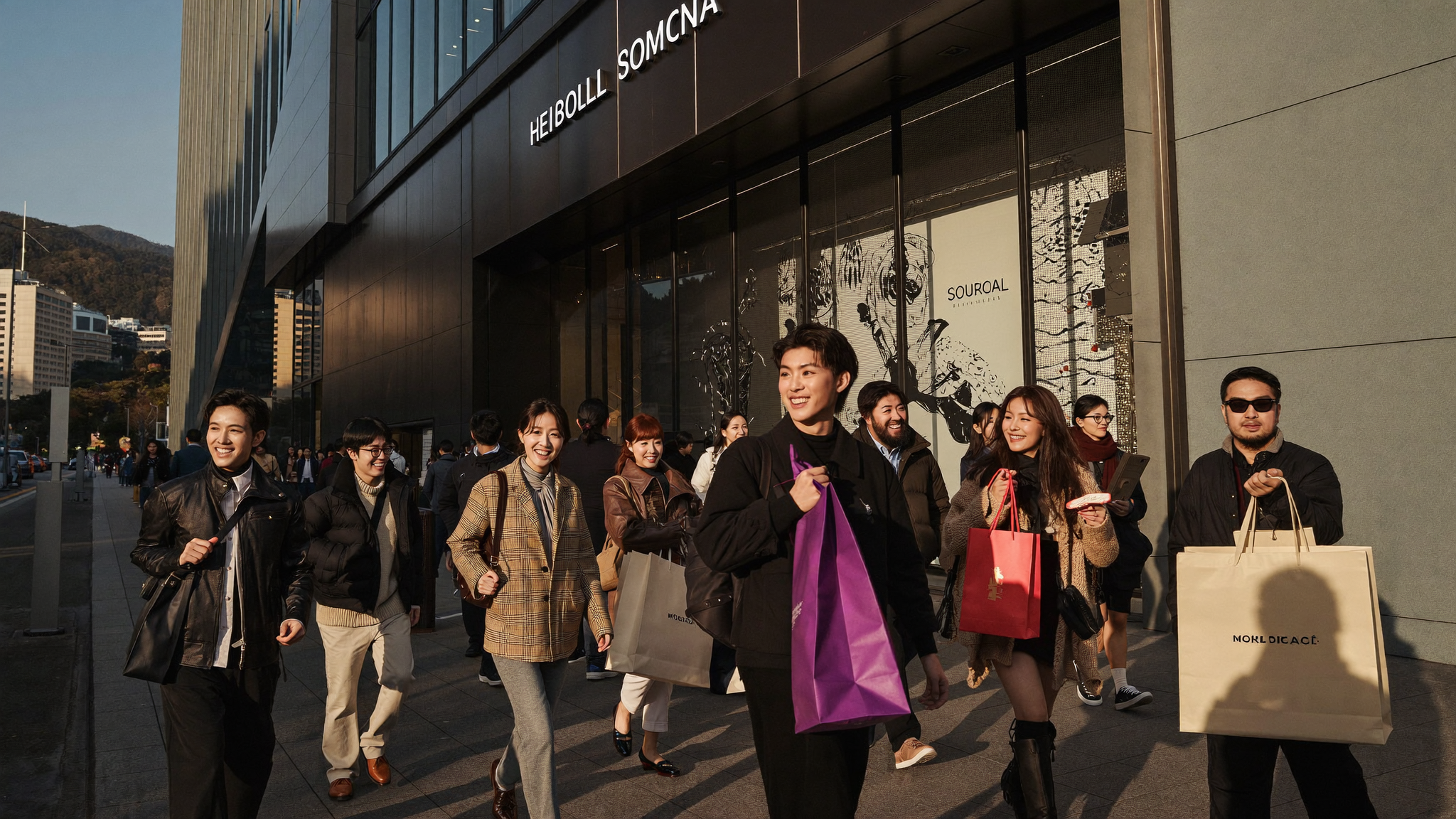
Department stores have noticed, and they’re chasing this new customer aggressively. Duty-free counters, multilingual staff, tax-refund kiosks, and even dedicated foreigner-only lounges have expanded across Myeongdong, Gangnam, and the main Lotte and Shinsegae flagship stores. For travelers, this means faster tax refunds, English/Chinese/Japanese-speaking staff on the luxury floors, and noticeably longer lines at the popular handbag counters than you might remember from a pre-pandemic trip.
The Background: Why Did This Start?
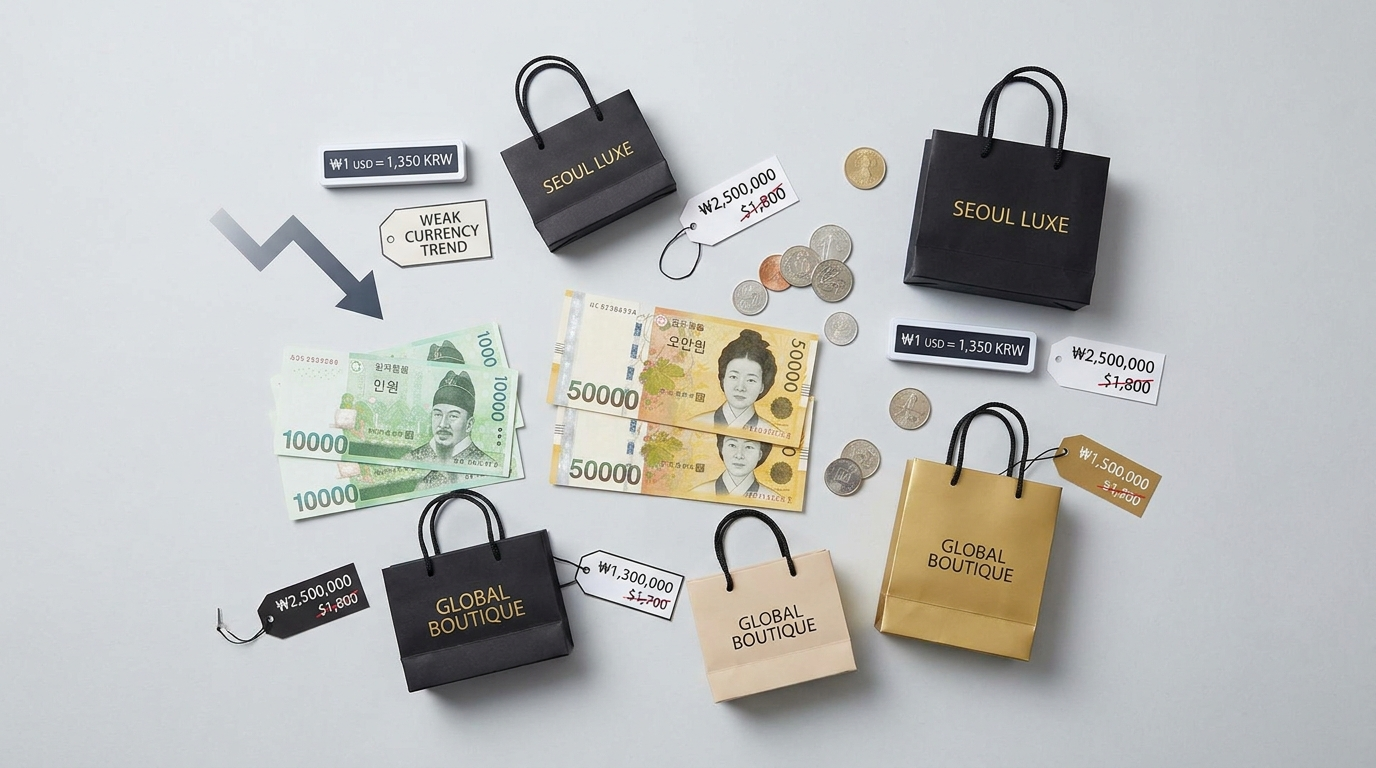
Two forces are compounding to create this moment. The first is currency: the Korean won has weakened significantly against the dollar, euro, yen, and yuan over the past couple of years, which means anything priced in won looks cheaper to a foreign shopper converting back to their home currency — even if the local, won-denominated sticker price hasn’t changed at all. A designer bag that costs the same number of won it did two years ago is now meaningfully less expensive for a tourist paying in dollars or euros.
The second force is Korea’s tourism recovery, which has gone well past “recovery” and into genuinely new territory. Visitor numbers have been boosted by the ongoing global popularity of K-pop, K-dramas, and Korean beauty and fashion trends — what industry watchers call the K-wave — which has turned Korea from a regional travel destination into a bucket-list stop for shoppers from Southeast Asia, China, Japan, the Middle East, and increasingly the West. As KED Global reported, the backdrop for Korean department stores “could hardly be better”: a weak currency, a tourism boom, and rising global cultural cachet all arriving at the same time.
There’s also a domestic piece to the story. Department stores had been leaning on foreign tourists to offset softer domestic consumer spending even before this year’s surge, actively marketing toward international shoppers as insurance against a slower Korean economy. When tourist arrivals then over-delivered in early 2026, that existing infrastructure — sales staff, marketing, tax-refund systems — was already in place to capture the demand.
What Are Koreans Actually Saying?
Reactions inside Korea are mixed, and mostly practical rather than resentful. Retail investors have cheered the trend, with department store stocks surging on the back of the tourist-driven sales figures — a genuine “wealth effect” story that’s shown up repeatedly in Korean business coverage this year. Store employees on the luxury floors describe a noticeably different clientele than five years ago: fewer bulk cosmetics buyers, more people specifically hunting one or two high-ticket designer items, often guided by resale value and investment potential as much as personal use.
There’s also a quieter undercurrent of concern. Some Korean commentators have noted the awkwardness of department stores openly courting foreign spending to compensate for local consumers who are pulling back — a signal, some argue, that domestic wage growth and consumer confidence haven’t kept pace with the country’s booming export and tourism sectors. It’s less a controversy than a backdrop hum: pride in Korea’s global cultural and retail relevance, mixed with an awareness that the boom is partly a symptom of a stretched domestic economy.
What This Reveals About Korean Culture
The luxury shopping boom is really a story about how thoroughly Korea has repositioned itself in the global imagination over the past decade. A generation ago, international shoppers came to Seoul for affordable skincare and cosmetics. Now they come because Seoul itself — its fashion sense, its celebrities, its department store culture — is treated as aspirational. Buying a bag at Shinsegae isn’t just a purchase; for many tourists, it’s a way of participating in the K-wave they’ve been consuming online for years.
It also reflects something specifically Korean about retail as spectacle. Korean department stores have long treated the shopping experience itself as entertainment — elaborate seasonal displays, rooftop gardens, gourmet food halls, and now increasingly multilingual concierge service built around the assumption that a store visit is itself a tourist attraction, not just a transaction. That instinct has positioned Korean retailers unusually well to catch this wave compared to more purely transactional shopping districts elsewhere.
How Does This Compare Internationally?
Currency-driven luxury tourism isn’t new — Japan saw a similar boom during the weak-yen years, with Tokyo’s Ginza district drawing huge numbers of Chinese and Southeast Asian shoppers hunting for bargains on the same designer brands sold at home for more. Korea’s version follows a similar currency logic but adds a distinct cultural pull that Japan’s boom didn’t lean on as heavily: the K-wave. Where Tokyo’s luxury boom was largely about price arbitrage, Seoul’s is price arbitrage plus a genuine cultural draw, which analysts note may make it more durable even if the won eventually strengthens.
The scale also stands out. Foreign sales growth rates above 100% at major department store chains, and luxury-category growth exceeding 250% at flagship stores, are figures that outpace most other Asian luxury tourism markets currently, according to The Herald Business.
Conclusion
Whether the won stays weak or eventually rebounds, 2026 will likely be remembered as the year Korea’s department stores went fully global, with foreign shoppers driving growth rates domestic retail hasn’t seen in years. If you’re planning a shopping trip yourself, exchange rates, tax-refund thresholds, and store-specific foreigner perks are all worth checking before you go.
For more on making the most of a Seoul shopping trip, check out our Myeongdong Travel Guide, browse the Yongsan Electronics Market guide for tech shopping, or use our Korea Shopping Cost Calculator to budget your trip.