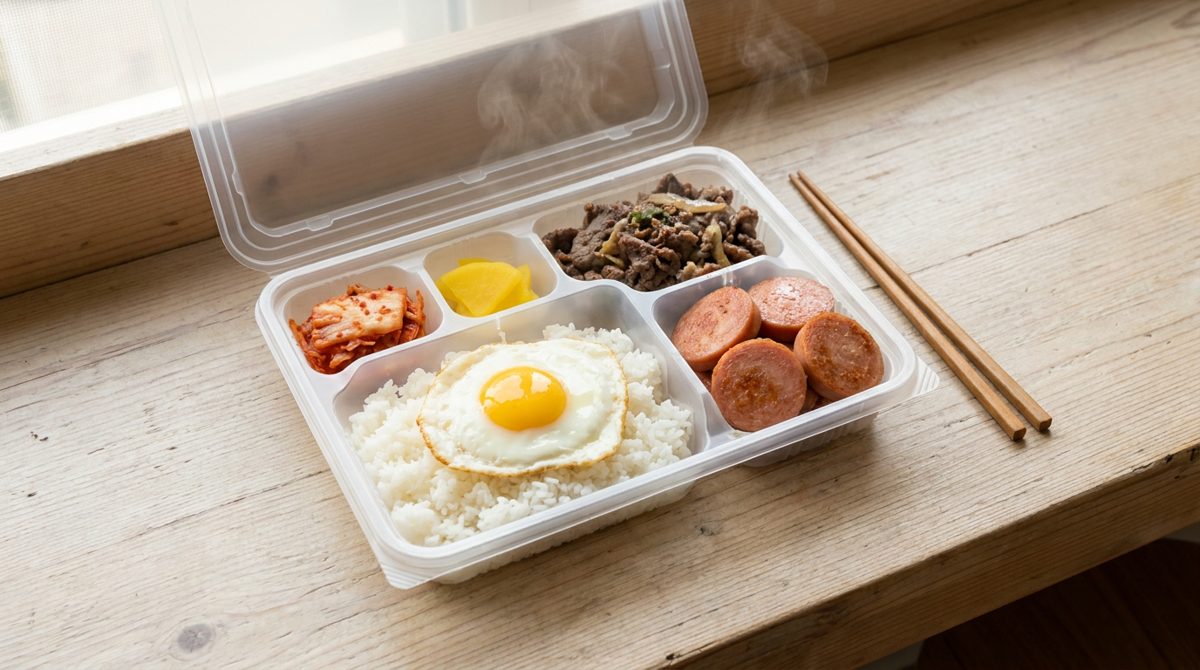
Standing in front of a chilled shelf full of plastic trays, wondering what everyone’s grabbing for lunch? That’s dosirak (도시락) — the Korean convenience store lunch box, a compartmentalized tray of rice plus 3 to 8 side dishes and proteins like bulgogi, fried chicken, grilled mackerel, kimchi, and rolled egg. It costs ₩3,300–₩6,700, heats in under three minutes at the in-store microwave, and might be the single best budget meal in the entire country. Here’s everything you need to know before you grab one.
Table of Contents
- Dosirak Quick Facts
- What Is a Convenience Store Dosirak, Exactly?
- Where to Find Dosirak In-Store
- Popular Dosirak Types & 2026 Prices
- Seasonal & Limited-Edition Dosirak
- How to Heat and Eat Your Dosirak
- CU vs GS25 vs 7-Eleven: Best Chains for Dosirak
- The Late-Night & Solo Traveler Favorite
- Nutrition, Calories & Shelf Life
- Etiquette & Practical Tips
- Dosirak FAQ
Dosirak Quick Facts
| Item | Details |
|---|---|
| Korean name | 도시락 (dosirak) — “lunch box” |
| Pronunciation | doh-shee-rock |
| What it is | Compartmentalized tray: rice + 3–8 side dishes/proteins |
| Where to find it | Refrigerated/chilled shelf, usually near the ready-meals or noodle section |
| Price (2026) | ₩3,300–₩6,700 depending on protein and number of compartments |
| Best chains | CU (meaty, celebrity-chef collabs), GS25 and 7-Eleven both competitive |
| How to heat | Ask staff (“데워주세요”) or use the free self-service microwave |
| Utensils | Disposable chopsticks/spork, often included or sold separately |
| Best for | Budget lunches, late-night meals, solo travelers, hostel dinners |
What Is a Convenience Store Dosirak, Exactly?
Dosirak simply means “lunch box” in Korean, and it’s one of the great quiet victories of modern convenience store food. Instead of one bland pre-made sandwich, you get an entire balanced meal: a mound of rice next to three, five, or even eight small compartments of side dishes. A typical tray might pair bulgogi (marinated beef) with a piece of fried chicken, seasoned spinach, kimchi, pickled radish, and a slice of rolled egg — all sealed under a clear plastic lid.
These aren’t sad airplane meals. Korean convenience store chains treat dosirak as a genuine culinary category, competing on flavor the way Western chains compete on burgers. Recipes rotate seasonally, some are developed with celebrity chefs or YouTubers, and a well-loved dosirak can sell out of a busy store by early afternoon. For travelers, it solves a real problem: a filling, varied, cooked-tasting meal for less than the price of a coffee back home, available 24 hours a day at literally every corner.
The convenience store version has roots in Korea’s older bento-style packed lunches, which office workers and students once brought from home or ordered from small dosirak-delivery shops near schools and factories. Chains modernized the format in the 2000s and 2010s, adding better refrigeration, tighter food-safety standards, and a rotating menu that now changes with the seasons — cold noodle dosirak in summer, stew-adjacent hot boxes in winter. What used to be a humble packed lunch is now a full retail category with its own fan base and review culture online.
Where to Find Dosirak In-Store
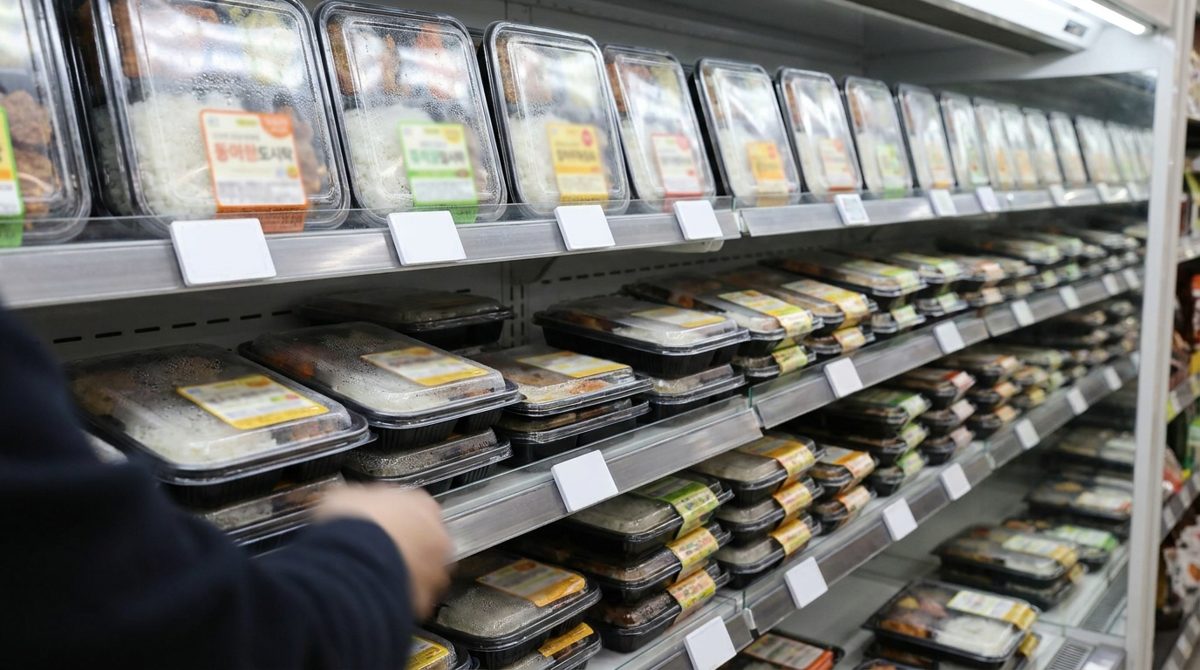
Every major chain stocks dosirak on a dedicated refrigerated shelf, typically along the back or side wall near the ready-to-eat section — look for stacked plastic trays with a colorful sticker showing the contents. It sits alongside triangle kimbap and pre-made sandwiches, but dosirak trays are noticeably larger and heavier, with visible compartments through the clear lid.
Price and expiry are printed directly on the sticker, along with a “sell by” time — Korean convenience stores rotate stock fast, so a dosirak bought at 6pm was very likely made and delivered that same morning. If you’re also curious about everything else on those shelves, our full Korean convenience store food guide covers the other must-try items, and the Korean Food Decoder explains individual side dishes like bulgogi and kimchi in more detail.
Popular Dosirak Types & 2026 Prices
Prices scale with protein quality and compartment count, not store location — a CU dosirak in Seoul costs the same as one in Busan. Here’s what you’ll typically see on the shelf in 2026:
| Dosirak type | Typical contents | 2026 price |
|---|---|---|
| Basic bulgogi dosirak | Rice, bulgogi, 3–4 simple sides | ₩3,300–₩4,000 |
| Fried chicken dosirak | Rice, fried chicken pieces, egg roll, vegetables | ₩4,200–₩5,000 |
| Grilled mackerel dosirak | Rice, grilled mackerel fillet, kimchi, pickled sides | ₩4,000–₩4,800 |
| “Baekjeong”-style meat dosirak | Rice, multiple meats (pork belly, bulgogi), 6–8 sides | ₩5,500–₩6,700 |
| Mixed/deluxe dosirak | Rice, 2 proteins, 6+ side dishes, sauce packet | ₩5,000–₩6,500 |
The “baekjeong”-style meat-heavy boxes are the ones locals talk about most — CU in particular has run popular collaborations with celebrity chefs and YouTubers built around grilled-meat, Korean BBQ-style dosirak with far more protein compartments than a basic box. If you want the most food for your won, these premium trays are worth the extra ₩1,000–₩2,000.
Seasonal & Limited-Edition Dosirak
Dosirak menus rotate constantly. Chains typically refresh their lineup every few weeks, swapping in seasonal proteins, regional specialties, or tie-ins with a popular drama, athlete, or YouTuber. Summer often brings cold noodle or lighter fish-based boxes; winter favors heavier, stew-adjacent trays with more rice and richer sauces. Limited-edition dosirak usually gets a bright, eye-catching sticker on the lid and disappears from shelves within a month, so if you spot something that looks unusual, it’s worth grabbing before it’s gone.
Store apps make tracking these releases easy even if you don’t read Korean well — GS25’s “우리동네GS” and CU’s “포켓CU” apps post new dosirak launches, photos, and sometimes coupons or stamp rewards. Scanning the app before you shop can save you from wandering the shelf comparing five nearly identical boxes.
How to Heat and Eat Your Dosirak
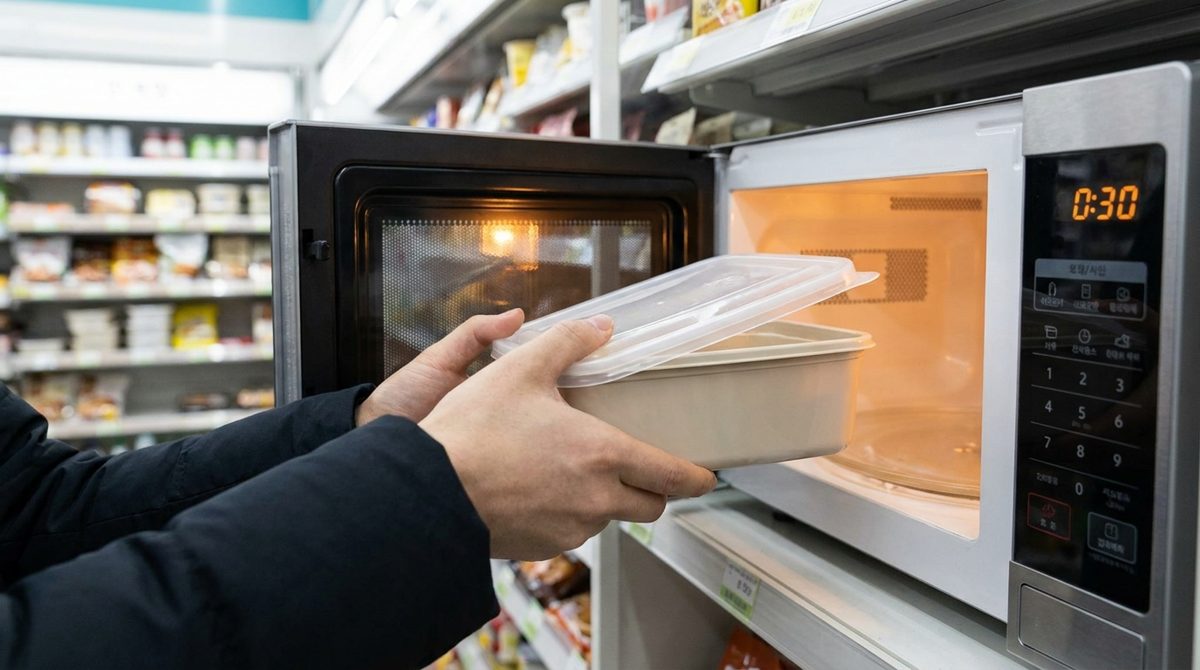
Buy your dosirak at the counter like anything else. If you want it hot — and you should, almost every dosirak is meant to be eaten warm — you have two options. Tell the cashier “데워주세요” (dae-wo-ju-se-yo, “please heat it up”) and they’ll pop it in the staff microwave behind the counter, handing it back in about 90 seconds to 2 minutes. This is the easiest option for first-timers since you don’t need to find or operate anything yourself.
The second option is the self-service microwave, which almost every store keeps near the eating counter. Peel back just the corner of the plastic film (don’t remove it fully — it stops splatter), place the tray inside, and run it for roughly 2–3 minutes depending on the microwave’s wattage — most stores post a suggested time on a sign taped to the machine. Stir the rice halfway through for even heating. Once it’s done, peel the lid fully, grab chopsticks from the dispenser nearby, and eat standing or seated at the store’s counter.
CU vs GS25 vs 7-Eleven: Best Chains for Dosirak
Korea’s convenience store landscape is dominated by a handful of giants, and dosirak quality is one of the few areas where they genuinely compete on taste rather than just price. CU (≈18,700 stores nationwide) has built the strongest reputation for meaty, hearty dosirak, frequently partnering with celebrity chefs and popular YouTubers on limited-run “baekjeong”-style meat-heavy boxes that sell out fast. If you only try one chain’s dosirak, make it CU.
GS25 (≈18,800 stores, the largest chain by count) and 7-Eleven both run competitive dosirak lines too, often leaning into seasonal specials, seafood-based trays, or collaborations with regional restaurants. emart24 rounds out the field with a smaller footprint but solid basic options. In practice, all four chains sell perfectly good dosirak — the differences show up most in limited-edition premium boxes, so it’s worth checking the shelf sticker for anything marked as a collaboration or new release.
If you’re staying more than a few days, it’s worth popping into all three or four chains near your accommodation rather than sticking to whichever one is closest. Store layouts and portion sizes vary slightly even within the same chain, and a quick five-minute comparison walk often reveals which nearby location restocks the good stuff earliest in the day. Morning restocks tend to happen between 7am and 10am, so that’s the best window for the widest selection.
The Late-Night & Solo Traveler Favorite
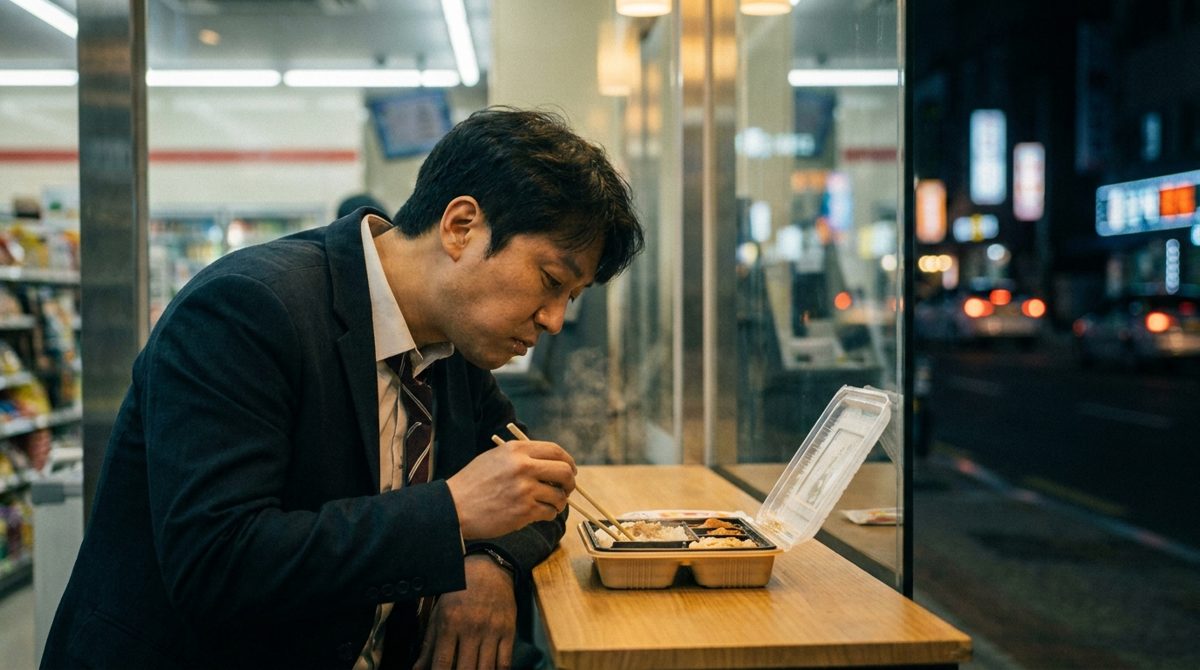
Dosirak earns its cult status after dark. Korean convenience stores never close, and the eating counter — with hot water, disposable utensils, and often a microwave — stays open around the clock. That makes dosirak the default cheap, filling meal after a night of drinking, after a late flight lands, or for solo travelers who don’t want to sit alone in a restaurant.
Grab a dosirak, a can of beer if you’re of legal age, and a bottle of water, heat the tray yourself, and eat at the outdoor plastic table or indoor counter alongside off-duty workers and students doing exactly the same thing. It’s one of the most authentic, unpretentious dining experiences in Korea, and it costs less than a single subway ride in most other countries.
It’s also a lifesaver for jet-lagged travelers landing on a red-eye or arriving after restaurants have closed. Airports and transit hubs feed straight into 24-hour convenience stores, so a hot dosirak can genuinely be your first proper meal in Korea, eaten within minutes of clearing customs. No reservation, no menu language barrier, no tipping — just point, pay, heat, and eat.
Nutrition, Calories & Shelf Life
Most dosirak run between 500 and 850 kcal depending on protein and portion size, with basic bulgogi boxes on the lower end and premium meat-heavy trays on the higher end. Rice makes up the bulk of the calories, with sides adding protein, fiber from vegetables, and sodium from soy-based seasonings — Korean convenience store meals in general trend salty, so don’t expect a light diet meal even from the smaller boxes.
Shelf life is short by design: dosirak are made fresh daily and typically carry a same-day or next-day expiration printed on the sticker. Buy one close to its sell-by time and it may already be discounted with a yellow or red markdown sticker — a good way to eat well for even less. Always check the date before buying, and eat it the same day; these are not meant to be stockpiled in a hostel fridge for later in the week.
Etiquette & Practical Tips
A few small habits will make you look like a regular instead of a confused tourist. Peel the plastic film off carefully and dispose of it in the trash bins provided at the eating counter — never leave trays or wrappers on the table. Chopsticks or a spork usually come free with the dosirak, but grab an extra pair from the dispenser if the tray didn’t include one; some premium boxes charge a small fee separately.
If you’re eating at the counter, it’s normal to stand rather than sit, especially during lunch rush. Keep noise low, return your tray to the designated bin (not the regular trash) if one is marked, and don’t linger at the counter if the store is busy — it’s meant for quick meals, not long hangouts. For more on these unspoken rules, see our Korean dining etiquette guide, and if you want a hot noodle to pair with your dosirak, check out our convenience store ramyeon guide — the two are a classic combo.
Payment is simple everywhere: cash, T-money transit cards, and both Visa and Mastercard are accepted at essentially every register nationwide, so there’s no need to hunt for exact change. If a dosirak is part of a 1+1 or 2+1 promotion (common on slower-moving basic boxes near closing time), the discount applies automatically at checkout — the receipt will show the free item ringing up at ₩0, so don’t worry about asking for it manually.
One more small courtesy: if you’re eating at a shared indoor counter during a busy lunch rush, it’s polite to eat reasonably quickly and free up the seat rather than treat it as a café table. Koreans themselves usually eat a dosirak in ten to fifteen minutes flat — it’s designed as a fast, functional meal, not a leisurely sit-down experience, and matching that pace will make you blend right in.
Dosirak FAQ
What is dosirak at a Korean convenience store?
Dosirak is a pre-packaged boxed meal sold at every Korean convenience store: rice plus 3 to 8 side dishes and proteins like bulgogi, fried chicken, mackerel, kimchi, and egg roll, all arranged in a compartmentalized plastic tray.
How much does a convenience store dosirak cost in 2026?
Between ₩3,300 and ₩6,700, depending on the protein and number of compartments. Basic bulgogi boxes sit at the lower end; premium “baekjeong”-style meat-heavy dosirak with 6–8 sides cost the most.
How do you heat up a dosirak lunch box?
Ask the cashier to heat it for you by saying “데워주세요” (please heat it up), or use the free self-service microwave near the eating counter that almost every store provides. Peel back a corner of the film first and heat for 2–3 minutes.
Which convenience store has the best dosirak — CU, GS25, or 7-Eleven?
CU has the strongest reputation for meaty, hearty dosirak, including celebrity-chef and YouTuber collaborations on “baekjeong”-style boxes. GS25 and 7-Eleven both offer competitive dosirak lines, so all three are worth checking.
Is convenience store dosirak good for vegetarians or halal travelers?
Most standard dosirak center on meat or fish, so options are limited for vegetarians and halal travelers. Check the shelf sticker for ingredient lists, and look for vegetable-forward or egg-based trays when available; when in doubt, ask staff or check labeling via VisitKorea resources on dietary needs.
The Verdict: Should You Try It?
Absolutely — convenience store dosirak is one of the best value meals in Korea, full stop. It’s filling, varied, available 24 hours, and costs less than a takeout coffee in most Western cities. Grab a CU meat-heavy box for your first try, heat it at the self-service microwave, and eat it at the counter like a local. Want to explore everything else these stores offer? Head over to our full Korean Convenience Store Explorer for the complete lineup of snacks, drinks, and hacks.