Seen bulgogi on every Korean menu and wondered what you’re actually ordering? Bulgogi (불고기, “fire meat”) is Korea’s most famous beef dish: paper-thin slices of beef marinated in a sweet-savory blend of soy sauce, sugar, garlic, sesame oil, and Korean pear, then grilled or pan-cooked with onions and scallions. It’s tender, juicy, almost never spicy — and one of the easiest Korean dishes for any first-timer to love. This decoder gives you the full picture: taste, spice level, allergens, halal and vegetarian answers, real 2026 prices, and exactly how to order bulgogi in Korean.
Table of Contents
- Bulgogi Quick Facts
- What Is Bulgogi, Exactly?
- What Does Bulgogi Taste Like?
- Dietary Guide: Vegetarian, Vegan, Halal & Allergens
- How to Order Bulgogi in Korean (+ 2026 Prices)
- How to Eat Bulgogi Like a Local
- Types of Bulgogi
- Where to Try Bulgogi
- Bulgogi FAQ
Bulgogi Quick Facts
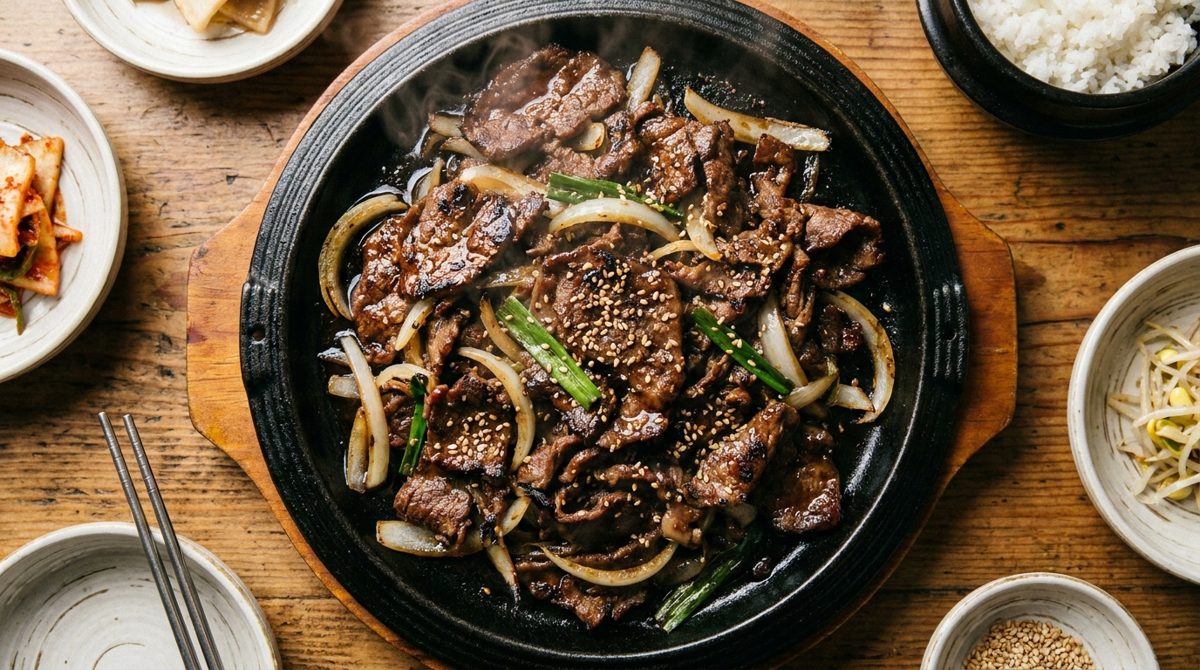
| Item | Details |
|---|---|
| Korean name | 불고기 (bulgogi) — “fire meat” |
| Pronunciation | BOOL-goh-ghee (hard “g”) |
| Type | Marinated grilled beef — shared main dish or rice-bowl topping |
| Spice level | 🌶️ 0–1 / 5 — sweet-savory, not spicy (pork bulgogi is the spicy exception) |
| Price (2026) | ₩12,000–₩16,000 per serving at casual restaurants; ₩20,000+ for hanwoo (Korean premium beef) |
| Vegetarian | ❌ It’s beef — but mushroom bulgogi (beoseot-bulgogi) exists at some restaurants |
| Vegan | ❌ Standard version no; mushroom versions can be, if egg-free and honey-free |
| Halal-friendly | ⚠️ Beef, not pork — friendly IF halal-certified; several halal Korean restaurants in Itaewon serve it |
| Main allergens | Soy, sesame, pear/fruit in the marinade, sometimes wheat (soy sauce) |
| Best for | First-timers, kids, anyone who wants Korean BBQ flavor without any heat |
What Is Bulgogi, Exactly?
Bulgogi is what happens when a culture spends roughly two thousand years perfecting marinated beef. Its ancestor, maekjeok, was skewer-grilled meat eaten in the Goguryeo kingdom era; its more direct parent is neobiani, the delicately sliced, soy-marinated grilled beef served in the Joseon royal court. The modern name says it plainly: bul (fire) + gogi (meat).
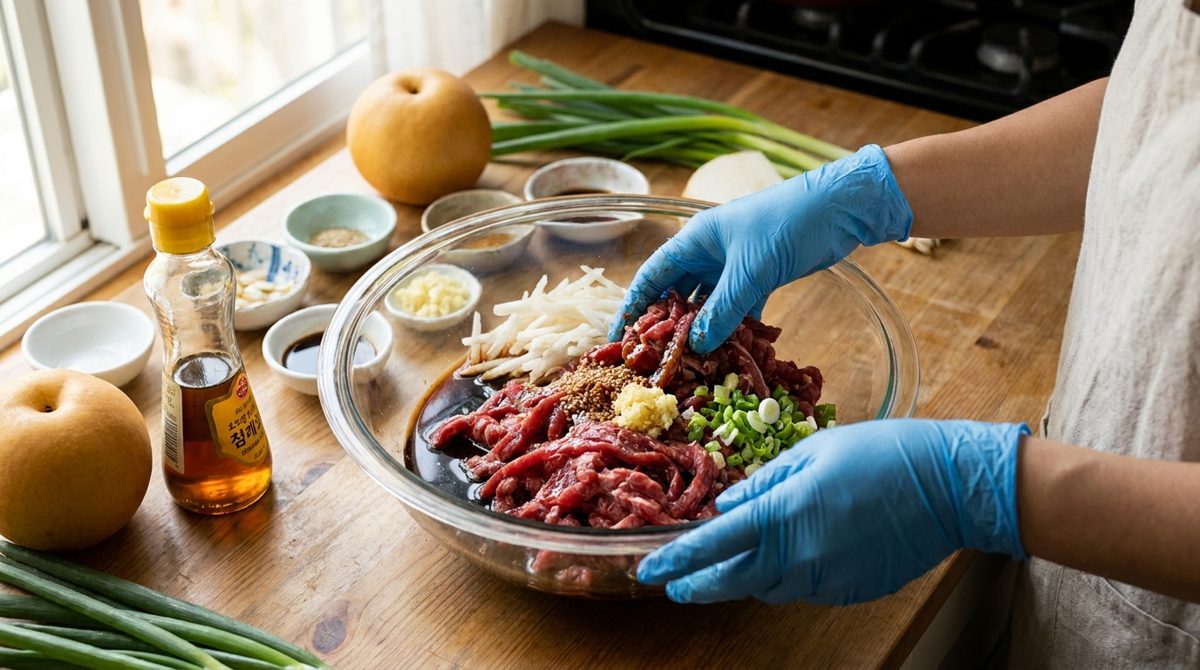
What makes bulgogi different from a Western steak or stir-fry is the marinade. Beef — usually sirloin, ribeye, or brisket sliced almost transparently thin — soaks in soy sauce, sugar, minced garlic, sesame oil, black pepper, and grated Korean pear. The pear is the secret: its enzymes tenderize the meat while adding a gentle fruit sweetness you can’t quite place. The result cooks in minutes and melts rather than chews.
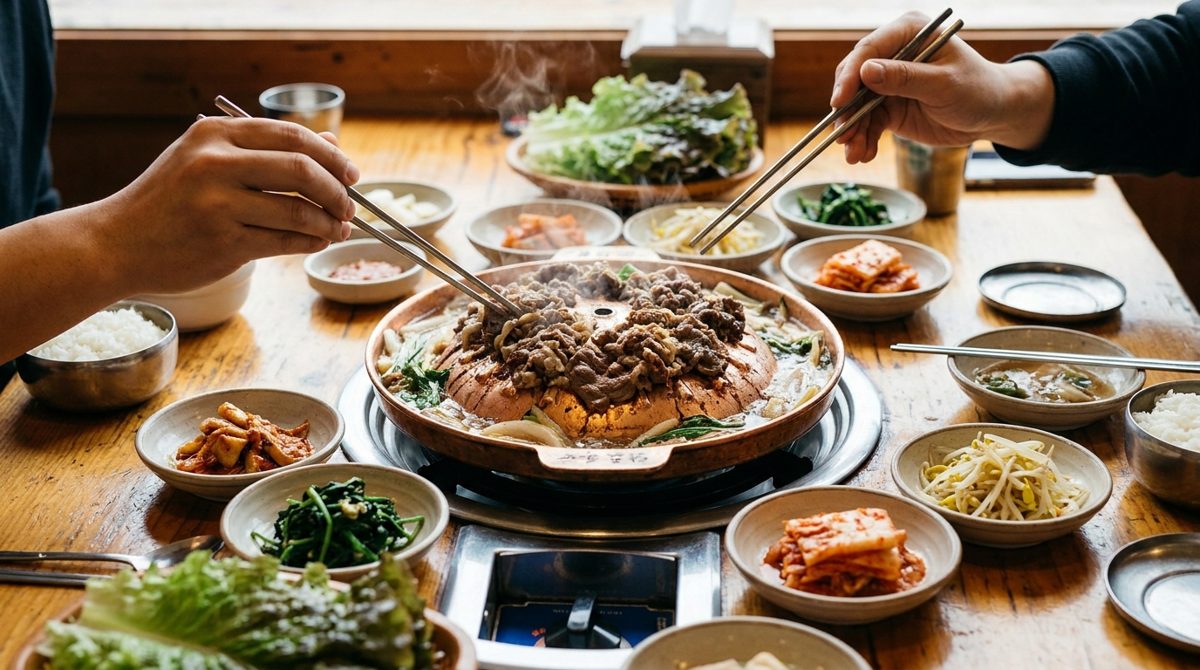
You’ll meet bulgogi in two main forms. At barbecue restaurants it’s grilled at your table, often on a domed pan that catches the sweet juices. At regular diners it appears as bulgogi-deopbap (over rice) or in a shallow bubbling pan with glass noodles, mushrooms, and broth. Either way, it’s arguably the single most beginner-friendly dish in the entire Korean BBQ universe.
Bulgogi also happens to be Korea’s most successful culinary export. It was the dish that introduced Korean food to much of the world decades before K-pop did the marketing — Korean immigrant restaurants from Los Angeles to São Paulo built their menus around it, and “bulgogi” entered English dictionaries long before “gochujang.” Inside Korea it carries a warm, nostalgic weight: it’s birthday-dinner food, grandma food, the dish families order when someone has good news. That cultural position matters for travelers, because it means bulgogi is everywhere, consistently good, and never a tourist trap invention.
Here’s what actually arrives when you order it at a barbecue restaurant: a plate of glistening raw marinated beef, a tabletop burner, a basket of lettuce and perilla leaves, ssamjang dipping paste, and a small army of banchan side dishes. Staff light the burner, the beef goes on, and within three minutes the table smells like caramelizing soy and garlic. At simpler diners, the kitchen does the cooking and bulgogi arrives ready to eat over rice or bubbling in a shallow pan. Either format is foreigner-proof — there’s no technique to fail at and no mystery ingredient to fear.
What Does Bulgogi Taste Like?
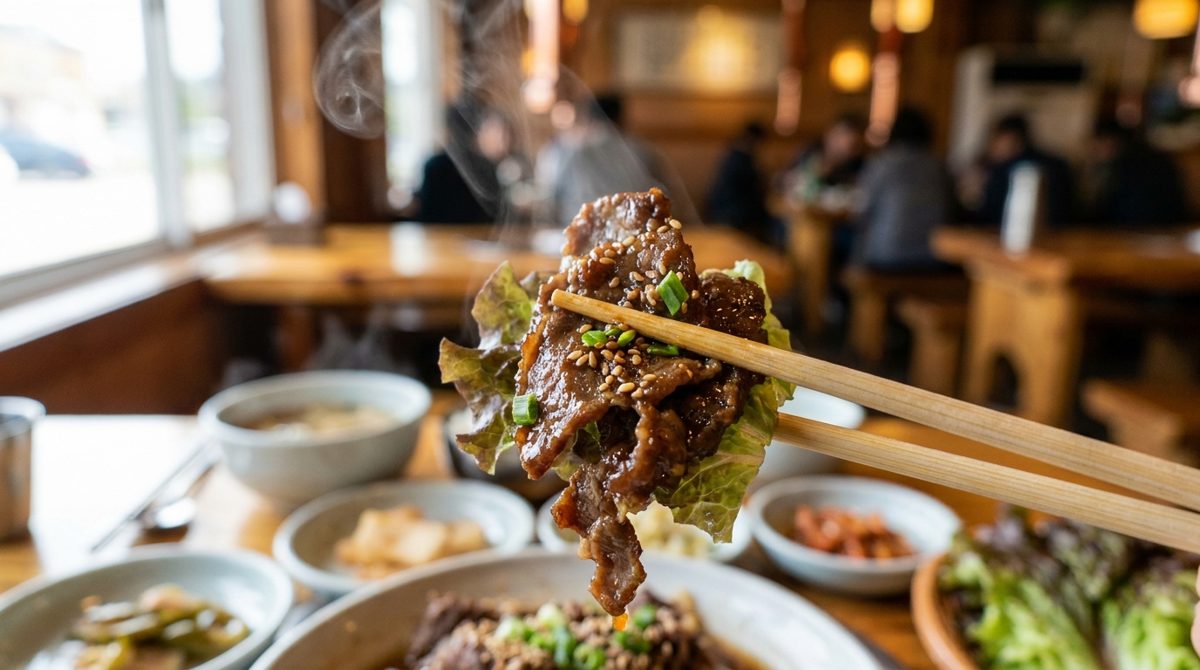
Sweet, savory, garlicky, and smoky at the edges. The soy-sugar-pear marinade caramelizes on the grill, giving each thin slice a glossy, slightly sticky coating over deeply tender beef. Sesame oil adds a nutty perfume; grilled onions and scallions add gentle sweetness. If teriyaki beef and a great steakhouse had a Korean child, it would taste like bulgogi — but juicier, and eaten wrapped in lettuce with rice.
The texture surprises people most. Because the beef is sliced so thin and tenderized by the pear, it’s almost impossibly soft — closer to shabu-shabu than to steak. Brothy pan-style bulgogi is even softer, with slippery glass noodles soaking up the sweet soy juices.
Flavor balance varies by style. Seoul-style pan bulgogi leans sweet and soupy — the broth is practically a sauce course. Charcoal-grilled versions from Gwangyang taste smokier and less sweet, letting the beef speak. If you generally find Korean-American bulgogi too sugary, order a charcoal-grilled style in Korea and you’ll meet a more savory, grown-up version of the dish.
Is Bulgogi Spicy?
No. Classic beef bulgogi contains zero chili — it’s one of the mildest famous Korean dishes, rated 0–1 out of 5 by virtually everyone. Kids love it for exactly this reason. The one trap: dwaeji-bulgogi (돼지불고기), the pork version, is usually marinated in spicy gochujang and glows red. If you see red sauce, expect heat; if the meat is brown and glossy, you’re safe. When in doubt, ask: “an maewoyo?” (안 매워요? — is it not spicy?).
Bulgogi Dietary Guide: Vegetarian, Vegan, Halal & Allergens
Bulgogi is simple at heart — beef plus marinade — but the marinade carries several hidden allergens worth knowing. The table below covers the standard beef version served at restaurants in Korea; homemade and overseas recipes vary, and fusion versions (bulgogi pizza, bulgogi burgers) add wheat, dairy, and more. When in doubt at a restaurant, showing a translated allergy card works far better than verbal English — kitchens are busy, and marinade ingredients aren’t something servers can improvise answers about.
| Ingredient concern | In standard bulgogi? | How to handle |
|---|---|---|
| Beef | Yes — it’s the dish | Mushroom bulgogi (beoseot-bulgogi) is the meat-free stand-in |
| Pork | No in beef bulgogi | But dwaeji-bulgogi (pork version) exists — check which one you’re ordering |
| Soy | Yes | Soy sauce is the marinade’s backbone — unavoidable |
| Wheat / gluten | Often | Most Korean soy sauce contains wheat; some marinades add flour-based starch |
| Sesame | Yes | Sesame oil and seeds are standard — hard to remove |
| Fruit (pear/apple) | Usually | Grated pear or apple tenderizes the beef — relevant for fruit allergies |
| Egg / dairy / nuts | No | Traditional recipes contain none |
| Alcohol | Sometimes | Some kitchens add mirin or rice wine to the marinade — relevant for Muslim diners |
Gluten-free travelers: the beef itself is fine, but standard Korean soy sauce contains wheat, so assume the marinade does too unless a restaurant confirms otherwise. Celiac-safe bulgogi realistically means a kitchen using tamari-style soy sauce — rare outside specialty restaurants — so treat restaurant bulgogi as “low gluten, not gluten-free.”
Is Bulgogi Vegetarian or Vegan?
No — bulgogi is beef by definition, and there’s no way to order the standard dish meat-free. The good news: the marinade is so beloved that mushroom bulgogi (버섯불고기, beoseot-bulgogi) is a real menu item at some traditional and vegetarian-friendly restaurants — king oyster and shiitake mushrooms cooked in the same sweet soy marinade, and genuinely delicious. Vegans should confirm no honey in the sauce and no egg garnish. If you can’t find it, japchae without beef or a vegetable bibimbap are easier fallbacks at ordinary restaurants.
Is Bulgogi Halal?
Bulgogi is one of the more promising Korean dishes for Muslim travelers because it’s beef, not pork — but at a regular restaurant the beef is not halal-certified, and marinades sometimes include mirin (rice wine). So the honest answer: standard bulgogi is not halal by default, but halal bulgogi is easy to find in the right places. Seoul’s Itaewon district — near the Seoul Central Mosque — has several halal-certified and Muslim-friendly Korean restaurants where bulgogi is a signature order, and the Korea Tourism Organization maintains lists of certified restaurants on VisitKorea. One firm rule: never assume — dwaeji-bulgogi is pork and absolutely not halal.
How to Order Bulgogi in Korean (+ 2026 Prices)
Bulgogi restaurants usually price by the serving (인분, inbun), and many require a minimum of two servings for table grilling. These phrases cover everything:
| What you want | Say this | Romanized |
|---|---|---|
| Two servings of bulgogi, please | 불고기 2인분 주세요 | bulgogi i-inbun juseyo |
| Beef bulgogi (to be safe) | 소불고기 주세요 | so-bulgogi juseyo |
| Is it spicy? | 매워요? | maewoyo? |
| One bowl of rice, please | 공기밥 하나 주세요 | gonggibap hana juseyo |
| Mushroom bulgogi (vegetarian) | 버섯불고기 있어요? | beoseot-bulgogi isseoyo? (do you have…?) |
A few ordering realities worth knowing. Menus list bulgogi by the serving, and one serving (150–200g of meat) is genuinely one person’s portion only if you’re also eating rice and banchan — hungry travelers should count on ordering generously. At traditional restaurants the menu may just say 불고기 with a price per 인분; point and hold up fingers for how many servings, and nobody will blink. Lunch is the value window: many bulgogi specialists run weekday lunch sets (불고기 정식, bulgogi jeongsik) that bundle meat, rice, soup, and banchan for several thousand won less than dinner pricing.
What it costs in 2026: at casual Seoul restaurants, bulgogi runs ₩12,000–₩16,000 per serving, usually with a two-serving minimum for tabletop grilling. Restaurants using hanwoo — Korea’s prized domestic beef — charge ₩20,000 and up per serving, and it’s worth trying once. Bulgogi-deopbap (over rice) at lunch diners is the budget route at ₩9,000–₩12,000. Rice is ordered separately (₩1,000–₩2,000), and banchan side dishes are free and refillable — brush up with our Korean dining etiquette guide before you go.
How to Eat Bulgogi Like a Local
The classic move is the ssam (wrap): take a lettuce or perilla leaf in your palm, add a spoonful of rice, a few slices of bulgogi, a dab of ssamjang paste, maybe a sliver of garlic — then fold it shut and eat the whole parcel in one bite. One bite is the rule; a half-eaten wrap dripping in your hand marks you as a rookie. It feels big. Commit.
If your bulgogi comes in the brothy pan style, don’t ignore the juices — that sweet soy broth is prime rice territory. Spoon it over your bowl, and hunt for the glass noodles hiding underneath the meat; they’ve absorbed everything good. At table-grill places, staff will often cook for you or check in — let them, especially on the domed pans where the meat cooks fast and the onions burn faster.
Work the banchan, too. A bulgogi table typically arrives with kimchi, pickled radish, seasoned greens, and a salad — all free, all refillable (just ask, or press the table bell). The pickled items exist for a reason: alternating a bite of sweet beef with something sour and cold resets your palate so the tenth wrap tastes as good as the first. And don’t rush the pan. Bulgogi cooks in two or three minutes; pull slices as they turn brown and glossy rather than letting everything stew, and push the onions to the sweet spot at the pan’s edge where the marinade pools and caramelizes.
Drinks: Koreans pair bulgogi with soju or beer, but the sweet marinade also loves plain barley tea, and nobody will judge a cola. One more local habit — order doenjang-jjigae (soybean paste stew) alongside for the table. Its salty, funky depth cuts the sweetness of the beef, and the combination of sweet meat, hot stew, and cold banchan is the full Korean-table experience in one meal.
Types of Bulgogi You’ll See on Menus
Seoul-style / pan bulgogi (서울식 불고기) — the juicy one: cooked in a shallow domed pan with sweet broth, onions, mushrooms, and glass noodles. Comfort food at its peak. Gwangyang bulgogi (광양불고기) — from a town famous for it: marinated just before grilling over oak charcoal, drier and smokier, beef flavor forward. Eonyang bulgogi (언양불고기) — the Ulsan-region style: finely sliced or minced beef pressed thin and grilled, almost like a delicate beef patty. Dwaeji-bulgogi (돼지불고기) — the spicy pork cousin in red gochujang marinade; cheaper, fiery, and not halal. Beoseot-bulgogi (버섯불고기) — mushrooms in bulgogi marinade, the vegetarian workaround. You’ll also spot bulgogi flavor colonizing everything in Korea: burgers, pizza, fried rice, even convenience store kimbap and sandwiches.
Which should you order first? If you want comfort and maximum juiciness, go Seoul-style pan bulgogi — it’s the version most likely served at the neighborhood restaurant near your hotel. If you want smoke and beef character, seek out a Gwangyang-style charcoal specialist. And if a menu just says “bulgogi” with no style listed, you’ll almost always get the sweet pan version — a safe default.
Where to Try Bulgogi
Every neighborhood has a bulgogi option, but a few routes stand out. For the classic brothy Seoul style, historic downtown restaurants around Jongno and Euljiro have been perfecting it for generations. For charcoal-grilled styles, look for signs reading 광양불고기 or 언양불고기. Department store food courts do reliable bulgogi-deopbap lunch sets, and any Korean BBQ restaurant will have bulgogi on the menu alongside the pork belly — our Korean BBQ guide breaks down the full menu hierarchy. If you’re building a Seoul food itinerary, bulgogi belongs on day one: it’s the dish most likely to convert a skeptical travel companion. Splurge tip: hanwoo bulgogi at a specialist restaurant is one of the best ₩20,000-something plates in the country.
Two more scenarios worth planning for. If you’re traveling with someone nervous about Korean food, a bulgogi restaurant is the diplomatic choice — mild, familiar-adjacent, and served with enough banchan variety that everyone finds something. And if you fall for the flavor, note that pork-belly barbecue is the natural next step up the adventure ladder; our samgyeopsal beginner’s guide covers that ritual. Compared with samgyeopsal, bulgogi is sweeter, softer, and comes pre-seasoned — which is exactly why Koreans consider it the beginner’s (and grandmother’s) barbecue.
Outside Seoul, two pilgrimage stops for the obsessed: Gwangyang in Jeolla province, where restaurants grill fresh-marinated beef over oak charcoal the way they have for a century, and Eonyang near Ulsan, home of the pressed thin-beef style. Neither is a practical day trip for most itineraries — but if your route passes through, a regional bulgogi lunch is the kind of meal that becomes the story you tell about the trip. Closer to Seoul, the Suwon area (better known for galbi) also does excellent marinated beef, an easy KTX or subway side trip.
Bulgogi FAQ
What does bulgogi mean in English?
“Fire meat.” Bul means fire, gogi means meat. The name refers to the traditional method of grilling marinated beef over an open flame — a lineage food historians trace back through Joseon-era neobiani to ancient skewer-grilled maekjeok (see the Wikipedia entry on bulgogi for the deep history).
Is bulgogi spicy?
No — classic beef bulgogi contains no chili at all and rates 0–1 out of 5. Its flavor is sweet-savory from soy sauce, sugar, and pear. The exception is dwaeji-bulgogi (pork bulgogi), which usually comes in a spicy red gochujang marinade.
What’s the difference between bulgogi and galbi?
Cut and texture. Bulgogi is thin-sliced beef (usually sirloin or brisket) in a sweet soy marinade — soft and fast-cooking. Galbi is beef short rib, meatier and chewier, often in a similar marinade. Galbi costs more; bulgogi is more tender and beginner-friendly.
Is bulgogi halal?
Not by default — the beef at regular restaurants isn’t halal-certified and some marinades contain rice wine. But because it’s beef rather than pork, halal-certified bulgogi is genuinely available: Itaewon in Seoul has several halal Korean restaurants where bulgogi is a signature dish.
How much does bulgogi cost in Korea in 2026?
₩12,000–₩16,000 per serving at casual restaurants (often a two-serving minimum for table grilling), and ₩20,000+ per serving for premium hanwoo beef. Bulgogi over rice at lunch diners runs ₩9,000–₩12,000.
The Verdict: Should You Order It?
Without hesitation. Bulgogi is the safest crowd-pleaser in Korean cuisine — zero spice, maximum tenderness, and a sweet-smoky flavor that needs no acquired taste. Order it on your first night, wrap it in lettuce, and save the adventurous stuff for day two. Hungry for the next dish? Decode the whole menu with our Korean Food Decoder — every major Korean dish explained with spice levels, allergens, and ordering phrases.