Why is Korea talking about G-Dragon and UNESCO right now? The legendary K-pop icon and BIGBANG member — real name Kwon Ji-yong — has been appointed as honorary ambassador for the 48th UNESCO World Heritage Committee session, which takes place in Busan from July 19–29, 2026. It’s a moment that perfectly captures the intersection of Korean pop culture and the country’s growing cultural diplomacy. Here’s what you need to know.

Table of Contents
- What’s Happening in Korea Right Now?
- The Background: G-Dragon’s Cultural Journey
- What Are Koreans Actually Saying?
- What This Reveals About Korean Cultural Diplomacy
- How Does This Compare Internationally?
- Conclusion
What’s Happening in Korea Right Now?
The Korea Heritage Service appointed G-Dragon as honorary ambassador for UNESCO’s World Heritage Committee session in Busan. This isn’t a token celebrity endorsement — G-Dragon will appear in promotional campaigns, participate in events, and work with his nonprofit organization, the Juspeace Foundation (established in 2024), to launch a “Heritage in Peace” campaign starting July 10. The campaign encourages citizens, corporations, and cities worldwide to participate in heritage preservation.
The Korea Heritage Service cited G-Dragon as “an artist with global influence extending beyond K-pop into the broader cultural and arts sphere” and praised his public interest work and social issue advocacy through art. Busan, Korea’s second-largest city and a major port on the southeastern coast, will host UNESCO representatives from around the world to discuss and decide on World Heritage designations.
The Background: G-Dragon’s Cultural Journey
To understand why this appointment resonates so deeply, you need to understand G-Dragon’s place in Korean culture. As the leader of BIGBANG and one of the most successful solo artists in K-pop history, G-Dragon (GD) has long transcended the “idol” category. He is widely recognized as a fashion icon, visual artist, and cultural architect who helped shape not just K-pop but contemporary Korean aesthetics more broadly.
His career has not been without controversy — like many Korean celebrities, he has faced intense public scrutiny. But his return to the spotlight in recent years, combined with his genuine philanthropic work through the Juspeace Foundation, has reestablished him as one of Korea’s most culturally significant figures. The UNESCO appointment represents an institutional acknowledgment of K-pop as a legitimate vehicle for global cultural dialogue.
Separately, BTS member V was also recently appointed as global ambassador for the Jinro soju brand — Korea’s most famous spirit — reinforcing the trend of K-pop stars becoming cultural ambassadors not just for entertainment but for Korea’s broader identity.
What Are Koreans Actually Saying?
Korean reaction has been overwhelmingly positive, with fans and cultural commentators alike celebrating the appointment as a recognition of K-pop’s maturation as a global cultural force. Longtime GD fans were emotional about seeing their idol take on this kind of cultural responsibility role. Korean media coverage has been uniformly enthusiastic.
Some observers have noted that the appointment comes at a particularly strategic moment for Korea. With the SEAblings controversy testing Korea’s soft power relationships in Southeast Asia (see our coverage of that story), the UNESCO appointment reinforces Korea’s commitment to cultural exchange and heritage preservation — values that transcend pop culture disputes.
Busan residents are especially excited. The city has been working to raise its international profile — it bid (unsuccessfully) for the 2030 World Expo — and hosting the UNESCO World Heritage Committee is a major coup. G-Dragon’s association with the event brings global attention to Busan that money alone couldn’t buy.
What This Reveals About Korean Cultural Diplomacy
Korea has become a master of what scholars call “soft power” — the ability to influence other countries through culture, values, and ideas rather than military or economic coercion. K-pop, K-dramas, Korean food, and Korean skincare have all served as vectors of Korean soft power. The UNESCO appointment marks something new: the institutionalization of K-pop as cultural diplomacy.
This isn’t the first time Korean pop culture has merged with official cultural institutions. BTS has addressed the United Nations General Assembly. Korean films have won Oscar awards and been used to promote Korean tourism. But appointing a K-pop artist as the public face of a UNESCO heritage preservation effort is a genuinely new step — one that signals Korea believes its pop culture credibility can advance global heritage goals.
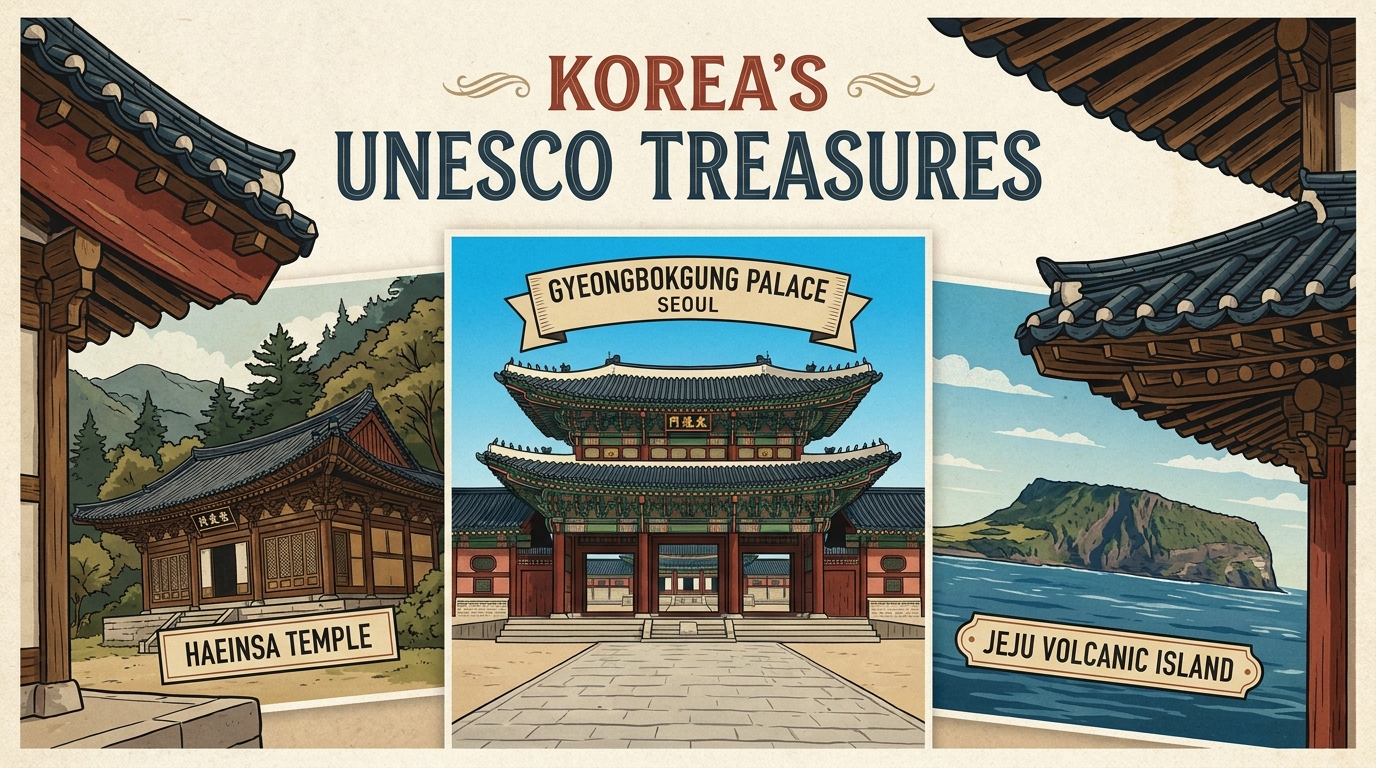
For visitors to Korea, this moment is a reminder that Korean culture operates on multiple levels simultaneously. The same country that produces global pop hits also has UNESCO-listed heritage sites including the Jeju Volcanic Island and Lava Tubes, the Historic Villages of Korea, and traditional court music. If you’re planning a visit and want to experience both sides of this cultural richness, check out our Korean BBQ guide for food culture and our Korean street food guide for everyday culinary heritage.
How Does This Compare Internationally?
UNESCO ambassadors have traditionally been drawn from classical arts, cinema, or literature. Audrey Hepburn, who served as a UNICEF Goodwill Ambassador, set a template for celebrity diplomacy decades ago. More recently, Leonardo DiCaprio has been a prominent UNESCO-adjacent environmental advocate.
What makes G-Dragon’s appointment distinctive is that K-pop itself is the product — not G-Dragon the individual philanthropist. The appointment says: the cultural form that G-Dragon represents, K-pop, is now mature and globally significant enough to carry UNESCO’s message of heritage preservation. That’s a remarkable statement about how far Korean pop culture has traveled in a single generation.
According to The Korea Times and The Korea Herald, G-Dragon’s Juspeace Foundation will collaborate directly with UNESCO on the “Heritage in Peace” campaign, giving the appointment real institutional substance beyond mere celebrity branding.
Conclusion
G-Dragon as UNESCO World Heritage ambassador is a symbol of how Korea has reimagined what cultural diplomacy looks like in the 21st century. It’s a story about a country confident enough in its cultural output to put a K-pop icon at the center of a global heritage dialogue. And it’s a reminder that the Korea of ancient palaces and the Korea of chart-topping music are not contradictions — they are two expressions of the same extraordinary creative spirit.
What do you think about this? Are you a G-Dragon fan excited about this role? Do you think K-pop stars make good cultural ambassadors for heritage causes? Share your thoughts below!