Welcome to your ultimate Jeonju travel guide. Tucked in the heart of North Jeolla Province, Jeonju is one of South Korea’s most rewarding destinations — a city where you can sleep in a 600-year-old hanok, eat the dish that put Korea on the world’s culinary map, and wander streets that feel genuinely unchanged by modernity. Whether you are planning your first trip to Korea or returning to explore beyond Seoul, this Jeonju travel guide covers everything you need to know for 2026.
Why Jeonju Deserves a Spot on Your Korea Itinerary
Jeonju is not a city that screams for attention — it earns it quietly. It holds the rare UNESCO Creative City of Gastronomy designation, is home to the largest concentration of preserved traditional hanok (Korean wooden houses) in the country, and is internationally recognized as the birthplace of bibimbap. Unlike the frantic pace of Seoul, Jeonju moves at a rhythm that lets you actually absorb Korean culture rather than just photograph it through a crowd.
Locals are proud of their city in a way that feels earned. Artisans still practice traditional crafts like hanji (Korean paper-making), guild bakers sell handmade pastries from the same family recipes for generations, and the makgeolli alleys buzz every evening with the easy generosity that defines the region. If you read only one Jeonju travel guide, let this be the one that convinces you to add at least two nights.
How to Get to Jeonju from Seoul
By KTX (Recommended)
The fastest and most comfortable way is the KTX bullet train. Departures from Seoul Station or Yongsan Station reach Jeonju Station in approximately 1 hour 30 minutes to 1 hour 50 minutes. Tickets cost ₩27,600–₩33,800 one-way in standard class. Book in advance via the Korail website or app, especially for weekend travel — trains fill up fast, particularly during spring blossom season.
From Jeonju Station to the Hanok Village, a taxi takes about 10 minutes and costs ₩5,000–₩7,000. City bus routes 79, 119, and 537 also connect the station to the village for around ₩1,500.
By Express Bus
Buses from Seoul’s Dong Seoul Terminal or Central City Terminal run frequently to Jeonju Intercity Bus Terminal. The journey takes about 2 hours 30 minutes and costs ₩10,000–₩17,000. This option suits budget travelers but offers less flexibility on timing.
By Car
Driving from Seoul takes around 2–2.5 hours via the Honam Expressway (Route 25). Parking near the Hanok Village can be tricky on weekends; use the large public car park on the eastern edge of the village and walk in.
For a broader Korea transit overview, see our Korea Travel Tips for First-Time Visitors 2026 guide.
10 Essential Things to Do in Jeonju
1. Walk Through Jeonju Hanok Village
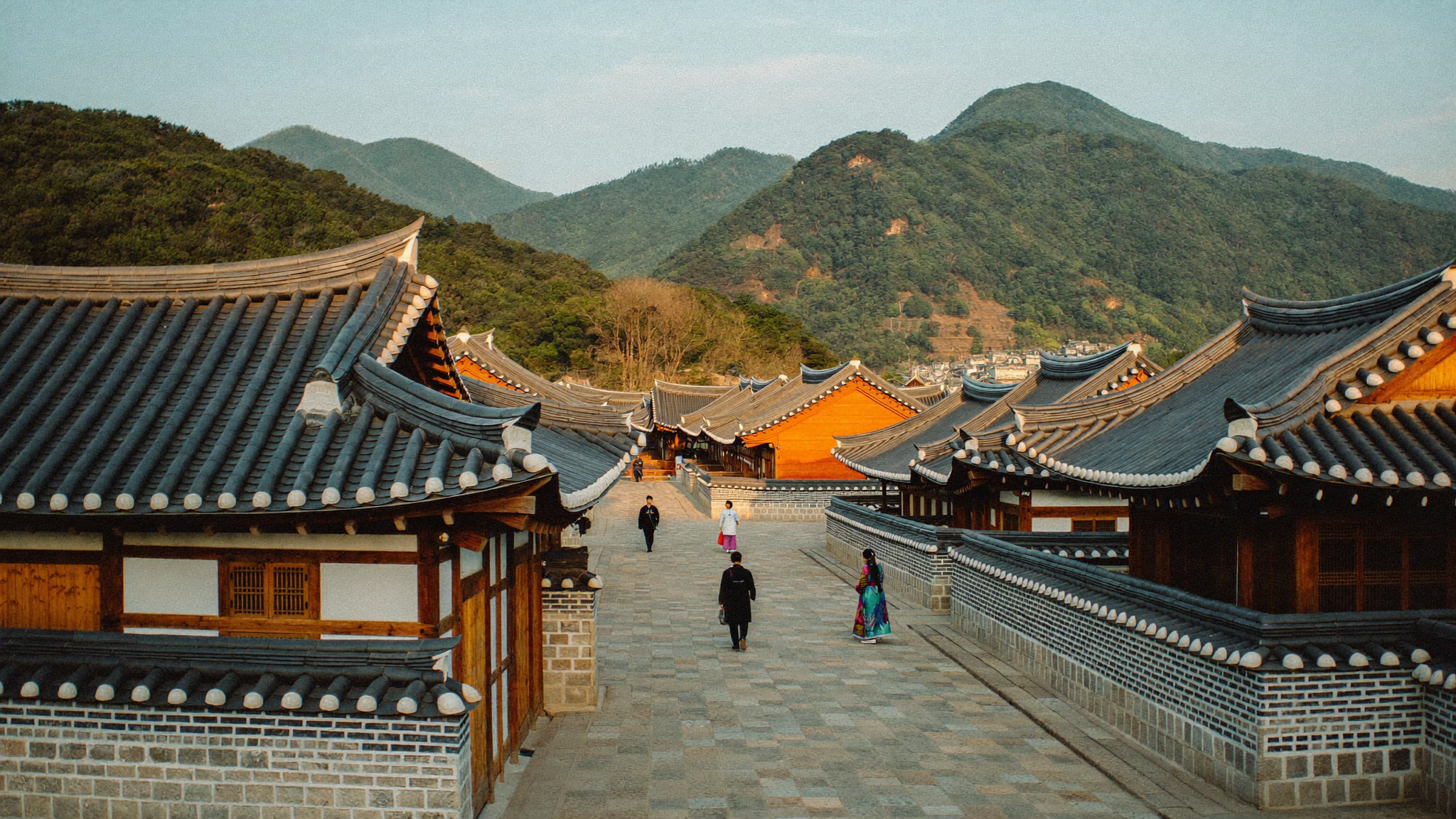
The undisputed centerpiece of any Jeonju travel guide, the Hanok Village — officially Jeonju Hanok Maeul — contains over 735 preserved traditional wooden houses spread across a 440,000 m² neighborhood in the Gyodong and Pungnam-dong districts. Unlike open-air museum recreations elsewhere, this is a living community. Families reside here; restaurants, guesthouses, and craft workshops occupy the same centuries-old buildings that once housed yangban (aristocratic) families.
The best strategy is to arrive early — before 9 a.m. — when the narrow lanes between the hanok walls catch the morning light and the crowds have yet to arrive. On weekday mornings the village feels almost meditative. By noon on weekends it can feel shoulder-to-shoulder. Plan accordingly.
2. Visit Gyeonggijeon Shrine
Built in 1410 by King Taejong, Gyeonggijeon was constructed to enshrine a royal portrait of King Taejo — the founder of the Joseon Dynasty. This makes it one of the oldest surviving structures in Jeonju and arguably the most historically significant site in any Jeonju travel guide. The complex includes a bamboo grove that ranks among the most photographed spots in the city, a small archive building housing Joseon-era royal records, and beautifully maintained stone-paved courtyards.
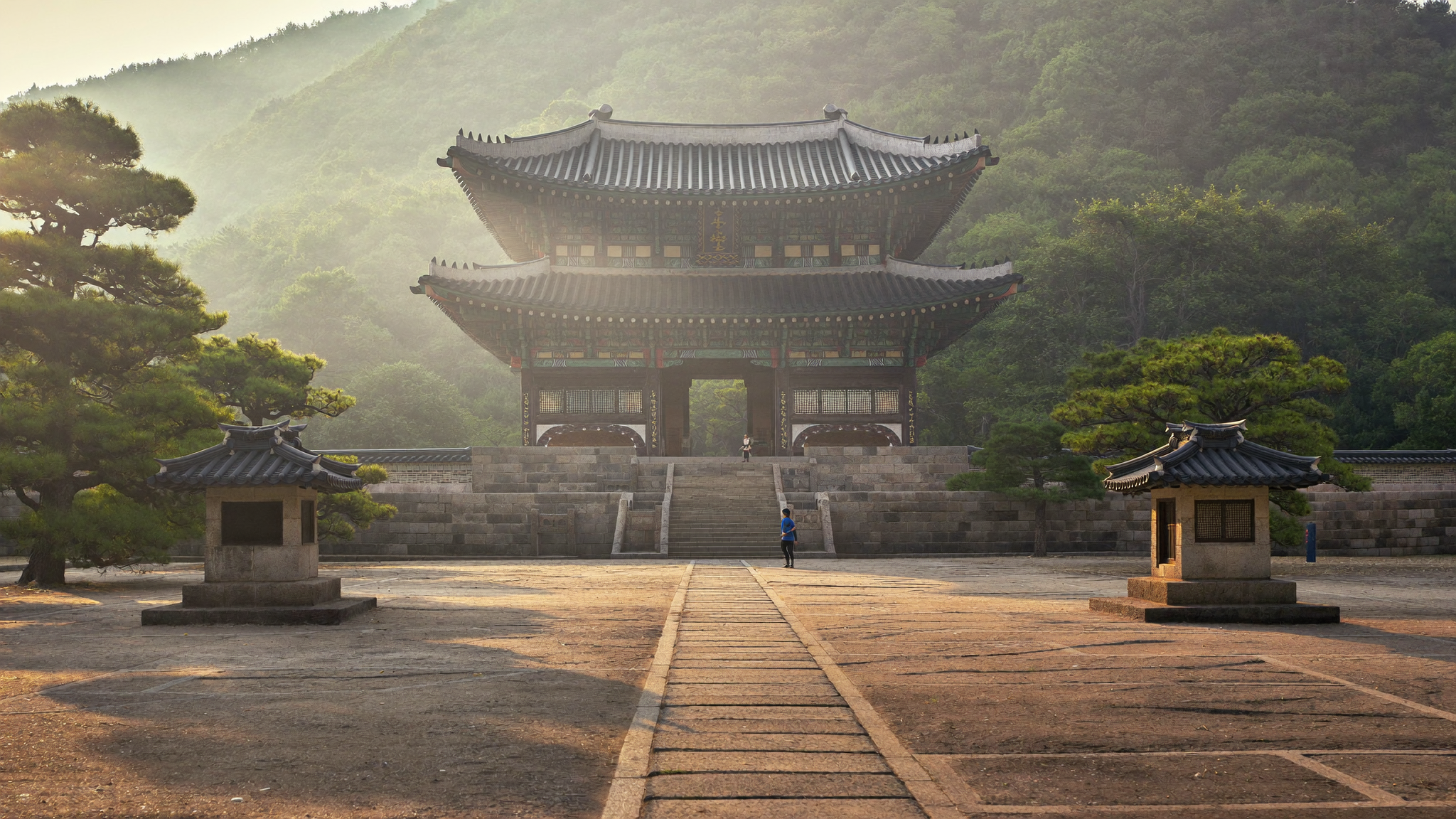
Entry costs ₩3,000 for adults. Arrive early or late afternoon to avoid groups. The bamboo grove just behind the shrine building is particularly stunning at golden hour. Allow at least 45 minutes to explore the full compound. Wearing a rented hanbok grants you free entry.
3. Eat Jeonju Bibimbap (the Real Thing)
No Jeonju travel guide would be complete without dedicating serious space to bibimbap. Jeonju’s version is considered the definitive form of the dish: served in a stone bowl (dolsot) or a regular bowl on a bed of bean sprout rice, topped with more than 30 seasonal namul (seasoned vegetables), a raw or fried egg, and a generous scoop of gochujang. The quality of locally sourced ingredients — particularly the sprouts grown in Jeonju water — is the reason locals insist it cannot be properly replicated elsewhere.
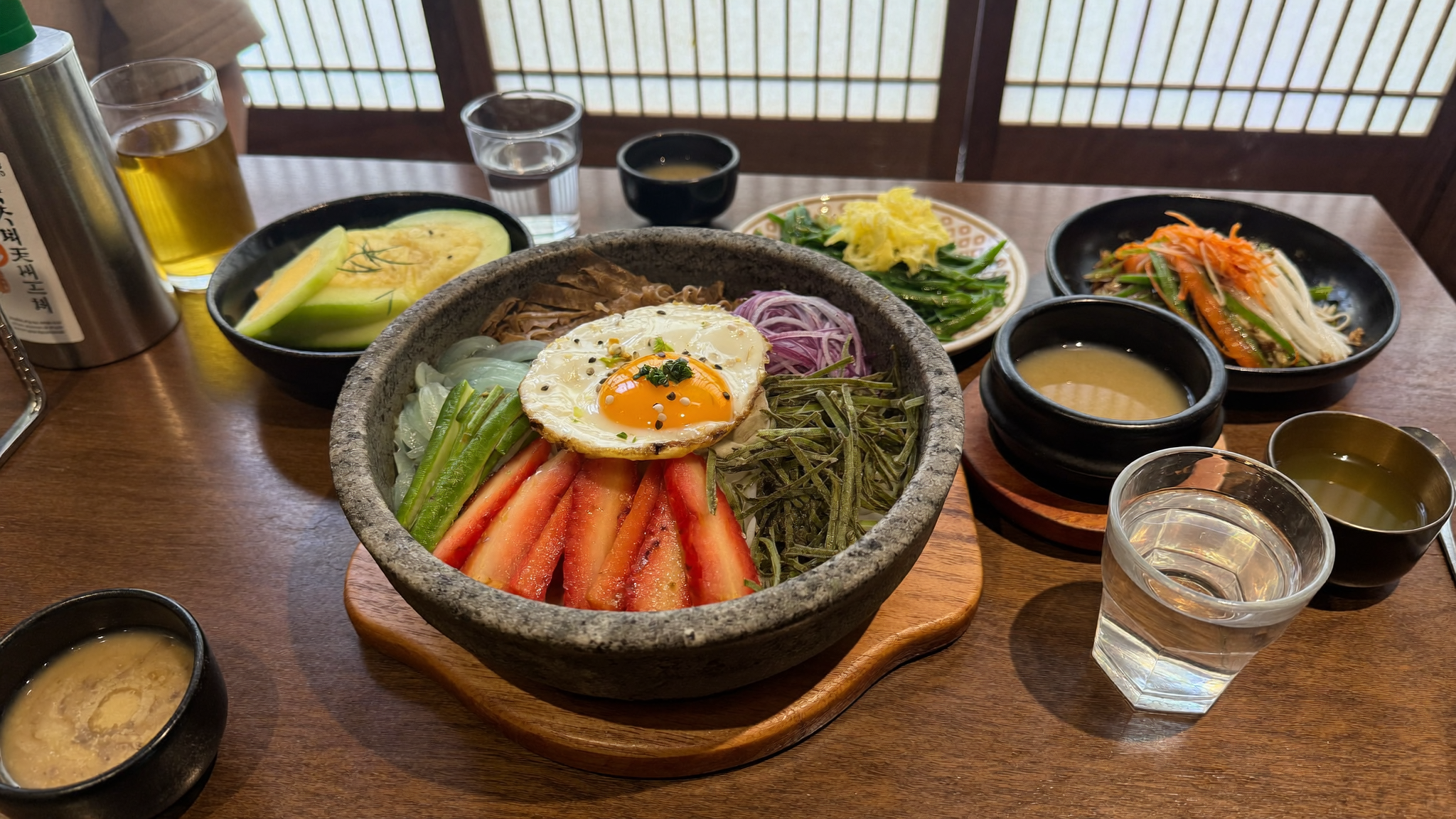
The most celebrated restaurants are clustered on Gajingoreum-gil and the streets around Gyeonggijeon. Expect to pay ₩10,000–₩15,000 per bowl. Lines form quickly at the top spots on weekends, so arrive before 11:30 a.m. for lunch. Pair it with a side of kong-namul guk (bean sprout soup), which comes free in most traditional restaurants. For more Korean food culture, see our Korean BBQ Guide 2026.
4. Rent a Hanbok and Walk the Village
Hanbok rental shops are plentiful throughout the Hanok Village, charging ₩15,000–₩25,000 for a 2–4 hour rental including hair accessories. Wearing hanbok grants free entry to Gyeonggijeon — a welcome perk. The experience of strolling tiled lanes in traditional dress against the curved eaves of 600-year-old buildings is genuinely transportive, not merely a photo opportunity. Many guesthouses offer same-day rentals to guests.
5. Climb Omokdae Hilltop Pavilion for the Best View
A short but rewarding uphill walk west of the Hanok Village brings you to Omokdae, a hilltop pavilion where General Yi Seonggye (later King Taejo) celebrated his victory over Japanese pirates in 1380. The pavilion itself is modest, but the panoramic views over the sea of gray hanok rooftops with the surrounding mountains beyond are the best in Jeonju. Come at sunset for the most spectacular light. The hike takes about 15 minutes from the village center and is paved the entire way.
6. Graze the Street Food Scene
Jeonju’s street food is arguably as celebrated as its restaurant cuisine. The Hanok Village’s main streets are lined with vendors selling bungeoppang (fish-shaped pastry stuffed with sweet red bean or custard cream), hotteok (sweet pancakes), tteokbokki, and the uniquely Jeonju treat of ojingeo twigim (fried squid) served with gochujang dipping sauce. Budget ₩10,000–₩20,000 for a full afternoon of grazing. The food quality in Jeonju is consistently excellent — locals hold food standards exceptionally high, and vendors know it.
7. Explore Jeonju Nambu Market and the Night Market
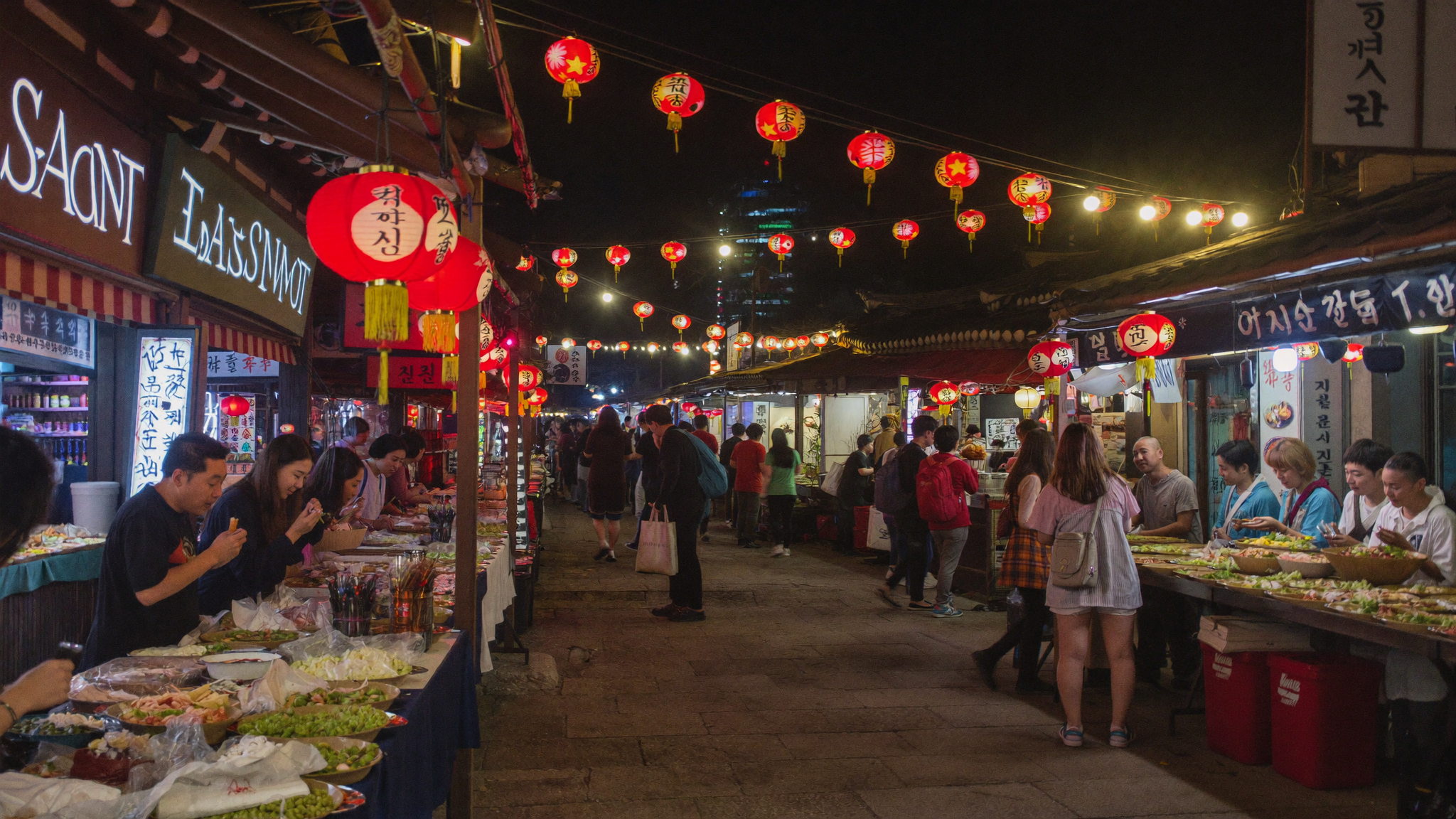
One of the oldest traditional markets in Korea, Jeonju Nambu Market has been operating for centuries. During the day it’s a bustling traditional market selling local produce, dried goods, handicrafts, and the famous pungnyeon rice. On Friday and Saturday evenings, the market transforms into a lively night market (roughly 6 p.m.–midnight) with dozens of food stalls, live music, and local artisan goods. This is one of the most authentic market experiences you will find in Korea — far less tourist-oriented than Gwangjang Market in Seoul.
8. Spend an Evening at Samcheon-dong Makgeolli Alley
Makgeolli (milky rice wine) is the drink of Jeonju, and Samcheon-dong Makgeolli Alley is where locals have been drinking it for decades. The tradition here is remarkable: order a pot of makgeolli (₩5,000–₩8,000) and the house brings out a succession of free side dishes — pajeon (green onion pancakes), kimchi, dubu kimchi, and more — until you stop ordering. The alley comes alive from around 5 p.m. and stays lively well into the night. It is one of the great affordable pleasures of the Jeonju travel experience.
9. Attend Jeonju International Film Festival (If Timing Allows)
The Jeonju International Film Festival (JIFF) takes place in late April to early May each year and is one of the most respected independent and art-house film festivals in Asia. If your trip overlaps, book accommodation many months ahead — the city fills to capacity. Tickets are affordable (₩6,000–₩12,000 per screening) and the festival atmosphere is electric, with screenings in venues throughout the Hanok Village and surrounding neighborhoods.
10. Day Trip to Moaksan Provincial Park
Just 15 km from central Jeonju, Moaksan Provincial Park offers forested hiking trails, traditional temples (particularly Geumsansa, a major Buddhist complex), and cool mountain air. The most popular trail circuits take 3–5 hours. Spring brings stunning cherry blossoms along the lower paths; autumn turns the mountain fiery red and gold. A taxi to the park entrance costs around ₩20,000–₩25,000, or take bus 79 from the city center.
Where to Stay in Jeonju
Staying in a hanok guesthouse inside the Hanok Village is the defining overnight experience of this Jeonju travel guide — something you cannot replicate anywhere else. These traditional wooden guesthouses have ondol (underfloor-heated) rooms, communal courtyards, and breakfasts that typically include kongnamul gukbap or traditional Korean spreads. Prices range from ₩50,000 to ₩120,000 per night depending on the property and season.
Top hanok guesthouses to consider (book well in advance for weekends): Hakindang (one of the oldest and most atmospheric in the village), Jeonju Hanok Heritage Hotel (larger property with modern amenities while maintaining traditional architecture), and Gaeoksanbang (intimate, family-run hanok with personalized service). Budget travelers can find comfortable motels and guesthouses outside the Hanok Village near Jeonju Station for ₩30,000–₩60,000/night.
Best Time to Visit Jeonju
Jeonju is a year-round destination, but the seasons affect experience significantly. Spring (late March–May) is peak season — cherry blossoms line the paths near Gyeonggijeon in late March and early April, and the JIFF festival draws international visitors in late April. Book accommodation 2–3 months ahead. Autumn (September–November) is the second-best season: foliage colors on Moaksan are spectacular, crowds thin after peak season, and seasonal menus feature late-harvest specialties. Summer (June–August) brings heat and humidity, but summer evenings are pleasant and the night market is at its most vibrant. Winter (December–February) is the quietest period — fewer vendors, but the village is starkly beautiful after snowfall and ondol rooms feel gloriously warm.
For comparison with another major cultural destination worth combining with Jeonju, see our Gyeongju Travel Guide: Korea’s Ancient Capital.
Practical Tips for Your Jeonju Visit
Timing: The Hanok Village becomes extremely crowded on weekend afternoons between 11 a.m. and 4 p.m. Arrive before 9 a.m. or after 4 p.m., or visit on weekdays for the best experience. Getting around: The village and its core attractions are fully walkable. For Moaksan or outlying sites, local buses are cheap and reliable. Most city taxi rides cost ₩3,500–₩8,000. Language: English signage in the Hanok Village is excellent. Major restaurants near Gyeonggijeon have English menus. A translation app handles everyday interactions outside the tourist core. Cash vs. card: Most restaurants and guesthouses accept credit cards; street food vendors and traditional market stalls are often cash-only. Keep ₩30,000–₩50,000 in cash for snacks and smaller purchases. Photography: The Hanok Village is a living community — avoid photographing residents without permission and respect any no-photography signs in narrow residential alleys.
Frequently Asked Questions
How many days do I need in Jeonju?
Two nights and two full days is the sweet spot. Day one covers the Hanok Village, Gyeonggijeon, bibimbap lunch, and Makgeolli Alley in the evening. Day two allows for Omokdae, Nambu Market, a deeper wander through craft workshops, and optionally a half-day trip to Moaksan.
Is Jeonju worth visiting as a day trip from Seoul?
Technically yes — the KTX makes it a 1h40m ride from Seoul. But a day trip means arriving when crowds begin and leaving before the evening food culture kicks in. One overnight transforms the experience entirely. If you can spare a night, do it.
What should I eat besides bibimbap?
Jeonju specialties include kongnamul gukbap (rice soup with bean sprouts), makgeolli with free side dishes at Samcheon-dong alley, bungeoppang from street vendors, pimatang gimbap (a local thicker-rolled variety), and traditional bingsu at village cafes. See our Korean Bingsu Guide 2026 for dessert inspiration across Korea.
Is Jeonju family-friendly?
Very much so. The flat village lanes are stroller-accessible, the food is generally mild (ask for low-spice versions of bibimbap), and the relaxed pace suits children well. Traditional craft workshops in the village — hanji paper-making, pottery, fan-making — offer excellent family-oriented hands-on activities.
Conclusion
This Jeonju travel guide has covered the key highlights: the Hanok Village, Gyeonggijeon Shrine, bibimbap, makgeolli, Omokdae, the Nambu Market, and the practical logistics of getting there and making the most of your stay. Jeonju is one of South Korea’s great travel rewards — a city that delivers cultural depth, extraordinary food, genuine architectural heritage, and a pace of life that makes Seoul feel like a different planet.
The best Jeonju travel advice is simply this: go slower than you think you need to. The city rewards lingering — an extra hour in the bamboo grove, another pot of makgeolli, one more bowl of bibimbap just to be sure. For more Korea travel inspiration, see Korea Insider’s Jeonju picks, Linda Goes East’s Hanok Village guide, and ZuzuKorea’s practical Jeonju tips.