Walk into any CU or GS25 convenience store in Seoul right now and you will likely see an empty shelf tag where the Dujjonku (Dubai chewy cookie) used to be. Korea’s viral convenience store desserts have turned ordinary corner stores into sold-out-by-9am hype machines, and the trend shows no sign of slowing in 2026. If you have scrolled past a Korean friend’s Instagram story showing a gooey, pistachio-stuffed cookie, or a cake shaped exactly like a triangle kimbap, you have already met this story’s main characters.
Table of Contents
- What’s Happening in Korea Right Now?
- The Background: Why Did This Start?
- What Are Koreans Actually Saying?
- What This Reveals About Korean Culture
- How Does This Compare Internationally?
- Conclusion and Your Next Read
What’s Happening in Korea Right Now?
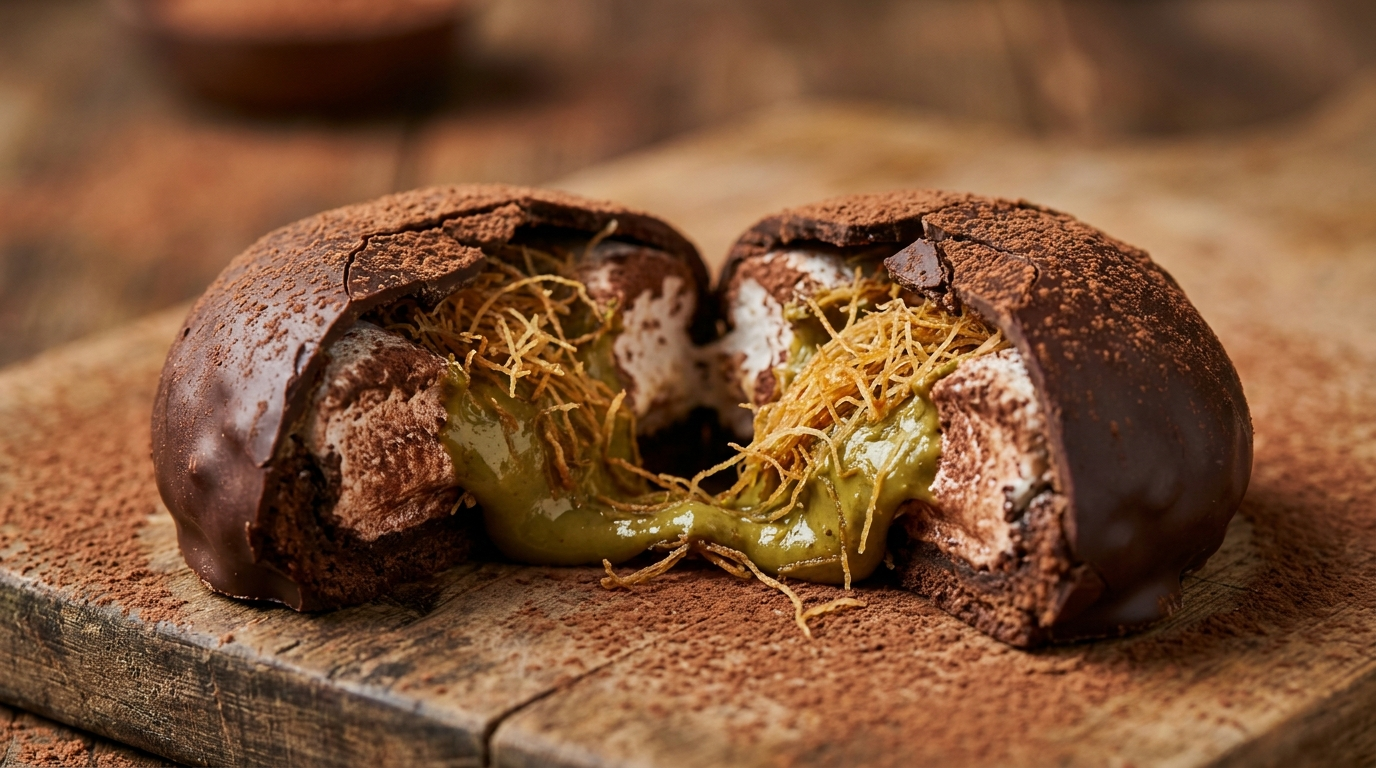
The Dujjonku — short for “Dubai chewy cookie” (두쫀쿠, du-jjon-ku) — is officially the convenience store dessert of the year in Korea, as The Korea Times reported. It is a rich, chocolate-coated cookie built around shredded kataifi pastry and pistachio cream, wrapped in a marshmallow-soft interior and dusted with cocoa powder, inspired by the global “Dubai chocolate” craze that started with the viral Fix Dessert Chocolatier bar in the UAE. Korea took that idea and ran with it hard.
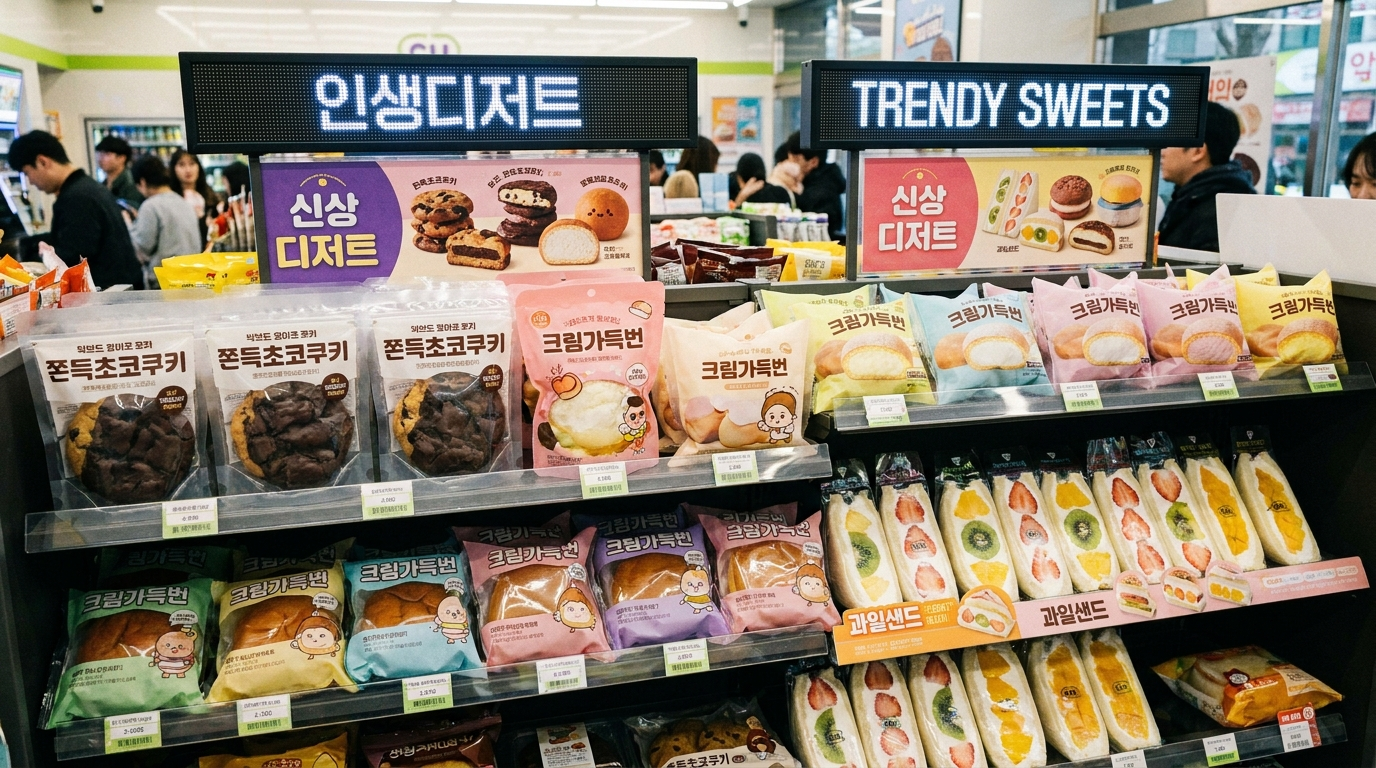
Major convenience store chains have leaned in hard. CU rolled out a Kataifi Chocolate Chewy Rice Cake, a Dubai Chocolate Brownie, and a Kataifi Chewy Macaron last October, selling more than 1.8 million units of the rice cake alone within three months, according to The Korea Herald. GS25 followed with its own Dubai chocolate balls and brownies, each topping a million units sold within two months of launch. By early 2026, even Starbucks Korea had joined in with a limited-run Dubai chewy cookie in six Seoul stores — customers lined up in sub-zero January temperatures at 7am just to get one. Prices at convenience stores hover around 3,500 won (roughly $2.50), which is a huge part of the appeal: hotel-dessert-level indulgence at pocket change prices.
But Dujjonku is just the tip of the iceberg. The bigger story in 2026 is a trend insiders are calling “Hyper-Realism” desserts: sweets engineered to look exactly like savory convenience store staples — triangle kimbap, instant ramyeon cups, even canned fish — but that are actually cake, mousse, or chocolate underneath. It is a visual prank built for social media, and it is spreading through CU, GS25, and 7-Eleven shelves nationwide.
The Background: Why Did This Start?
The Dubai chocolate phenomenon began in the UAE with a pistachio-and-kataifi filled chocolate bar that went viral worldwide on TikTok in 2023 and 2024. Korea, a country with an unusually fast trend-adoption cycle and a bakery culture obsessed with novelty, was primed to localize it. Credit for the Korean version generally goes to a small private bakery called Mont Cookie, which launched its own pistachio-kataifi cookie in spring 2025. The trend stayed relatively niche until September 2025, when IVE member Jang Wonyoung posted photos of herself eating one on social media — and searches, orders, and copycat versions exploded almost overnight, per OneulKorea’s convenience store culture guide.
From there, it followed a now-familiar Korean snack-fad script: an indie bakery innovation gets amplified by a celebrity or influencer, cafes and dessert shops rush out their own versions, and finally the convenience store giants — CU, GS25, 7-Eleven, emart24 — mass-produce affordable copies to capture the broadest possible audience. This is also exactly how the “Hyper-Realism” trend caught fire: once one brand proved that a cake shaped like a paper cup of instant noodles would get shared thousands of times online, everyone wanted their own version of the joke.
There is also a generational and commercial context here. Following the huge popularity of Korean cooking survival shows, convenience stores have been racing to add “gourmet” credibility to their food lineups, including chef collaborations — CU and GS25 have both released dosirak (lunch box) items co-developed with celebrity chefs, such as a Gochujang BBQ Pulled Pork Gimbap. The dessert case and the dosirak aisle are both part of the same strategy: make a 3,000-won item feel like a luxury experience.
What Are Koreans Actually Saying?
On Korean social media, reactions split fairly cleanly by generation. Teens and twenty-somethings treat the hunt for a Dujjonku or a hyper-realism dessert like a scavenger hunt — posting “restock alert” videos, filming taste-test reactions, and competing to be the first to try a new flavor variant. Comment sections are full of people asking which branch still has stock, and resale listings for sold-out items have popped up on secondhand marketplaces at a markup.
Older consumers and some food critics have voiced fatigue, joking that Korea has “pistachio-and-kataifi everything” now — cookies, lattes, ice cream, even instant coffee mixes — and questioning whether the craze has already peaked. Others point out the irony of the Hyper-Realism trend: desserts mimicking cheap, humble foods like triangle kimbap are, in a strange way, both a joke about and a tribute to convenience store culture itself. It is food commenting on food.
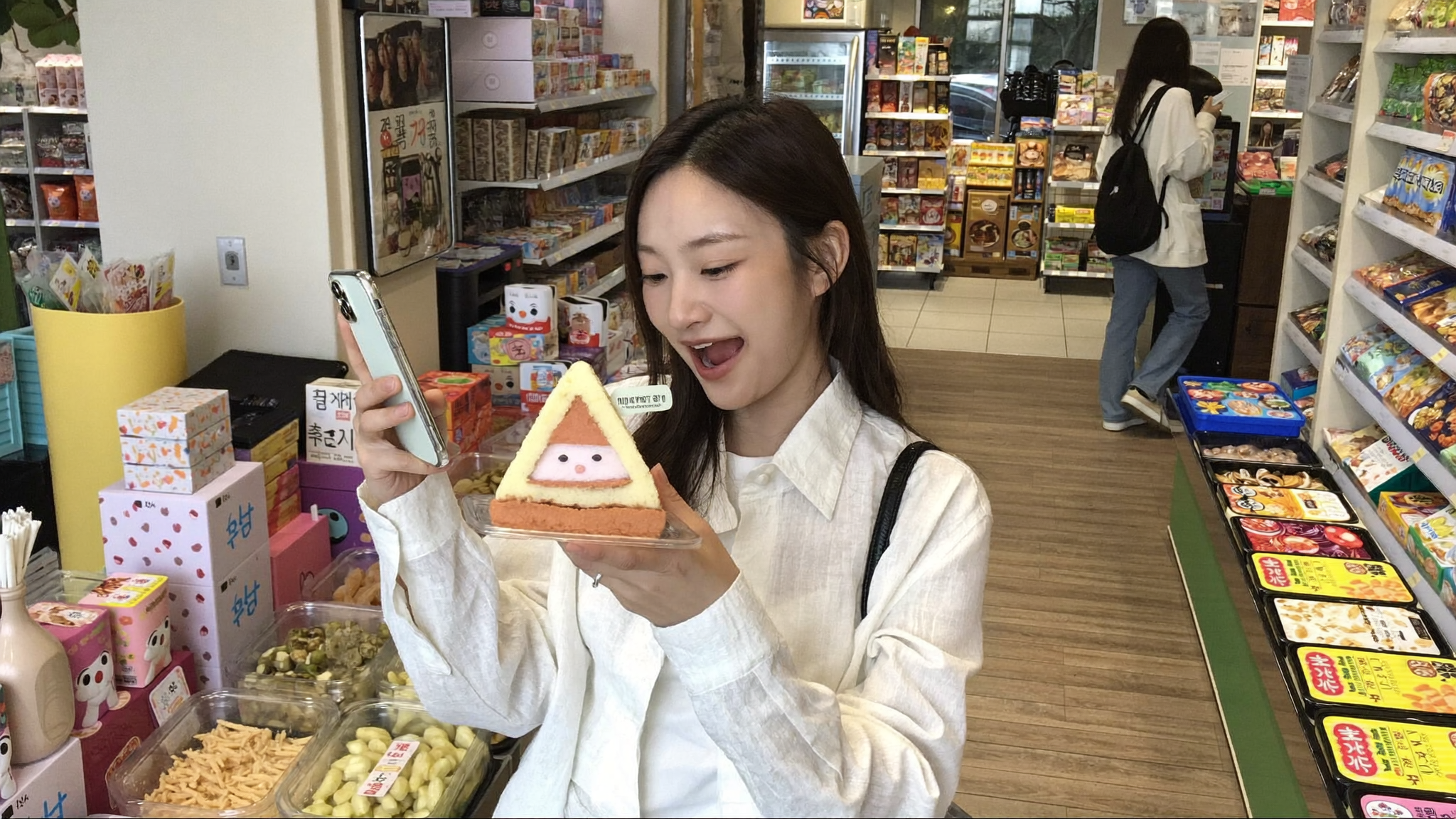
In February 2026, CU leaned all the way into this cultural moment by opening a dessert-focused concept store in Seongsu-dong, one of Seoul’s trendiest neighborhoods, built entirely around Instagram-bait sweets: cream buns, fruit sandwiches, the soft and cloud-like Yonsei Milk Cream Bread, and CU’s own take on the Dubai chewy cookie. Lines outside on opening weekend were, predictably, long.
What This Reveals About Korean Culture
This trend is a window into what some commentators call Korea’s “FOMO snack culture” — a cycle where social media drives extremely fast-moving food fads that build intense hype, sell out within weeks, and then fade to make room for the next thing. It is less about any single food being objectively the best, and more about participating in a shared, time-limited cultural moment. Buying a Dujjonku before it sells out is a small act of belonging.
It also reflects a broader shift in how Korean convenience stores position themselves. What used to be purely a utilitarian pit stop for instant noodles and canned coffee has become a legitimate stage for “gourmet convenience” — visually stunning, sharable products that deliver a mini luxury experience for a few dollars. Chef collaborations on dosirak, hyper-realism dessert gags, and Dubai chocolate knockoffs are all branches of the same tree: convenience stores competing not just on price and speed, but on cultural relevance and shareability.
Finally, the Hyper-Realism trend specifically says something about Korean humor and design sensibility — a love of visual double-takes, meticulous craftsmanship applied to a joke, and a comfort with blurring the line between “serious food culture” and playful self-parody.
How Does This Compare Internationally?
Korea did not invent viral dessert culture, but it may run it faster than anywhere else. The original Dubai chocolate bar phenomenon in the UAE showed how a single, hyper-specific dessert can capture global attention through short-form video. Japan has its own decades-long convenience store dessert tradition (konbini sweets), known for constant limited-edition rotation and collaborations, which arguably set the template Korea has since accelerated. The difference in Korea is speed and density: an indie bakery item can go from unknown to nationwide convenience store product in a matter of months, thanks to the tight loop between K-pop idols, short-form video platforms, and a retail sector with three or four major chains all racing to copy each other immediately.
This pattern of fast build-up and fast burnout mirrors broader Asian social-media-driven food trends, but Korea’s convenience store density (tens of thousands of CU, GS25, and 7-Eleven locations packed into every neighborhood) means a trend can achieve near-total market saturation faster than in almost any other country.
Conclusion: Try It Before the Next Trend Arrives
Whether the Dujjonku craze has another six months of life left or gets replaced by the next hyper-realism gag next quarter, it captures something genuinely fun about Korea right now: a convenience store culture that treats a 3,000-won dessert as worth queuing up for, filming, and sharing. If you are visiting Seoul, walking into a CU or GS25 and simply seeing what is sold out that day is its own kind of only-in-Korea experience.
Curious what else is worth trying on a convenience store run? Check out our guides to Korean Convenience Store Food: 12 Best Eats, Korean Street Food: 9 Irresistible Eats, and Best Tteokbokki in Seoul for more can’t-miss picks on your next trip.