On July 6, 2026, agency DSP Media announced that KARD, one of K-pop’s only prominent co-ed (mixed-gender) idol groups, will disband after nearly a decade together. The news broke while the group was in the middle of an active world tour, leaving both longtime fans and casual K-pop watchers asking the same question: why now, and why does a single group’s ending feel like such a big cultural moment in Korea? If you’ve seen the KARD disbandment trending and wondered what the fuss is about, here are five things you should know.
Table of Contents
- What’s Happening in Korea Right Now?
- The Background: Why Did This Start?
- What Are Koreans Actually Saying?
- What This Reveals About Korean Culture
- How Does This Compare Internationally?
- Conclusion
What’s Happening in Korea Right Now? The KARD Disbandment Announcement
The KARD disbandment announcement dropped on a Monday morning in Korea, and within hours it was a top-trending K-pop story across Korean portals like Naver and Daum. DSP Media, the agency that also launched KARA, confirmed that KARD will release its very first full-length studio album, “Where To Now? (Part.2: NOWHERE),” on July 28, 2026, then embark on a farewell world tour before formally ending group activities. The agency’s statement read: “After thoughtful discussions with the members, we mutually agreed to conclude KARD’s journey with these upcoming promotions.”
What makes this especially newsworthy is the timing. KARD is currently mid-tour, meaning fans in multiple countries are watching the group perform live even as the disbandment news spreads. According to Forbes, KARD will close out its nine-year run with one final studio statement and a proper goodbye tour rather than simply vanishing after a contract lapses quietly, which is itself unusual in an industry known for abrupt, PR-managed exits.

The Background: Why Did This Start? KARD’s Decade as Korea’s Co-Ed Pioneer
To understand why the KARD disbandment matters, you need to understand what KARD actually was. Formed by DSP Media and officially debuting in July 2017 with the EP Hola Hola, KARD is a four-member co-ed group: B.M and J.Seph on the male side, Somin and Jiwoo on the female side. That mixed-gender lineup made KARD a rarity from day one — Korean idol groups are overwhelmingly single-gender, packaged and marketed to fandoms that expect an all-boy or all-girl unit. KARD’s moombahton- and tropical house-inflected sound, paired with two men and two women sharing the stage as equals, broke that mold and helped the group build an outsized following overseas, particularly in North and South America and Europe, well before they were fully established at home. If you’re new to how K-pop fandom culture works on the ground in Seoul, our guide to K-pop tourism in Seoul is a good next stop.
The members have now been together for roughly a decade, and their contracts were reportedly up for renewal around December 2025. Earlier this year, in April 2026, member BM spoke candidly in interviews about weighing whether to re-sign with DSP Media at all, hinting he might prefer to go independent rather than continue as part of the group. That kind of public ambivalence from a member is often read by K-pop watchers as an early warning sign, and in hindsight, BM’s comments line up closely with the disbandment that followed a few months later. Rather than a sudden falling-out, the picture that’s emerged is one of a long, quiet negotiation that ultimately ended in mutual agreement rather than conflict.
What Are Koreans Actually Saying? Fan Reaction to the KARD Disbandment
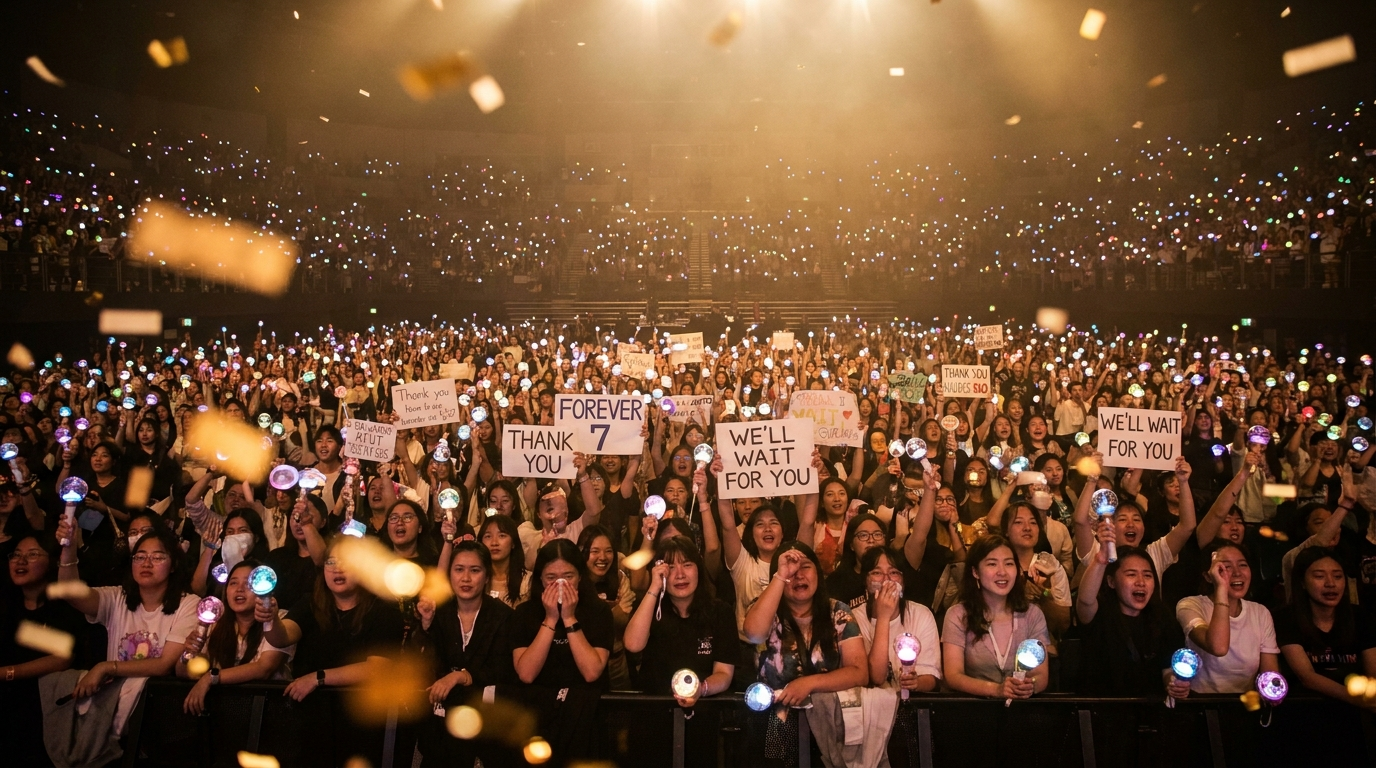
If you expected the group’s fandom, known as HIDDEN KARD, to be in full mourning mode, the actual reaction has been more nuanced. Social media has been flooded with tributes, but the dominant emotional register has been gratitude and warmth rather than devastation. Fans have been sharing throwback clips from KARD’s 2017 debut, thanking the members for nearly ten years of music, and in many cases explicitly hoping for some kind of reunion project down the line rather than treating this as a permanent goodbye.
That said, Koreaboo reported that the announcement still caught HIDDEN KARD off guard — not necessarily because a group ending after nine or ten years is shocking in itself, but because of the timing. Finding out your favorite group is disbanding while they are actively touring, with more tour dates still to come, creates a strange emotional whiplash: fans are simultaneously being told to say goodbye and being invited to one last round of concerts. Comment sections and fan forums have reflected that tension, mixing celebration of the group’s legacy with genuine confusion about how to feel while watching a farewell tour unfold in real time. This mirrors the intense online discourse we covered around K-pop dating rumors, where fandom reaction is rarely as simple as it looks from outside.
What This Reveals About Korean Culture and the Idol System
The KARD disbandment is a useful window into how the Korean entertainment industry actually works behind the glossy stage lighting. K-pop idol contracts are typically signed for seven or more years, and renewal negotiations around the decade mark are often where quiet cracks become public news. Unlike Western pop acts, which can drift apart informally over years without ever issuing a formal statement, Korean agencies tend to manage endings the same way they manage debuts: with a controlled announcement, a final content push (here, a full album), and a structured farewell tour that gives fans, and the agency’s balance sheet, one last commercial cycle together.
There’s also a specific cultural weight to KARD’s identity as a co-ed group. Because mixed-gender idol groups are so rare in Korea’s tightly gendered idol marketing, KARD’s ending doesn’t just remove one group from the roster, it shrinks an already small category almost to nothing. That scarcity is part of why the story has resonated beyond KARD’s core fandom into broader K-pop commentary: it raises the question of whether the co-ed concept was ever fully embraced by the industry, or whether it was always a niche experiment that agencies were less willing to reinvest in compared to conventional boy groups and girl groups.

How Does This Compare Internationally? K-pop Disbandments vs. Global Pop Group Endings
K-pop disbandments tend to look very different from how Western bands or pop groups break up. Groups like One Direction or the Spice Girls typically went on “hiatus” with no formal end date, leaving the door open indefinitely and often reuniting years later for tours or anniversary releases. Korean idol groups, by contrast, usually get an official, agency-confirmed disbandment date, paired with a farewell era engineered to close the chapter cleanly, similar to how groups like 2NE1 or Girls’ Generation-adjacent sub-units have wrapped up in the past. It’s a more transparent, if more final-feeling, way of ending things, and it reflects how tightly the idol system controls narrative even at the exit.
The mixed-gender angle also gives KARD’s disbandment an international news hook. Co-ed pop groups are far more normal outside Korea. It’s part of why outlets like allkpop and Business Upturn picked up the story for non-K-pop-specialist audiences, framing it less as “another group disbands” and more as “one of K-pop’s few gender-integrated acts is calling it a career,” a distinction that resonates with readers unfamiliar with just how segregated Korean idol group marketing normally is.
Conclusion: Why the KARD Disbandment Matters
The KARD disbandment marks the end of a nearly decade-long experiment that proved a co-ed idol group could thrive internationally, even if the format never became mainstream within Korea’s idol industry. With one final album and a farewell world tour still ahead, HIDDEN KARD fans have a bit more time to say goodbye properly, and the rest of the K-pop world has one more example of how Korean agencies choreograph even an ending. Curious about more stories shaping Korean pop culture right now? Explore our coverage of K-pop and Korean cultural diplomacy and other Korea culture stories on Unboxing Korea.