Think convenience store desserts mean a sad candy bar? Korea would like a word. Convenience store desserts in Korea are a national obsession: viral cream breads that sell out by lunchtime, legendary ₩1,200 ice cream bars, trending traditional sweets, and limited drops people genuinely hunt across the city. Budget: ₩1,000–4,000 per treat. Here’s the full dessert map for 2026.
Table of Contents
- Convenience Store Desserts Quick Facts
- The Cream Bread Phenomenon
- Pocket Ice Cream Classics: Melona, Samanco & Friends
- The Yakgwa Wave: Grandma’s Sweets Go Viral
- Beyond the Freezer: Jelly, Pudding & the Chilled Case
- Seasonal Drops & Sell-Out Culture (the Pokémon Bread Story)
- How to Hunt Viral Desserts Like a Local
- Allergy & Dietary Notes
- Convenience Store Desserts FAQ
Convenience Store Desserts Quick Facts
| Item | Details |
|---|---|
| What it is | Korea’s dessert scene in miniature: cream breads, ice cream bars, traditional sweets, jelly cups, and limited-edition viral drops |
| Where in the store | Bakery shelf near the sandwiches, the ice cream freezer chest, and the chilled dessert case (cakes, puddings, tiramisu cups) |
| Price range (2026) | ₩1,000–4,000 — ice cream bars from ₩1,200, cream breads ₩1,900–2,800, chilled dessert cups ₩2,500–4,000 |
| Best chains for it | CU is the reigning dessert champion (cream bread dynasty); GS25 and 7-Eleven counter with their own hits |
| Dietary notes | Wheat, milk, egg and soy are everywhere; nuts appear in some items — check the allergen box on the label |
| Best for | Sweet tooths, K-content fans chasing viral items, late-night dessert emergencies |
The Cream Bread Phenomenon
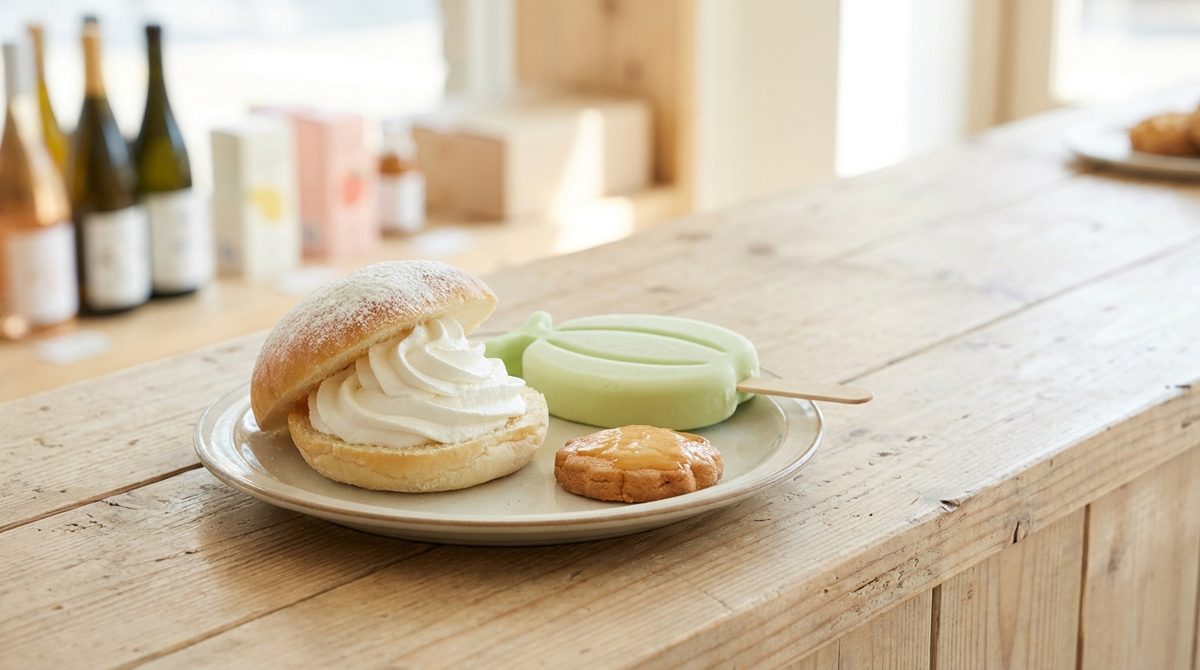
In January 2022, CU launched a plump white bun filled with an almost irresponsible amount of fresh cream, made with Yonsei University Dairy milk: the Yonsei Milk Cream Bread (연세우유 크림빵). Korea lost its mind. The bread went viral for its cross-section — cut it open and it’s more cream than bread — and “crembbang” review videos flooded YouTube and Instagram. It has since sold well over a hundred million units and spawned an entire dynasty.
The lineup rotates like a fashion house: original milk cream, chocolate, matcha, corn, sweet potato, injeolmi (roasted soybean), seasonal strawberry in winter, melon in summer. Each new flavor drop triggers a fresh wave of sell-outs. GS25 answered with its own premium cream bread lines and 7-Eleven followed, so every chain now has a cream bread shelf — but CU’s blue-and-white Yonsei packaging remains the icon.
Why did a convenience store bun beat famous bakeries at their own game? Distribution and drama. CU put a bakery-grade cream bread within a three-minute walk of every Korean, priced it under ₩3,000, and let the cross-section photos do the marketing. Competitor releases now get compared to “the Yonsei standard” the way phones get compared to iPhones.
How to eat it like the internet does: buy it chilled (the fridge version, not the room-temperature shelf), cut or tear it straight down the middle, admire the cream-to-bread ratio, photograph it, then eat. Price: ₩1,900–2,800. Pair it with a ₩1,500 convenience store coffee and you’ve recreated Korea’s most popular office-worker afternoon ritual for under ₩4,500.
Pocket Ice Cream Classics: Melona, Samanco & Friends
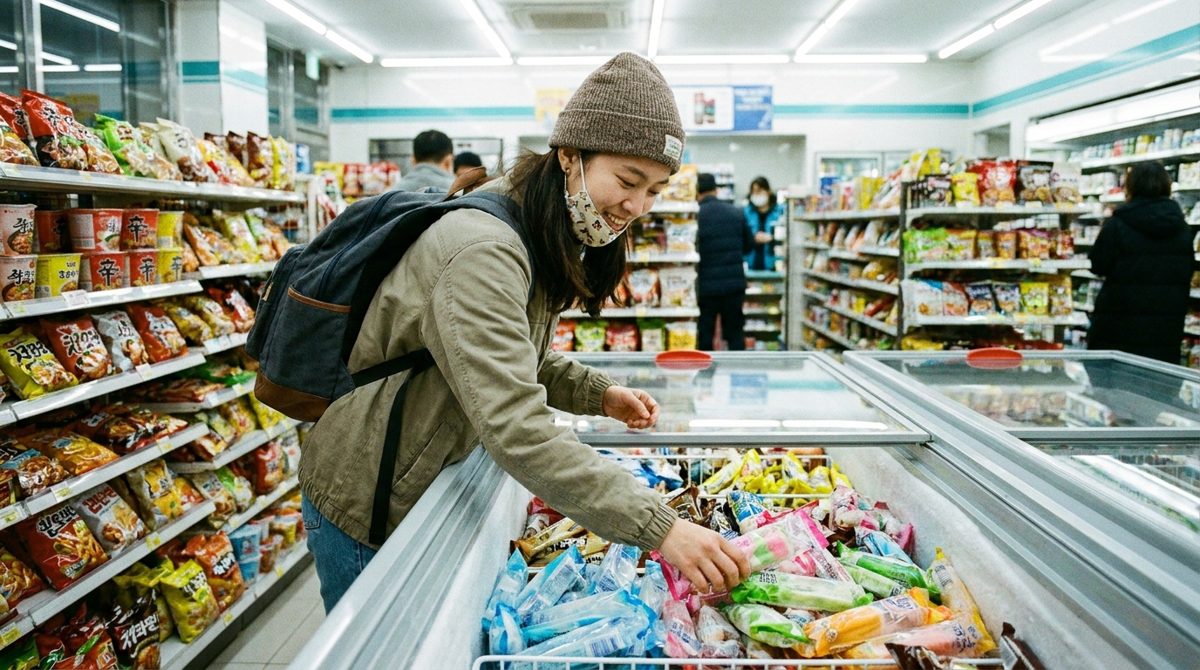
The waist-high freezer chest is a museum of Korean childhood, and everything in it costs less than a subway ride. The essentials, with real 2026 prices:
| Ice cream | What it is | Price (2026) |
|---|---|---|
| Melona (메로나) | The legendary 1992 melon bar — creamy, floral, Korea’s most famous ice cream export | ₩1,200–1,500 |
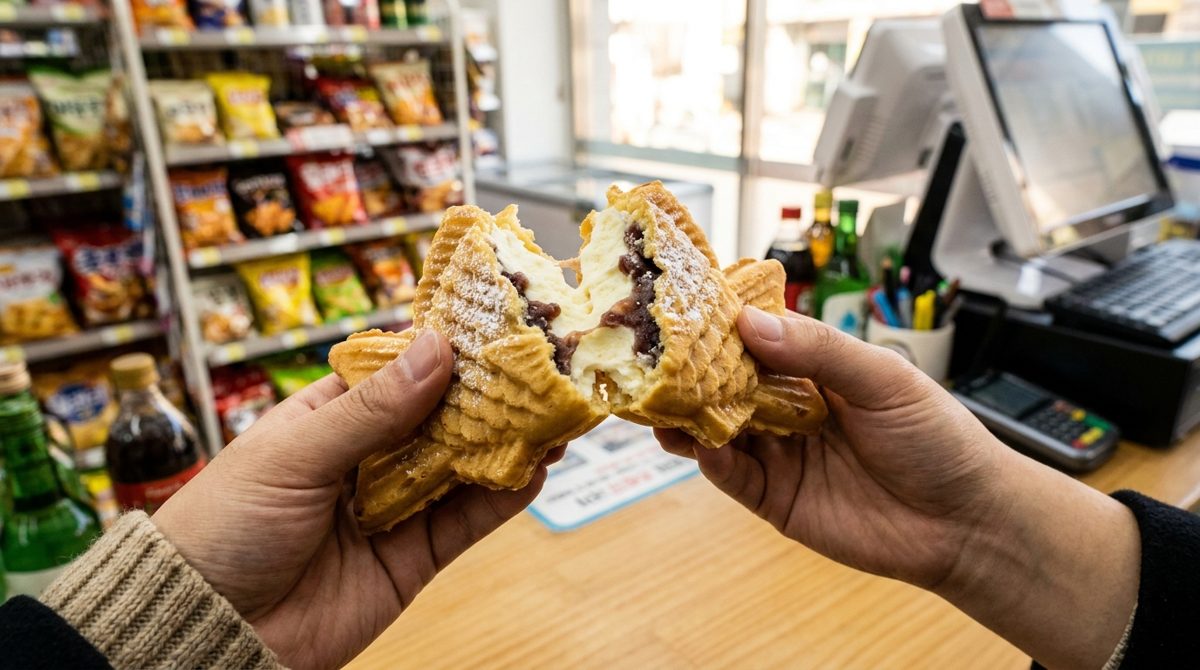
| Samanco (사만코) | Fish-shaped waffle sandwich with vanilla ice cream and red bean — frozen bungeoppang | ₩1,800–2,200 |
| Screw Bar (스크류바) | Twisted fruity ice pop, unchanged since 1985 | ₩1,200–1,500 |
| Jaws Bar (죠스바) | Shark-shaped berry ice pop that dyes your tongue purple — a rite of passage | ₩1,200–1,500 |
| Bibibig (비비빅) | Old-school red bean bar, the grandpa of the freezer | ₩1,200–1,500 |
| World Cone / Bravo Cone | Korea’s answer to the Cornetto, chocolate-tipped cone included | ₩2,000–2,500 |
| Tank Boy (탱크보이) | Watermelon-flavored monster pop, summer’s best ₩1,200 | ₩1,200–1,500 |
| Pints & tubs | Binggrae, Lotte and store-brand pints for hotel-room nights | ₩3,500–4,000 |
Freezer economics worth knowing: convenience stores sell ice cream at sticker price, but Korea also has dedicated discount ice cream shops (아이스크림 할인점) in residential areas selling the same bars for ₩400–700. If you spot one, stock up — but at ₩1,200–1,500, the convenience store version is still one of the cheapest joys in the country, available at 2 a.m., 365 days a year.
Samanco deserves special attention. It’s the frozen version of bungeoppang, Korea’s beloved fish-shaped winter street pastry — crisp waffle shell, vanilla ice cream, ribbon of sweet red bean. Nobody’s first guess is “fish-shaped ice cream sandwich,” and it converts every skeptic. If red bean is new to you, this is the friendliest possible introduction.
And Melona: if you’ve seen it in Korean grocery stores abroad for triple the price, this is your chance to eat it at the source for ₩1,200. On a summer night in Korea, a Melona at the outdoor table is a complete experience. For the shaved-ice end of Korean frozen desserts, see our Korean bingsu guide — the cafe-sized cousin of everything in this freezer.
The Yakgwa Wave: Grandma’s Sweets Go Viral
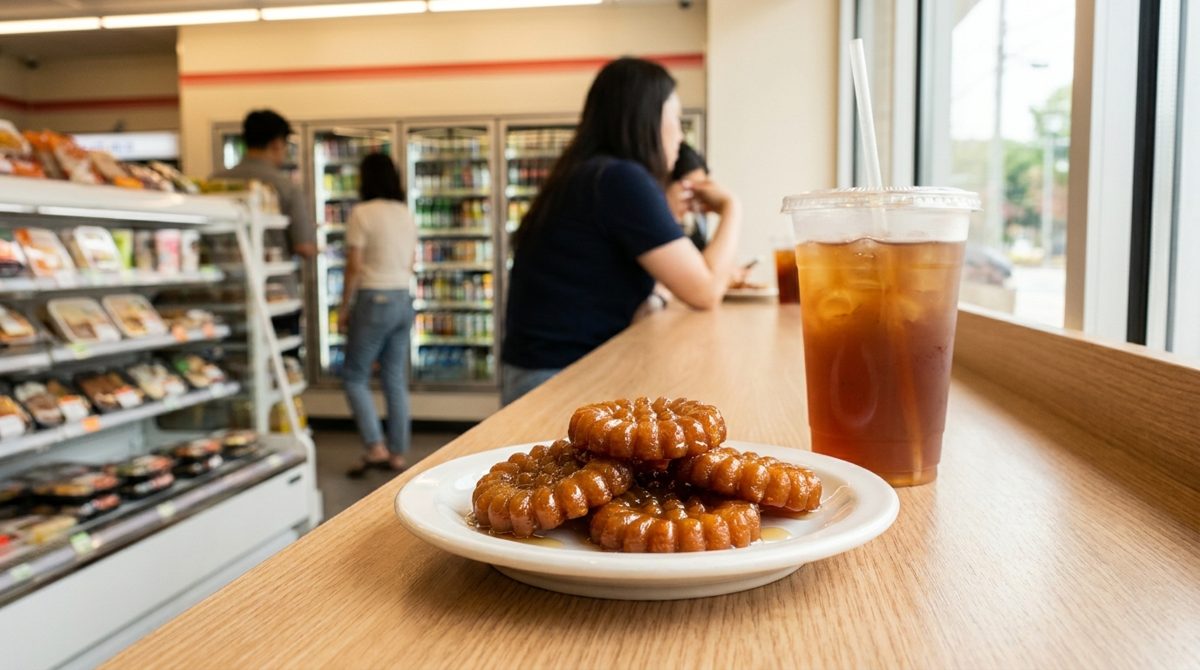
The most charming dessert trend in Korea right now is the halmaenial wave — “halmae” (grandma) plus “millennial” — young Koreans falling in love with traditional sweets their grandmothers served. The star is yakgwa (약과): a flower-shaped cookie of wheat flour, honey and sesame oil, deep-fried and soaked in syrup until it’s glossy, dense and chewy. It was once reserved for ancestral ceremonies and royal courts; now it’s on every convenience store shelf.
The 2026 shelf reads like a hanok cafe menu: yakgwa cookies and mini yakgwa packs (₩1,500–3,000), yakgwa-topped chocolate sticks, injeolmi (roasted soybean powder) cream breads, black sesame puddings, and rice-cake-filled chocolates. Convenience store buyers chase this trend hard because it photographs beautifully and sells to both grandmas and twenty-somethings — the rare dessert with 60 years of cross-generational approval.
Traveler’s angle: yakgwa is also one of the best edible souvenirs in the store — individually wrapped, sturdy, and unmistakably Korean. If traditional flavors intrigue you, this is a ₩2,000 gateway into a whole category most tourists never discover. Learn more about traditional Korean sweets on the Korea Tourism Organization’s site.
Beyond the Freezer: Jelly, Pudding & the Chilled Case
Two more dessert zones most tourists walk straight past. First, the jelly wall near the register: Korea has a serious gummy habit, and the convenience store shelf proves it. The famous peach-shaped gummies, ultra-sour belts, konjac jelly pouches (곤약젤리 — the squeezable ~5 kcal “diet dessert” Koreans inhale by the box), and yogurt-flavored jellies all run ₩1,000–2,500. Konjac jelly pouches in peach or apple flavor are the sleeper souvenir — light, cheap, and weirdly addictive.
Second, the chilled dessert case next to the sandwiches: this is where convenience stores openly compete with cafes. Expect tiramisu cups, cheesecake slices, chocolate roll cakes, milk puddings, custard cups, and soft rice-cake (tteok) packs at ₩2,500–4,000 — roughly half of what a cafe charges for the same square centimeters of dessert. Quality jumped dramatically in the mid-2020s when chains started collaborating with famous bakeries and dessert brands, and honestly, some of these cups would not embarrass a Seongsu cafe.
The move: grab a chilled tiramisu cup and a machine latte, take the window counter, and enjoy Korea’s cheapest cafe experience — total damage under ₩5,000.
Seasonal Drops & Sell-Out Culture (the Pokémon Bread Story)
To understand Korean dessert culture, you need the legend of the Pokémon bread. In February 2022, SPC re-released Pokémon Bread (포켓몬빵) — a nostalgic 90s snack bread, each containing one collectible ttibusil sticker. Korea went feral. People lined up before delivery trucks arrived, stores posted “NO POKÉMON BREAD” signs to stop the hourly questions, over 10 million sold in six weeks, and rare stickers traded online for more than 100 times the bread’s price. Grown adults bought bread, kept the sticker, and gave the bread away.
That episode explains the operating logic of the entire dessert shelf: scarcity is the flavor. Chains drop limited collabs constantly — character tie-ins, K-pop idol collabs, dubai-chocolate-style viral imports, seasonal strawberry everything each winter — and the good ones genuinely sell out within days. The Korean phrase to know is pumjeol (품절, “sold out”), a word you will see taped to shelves.
The seasonal calendar is its own show. Winter means strawberry season — strawberry cream breads, strawberry sandwiches, strawberry everything from December to February, and Koreans plan for it. Spring brings cherry-blossom-pink packaging, summer is peak ice cup and frozen fruit season, and autumn goes chestnut and sweet potato. Chains time viral drops to these windows, which keeps the dessert shelf in permanent rotation.
For travelers this is good news, not bad: whatever week you visit, there will be a new limited dessert the whole country is talking about. Ask any convenience store part-timer “yojeum mwoga yuhaenghaeyo?” (요즘 뭐가 유행해요? — what’s trending these days?) or just look for the shelf tag marked 신상 (new item).
How to Hunt Viral Desserts Like a Local
Dessert-hunting (디저트 헌팅) is a legitimate Korean hobby with its own tactics. Steal them:
- Go in the morning. Bakery items are delivered overnight and early morning; viral cream breads are often gone by 2 p.m. in busy areas.
- Use the store apps. CU’s Pocket CU (포켓CU) and GS25’s app show real-time stock at nearby branches — Koreans literally check which store within 500m has the item, and the apps stack coupons on top.
- Try residential branches. Tourist-district stores sell out first. The sleepy store two alleys behind your hotel probably still has the drop everyone wants.
- Check 1+1 tags on desserts too. Jelly cups, chocolates and even some ice creams rotate through 1+1 and 2+1 promotions — free dessert is the best dessert.
- Look at the chilled case, not just the bakery shelf. The refrigerated dessert section — tiramisu cups, cheesecake slices, rice cake (tteok) packs, pudding — is where chains hide their most cafe-like items, ₩2,500–4,000.
- Follow the freezer in summer, the bakery in winter. Korea’s dessert seasons are real: ice cup drinks and bars rule July; strawberry cream everything rules December–February.
One warning: dessert-hunting is a gateway habit. It starts with one cream bread and ends with you rating snack aisles like a judge on a cooking show. Budget accordingly — though at ₩1,000–4,000 per item, even a serious habit costs less than one hotel dessert. Round out the haul with a banana milk and you have the classic Korean dessert set.
Allergy & Dietary Notes
Quick honesty section: this is the least allergy-friendly corner of the store. Cream breads and most baked desserts contain wheat, milk, egg and soy; many chocolates and some breads contain nuts or peanuts; Samanco and red bean items are usually nut-free but share lines with nutty products. Korean labels list allergens in a boxed section (알레르기 정보) — the words to scan for: 밀 (wheat), 우유 (milk), 계란 (egg), 대두 (soy), 땅콩 (peanut), 호두 (walnut).
Brighter news for other diets: fruit jelly cups and most ice pops (Screw Bar, Jaws Bar, Tank Boy) are dairy-free; yakgwa is traditionally egg- and dairy-free (wheat and honey, though — vegans should note the honey); and rice-based tteok desserts are naturally gluten-light but often not certified gluten-free. When in doubt, the fruit cup fridge is the safest sweet corner in the store. For a full store-wide restriction guide, see our halal & vegetarian convenience store guide.
Final note on hunting etiquette: it’s fine to photograph the shelves (everyone does), but don’t open packaging before paying, and if you grab the last viral item while someone else is reaching — well, that’s the game. May the fastest dessert hunter win.
Convenience Store Desserts FAQ
What is the most famous convenience store dessert in Korea?
CU’s Yonsei Milk Cream Bread (연세우유 크림빵) — the 2022 viral hit that has sold over a hundred million units. Cut it open for the famous cream-heavy cross-section. Among frozen treats, Melona and the fish-shaped Samanco are the all-time icons.
How much do convenience store desserts cost in Korea in 2026?
₩1,000–4,000 covers virtually everything: classic ice cream bars run ₩1,200–1,500, cream breads ₩1,900–2,800, yakgwa packs ₩1,500–3,000, and chilled dessert cups like tiramisu ₩2,500–4,000. Watch for 1+1 promotions that make it even cheaper.
What was the Pokémon bread craze?
In 2022, SPC re-released Pokémon Bread with collectible ttibusil stickers inside. Over 10 million sold in six weeks, stores posted signs apologizing for empty shelves, and rare stickers resold for over 100 times the bread’s price. It remains the defining story of Korea’s sell-out dessert culture.
What is yakgwa and why is it trending?
Yakgwa is a traditional flower-shaped Korean honey cookie, deep-fried and soaked in syrup — once served at royal courts and ancestral rites. It’s trending thanks to the “halmaenial” wave of young Koreans embracing grandma-era sweets, and it’s now a staple on every convenience store dessert shelf.
What time do viral desserts sell out at Korean convenience stores?
Popular cream breads and limited drops often disappear by early afternoon in busy areas, since bakery deliveries arrive overnight. Shop in the morning, use the CU or GS25 apps to check real-time stock, and try quieter residential branches where viral items last longer.
Verdict: Korea’s Best Dessert Cafe Is Open 24 Hours
Convenience store desserts are Korean food culture compressed into a ₩2,000 price point: viral marketing genius (cream bread), fifty years of nostalgia (Melona, Samanco), tradition reborn (yakgwa), and the thrill of the hunt (limited drops). No reservation, no closing time, no wrong answer in the freezer. Start with a cream bread and a Melona tonight, then work through the rest of the store with our full Korean Convenience Store Explorer.