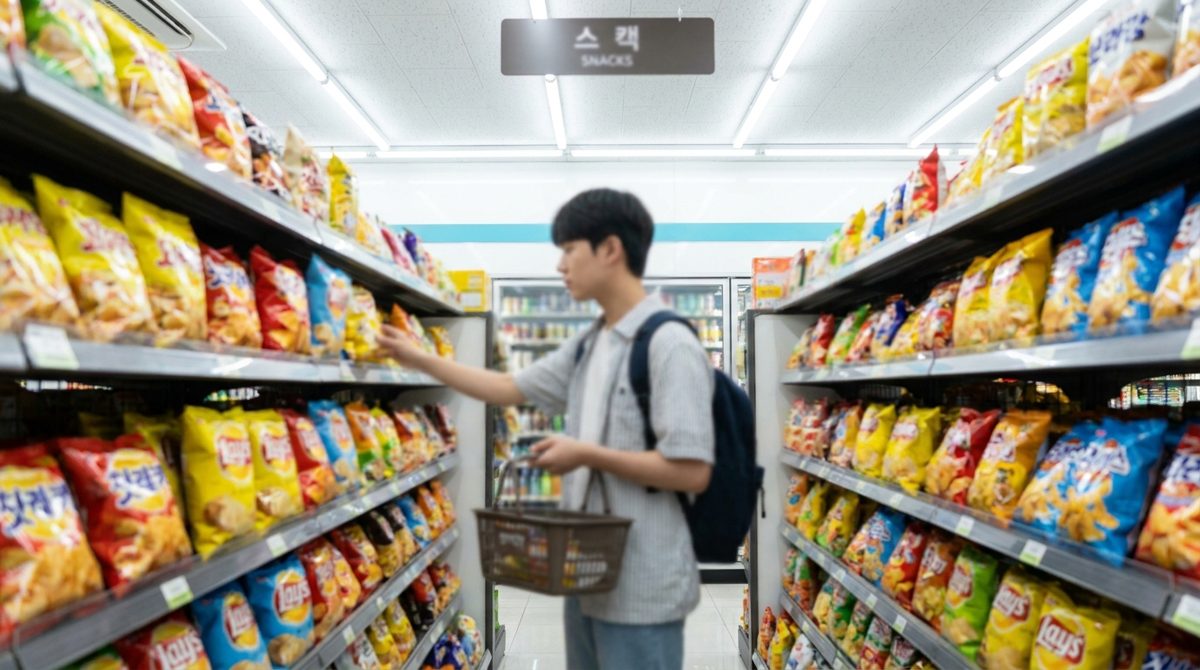
Standing in the snack aisle wondering where to start? Korean convenience store snacks are a legitimate cultural attraction: chips that once caused a national shortage, shrimp crackers older than your parents’ marriage, choco pies with geopolitical history, and a whole “anju” shelf built for beer. Budget ₩1,500–3,500 a bag. Here’s the complete 2026 snack map — icons, trends, souvenir picks and allergy notes.
Shopping more than your suitcase can hold? We deliver a new suitcase to your Seoul hotel within 2 hours — from $89, open 24/7.
Table of Contents
- Korean Convenience Store Snacks Quick Facts
- The Chip Icons: Honey Butter, Shrimp Crackers & Turtle Chips
- Choco Pies & the Sweet Classics
- Jelly Culture: Korea’s Gummy Obsession
- The Anju Shelf: Dried Squid & Drinking Snacks
- Snack Culture 101: Mukbang, Nitrogen Bags & Exclusives
- Snacks as Souvenirs: The Best Edible Gifts
- Allergen Notes: Nuts, Shrimp & Wheat
- Korean Convenience Store Snacks FAQ
Korean Convenience Store Snacks Quick Facts

| Item | Details |
|---|---|
| What it is | Korea’s snack universe: legendary chips, choco pies, gummy jellies, and savory “anju” drinking snacks |
| Where in the store | The central snack aisle (chips and sweets), jelly rack near the register, anju shelf near the beer fridge |
| Price range (2026) | ₩1,500–3,500 per bag; jellies from ₩1,000; premium jerky and nut packs up to ₩5,000 |
| Best chains for it | All four majors carry the icons; GS25 and CU race each other on exclusive collab flavors |
| Dietary notes | Shrimp, wheat, milk, soy and nuts are common — allergen box on every label (알레르기 정보) |
| Best for | Movie nights, souvenir shopping, beer pairing, anyone who thinks they don’t like “foreign snacks” |
The Chip Icons: Honey Butter, Shrimp Crackers & Turtle Chips
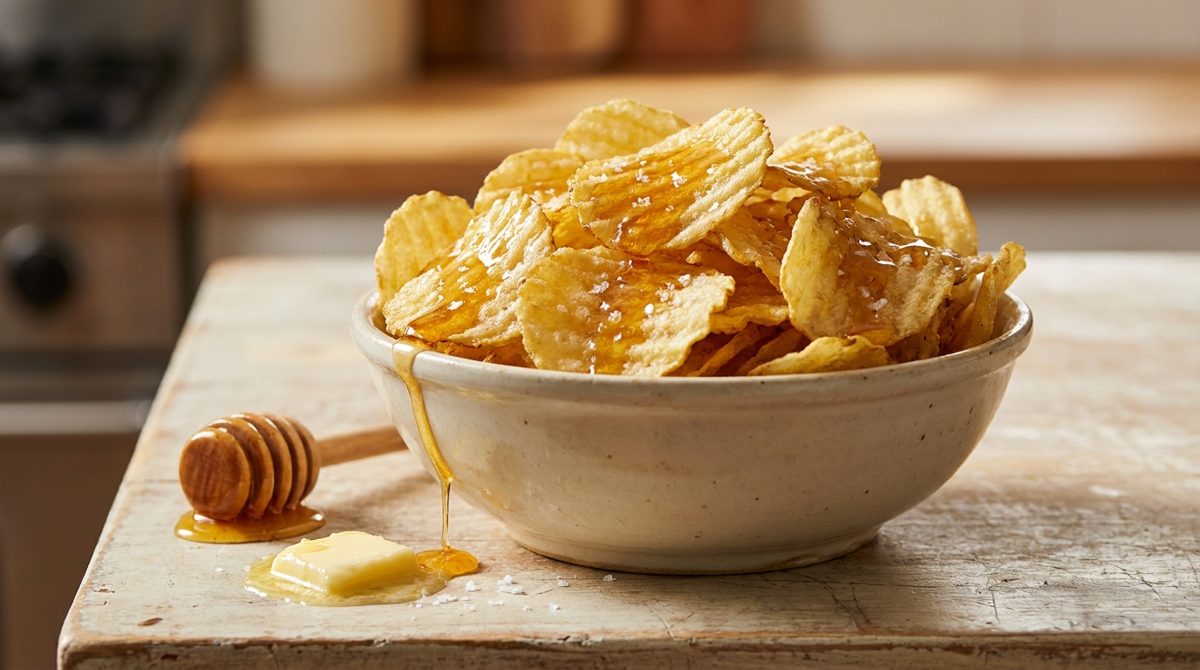
Start with the legend. In late 2014, Haitai released Honey Butter Chips (허니버터칩) — sweet-savory potato chips with honey and butter — and Korea experienced an actual, documented snack shortage. Stores sold out nationwide for months. Bags resold online for several times retail. Celebrities posted trophy photos holding a single bag. Convenience stores rationed them, and “I found Honey Butter Chips” became a legitimate social media flex. The factory ran at full capacity and still couldn’t keep up for the better part of a year.
The mania cooled, but the chip stayed — and it rewired the whole industry. Every Korean snack maker now chases the next viral flavor, which is why the chip aisle rotates like a fashion week. The current essentials:
| Snack | What it is | Price (2026) |
|---|---|---|
| Honey Butter Chips (허니버터칩) | The 2014 legend — sweet, buttery, dangerously light | ₩1,700–2,000 |
| Saewookkang (새우깡) | Shrimp crackers, since 1971 — Korea’s original snack and still a top seller | ₩1,500–1,800 |
| Kkobuk Chips / Turtle Chips (꺼북칩) | Four-layered corn chips; the Choco Churro flavor is a global TikTok star | ₩1,800–2,200 |
| Pocachip (포카칩) | Korea’s standard-bearer potato chip, original and onion flavors | ₩1,700–2,000 |
| Kkokkal Corn (꺼깔콘) | Cone-shaped corn snacks you wear on your fingertips first — everyone does it | ₩1,500–1,800 |
| Matdongsan (맛동산) | Crunchy peanut-coated fried dough bites, a 1975 classic | ₩1,800–2,200 |
| Jagalchi (자갈치) / Ojingeo Ttangkong (오징어땅콩) | Seafood-flavored crunch and squid-peanut balls — the savory deep cuts | ₩1,500–2,500 |
Saewookkang deserves its own paragraph. Launched in 1971, these airy shrimp crackers are Korea’s first mass-produced snack — the bag design has barely changed in 50 years, and the jingle is national heritage. Made with real shrimp (allergy note below), they’re savory, light, and the traditional companion to a can of beer. Feeding them to seagulls on ferry rides is a Korean pastime so universal that some ferries sell the bags onboard.
Turtle Chips are the modern rival: Orion’s four-layer corn chips whose Choco Churro flavor went internationally viral. In Korea you’ll find flavors that never left the country — corn soup, injeolmi, sweet vanilla — often as convenience-store exclusives. Check shelf tags for 1+1 and 2+1 deals; chips rotate through promotions constantly.
Choco Pies & the Sweet Classics
The Orion Choco Pie (초코파이) is more than a snack — it’s a cultural artifact. Born in 1974, this chocolate-coated marshmallow sandwich became shorthand for jeong (정) — the untranslatable Korean concept of deep affection — thanks to decades of “정” advertising. Korean soldiers hoard them during military service; they’ve been used as morale currency in barracks for generations. And during the Kaesong industrial complex era, Choco Pies given to North Korean workers became so coveted they reportedly traded as informal currency — the snack has its own Wikipedia entry covering the phenomenon.
One ₩600–800 pie (small packs at convenience stores; boxes of 12 run ₩4,800–6,000 at marts) buys you a taste of all that history. The sweet-classics shelf around it: Mongshell (softer, cream-filled cousin), Oh Yes (chocolate cake bars), Custard (fluffy custard cream cakes), Kancho (chocolate-filled biscuit balls with cartoon faces), and Pepero (chocolate-dipped sticks — Korea celebrates an entire holiday, November 11, in their honor).
Traveler tip: these individually-wrapped classics are the single best “office gift” category in the store — more on the souvenir strategy below. And if your sweet tooth wants the premium end, the dessert shelf one aisle over is a whole other adventure.
Jelly Culture: Korea’s Gummy Obsession
Korea is quietly one of the world’s great gummy nations. The rack near the register carries an ever-mutating zoo: the famous peach-shaped gummies (복숭아 젤리), cola bottles, sour belts, yogurt jellies shaped like the yogurt drink they imitate, ultra-realistic fruit shapes, and collagen-added “beauty jellies” that claim skincare benefits with a straight face. Prices run ₩1,000–2,500, and new shapes drop monthly.
Two jelly categories worth understanding: character jellies — chains license K-pop idols, games and cartoon characters for exclusive shapes, which sell out exactly like viral desserts do — and konjac jellies (곤약젤리), the squeezable near-zero-calorie pouches Koreans treat as guilt-free dessert. The peach konjac pouch is arguably the most re-purchased snack among foreign residents in Korea.
Why so many jellies? Korean snacking leans heavily on texture — the same instinct behind chewy rice cakes and glass noodles. If a Korean friend hands you a jelly and watches your face, they’re waiting for the chew verdict. Take it seriously. And keep an eye out for regional and seasonal jellies — Jeju hallabong citrus shapes, summer watermelon editions — which double as tiny, edible travel diaries.
The Anju Shelf: Dried Squid & Drinking Snacks
Next to the beer fridge lives the most Korean shelf in the store: anju (안주) — food that exists specifically to accompany alcohol. The anchor product is dried squid (마른 오징어, or butter-grilled 버터구이 오징어), chewy strips you tear and share, ₩3,000–5,000. Around it: shredded seasoned squid (진미채), dried filefish jerky (쥐포), butter-roasted peanut and almond packs, beef jerky, spicy braised chicken feet pouches for the brave, and mini smoked sausages.
The ritual matters: crack a beer at the outdoor plastic table, tear the squid pack down the middle, and alternate bites and sips. Dried squid is chewy, intensely savory, slightly sweet — a flavor that reads strange for about three bites and then becomes a craving. Convenience stores even stock mayonnaise-gochujang dip cups specifically for it.
This shelf pairs with our convenience store alcohol guide — soju, beer, somaek ratios and the sacred plastic table — and with the broader 12 best convenience store eats if you’re building a full outdoor feast.
Snack Culture 101: Mukbang, Nitrogen Bags & Exclusives
A few pieces of context that make the aisle more fun to read. First, snack reviews are mainstream entertainment in Korea. Mukbang and convenience-store review channels move markets — a single viral review can empty a product from every store in a district within days, and chains openly design products hoping for exactly that. When you see a shelf tag with a YouTube thumbnail on it, that’s why.
Second, the nitrogen bag saga. Korean chip bags are famously over-inflated with nitrogen — so famously that in 2014, university students built a raft out of 160 chip bags and successfully paddled it across the Han River to prove the packaging was mostly air. The stunt made national news, snack makers promised reform, and the phrase “nitrogen snack” (질소과자) entered the dictionary of Korean consumer complaints. The bags are still puffy. Consider it protective packaging for your suitcase.
Third, chain exclusives are real strategy. GS25, CU, 7-Eleven and emart24 each negotiate exclusive flavors and collabs — a Turtle Chips flavor only at CU, an idol-branded jelly only at GS25. Serious snack hunters cross-shop chains the way sneakerheads cross-shop drops. If you don’t find this month’s viral item in one store, the rival brand’s store fifty meters away may have its own answer to it.
Snacks as Souvenirs: The Best Edible Gifts
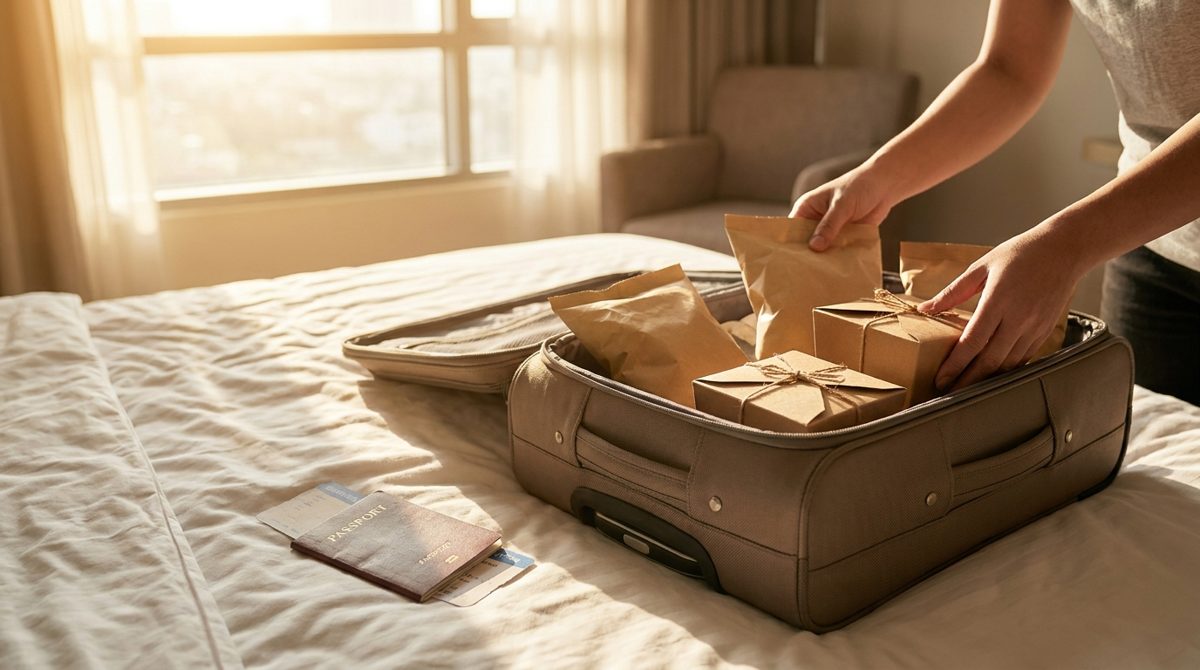
Here’s the open secret of Korea souvenir shopping: skip the ₩15,000 keychains — snacks are the best gifts in the country. They’re cheap (₩1,500–3,500), light, unmistakably Korean, and actually get consumed instead of drawered. The proven crowd-pleasers:
- Honey Butter Chips — the story alone (“this caused a national shortage”) makes the gift.
- Honey butter almonds — the #1 tourist snack purchase in Korea for a decade running; convenience stores carry small packs, marts sell gift boxes.
- Turtle Chips Choco Churro — for anyone who lives on TikTok.
- Choco Pie box — history plus 12 individually wrapped units, the perfect office share.
- Pepero variety packs — small, flat, packable.
- Yakgwa and traditional sweets — for the tasteful relative.
- Dried squid — for the adventurous friend (seal it well; your suitcase will thank you). Check your airline and destination’s rules on animal products first — some countries restrict seafood and meat snacks.
Packing tips from repeat offenders: put chip bags in your carry-on if you can (checked-bag pressure changes make them balloon dramatically — they usually survive, but why gamble), keep chocolate items out of summer checked luggage, and stack Pepero boxes flat along the suitcase edge. If you’re gifting to kids, character jellies win every time; for coworkers, anything labeled “Korea limited” does the heavy lifting.
Buying strategy: convenience stores are perfect for singles and taste-testing; once you know your winners, big marts sell multi-packs cheaper. Spending over ₩15,000 at bigger retailers? You may qualify for an instant tax refund — run your numbers with our Korea tax refund calculator before the airport. Chip bags are mostly air (Korean internet’s favorite complaint — “nitrogen snacks”), so they survive suitcases beautifully but eat luggage space; leave room or crush-proof a tote.
Allergen Notes: Nuts, Shrimp & Wheat
Three allergens do most of the damage in this aisle, so here’s the plain-language map:
| Allergen | Where it hides | Korean label word |
|---|---|---|
| Shrimp / shellfish | Saewookkang shrimp crackers, Jagalchi, many “seafood flavor” snacks | 새우 (shrimp), 게 (crab) |
| Peanuts / tree nuts | Matdongsan, Ojingeo Ttangkong, honey butter almonds, many chocolates | 땀콩 (peanut), 아몬드 (almond), 호두 (walnut) |
| Wheat | Almost all crackers, cookies, choco pies, Pepero | 밀 (wheat) |
| Milk & soy | Chocolate items, butter flavors, most baked snacks | 우유 (milk), 대두 (soy) |
| Squid / fish | The entire anju shelf | 오징어 (squid), 쥐포 (dried filefish) |
Korean law requires allergens listed in a highlighted box on every package (알레르기 정보). If you carry a serious allergy, screenshot your allergen’s Korean word and match characters — pointing your camera translator at the box works well, and CU’s tourist-area stores with AI translation screens can help too. Cross-contamination is also declared (“혼입 가능” = may contain traces). Plain chips like Pocachip original are typically nut-free, but the aisle is a high-contact zone — read, don’t assume. Gluten-free travelers: rice snacks (쌀과자) and most jellies are your safest lanes, though certification is rare.
Korean Convenience Store Snacks FAQ
What happened with the Honey Butter Chip shortage?
After launching in late 2014, Haitai’s Honey Butter Chips went so viral that Korea ran short for months — stores rationed bags, resellers charged several times retail, and celebrities posted photos with theirs like trophies. The craze reshaped the industry, kicking off Korea’s ongoing viral-flavor arms race.
How much do Korean convenience store snacks cost in 2026?
Most chip bags and sweet snacks run ₩1,500–3,500. Jellies start around ₩1,000, single choco pies cost ₩600–800, and premium anju items like dried squid or jerky reach ₩3,000–5,000. 1+1 and 2+1 shelf promotions rotate monthly and apply automatically at checkout.
What are the best Korean snacks to bring home as souvenirs?
Honey Butter Chips, honey butter almonds, Turtle Chips (Choco Churro), a box of Orion Choco Pies, and Pepero variety packs are the proven winners — cheap, light and unmistakably Korean. Buy singles at convenience stores to taste-test, then multi-packs at marts for the haul.
Do Korean snacks contain common allergens?
Frequently: shrimp crackers contain real shrimp, many classics contain peanuts or almonds, and nearly all biscuits and pies contain wheat, milk and soy. Every package lists allergens in a highlighted box (알레르기 정보) — match the Korean words or use a camera translator before eating.
What is anju and what snacks go with Korean beer?
Anju (안주) means food eaten with alcohol — a cornerstone of Korean drinking culture. At convenience stores, the classics are dried squid with mayo-gochujang dip, shredded squid, nut packs, jerky and shrimp crackers, all stocked conveniently next to the beer fridge.
Verdict: The Snack Aisle Is a Museum With ₩2,000 Admission
Fifty years of Korean pop culture is sitting on that shelf for pocket change: the 1971 shrimp cracker, the 1974 choco pie, the 2014 chip that broke the internet before that was a phrase, and this month’s viral drop you’ll brag about trying first. Grab a basket, budget ₩10,000, invite whoever you’re traveling with, and conduct your own blind taste test tonight — then let the Korean Convenience Store Explorer walk you through every other shelf in the store.