If you’ve walked past a Seoul dessert cafe recently and seen either a massive queue or a “70% off” sign, you’ve witnessed both ends of the Dubai chewy cookie phenomenon. Known in Korean as dujjonku (두쫌쿠, short for “Dubai chewy cookie”), this chocolate-coated, pistachio-and-kadaif-filled marshmallow cookie became Korea’s most talked-about food of 2026 — and its trajectory tells you almost everything about how Korean food fads work.
Table of Contents
- What’s Happening in Korea Right Now?
- The Background: From Dubai Chocolate to Dujjonku
- 5 Wild Facts About the Dubai Chewy Cookie Craze
- What Are Koreans Actually Saying?
- What This Reveals About Korean Food Culture
- How Does This Compare Internationally?
- Conclusion: Should You Still Try One?
What’s Happening in Korea Right Now?
The Dubai chewy cookie is a Korean invention that fuses the viral “Dubai chocolate” formula — pistachio cream and crispy kadaif (shredded phyllo) — with Korea’s beloved chewy, mochi-like cookie texture, made by melting marshmallow into the dough. The result: crunchy outside, absurdly stretchy inside, photogenic when torn in half. In other words, engineered for social media.
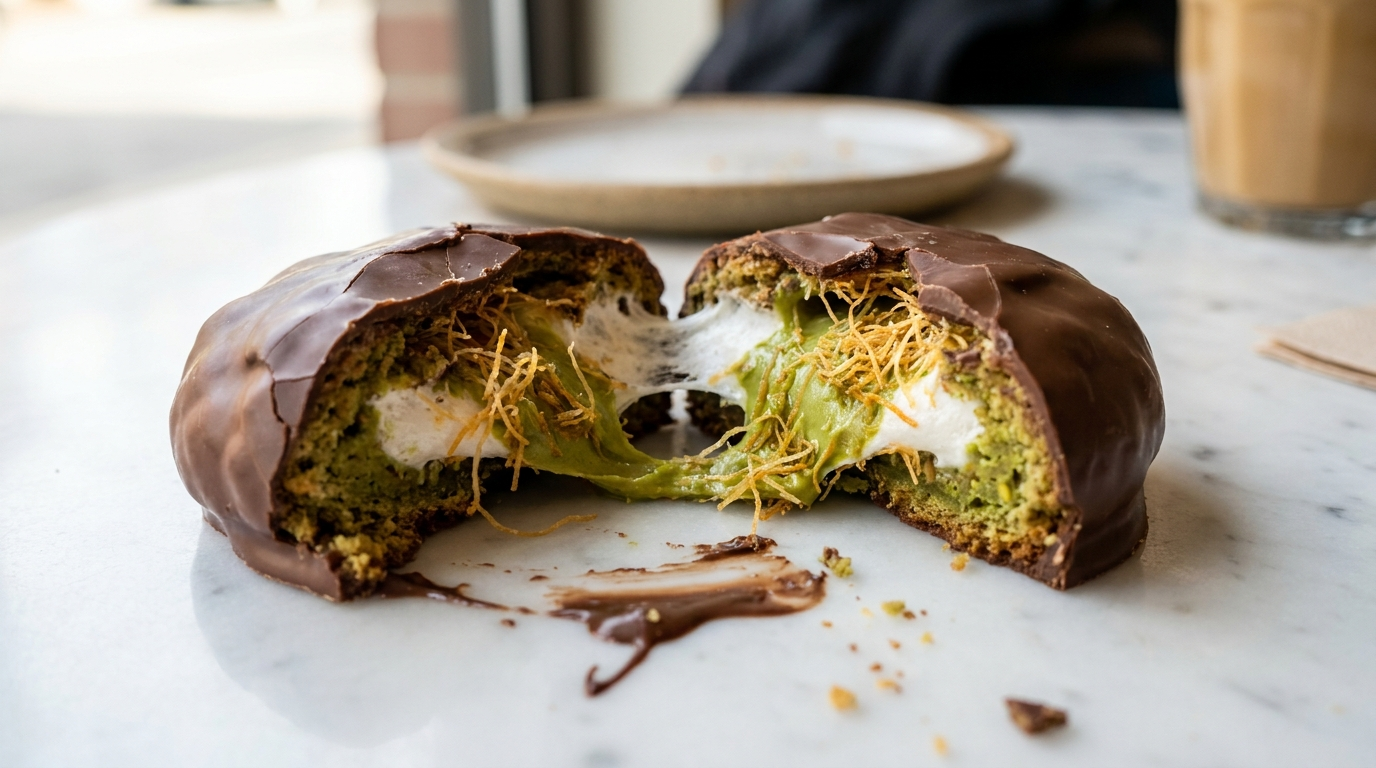
Through late 2025 and early 2026, the dujjonku dominated Korean delivery apps’ search rankings for over a month, sold out at cafes within minutes of opening, and spawned convenience store versions, ice creams, muffins, and even rice cakes. By mid-2026, the fever has cooled dramatically — and that crash is now a story in itself.
The Background: From Dubai Chocolate to Dujjonku
The origin story is peak Korea: the global Dubai chocolate trend arrived in Seoul in 2025, and everything changed when Jang Won-young of K-pop group IVE posted herself eating Dubai chocolate on social media. According to the South China Morning Post, that single K-pop post ignited a nationwide frenzy that Korean bakers then localized — swapping the chocolate bar for Korea’s trendy chewy cookie format. By December 2025 it was everywhere on YouTube and Instagram; by January 2026 it was a full national phenomenon.
5 Wild Facts About the Dubai Chewy Cookie Craze
1. Queues started before sunrise
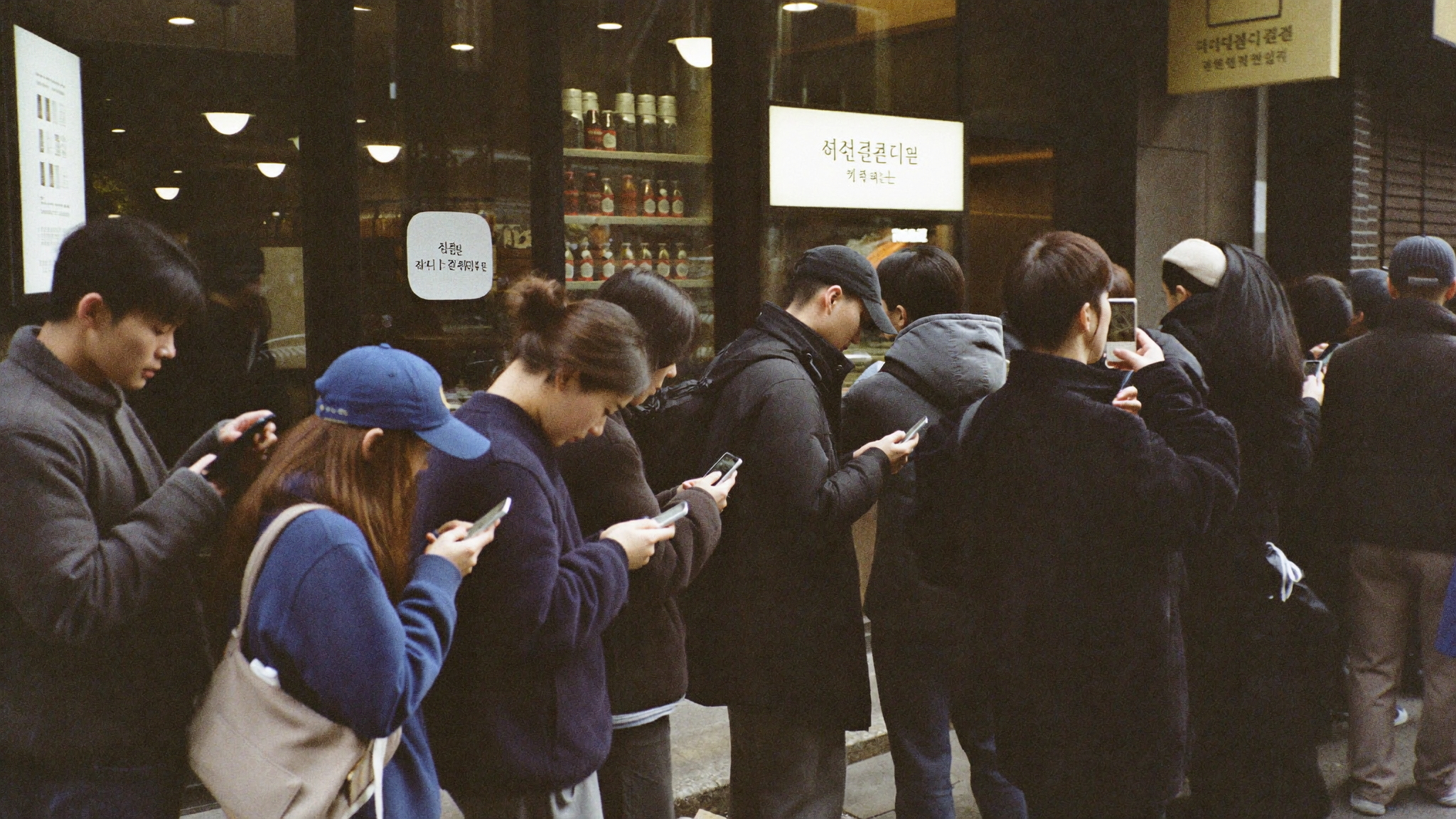
Popular Seoul cafes saw lines form before dawn, with 120 cookies selling out in 30 minutes. Some shops introduced per-person purchase limits, sold only on certain days, or halted in-store sales entirely to control crowds, as reported by the Korea JoongAng Daily.
2. CU sold 1.8 million in under three months
Convenience store chain CU’s Dubai chocolate line sold nearly 1.8 million units between October 2025 and mid-January 2026, topping its app’s search rankings for weeks. Paris Baguette, cinemas, and yogurt chains all rushed out their own versions.
3. It triggered a global pistachio squeeze
Demand for kadaif and pistachio cream outran supply so badly that Costco Korea put per-person limits on pistachio purchases in December 2025. Prices for a single cookie ran 5,000–10,000 won ($3.50–$7) — roughly double a normal cookie.
4. The government inspected 3,600 dessert shops
The boom grew so fast that Korea’s Ministry of Food and Drug Safety ran hygiene inspections on thousands of shops selling the cookie after a wave of consumer reports — a rite of passage for any mega-trend in Korean food.
5. The crash came as fast as the boom
By late February 2026, self-employed cafe owners who had jumped on the trend were posting about unsold inventory — “even at 2,000 won it doesn’t sell.” The dujjonku’s rise and fall took roughly six months, almost exactly matching Korea’s previous fad cycles (think tanghulu, croffles, and bagel mania).
What Are Koreans Actually Saying?
Korean social media split into three camps. The trend-chasers documented every bite (“the kadaif crunch is real”). The skeptics rolled their eyes at paying 10,000 won for a cookie. And a third, more reflective camp debated what the cycle says about Korea: one popular comment format goes, “Koreans don’t eat desserts, we eat content.” Younger Koreans also framed it as a sobiyok (small indulgence) — an affordable luxury in a high-cost era, the same psychology driving Korea’s luxury shopping boom.
What This Reveals About Korean Food Culture
The Dubai chewy cookie is a textbook case of Korea’s hyper-compressed trend cycle. A celebrity spark, instant nationwide adoption via social media, convenience store commodification within weeks, government inspection at peak, and oversupply crash — all inside six months. Sociologists call it FOMO consumption; Koreans call it ppalli-ppalli (hurry-hurry) culture applied to dessert. It’s also a story about Korea’s fiercely competitive self-employment economy: when a trend hits, thousands of small cafes pivot overnight, which supercharges both the boom and the bust.
For visitors, the upside is real: Korea is arguably the best country on earth to taste whatever the world’s next viral dessert is, done better than the original. Explore the staples that outlast the fads in our Korean street food guide and our roundup of the best Korean convenience store foods.
How Does This Compare Internationally?
Other countries have viral foods — the cronut in New York, the Dubai chocolate bar itself in the Gulf and Europe — but Korea’s cycle is uniquely fast and total. What takes two years elsewhere takes six months in Korea, because the entire retail chain (cafes, franchises, convenience stores, delivery apps) mobilizes simultaneously. The dujjonku even boomeranged: the Korean remix of a Dubai-inspired treat is now spreading to Japan, Taiwan, and Southeast Asia as a “Korean dessert.”
Conclusion: Should You Still Try One?
Honestly — yes, and now is the perfect time. The queues are gone, prices are dropping, and the well-made versions (pistachio cream, real kadaif, proper chewy dough) are still delicious. Skip the tourist-trap knockoffs, find a bakery that specialized in chewy cookies before the boom, and enjoy a piece of Korean food-trend history.
Coming to Seoul for a dessert tour? Drop your bags with our luggage delivery and storage service and hit the cafes hands-free — trust us, you’ll want both hands for the tear-apart photo.