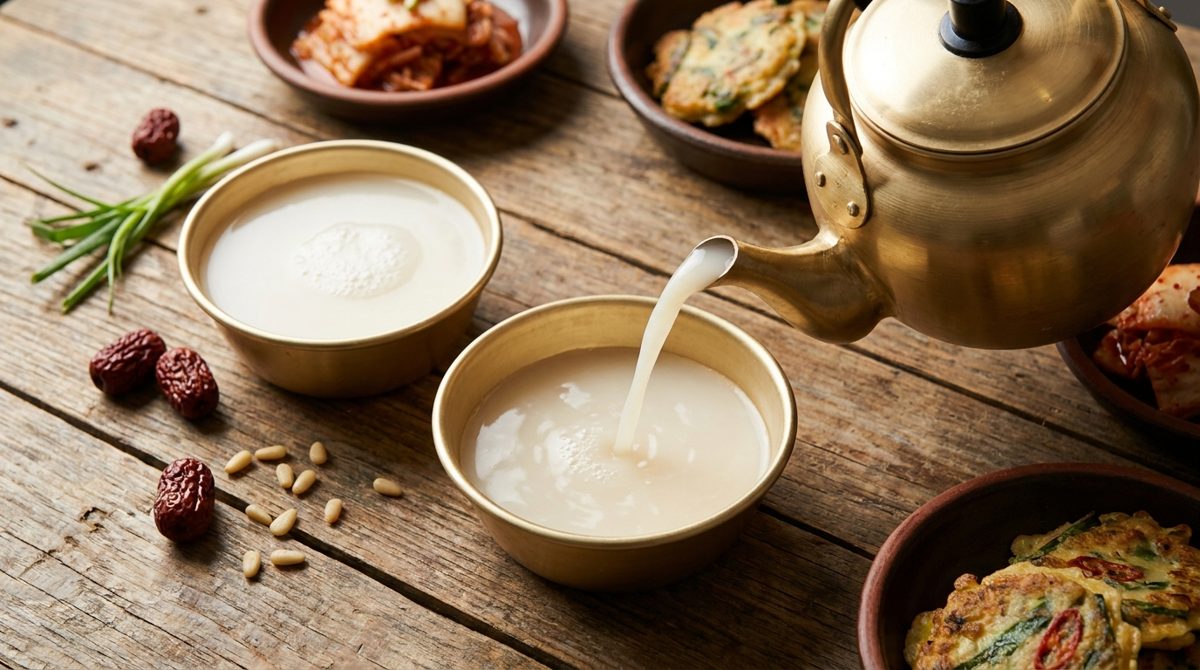
Ordering drinks in Korea and keep seeing a milky white bottle on every table? Makgeolli (막걸리) is Korea’s traditional fermented rice wine — a cloudy, lightly sparkling, tangy-sweet drink made from rice, water, and a fermentation starter called nuruk. It’s low in alcohol compared to soju, sold everywhere from convenience stores to breweries, and the go-to pairing for a rainy day and a plate of pajeon. This decoder page covers taste, ABV, allergens, halal status, real 2026 prices, and how to drink it the way locals do.
Table of Contents
- Makgeolli Quick Facts
- What Is Makgeolli, Exactly?
- What Does Makgeolli Taste Like? (ABV & Flavor)
- Dietary Guide: Vegetarian, Vegan, Halal & Allergens
- How to Order & Buy Makgeolli (+ 2026 Prices)
- How to Drink Makgeolli Like a Local
- Types of Makgeolli
- Where to Try Makgeolli
- Makgeolli FAQ
Makgeolli Quick Facts
| Item | Details |
|---|---|
| Korean name | 막걸리 (makgeolli) — “roughly filtered [wine]” |
| Pronunciation | mahk-GUH-lee |
| Type | Milky, unfiltered, lightly sparkling fermented rice wine |
| Alcohol content | Typically 6–8% ABV — much lower than soju (16–20%) |
| Price (2026) | ₩5,000–₩9,000 per 750ml–1L bottle at restaurants/pubs; ₩2,500–₩4,000 at convenience stores/marts |
| Vegetarian | ✅ Most traditional recipes (rice, water, nuruk, yeast) are vegetarian |
| Vegan | ✅ Generally, with the same base ingredients — check flavored/honey-sweetened variants |
| Halal-friendly | ❌ No — it is an alcoholic beverage, so it is not halal regardless of ingredients |
| Main allergens | Gluten (some commercial blends use wheat), sulfites (added as a preservative in bottled versions) |
| Best for | Rainy-day pajeon pairing, casual/traditional drinking culture, souvenir shopping, travelers who want a lower-ABV option than soju |
What Is Makgeolli, Exactly?
Makgeolli is Korea’s oldest alcoholic drink, brewed for well over a thousand years by fermenting steamed rice with nuruk — a wheat or rice-based fermentation starter packed with wild yeasts and enzymes. Unlike clear soju, which is distilled, makgeolli is simply fermented and left unfiltered, which is exactly why it looks like a milky, slightly chalky smoothie rather than a typical wine or spirit. The name literally comes from mak (roughly, carelessly) and georeuda (to strain) — “roughly strained” rice wine, a nod to its humble farmhouse origins.
The brewing process is deceptively simple but takes real patience: steamed rice is mixed with nuruk and water, then left to ferment for about a week to ten days at room temperature, with the mash stirred daily to keep the fermentation even. Wild yeasts in the nuruk convert the rice starches into alcohol and natural carbonation, which is why makgeolli has that faint fizz even without any added carbonation — it’s a genuinely living, active ferment, closer in spirit to a farmhouse cider than a factory-made spirit.
For centuries makgeolli was the drink of Korean farmers, brewed at home and shared in the fields between planting and harvest — it’s still sometimes called nongju (“farmer’s wine”). It fell out of fashion in the mid-20th century as soju and beer took over city life, but it’s had a genuine renaissance since the 2010s: craft breweries, fruit-flavored versions, and premium bottled labels have turned it into one of Korea’s trendiest drinks again, popular with both older generations and younger Koreans rediscovering it.
Today makgeolli shows up everywhere from ₩2,500 plastic bottles at the corner store to ₩15,000+ artisanal bottles at specialty makgeolli bars in Seoul’s Ikseon-dong and Itaewon neighborhoods. It’s carbonated from natural fermentation, so bottles are often still slightly “alive” — a gentle fizz builds up, which is part of the charm and part of why you shake before pouring.
What Does Makgeolli Taste Like? (ABV & Flavor)
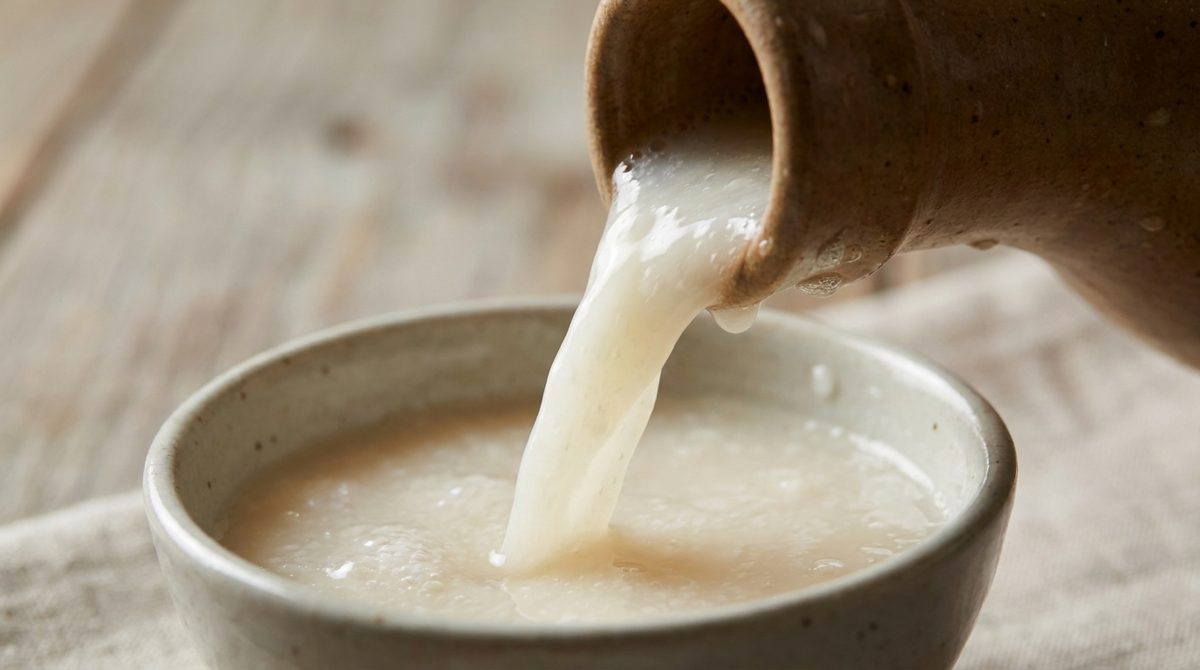
Makgeolli tastes tangy, mildly sweet, and slightly sour — somewhere between a light yogurt drink, a dry cider, and a very mellow wine. The mouthfeel is thick and a little chalky from the suspended rice sediment, with a gentle natural fizz on the tongue. It’s far less sweet than it looks; the milky-white color often surprises first-timers who expect something like a milkshake or a fruit juice.
How Strong Is Makgeolli? (ABV)
Standard makgeolli runs about 6–8% ABV — roughly similar to a strong beer, and far gentler than soju’s 16–20% or Korean whisky-based spirits. This makes it a popular “easy” entry point for visitors who want to try Korean alcohol culture without the intensity of soju shots. That said, don’t underestimate it: bottles are usually 750ml–1L and go down easily because of the sweetness, so it’s simple to drink more than you intended. Premium and traditional brewed versions can run higher, up to 12–15% ABV, so always check the label.
Because it’s brewed rather than distilled, makgeolli also carries some natural nutrients from the fermentation — trace B vitamins, lactic acid bacteria, and amino acids — which is why it’s sometimes (a little optimistically) marketed as a “healthier” alcohol choice. It won’t cancel out a night of drinking, but a bottle of makgeolli is generally lighter on the stomach and the next-day headache than the same volume of soju, largely because of the lower ABV and slower drinking pace that its bowl-and-share serving style encourages.
Makgeolli Dietary Guide: Vegetarian, Vegan, Halal & Allergens
Makgeolli is one of the friendlier Korean drinks for vegetarians and vegans, but it comes with one non-negotiable fact for Muslim travelers: it is alcohol.
| Ingredient concern | In standard makgeolli? | How to handle |
|---|---|---|
| Alcohol | Always (6–8% ABV typical, some up to 12–15%) | Not suitable for anyone avoiding alcohol for religious, health, or personal reasons |
| Gluten / wheat | Sometimes — nuruk starter can be wheat- or rice-based | Check the label; rice-nuruk versions are lower-gluten but rarely certified gluten-free |
| Sulfites | Often, in mass-produced bottled versions | Added as a preservative to slow ongoing fermentation; sensitive drinkers should ask for freshly brewed, small-batch makgeolli |
| Honey / added sugar | Only in flavored variants (peach, yuzu, etc.) | Plain/traditional makgeolli has no added honey; check labels on flavored bottles |
| Dairy | No | Despite the milky appearance, no dairy is involved — the color comes from rice sediment |
| Nuts / shellfish / egg | No | Not part of any standard recipe |
Is Makgeolli Vegetarian or Vegan?
Yes, generally — traditional makgeolli is made from just four things: rice, water, nuruk, and yeast, none of which involve animal products. That makes plain makgeolli vegetarian and vegan-friendly by default. The one thing to double-check is flavored or “premium” commercial variants, since some add honey, milk-based flavoring, or other sweeteners for peach, yuzu, or strawberry versions — read the label or ask “kkul deureo issnayo?” (꿀 들어 있나요? — “does it have honey in it?”) if you’re strictly vegan.
Is Makgeolli Halal?
No — makgeolli is not halal, and there’s no version of it that is. It is a fermented alcoholic beverage, and alcohol content alone makes a drink non-halal under Islamic dietary law, regardless of how “natural,” “milky,” or “juice-like” it looks or tastes. This is worth stating plainly because makgeolli’s pale, smoothie-like appearance genuinely confuses some travelers — it is not a rice drink or a dessert beverage, it is wine. Muslim travelers and anyone avoiding alcohol should skip makgeolli entirely; non-alcoholic Korean drink options include sikhye (sweet rice punch), sujeonggwa (cinnamon-persimmon punch), and standard soft drinks widely available at convenience stores.
How to Order & Buy Makgeolli in Korea (+ 2026 Prices)
Makgeolli is sold almost everywhere in Korea, so you rarely need much Korean to get a bottle — but a few phrases help at restaurants and pubs:
| What you want | Say this | Romanized |
|---|---|---|
| One bottle of makgeolli, please | 막걸리 한 병 주세요 | makgeolli han byeong juseyo |
| A bowl / cup for makgeolli | 막걸리 잔 주세요 | makgeolli-jan juseyo |
| Fruit-flavored makgeolli | 과일 막걸리 있나요? | gwail makgeolli innayo? |
| Do you have any recommendations? | 추천해 주세요 | chucheonhae juseyo |
| Is this makgeolli strong? | 이거 도수 높아요? | igeo dosu nopayo? |
What it costs in 2026: at pubs and restaurants, a 750ml–1L bottle runs ₩5,000–₩9,000, with craft or premium bottled makgeolli at specialty bars going higher, ₩10,000–₩18,000. At convenience stores and marts, the same size bottle is a steal at ₩2,500–₩4,000 — genuinely one of the cheapest ways to try Korean alcohol culture. Traditional markets and dedicated makgeolli breweries also sell bottles to go, which makes a great, TSA-liquids-aside, only-for-checked-bags souvenir.
How to Drink Makgeolli Like a Local
Rule one: always shake or gently roll the bottle before pouring. Makgeolli separates as it sits — the rice sediment settles at the bottom — so an unshaken bottle pours thin and watery on top with thick sludge left behind. A good shake (or a few careful inversions if the bottle is fizzy) redistributes everything into that classic cloudy, uniform texture.
Traditionally, makgeolli is served in a wide metal or plastic bowl (makgeolli-jan) rather than a wine glass or shot glass — part of its down-to-earth, farmhouse identity. Many modern pubs use small bowls or cups instead; either is fine, and using a regular glass won’t offend anyone. Pour for others before yourself if you’re drinking in a group, the same etiquette as with soju, and it’s customary to turn slightly away from elders when taking a sip as a sign of respect — see our Korean dining etiquette guide for the full rundown on drinking manners.
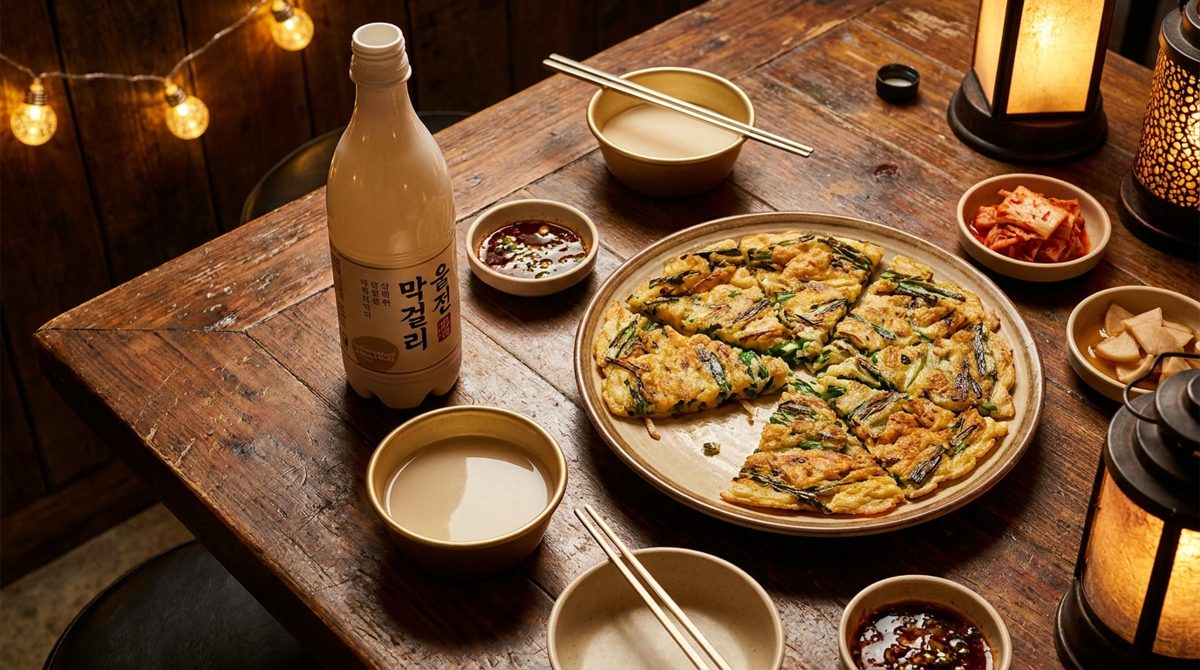
The single most famous pairing is makgeolli with pajeon (Korean scallion pancake) — so iconic that Koreans have a saying that rainy weather “calls for” the combination, since the sound of rain is said to resemble the sizzle of pancake batter hitting a hot pan. Other classic pairings include modeumjeon (mixed savory pancakes), tofu kimchi, and dried anchovy snacks — all foods with enough salt and fat to balance makgeolli’s tang.
Types of Makgeolli You’ll See on Menus and Shelves
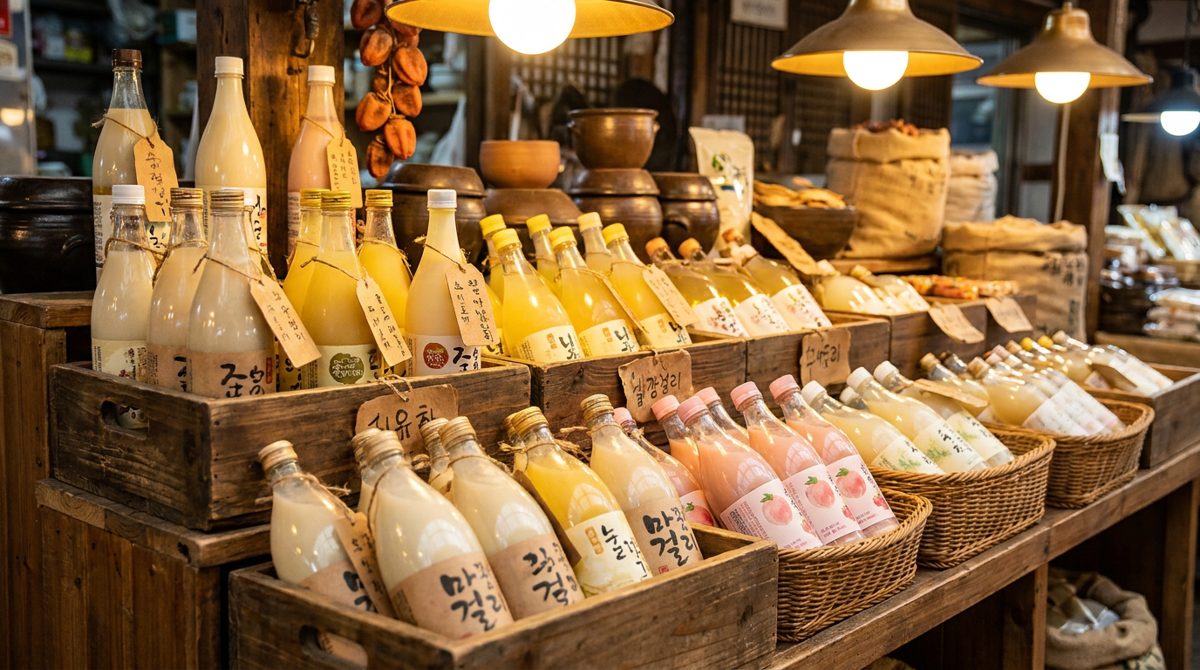
Saeng makgeolli (생막걸리) — “raw” or unpasteurized makgeolli, still actively fermenting, sold refrigerated with a short shelf life; considered the freshest and most authentic style, and the version serious enthusiasts seek out. Pasteurized/bottled makgeolli — heat-treated for shelf stability, found at any convenience store, milder and more consistent but less complex. Fruit-flavored makgeolli — peach, yuzu, strawberry, and blueberry versions have driven the 2020s makgeolli boom, generally sweeter and lower-proof, popular with younger drinkers and first-timers.
Premium/craft makgeolli — small-batch bottles from dedicated breweries, often using single-origin rice and traditional wild fermentation, sold at a markup in specialty bars and gift shops. Regional makgeolli — towns and regions across Korea brew their own signature styles, some using different grains or longer fermentation, worth trying if you’re traveling outside Seoul. There’s also a thriving home-brewing culture: many Koreans still make small batches of makgeolli at home using simple nuruk kits, treating it as a rustic, DIY tradition passed down through families.
Menus can also flag makgeolli by its base grain or process: some breweries use glutinous rice for a richer, thicker mouthfeel, while others blend in wheat or use multi-stage fermentation for a drier, more wine-like finish. If a bar or shop offers a tasting flight, it’s worth taking — the difference between a mass-market bottled makgeolli and a small-batch saeng makgeolli from a local brewery can be as dramatic as comparing boxed wine to a vineyard pour.
Where to Try Makgeolli
You’ll find makgeolli within arm’s reach almost anywhere in Korea. For an easy, low-stakes first taste, grab a ₩3,000 bottle from any convenience store and pair it with instant pajeon or dried snacks from the same shop. For a proper night out, Seoul’s Ikseon-dong hanok village and Itaewon have dedicated makgeolli bars pouring dozens of craft and regional labels side by side, often with small food pairings designed for the drink. Traditional markets — check our Seoul food guide for picks — are also reliable spots to find fresh, locally brewed makgeolli straight from the source, sometimes poured from unmarked kettles by vendors who’ve made it the same way for decades.
Makgeolli FAQ
What does makgeolli mean in English?
Roughly, “carelessly strained [rice wine].” The name references the traditional brewing method of loosely filtering fermented rice through a cloth, leaving behind the cloudy sediment that gives makgeolli its milky look.
How much alcohol is in makgeolli?
Standard makgeolli is typically 6–8% ABV, similar to a strong beer and much lower than soju’s 16–20%. Some premium or traditionally brewed versions can reach 12–15% ABV, so it’s worth checking the label rather than assuming.
Is makgeolli vegan?
Plain, traditional makgeolli is vegan — it’s made only from rice, water, nuruk, and yeast. Flavored commercial versions sometimes add honey or dairy-based flavoring, so check the label if you’re strictly vegan.
Is makgeolli halal?
No. Makgeolli is an alcoholic beverage, and that alone makes it non-halal, regardless of its rice-based ingredients or milky, juice-like appearance. There is no halal version of makgeolli; Muslim travelers should choose a non-alcoholic Korean drink instead.
Do you shake makgeolli before drinking it?
Yes — always. The rice sediment settles at the bottom of the bottle, so gently shaking or rolling it before pouring restores the smooth, cloudy texture that makgeolli is known for. Skipping this step gives you a thin, watery pour.
The Verdict: Should You Try It?
Yes — makgeolli is one of the most approachable ways to experience Korean drinking culture, especially if soju’s higher proof isn’t your thing. It’s cheap, widely available, low-ABV, and comes with its own built-in food pairing in pajeon. Just remember: it’s alcohol, not a milky soft drink, so treat it accordingly. Curious about the food it’s traditionally served with? Explore the whole menu with our Korean Food Decoder — every major Korean dish and drink explained with taste, allergens, and ordering phrases.