Korean convenience store food combos are a national sport: mixing off-the-shelf items into meals greater than the sum of their barcodes. From the K-pop-famous Mark-jeongsik to the eternal ramyeon-kimbap-cheese trinity, these hacks turn a GS25 or CU into a restaurant with 50,000 locations. This guide tells the viral stories, teaches the classic builds, and hands you ₩5,000 and ₩10,000 meal blueprints you can assemble tonight.
Table of Contents
- Combo Culture Quick Facts
- The Mark-Jeongsik Story (마크정식)
- The Classic Combos Every Korean Knows
- Build-Your-Own: ₩5,000 and ₩10,000 Meals
- Next-Level and Seasonal Combos
- The Hot Water & Microwave Station How-To
- TikTok, Mukbang & Why Combos Go Viral
- Food Combos FAQ
Combo Culture Quick Facts
| Item | Details |
|---|---|
| What it is | Mixing convenience store items into upgraded meals — a Korean pop-culture institution |
| Where it happens | The in-store eating counter, hot-water station and outdoor plastic tables at any GS25/CU/7-Eleven/emart24 |
| Price range (2026) | Full combo meals from ₩4,000; feast-tier builds under ₩10,000 |
| Most famous combo | Mark-jeongsik (마크정식) — NCT Mark’s buldak + string cheese + triangle kimbap set |
| Most classic combo | Cup ramyeon + samgak kimbap + cheese slice |
| Equipment provided | Free hot water, microwave, chopsticks, counter seating — with any purchase |
| Dietary note | Most combos center on meat-broth ramyeon — see our halal & vegetarian guide for swaps |
| Best for | Budget dinners, midnight snack runs, K-pop pilgrimage eating |
The Mark-Jeongsik Story (마크정식)
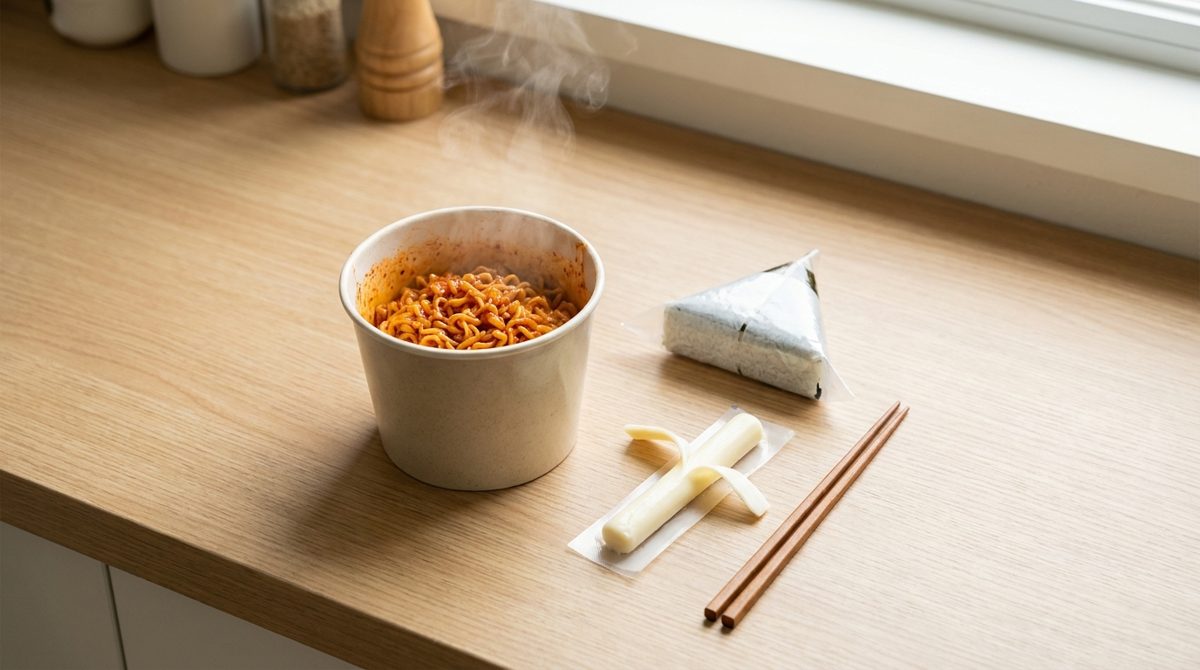
Every food culture has a dish named after a person; Korea’s convenience stores have Mark-jeongsik — “Mark’s set meal.” The Mark in question is Mark Lee of K-pop group NCT. On a broadcast years back, he assembled his go-to konbini order: buldak fried noodles (the famously spicy ones), a Jeonju bibim triangle kimbap, and string cheese torn over the top so it melts into the sauce. Cameras rolled, fans took notes, and within weeks convenience stores were watching three unrelated barcodes fly off shelves together.
The combo earned the name 마크정식 (Mark-jeongsik), spawned millions of recreation videos, and chains eventually leaned in — GS25 has sold official Mark-jeongsik bundle promotions. It’s K-pop’s most delicious piece of fan culture: eating what your idol eats, for about ₩5,000.
Why it actually works, food-wise: buldak noodles are punishingly spicy on their own. The cheese coats the noodles and softens the burn; the bibim kimbap adds cool rice and a vinegary counterpoint. It’s legitimate flavor engineering — the same logic as adding cheese to tteokbokki. Recreate it: grab the black buldak cup (₩1,800–2,200), a bibim-flavor samgak kimbap (₩1,300–1,500), and string cheese (₩1,500–1,800). Hot water in the cup, drain most of it, sauce in, cheese torn over hot noodles, kimbap on the side. Total: about ₩5,000.
Spice warning: buldak is a 4/5 burn even with cheese. Have a banana milk standing by — dairy is the fire extinguisher.
The Classic Combos Every Korean Knows
Beyond celebrity sets, a canon of combos has evolved over decades. The 2026 nationwide prices:
| Combo | Build | Cost (2026) | Why it works |
|---|---|---|---|
| The Trinity | Cup ramyeon + samgak kimbap + cheese slice | ₩3,500–₩4,500 | Kimbap dunked in broth; cheese melted on noodles. The default Korean quick meal |
| Mark-jeongsik | Buldak + bibim samgak kimbap + string cheese | ≈₩5,000 | Cheese tames the fire; K-pop street cred included |
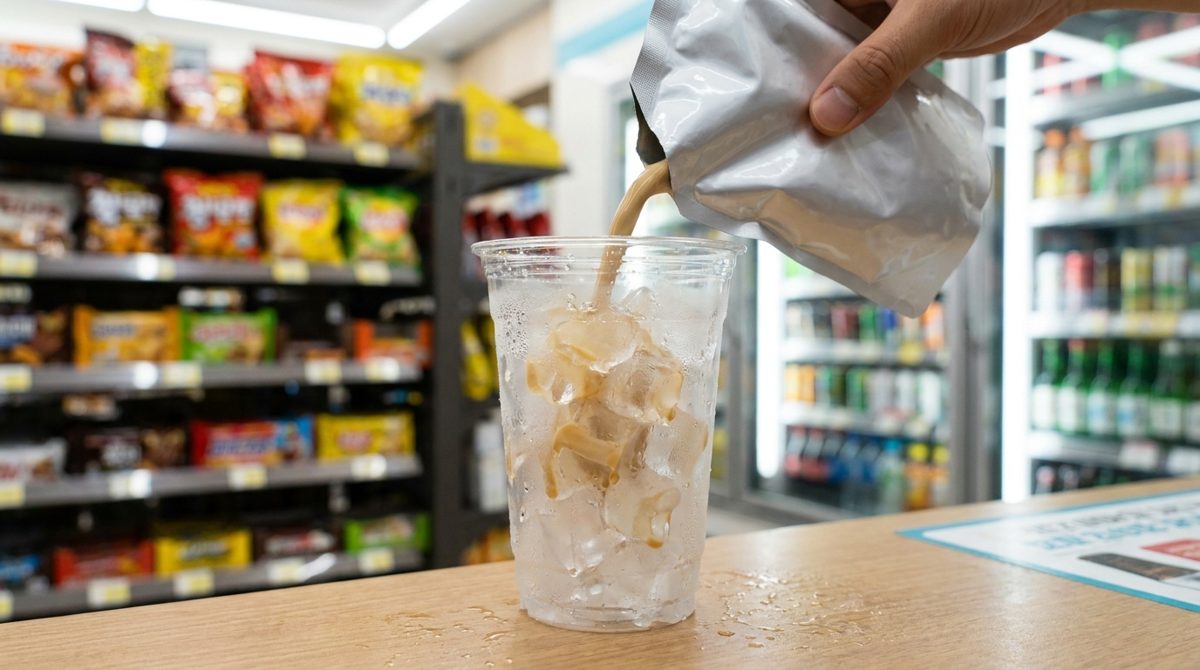
| Ice cup + pouch drink | Cup of ice (₩500–700) + coffee/ade pouch (₩1,500–2,000) | ₩2,000–₩2,700 | Cafe-quality iced latte at a third of cafe price — the summer icon |
| Chapaguri (ram-don) | Chapagetti cup (₩1,800) + Neoguri cup (₩1,900), mixed | ≈₩3,700 | The Oscar-winning noodle mix from Parasite — black bean richness meets spicy seafood |
| Egg drop ramyeon | Any ramyeon + baked/boiled egg stirred in | ₩3,500–₩4,500 | Protein and silkiness; locals add the egg mid-steep |
| Dosirak upgrade | Lunchbox + instant miso/soup cup + banana milk dessert | ₩6,000–₩9,000 | Restaurant-format meal: main, soup, dessert |
| Midnight sweet set | Ice cream bar pressed between two halves of a cream bread | ₩3,000–₩4,000 | DIY ice cream sandwich — dessert-aisle folklore |
Chapaguri deserves its footnote: after Parasite won the Oscar, the ram-don scene sent tourists into Korean stores to mix the two cups themselves — cook both, drain, combine noodles, add all of the Chapagetti sauce and half the Neoguri soup powder. For the full instant-noodle universe beyond combos, our convenience store ramyeon guide ranks every cup worth your ₩2,000.
Build-Your-Own: ₩5,000 and ₩10,000 Meals
Combos follow an architecture: carb base + protein/topping + sauce or dairy + drink. Once you see the pattern, you can improvise like a local.
The ₩5,000 dinner: cup ramyeon (₩1,500–2,000) as the base; samgak kimbap (₩1,100–1,500) as the rice course; one upgrade — cheese slice, string cheese, or an egg (₩800–1,500); and a small drink if the budget stretches. This is the formula behind both the Trinity and Mark-jeongsik, and it eats like a proper hot meal, not a snack.
The ₩10,000 feast: start with a dosirak lunchbox (₩3,300–6,700, microwave it 90 seconds), add a soup or small ramyeon cup for the broth slot (₩1,500), banana milk or a dessert from the freezer (₩1,700–2,500), and finish with a pouch-coffee ice cup (₩2,200). You’ve recreated the Korean set-meal structure — rice, mains, soup, dessert, coffee — entirely from shelves.
Stretch tactics: the monthly 1+1 and 2+1 deals routinely cover combo components — a 2+1 on coffee pouches drops the ice-cup latte under ₩2,000 — and store-brand (PB) versions of cheese, eggs and drinks shave another 10–20%. Vegetarian or halal travelers can rebuild most combos around cup rice, eggs, cheese and label-checked kimbap — our halal & vegetarian guide has the swap list.
Next-Level and Seasonal Combos
Once the classics feel routine, the shelves keep going. Cheese tteokbokki upgrade: take a cup tteokbokki (₩2,500–3,500), microwave it, then tear string cheese over the top and give it 20 more seconds — a konbini version of the beloved cheese tteokbokki you’d pay ₩12,000 for in a cafe. If tteokbokki is new to you, our tteokbokki decoder explains the dish itself.
The breakfast build: morning combos skew gentle — a hot bar steamed egg or boiled egg pack, a morning roll, and the ice cup + pouch latte. Total ₩4,500, and you’ll stand at the window counter with salarymen doing exactly the same thing at 7:40 a.m.
Winter specials: from roughly November to March, stores run steamers of hoppang — pillowy steamed buns with red bean, vegetable or pizza fillings (₩1,200–1,800). The winter combo is a hoppang in one hand and warm canned coffee (heated cabinet by the register) in the other. Convenience store walls also sprout roasted-sweet-potato warmers in winter; pair one with banana milk for the most grandmother-approved meal in Korea.
Summer specials: the ice cup ecosystem expands — fruit ades, cold brew, even bingsu-style shaved ice cups appear. The move: any ice cream bar from the freezer plus an iced americano, alternating bites and sips. For the full dessert-aisle tour, see our convenience store desserts guide.
The hot-bar flex: the counter’s hot cabinet (fried chicken pieces, sausages, hash browns, ₩1,500–3,000) exists to be added to things. A hash brown inside a burger, a sausage alongside ramyeon, fried chicken on top of cup rice — nothing in the store is off-limits to combination. That’s the entire philosophy.
The Hot Water & Microwave Station How-To
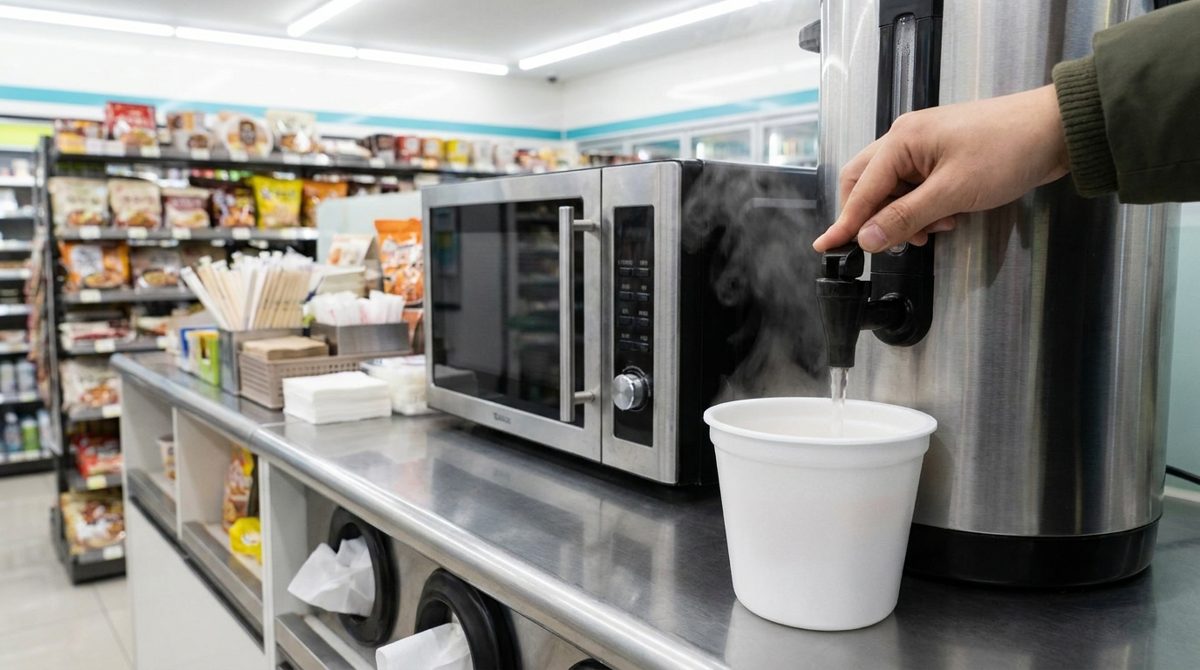
First-timers hover awkwardly here, so let’s demystify. Step 1: pay first. Everything gets scanned before you cook it. Step 2: find the station — hot water dispenser, microwave, chopsticks/napkins, usually by the eating counter. Step 3: cook. Ramyeon: peel the lid halfway, remove the soup packets, powder in, water to the inner fill line, lid closed, 3–4 minutes (the wait is sacred). Dosirak and burgers: microwave per the label — most lunchboxes mark seconds for 700W/1000W; when in doubt, 60–90 seconds.
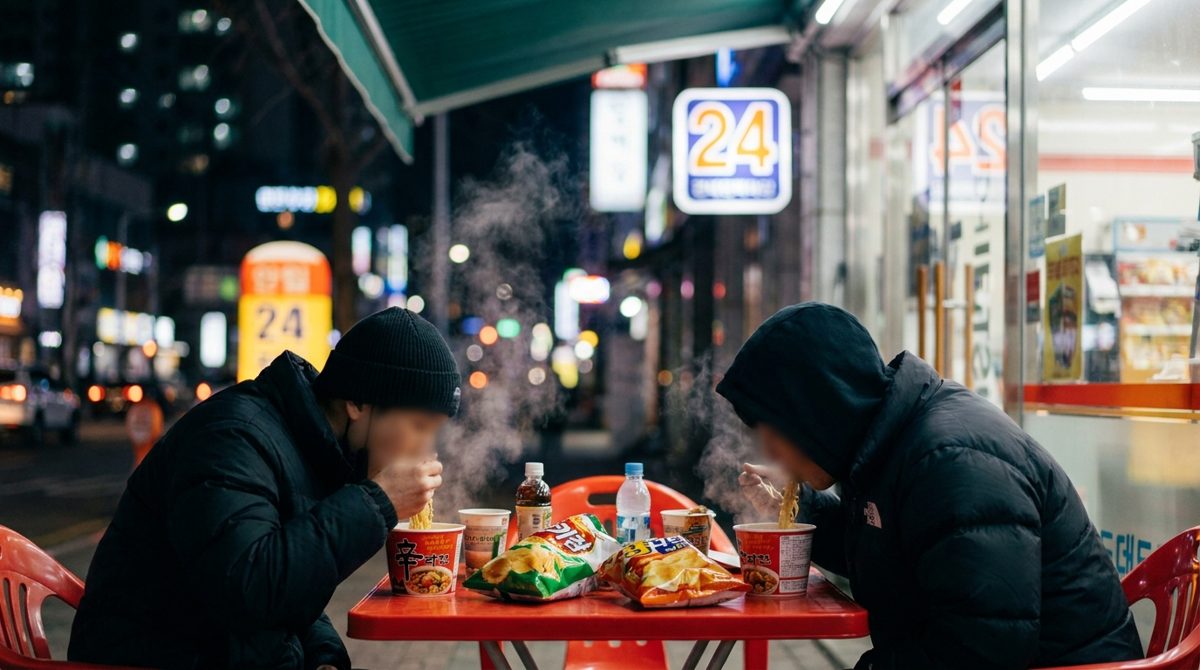
Step 4: eat like you belong. Window counter, standing table, or the outdoor plastic table — the last one at night with city neon is a core Korean experience, immortalized in every K-drama. Step 5: clean up. Leftover broth goes in the designated broth bucket (never the trash bag), containers sorted by material. Some stores even have dedicated ramyeon-cooking machines that auto-dispense water on a timer — pay at the counter first, then let the robot cook.
TikTok, Mukbang & Why Combos Go Viral
Combo culture predates social media — Korean students and night-shift workers have hacked konbini shelves for decades — but TikTok and mukbang turned it into a global genre. The format is irresistible: a hand grabs three items, a jump cut, and a steaming creation that looks like it cost five times its price. Hashtags around Korean convenience store food pull billions of views, and a single viral video can genuinely move national sales, as chains learned with Mark-jeongsik and the post-Parasite Chapaguri rush.
Trends rotate fast — one month it’s cheese-injected sausages, the next it’s yogurt-jelly mixes or “cursed” combos engineered for shock value. The stores play along, launching collab products and PB items designed to be mixed. For a traveler this means one thing: the eating counter is a live show. Watch what the high schoolers next to you are assembling; that’s this month’s meta. Start with our 12 best convenience store eats for the proven staples, then combo them into something the algorithm hasn’t seen yet.
Two more viral currents worth knowing. PB collab mania: chains license everything — beer brands into snacks, bakery brands into ice cream, K-pop groups onto lunchboxes — and each drop spawns a review cycle on social media within hours. If you see a display stand groaning under one new product, that’s this week’s drop. The “convenience store omakase” genre: creators film multi-course tasting menus built entirely from one store, plating dosirak components like fine dining. It’s parody and love letter at once, and it’s genuinely useful research for your own builds.
A few pro tips learned from a thousand counter meals. Timing: fresh food deliveries land in the morning and late evening; kimbap bought at 8 a.m. beats kimbap bought at 7 p.m. Expiry markdowns: lunchboxes and kimbap nearing their time get discount stickers at many stores — combined with a combo build, that’s dinner under ₩3,500. Napkin economics: take chopsticks and napkins when you pay; wandering back through the queue mid-meal is the one konbini faux pas. Two-person builds: couples should exploit 1+1 drink deals and split a dosirak plus a ramyeon — the konbini equivalent of ordering family style.
Combo etiquette in one paragraph: the counter is shared space, so eat, enjoy, and rotate out within a reasonable time at peak hours. Sort everything at the bins — broth in the broth bucket, plastics separated. And Koreans will not blink at any creation you assemble, however chaotic; judgment-free experimentation is the counter’s founding law. The only real crime is abandoning an unsorted tray.
Food Combos FAQ
What is Mark-jeongsik (마크정식)?
The convenience store combo made famous by NCT’s Mark Lee: buldak spicy fried noodles, a Jeonju bibim triangle kimbap, and string cheese melted over the noodles. It went so viral that GS25 sold official bundle promotions of it. Cost to build in 2026: about ₩5,000.
What is the most popular Korean convenience store combo?
The timeless one: cup ramyeon + samgak kimbap + a cheese slice, around ₩4,000 total. Dunk the kimbap in the broth, melt the cheese on the noodles. Locals of every generation eat it; everything else is a variation on this template.
Can I really cook and eat inside a Korean convenience store?
Yes — it’s expected. Every store provides free hot water, a microwave, chopsticks and counter seating for customers. Pay first, cook at the station, eat at the counter or outdoor table, then sort your trash and pour leftover broth into the broth bucket.
How do I make the Parasite ram-don (Chapaguri) at a convenience store?
Buy a Chapagetti cup (₩1,800) and a Neoguri cup (₩1,900). Cook both with hot water, drain, then combine the noodles with all of the Chapagetti black-bean sauce and about half the Neoguri spicy powder. The movie adds steak; the konbini version is glorious without it.
How much should I budget for a convenience store meal in Korea?
₩4,000–₩5,000 buys a hot combo meal (ramyeon + kimbap + upgrade); ₩10,000 builds a full feast with a dosirak main, soup, dessert and iced coffee. Monthly 1+1/2+1 promotions can cut those numbers by a third.
The Verdict: The Cheapest Food Adventure in Korea
Convenience store combos are Korea’s most accessible food culture: no reservations, no language barrier, no bill over ₩10,000 — just shelves, hot water, and decades of collective genius. Eat the Trinity once for education, the Mark-jeongsik once for culture, then invent your own. When you’re ready for the full konbini universe — machines, deals, desserts and midnight etiquette — our Korean Convenience Store Explorer maps all of it.