Looking for halal Korean convenience store options — or just trying to eat vegetarian at a GS25? Here’s the honest answer up front: Korean convenience stores carry no halal-certified prepared food, and most ready meals contain meat. But with the right categories and about ten Korean label words, Muslim and vegetarian travelers can eat safely, cheaply, and even well from these stores. This guide gives you the real safe list, the real avoid list, and a label decoder you can screenshot.
Table of Contents
- Halal & Vegetarian Quick Facts
- The Honest Reality First
- What’s Generally Safe (The Green List)
- What to Avoid (The Red List)
- Label Decoder: 10 Korean Words That Do the Work
- Practical Strategies by Diet
- Beyond the Store: Certified Options & a Sample Day
- Halal & Vegetarian FAQ
Halal & Vegetarian Quick Facts
| Item | Details |
|---|---|
| Halal-certified food in stores? | ❌ None among prepared foods — no Korean convenience chain stocks certified ready meals |
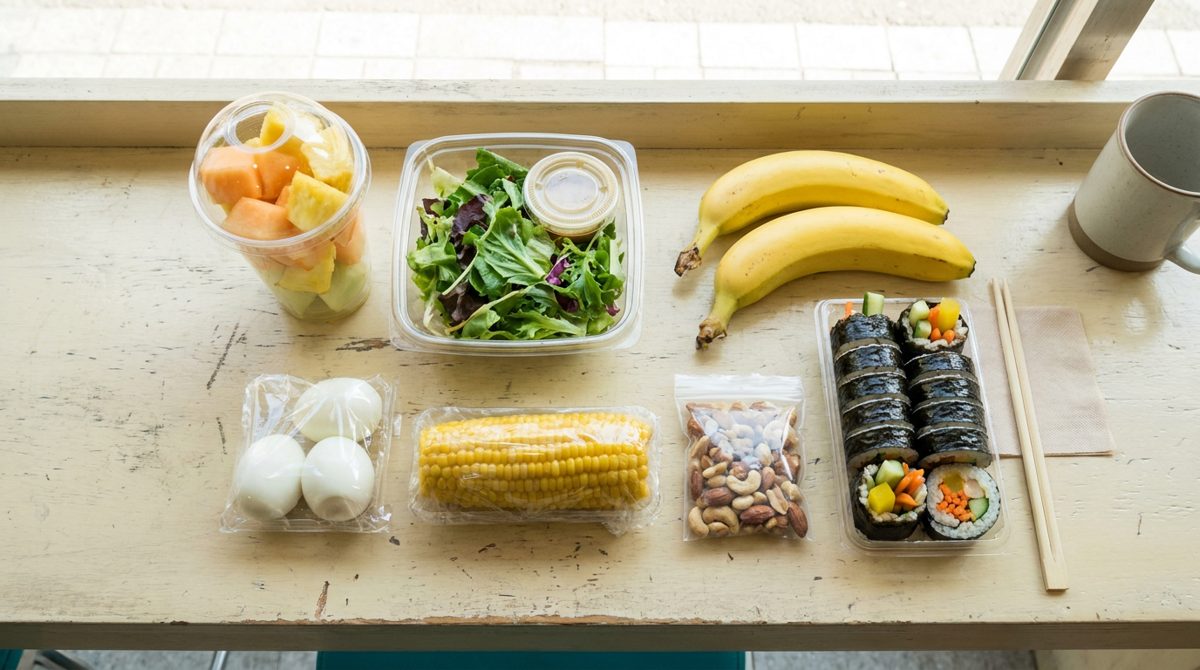
| Can Muslims still eat here? | ✅ Yes — fruit, dairy, breads (checked), eggs, nuts, seafood items, and label-read snacks |
| Vegetarian difficulty | ⚠️ Moderate — most dosirak and triangle kimbap contain meat; the fresh corner is your friend |
| Vegan difficulty | ❌ Hard — egg, milk and honey hide in most breads and snacks; fruit, nuts, corn and plain rice work |
| Budget (2026) | A safe meat-free meal assembles for ₩4,000–₩7,000 |
| Key skill | Reading 10 ingredient words in Korean (decoder table below) |
| Best chains | All four work; GS25 and CU have the biggest fresh-food corners (≈18,800 / ≈18,700 stores) |
| Best for | Muslim travelers, vegetarians, and anyone tired of guessing at labels |
The Honest Reality First
Let’s not sugarcoat it. Korean convenience store food culture is built on meat: the lunchboxes (dosirak) are meat-centric, most triangle kimbap fillings involve ham, tuna-mayo, bulgogi or spam, and nearly every instant noodle cup uses meat or seafood broth. There is no halal aisle, no certification logos, and staff usually can’t answer ingredient questions beyond reading you the label you’re already holding.
What Korea does give you is world-class labeling law. Every packaged item lists ingredients and highlights major allergens — in Korean. That means the store is not a minefield; it’s a library written in a language you can learn ten words of. Muslim travelers who accept “no pork, no alcohol, label-checked” as their standard (rather than certified-only) eat comfortably from convenience stores every day. Certified-only travelers should treat stores as a fruit-drink-snack stop and plan meals at Seoul’s halal-certified restaurants — the Korea Tourism Organization maintains an official list of Muslim-friendly restaurants, concentrated around Itaewon.
Vegetarians have it slightly easier, vegans harder: dairy, egg and honey are everywhere in Korean baked goods and snacks. The strategies section below splits the advice by diet.
What’s Generally Safe (The Green List)
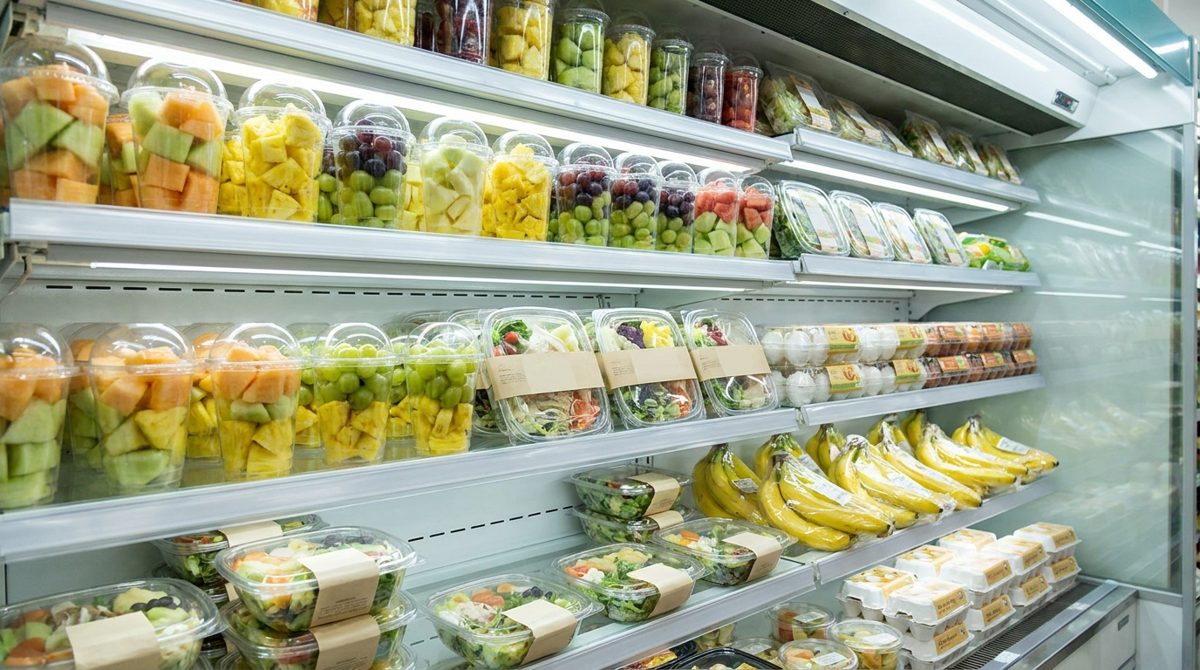
These categories are reliable across GS25, CU, 7-Eleven and emart24, at 2026 nationwide prices:
| Item | Status | Price (2026) | Watch out for |
|---|---|---|---|
| Cut fruit cups & whole bananas | ✅ Safe for all | ₩2,500–₩4,500 | Nothing — the safest thing in the store |
| Salad boxes | ⚠️ Usually fine | ₩3,500–₩5,500 | Ham/chicken toppers on some; dressing may contain anchovy or egg |
| Banana milk & flavored milks | ✅ Vegetarian-safe | ₩1,700–₩1,800 | Not vegan; halal-fine (no gelatin in the classics) |
| Boiled eggs & baked eggs (구운계란) | ✅ Vegetarian & halal-friendly | ₩2,000–₩3,500 (2–3 pack) | Nothing significant |
| Steamed corn & roasted sweet potato | ✅ Safe for all, vegan too | ₩2,000–₩4,000 | Seasonal availability |
| Nuts, dried fruit, seaweed snacks | ✅ Mostly vegan | ₩1,500–₩4,000 | Honey-glazed varieties; wasabi mixes with milk powder |
| Plain breads & morning rolls | ⚠️ Vegetarian yes, check fillings | ₩1,500–₩3,500 | Ham-cheese pastries look identical to custard ones — read or translate |
| Vegetable/tuna kimbap variants | ⚠️ Check the label | ₩1,100–₩2,000 | “Vegetable” rolls sometimes sneak ham; tuna-mayo is pescatarian/halal-seafood territory |
| Cup rice & plain rice packs (햇반류) | ✅ Vegan-safe base | ₩1,500–₩2,500 | Pair with seaweed and eggs for a meal |
| Yogurt, cheese, ice cream | ⚠️ Vegetarian yes | ₩1,500–₩3,500 | Some jelly-added desserts use gelatin — see the red list |
Build-a-meal example for ₩6,000: vegetable kimbap (label-checked) + baked eggs + banana milk + a fruit cup. Filling, balanced, zero guesswork. More assembly ideas in our convenience store food combos guide — most combos there can be built meat-free with swaps.
What to Avoid (The Red List)
Now the categories where restricted diets fail, so you can walk past them without wasting hope:
Dosirak lunchboxes: essentially all contain meat — usually several kinds, and Korea’s beloved spam and sausage feature heavily. Even the rice sections often touch meat juices in the tray. Our dosirak guide is a fun read, but for this audience it’s a museum tour.
Most triangle kimbap: the bestsellers are tuna-mayo (fine for pescatarians and seafood-accepting Muslims), spam, bulgogi beef, and chicken. Genuinely meatless options exist (kimchi — check for fish sauce; plain fried-rice styles) but are the minority. Full filling-by-filling breakdown in our triangle kimbap guide.
Cup ramyeon: the silent killer of vegetarian plans. Even “plain” flavors almost always use beef, pork or seafood stock powder — the noodle block is innocent, the soup packet isn’t. A small number of vegan ramyeon products exist in Korea but rarely at convenience stores. Check 소고기/돼지고기 in the soup ingredients before trusting anything.
Sausages, fish cakes, fried counter food: pork-default unless labeled otherwise, and the hot counter shares fryers anyway.
Jelly candies and marshmallow desserts: gelatin (젤라틴) is typically pork-derived — the classic invisible non-halal ingredient. Fruit gummies are the most common accidental purchase among Muslim travelers.
Anything “제육/불고기/햄/치킨” flavored: those words in a product name mean pork/beef/ham/chicken respectively — flavor powders count for strict eaters.
Label Decoder: 10 Korean Words That Do the Work
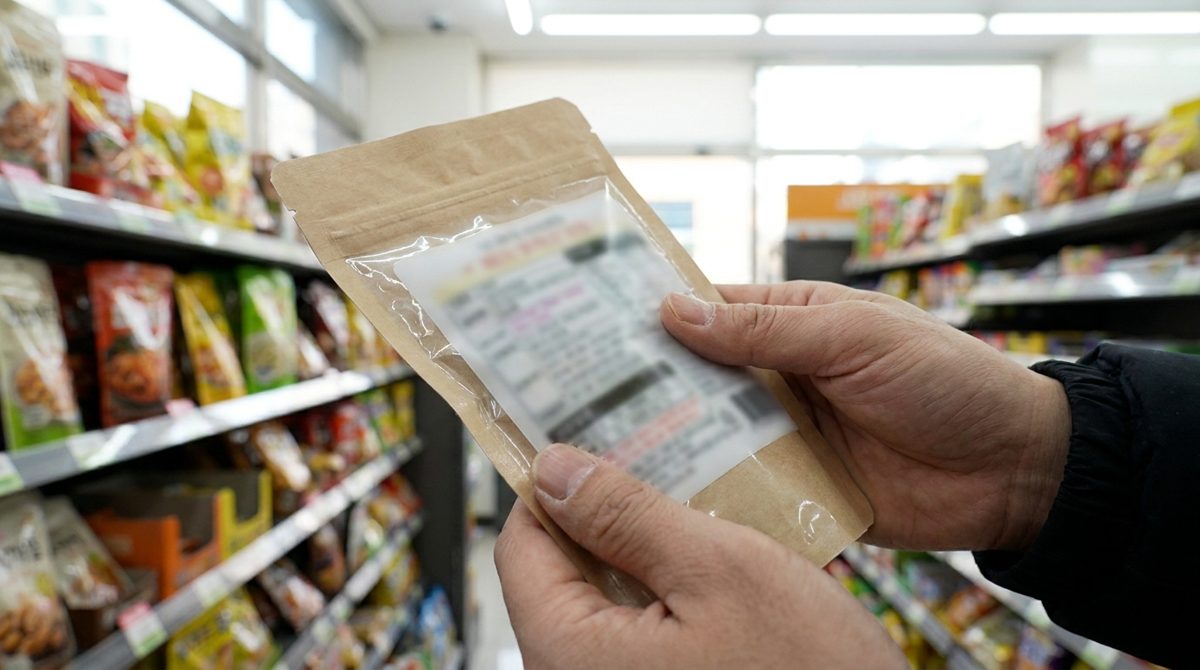
Korean labels list ingredients (원재료명) on the back, and allergens are re-stated in a highlighted box — the fastest place to look. Screenshot this table:
| Korean | Romanized | Meaning | Who cares |
|---|---|---|---|
| 돼지고기 | dwaeji-gogi | Pork | Muslim: hard no |
| 소고기 / 쇠고기 | so-gogi | Beef | Vegetarian no; Muslim: not halal-slaughtered |
| 닭고기 / 닭 | dak-gogi | Chicken | Vegetarian no; Muslim: not certified |
| 햄 / 소시지 | haem / sosiji | Ham / sausage (usually pork) | Both |
| 새우 | sae-u | Shrimp | Vegetarians, shellfish allergies |
| 멸치 / 참치 | myeolchi / chamchi | Anchovy / tuna (broths, kimchi, dressings) | Vegetarians — this is the sneaky one |
| 젤라틴 | gelatin | Gelatin (typically pork-derived) | Muslim, vegetarian |
| 고기 / 육 | gogi / yuk | Meat (generic, any kind) | Both — if you see it, skip it |
| 계란 / 난류 | gyeran / nallyu | Egg | Vegans |
| 우유 / 유당 | uyu / yudang | Milk / lactose | Vegans, lactose-intolerant |
Two bonus signals speed things up. First, the allergen box (알레르기 표시) legally must call out egg, milk, wheat, soy, shellfish and more — if pork or beef appear in a product, they’ll also be visible in the main ingredient list within the first few entries, because Korean labels order ingredients by weight. Second, product-name suffixes do heavy lifting: 불고기 (bulgogi) means beef, 제육 (jeyuk) means spicy pork, 참치마요 (chamchi-mayo) means tuna-mayonnaise, and 야채 (yachae) means vegetable — four words that sort most of the kimbap shelf at a glance.
Workflow: flip the package, find the highlighted allergen box, scan for the first eight rows. If the box is clean and the product name has no meat word, you’re overwhelmingly safe. Phone camera translate (Google Lens or Papago) covers the rest in five seconds. This same skill unlocks restaurant menus too — our Korean Food Decoder rates every major dish for vegetarian and halal status, and dishes like bibimbap show how far label-smart travelers can go beyond the konbini.
Practical Strategies by Diet
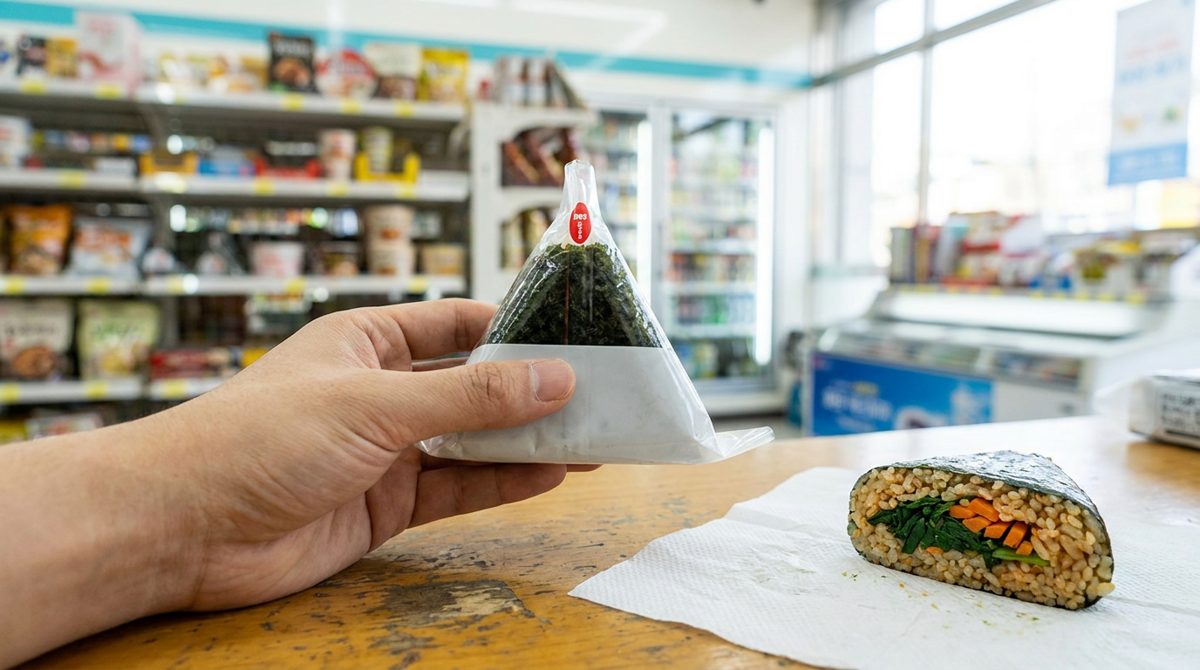
Muslim travelers (no pork, no alcohol, label-checked standard): breakfast from the store is easy — bread (checked), eggs, fruit, milk drinks or juice. Tuna and other seafood items widen the menu substantially if your practice accepts non-certified seafood, which most do. Watch three traps: gelatin in desserts, pork-based broth powders in noodles, and cooking wine (맛술) in some prepared foods. For hot meals, base yourself near certified restaurants and use the konbini for everything between.
Vegetarians: your enemies are hidden fish (anchovy stock in kimchi products, fish sauce in “vegetable” items) and meat broth in noodle cups. Your friends: the fresh corner, dairy aisle, bakery shelf, plain rice products, and the microwave — a cup rice + retort curry (label-checked) + boiled eggs is a legitimate hot dinner. GS25’s and CU’s fresh ranges rotate weekly, so re-check often.
Vegans: keep expectations modest: fruit, nuts, corn, sweet potato, plain rice, seaweed, some soy milks (두유 — widely stocked and excellent), and dark chocolate. Korean vegan products exist but live in supermarkets and health stores more than konbini.
Everyone: prices are fixed nationwide and the 1+1 deals apply to plenty of green-list items — soy milk and nut packs go on promotion constantly. And if you only memorize one sentence: “gogi deureo-isseoyo?” (고기 들어있어요? — does this contain meat?) gets you a yes/no from any staff member.
Beyond the Store: Certified Options & a Sample Day
If you need certified halal meals, base your food day around Seoul’s Itaewon district — the Seoul Central Mosque neighborhood concentrates certified Korean, Middle Eastern and Southeast Asian restaurants, plus halal grocery shops selling certified instant noodles and snacks you can carry for the rest of your trip. Busan, Incheon and Jeju also have official Muslim-friendly listings. The winning pattern travelers report: one certified restaurant meal per day, konbini green-list for everything else.
A realistic konbini day (label-checked standard): breakfast — morning roll, baked eggs, fruit cup and soy milk (₩5,500). Lunch — certified restaurant, or tuna kimbap plus salad if you accept seafood (₩4,500). Snack — nuts and a 1+1 tea pair from the deals shelf (₩2,500 effective). Dinner — cup rice heated in the microwave, label-checked retort side, boiled eggs, banana milk (₩6,500). Total: under ₩20,000 for a full label-safe day.
Drinks are the easy zone: water, teas, juices, sodas, vitamin drinks and the entire coffee wall are all fine — Korea doesn’t hide alcohol in soft drinks, and the alcohol aisle is clearly separated (and clearly labeled 19+). During Ramadan, the 24/7 nature of Korean stores becomes a quiet blessing: suhoor supplies at 4 a.m. are three minutes away anywhere in the country.
One practical caveat: the store microwave and hot-water station are shared with everyone’s pork-containing meals. Zero-cross-contact eaters should stick to items that need no heating — which, as the green list shows, is most of them.
Halal & Vegetarian FAQ
Is there halal-certified food at Korean convenience stores?
No — as of 2026, no Korean convenience store chain stocks halal-certified prepared food. Muslim travelers following a “no pork, no alcohol, ingredient-checked” standard can still eat many items: fruit, eggs, breads (checked), dairy, seafood products and label-verified snacks.
What can vegetarians eat at a Korean convenience store?
Fruit cups, salads (check toppings and dressing), boiled and baked eggs, banana milk and dairy, breads without meat fillings, nuts, steamed corn, plain rice products, and label-checked vegetable kimbap. Avoid dosirak, most triangle kimbap, and nearly all instant noodle cups, whose broths use meat or seafood stock.
Is Korean banana milk halal and vegetarian?
The classic banana-flavored milk is vegetarian-friendly and contains no gelatin or alcohol, so Muslim travelers on an ingredient-checked standard generally drink it without concern. It contains dairy, so it is not vegan.
How do I say “does this contain meat?” in Korean?
“Gogi deureo-isseoyo?” (고기 들어있어요?). For pork specifically: “dwaeji-gogi deureo-isseoyo?” (돼지고기 들어있어요?). Staff will check the label with you even without shared language.
Are Korean instant ramyeon cups vegetarian?
Almost never — even mild flavors typically use beef, pork or seafood broth powder. Look for 소고기 (beef), 돼지고기 (pork), or 멸치 (anchovy) in the soup ingredients. Dedicated vegan ramyeon exists in Korea but is rarely stocked at convenience stores.
The Verdict: Harder, Not Hopeless
A Korean convenience store will never be a halal-certified cafeteria, and it quietly fights vegetarians with anchovy stock. But armed with ten Korean words and the green list, you can eat three honest meals a day from it for under ₩20,000 — every block, at any hour. Learn the labels once and Korea opens up. For the full picture of what these stores can feed you, keep exploring the Korean Convenience Store Explorer.