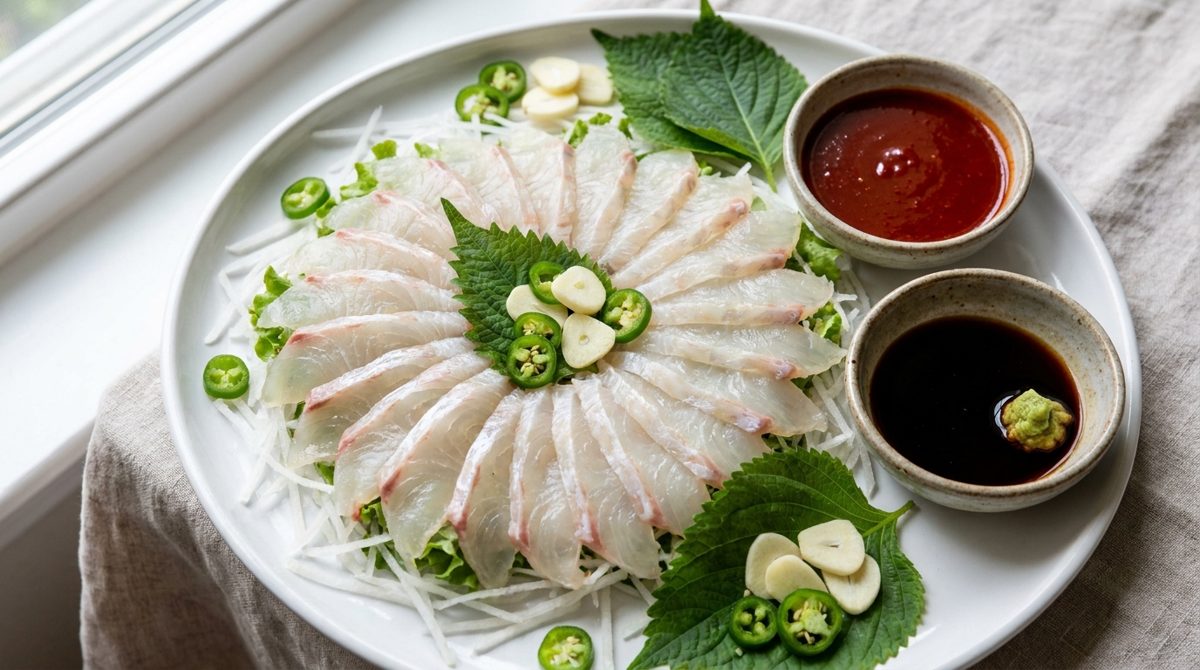
Wondering what hoe is on a Korean menu — and no, it’s not what it looks like in English? Hoe (회, pronounced roughly “hweh,” rhyming with “way”) is Korea’s answer to sashimi: thin, glassy slices of raw fish, most often flounder or halibut, served fresh with a tangy-spicy gochujang dip or soy sauce and wasabi. It’s a coastal Korean staple from Busan to Sokcho, and this page decodes everything: pronunciation, taste, spice, allergens, halal status, real 2026 prices, and how to order it like a local.
Table of Contents
- Hoe Quick Facts
- What Is Hoe, Exactly?
- What Does Hoe Taste Like?
- Dietary Guide: Vegetarian, Vegan, Halal & Allergens
- How to Order Hoe in Korean (+ 2026 Prices)
- How to Eat Hoe Like a Local
- Types of Hoe You’ll See on Menus
- Where to Try Hoe
- Hoe FAQ
Hoe Quick Facts
| Item | Details |
|---|---|
| Korean name | 회 (hoe) — “raw sliced [fish]” |
| Pronunciation | hweh (rhymes with “way,” not the English word “hoe”) |
| Type | Thin-sliced raw fish, served with dipping sauce |
| Spice level | 🌶️ 0 / 5 — the fish itself is not spicy; the optional chojang dip can be tangy-spicy |
| Price (2026) | ₩30,000–₩70,000+ per platter; premium or larger fish priced at sigaga (live market rate) |
| Vegetarian | ❌ Raw fish — no vegetarian version exists |
| Vegan | ❌ Not vegan |
| Halal-friendly | ✅ Fish is generally halal; hoe itself (raw fish, rice vinegar dip) is halal-friendly, though it’s often served alongside soju |
| Main allergens | Fish, shellfish (on shared seafood platters), sesame, soy |
| Best for | Seafood lovers, halal-friendly travelers, adventurous eaters, Busan/Noryangjin/Sokcho market trips |
What Is Hoe, Exactly?
Let’s clear up the name first, since it trips up almost every first-time visitor. Hoe (회) is romanized “hoe” but pronounced closer to “hweh” — nothing like the English gardening tool. If a Korean friend says “let’s get hoe tonight,” they mean raw fish, not a trip to the hardware store. Menus sometimes spell it “hoe” or “hwe” for exactly this reason, so keep an eye out for both spellings.
As a dish, hoe is Korea’s own tradition of eating raw seafood, distinct from Japanese sashimi in texture and serving style. The fish — usually flatfish like gwangeo (flounder) or halibut, sometimes rockfish (woo-eo) or sea bream — is sliced thin while extremely fresh, often still alive minutes before serving. Korea’s peninsula geography and long coastline (Busan, Sokcho, Incheon, Jeju) made raw fish a natural regional specialty long before it became a tourist attraction.
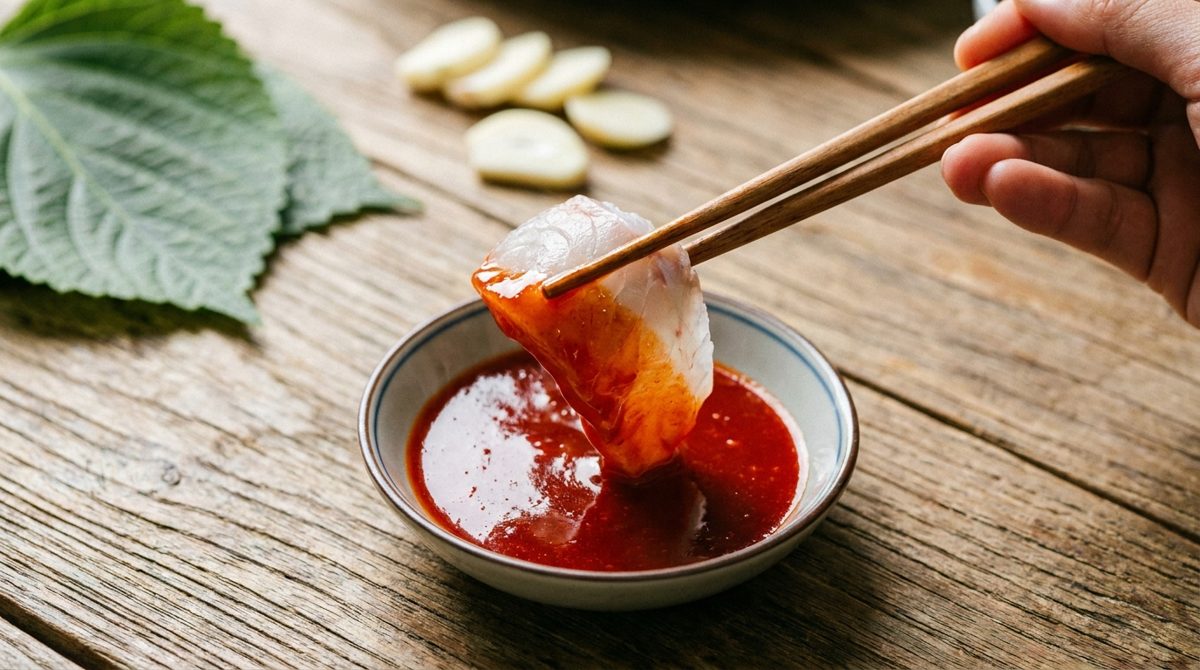
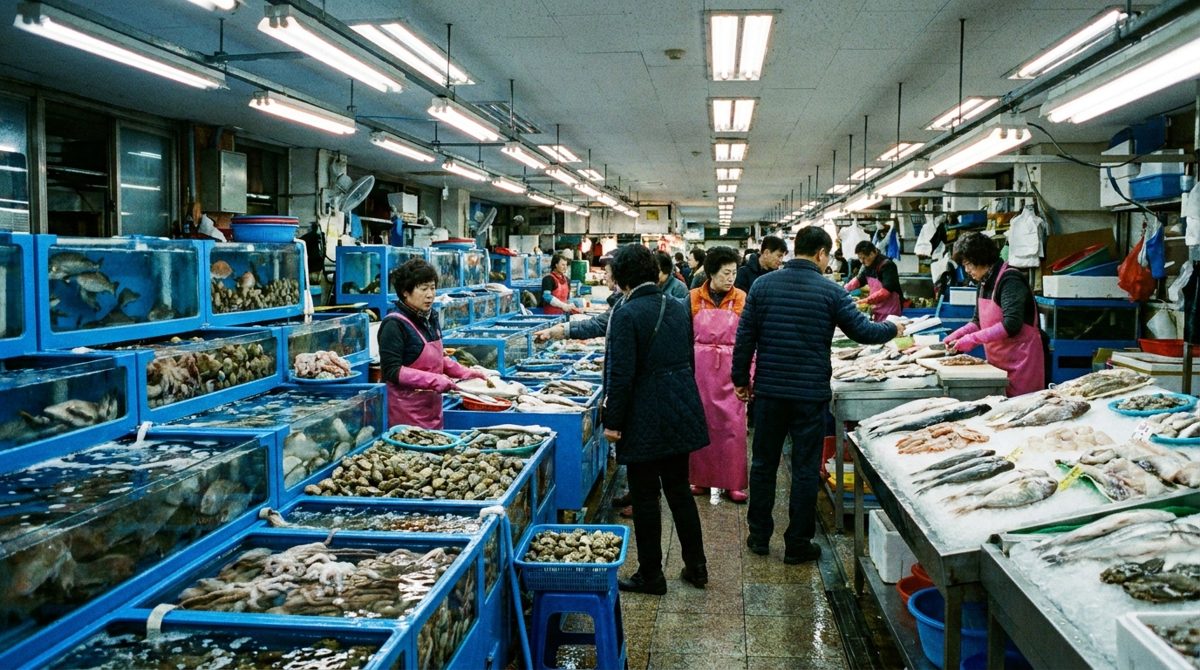
The defining Korean twist is the sauce: rather than soy sauce and wasabi alone, hoe is classically eaten with chojang (초장), a vinegar-sweetened gochujang dip that’s tangy, mildly sweet, and only gently spicy. Restaurants that serve hoe are frequently built around live fish tanks — you choose your fish, watch it get prepared, and eat it within minutes. This “point and eat” format at markets like Noryangjin is half the experience.
Hoe culture runs deep in coastal Korean life. On Jeju Island, the famous haenyeo (female free-divers) have harvested shellfish and fish by hand for generations, much of it destined to become hoe served fresh at seaside stalls the same day. In fishing towns along the east and south coasts, a boat’s catch often goes straight from the dock to a restaurant’s tank within hours — travelers who visit these towns often say it’s the freshest raw fish they’ve ever eaten, tourist hype aside.
What Does Hoe Taste Like?
Good hoe tastes clean, faintly sweet, and almost buttery — nothing fishy or “oceanic” in a strong sense. Texture is the real star: fresh flounder hoe is firm, springy, and slightly chewy, quite different from the softer, fattier cuts common in Japanese sashimi like tuna belly. The chojang dip adds a bright vinegar tang and mild sweetness that cuts through the richness, while soy sauce with wasabi gives a sharper, more familiar sashimi flavor if you prefer that route.
Is Hoe Spicy?
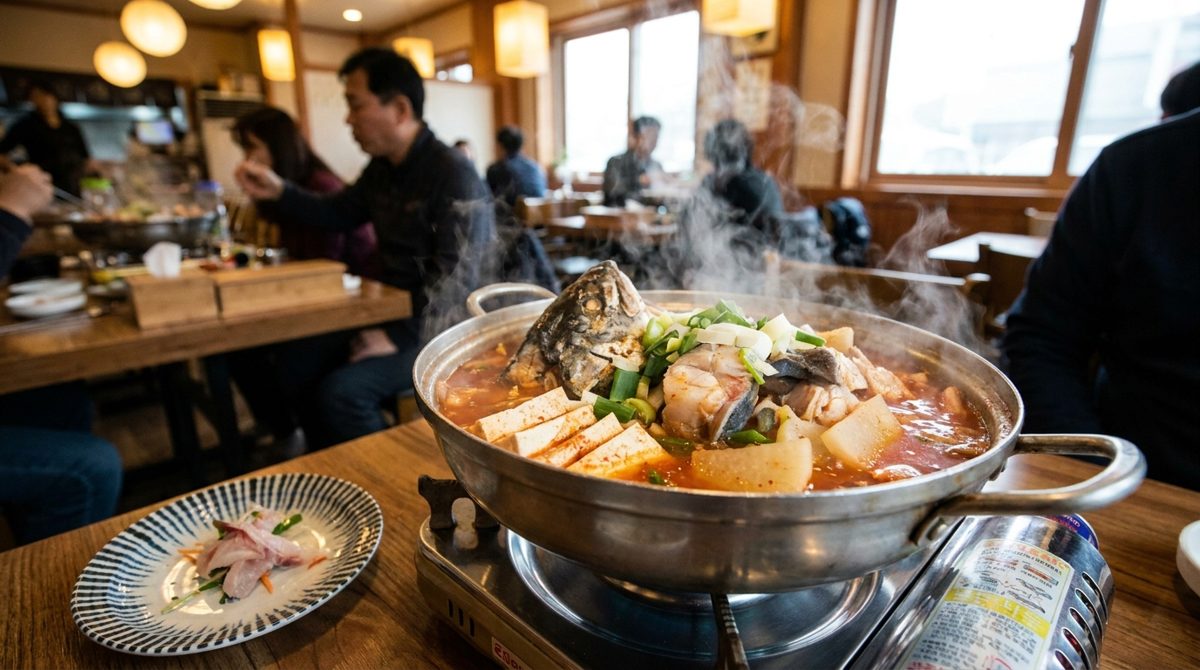
No — hoe itself has zero spice. The fish is served plain, and you choose your own dip. Chojang has a mild tang with a light chili kick, nowhere near Korea’s spicier dishes, and you can skip it entirely for plain soy sauce and wasabi if you want zero heat at all. If you order the follow-up maeuntang (spicy fish soup made from the leftover bones), that dish is genuinely spicy — the raw fish course itself is not.
Hoe Dietary Guide: Vegetarian, Vegan, Halal & Allergens
Hoe is a straightforward dish dietarily — it’s fish, full stop — but a few details matter for allergies and religious diets.
| Ingredient concern | In standard hoe? | How to handle |
|---|---|---|
| Fish | Yes — it’s the entire dish | No substitute exists; skip the dish if you have a fish allergy |
| Shellfish | Sometimes, on shared platters | Ask for a fish-only order: “haemul ppaego juseyo” (해물 빼고 주세요) |
| Pork / beef | No | Not applicable — hoe is 100% seafood |
| Soy | Yes, in dipping sauces | Soy sauce and chojang both contain soy; request plain fish if avoiding |
| Sesame | Yes, often as garnish or oil | Ask for no sesame oil/seeds if allergic |
| Wheat / gluten | Rarely | Chojang and soy sauce may contain trace wheat; ask if strict |
| Egg / dairy / nuts | No | Traditional hoe contains none of these |
| Alcohol | Not in the dish | Commonly paired with soju/beer, but the food itself is alcohol-free |
Is Hoe Vegetarian or Vegan?
No. Hoe is raw fish by definition — there is no vegetarian or vegan version, and no reasonable substitution exists (the entire point is fresh, natural fish texture). If you’re traveling with vegetarian companions, save this dish for the seafood lovers in your group and consider a plant-based Korean dish like vegetable bibimbap or sanchae bibimbap instead, which are widely available at the same kind of restaurants.
Is Hoe Halal?
Yes — hoe is one of the more halal-friendly Korean dishes for Muslim travelers. Fish is generally permissible in Islamic dietary law, and hoe’s preparation is simple: raw fish, rice, vegetables, and a vinegar-chili dip, with no pork, no non-halal meat broth, and no alcohol in the dish itself. The one thing to be aware of is cultural context: hoe restaurants are very frequently paired with soju and beer drinking culture, so it’s worth choosing a calmer, family-style seafood restaurant if you’d rather avoid an alcohol-heavy atmosphere. For restaurant recommendations, the Korea Tourism Organization’s official travel site lists Muslim-friendly dining options in major cities.
How to Order Hoe in Korean (+ 2026 Prices)
Hoe is usually ordered at a live-tank restaurant where you pick your fish first, then have a seat while it’s prepared. These phrases help:
| What you want | Say this | Romanized |
|---|---|---|
| Raw fish platter, please | 회 한 접시 주세요 | hoe han jeopsi juseyo |
| Flounder (most common) | 광어회 주세요 | gwangeo-hoe juseyo |
| What’s fresh/recommended today? | 오늘 뭐가 좋아요? | oneul mwoga joayo? |
| Can we also get the fish soup after? | 매운탕도 주세요 | maeuntang-do juseyo |
| How much is this fish (market price)? | 이거 얼마예요? | igeo eolmayeyo? |
What it costs in 2026: a standard hoe platter for two runs ₩30,000–₩50,000 at everyday coastal restaurants, with premium fish, larger portions, or tourist-district markets pushing ₩50,000–₩70,000 or higher. Many places price fish at sigaga (시가, “market price”) — the cost isn’t printed on the menu because it changes daily with the catch and the fish’s live weight. Always ask the price before the fish is killed and sliced; reputable places will weigh the fish and quote a number on the spot. See our Korean dining etiquette guide for how ordering and paying norms work at sit-down restaurants.
How to Eat Hoe Like a Local
Pick up a slice with chopsticks, dip it lightly in chojang or soy-wasabi, and eat it in one bite — no chewing marathon needed since the slices are thin. Many locals wrap a piece of hoe with a lettuce or perilla (sesame) leaf, a dab of ssamjang or garlic, and a slice of raw chili for a fuller bite, the same way Korean BBQ is wrapped.
Hoe is a classic anju — food eaten alongside drinks — and soju is the traditional pairing at Korean tables; if you don’t drink alcohol, no one will blink at ordering soft drinks instead. The real local move comes after the raw fish is finished: ask for maeuntang (매운탕), a fiery red soup made by simmering the fish’s head and bones with radish, tofu, and chili paste. It’s included free or cheaply at many hoe restaurants and is considered the proper way to finish the meal — nothing goes to waste.
Portion sizes matter too: hoe platters are almost always meant for sharing rather than solo dining, so it’s a natural dish to order with two or more people. Don’t be shy about asking your server how much fish you’ll need for your group — they’re used to helping foreign diners judge quantity, especially since sigaga pricing can make it hard to estimate cost otherwise.
Types of Hoe You’ll See on Menus
Gwangeo-hoe (광어회) — flounder, the most common and affordable choice, firm and mild. Neombi-hoe / halibut — a fattier, slightly richer option often priced higher. Woo-eo-hoe (우럭회) — rockfish, popular in Busan and along the southern coast, with a denser bite. Domi-hoe (도미회) — sea bream, prized for its delicate sweetness, often a premium option. Modeumhoe (모둠회) — a mixed platter of several fish types, good for groups wanting variety in one order. Regionally, Busan’s Jagalchi-style hoe tends to be served in generous, casual portions with a wider variety of fish, while Seoul’s Noryangjin scene is more market-driven — you buy fish at one stall and pay a small fee to have it sliced and served at an adjoining restaurant.
Worth noting for adventurous eaters: hoe’s beef counterpart is yukhoe (육회), Korean-style raw beef tartare, often served over rice as yukhoe-bibimbap. If you enjoyed the “raw and fresh” concept behind hoe, yukhoe is the natural next dish to try — same philosophy, different protein.
You’ll also see hoe-deopbap (회덮밥) on many menus — a rice bowl version where cubed raw fish sits over rice and vegetables with chojang mixed in like a Korean poke bowl, popular as a faster, cheaper lunch option than a full sliced platter. It’s a great gateway dish if you want to try hoe without committing to a full-priced sharing platter.
Where to Try Hoe
Noryangjin Fisheries Market in Seoul is the classic first stop: cavernous halls of live-tank vendors where you select your fish, haggle politely on price, then carry it upstairs to a restaurant that slices and plates it for a small fee. It’s touristy but genuinely fun, and the freshness is unbeatable — pair the trip with our Seoul food guide for nearby market stops. In Busan, Jagalchi Market is Korea’s largest seafood market and the spiritual home of hoe culture, with harborside restaurants serving it fresh off the boats — read our Busan restaurant travelogue for more of the city’s food scene. Sokcho, on the east coast, is famous for its own hoe restaurants overlooking the water, popular with weekend travelers from Seoul. For a seafood-market atmosphere without the raw fish, agujjim (spicy braised monkfish) at the same kinds of markets is a great cooked alternative.
Sokcho in particular draws weekend crowds from Seoul thanks to its combination of mountain scenery (Seoraksan National Park) and fresh east-coast seafood, making a hoe meal there an easy add-on to a nature trip. Jeju Island is another strong option, where haenyeo-caught fish and shellfish are served at simple seaside huts as well as more polished restaurants.
Hoe FAQ
How do you pronounce hoe in Korean food?
“Hweh” — one syllable, rhyming with “way,” not the English gardening tool. It’s romanized “hoe” (sometimes “hwe”) from the Korean 회, so don’t be thrown off by the spelling when you see it on a menu.
Is hoe the same as sashimi?
They’re closely related but not identical. Both are thin-sliced raw fish, but hoe is typically served with chojang (a vinegar-gochujang dip) rather than only soy sauce and wasabi, uses different common fish (flounder and rockfish over tuna), and is often eaten at live-tank restaurants where you pick the fish yourself.
Is hoe safe to eat?
Yes, when bought from a reputable market or restaurant. Korean hoe restaurants keep fish alive in tanks until moments before slicing, which is one of the strongest freshness guarantees in raw seafood dining anywhere. Stick to busy, well-reviewed spots rather than the cheapest stall.
Is hoe halal?
Yes — fish is generally halal, and hoe (raw fish with rice-vinegar-based dipping sauce) contains no pork and no alcohol in the dish itself. The main consideration is that hoe restaurants often have a heavy soju-drinking culture around them, so choose a calmer, family-oriented restaurant if that matters to you.
How much does hoe cost in Korea in 2026?
₩30,000–₩70,000+ per platter depending on the fish type and size, since most hoe is priced at sigaga (live market rate) rather than a fixed menu price. Flounder is the most affordable common option; sea bream and larger halibut cost more.
The Verdict: Should You Order It?
Yes — if you like seafood, hoe is one of the freshest, most memorable meals you can have in Korea, and it’s genuinely halal-friendly for Muslim travelers looking for a safe seafood option. Pick a lively market like Noryangjin or Jagalchi, choose your fish, dip it in chojang, and don’t skip the maeuntang finale. Ready to decode more of the menu? Explore the full Korean Food Decoder for every major dish explained with spice levels, allergens, and exact ordering phrases.