
Things to Know Before Visiting Korea: An Honest 2026 Guide
A local’s honest briefing — what we would tell you before you land, from stairs and seasons to food and travelling hands-free.
As someone who calls Korea home, here are the things to know before visiting Korea that I find myself explaining to guests again and again. Korea is genuinely easy and rewarding to travel, but a few local realities — the hilly streets, the dramatic seasons, and the way our restaurants and transport actually work — make far more sense once a local spells them out. Think of this as the friendly briefing I would give you before you land.
I have written it the way I would talk you through it in person: honest, practical, and free of the usual clichés. You will find what to expect from the people, the transport, the food, and the weather, plus one habit that quietly transforms any trip here — not spending your holiday dragging heavy bags up and down our endless staircases. Get these straight, and you will travel as though you already know the country.
Suitcase broke or too small? A new one at your Seoul hotel front desk within 2 hours — from $89, open 24/7.
In This Guide
- Things to Know Before Visiting Korea: The Honest Overview
- Koreans Are Friendly, Sometimes Surprisingly So
- Getting Around Is Easy and Cheap
- The Stairs and Hills Are Real
- The Weather Can Catch You Out
- Eating Out: Menus, Naver Map and Fatty Cuts
- Korea Is the Land of Convenience
- Museums and Attractions Are Cheap and Easy
- Travel Hands-Free
- FAQ
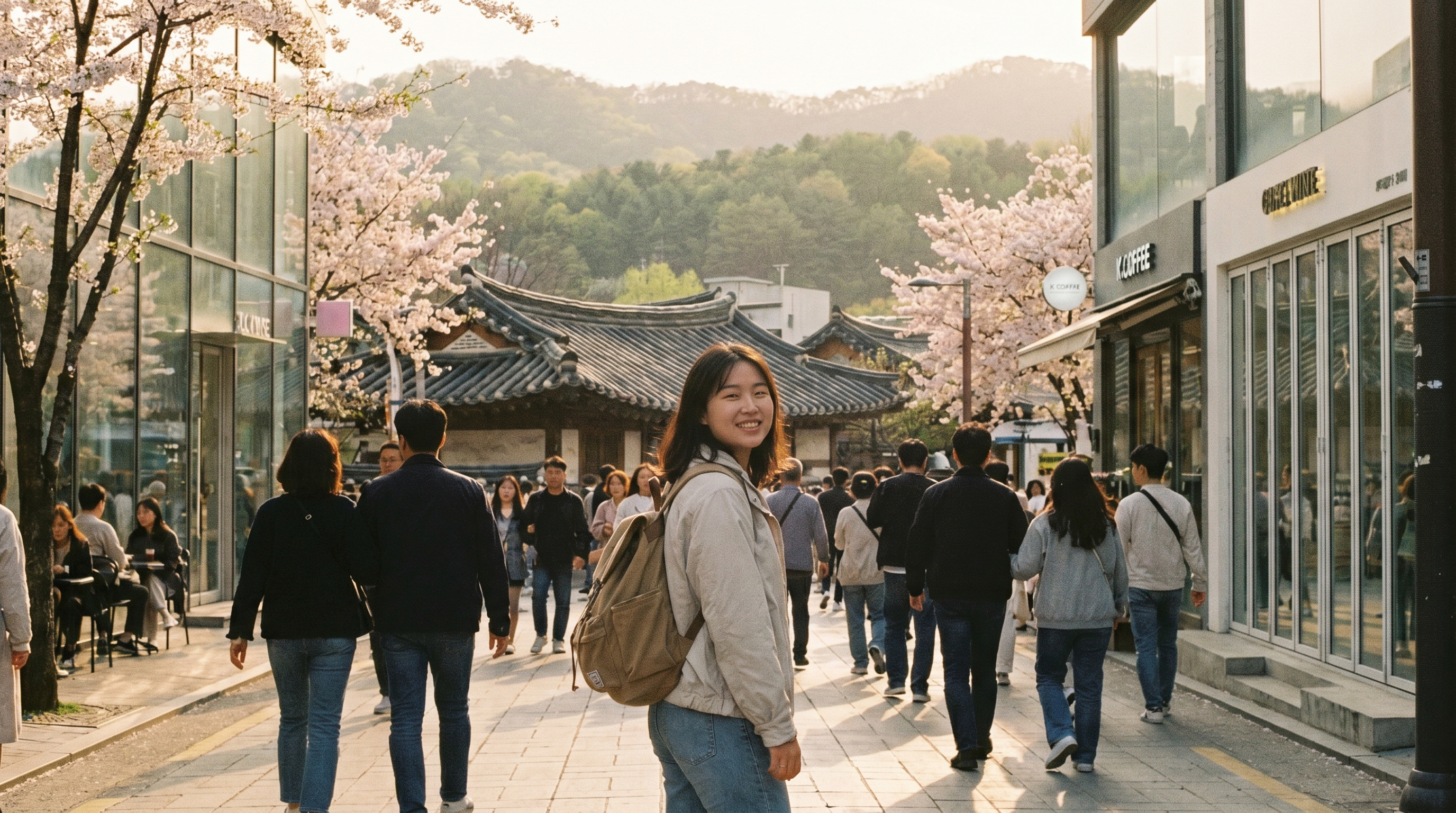
Things to Know Before Visiting Korea: The Honest Overview
Let me reassure you first: Korea is one of the safest, most convenient countries you can visit. Public transport runs like clockwork, almost everything is paid for by card, and help is rarely far away. Most guests leave already planning their next trip back.
The small surprises below are not problems, just things we locals take for granted. Streets climb steep hills, summers are hot and humid while winters bite, and many smaller restaurants post their menus only in Korean. Knowing these in advance means you spend your energy enjoying the food and the scenery rather than puzzling over logistics — which is exactly what a good guide is for.
Koreans Are Friendly, Sometimes Surprisingly So
I will happily confirm the stereotype: people here are warm, and often go out of their way for visitors. An older passer-by may walk you to the right exit, and shop staff frequently switch to English the moment they sense you need it. In smaller towns, where foreign faces are rarer, this kindness can feel almost overwhelming — please take it in the friendly spirit it is meant.
Communication is easier than you fear. A simple 안녕하세요 (annyeonghaseyo, hello) and 감사합니다 (gamsahamnida, thank you) are warmly received, and a translation app covers the rest. For in-person help, look for the official tourist information centres, usually marked with a red letter ‘i’; the Seoul tourism site lists their locations. A smile and a little patience go a very long way here.
Getting Around Is Easy and Cheap
This is where Korea shines, and where I always tell guests to relax. Buy a rechargeable T-money card at any convenience store or station machine, and you can tap onto every city bus and subway, and pay in most taxis too. Subway signs and announcements are in English, so you will rarely get lost underground.
For longer trips, the high-speed KTX and SRT trains booked through KORAIL link Seoul to Busan in about two and a half hours, while comfortable express buses (고속버스) reach almost everywhere else for less. One honest local tip many guides skip: do not rely on Google Maps here, as its driving and transit directions are restricted in Korea. Use Naver Map or Kakao Map instead, and Kakao T to call a taxi.
If you would rather drive, the roads are orderly and the countryside is the reward. The one quirk is the tollgates: the blue Hi-Pass (하이패스) lanes are only for cars fitted with a transponder, so a rental without one should stay in the ordinary cash or card lanes. Prefer to skip the planning entirely? Our personal concierge can arrange routes and bookings, and if you are heading south, the Busan tourism site is a great place to start.
The Stairs and Hills Are Real
Now the thing we locals forget to warn you about: Korea is mountainous, and you will feel it. Around seventy percent of the country is hills and mountains, so neighbourhoods climb, pavements tilt, and even a short walk can turn into a workout. It is part of what makes the views so lovely, but it adds up over a full day on foot.
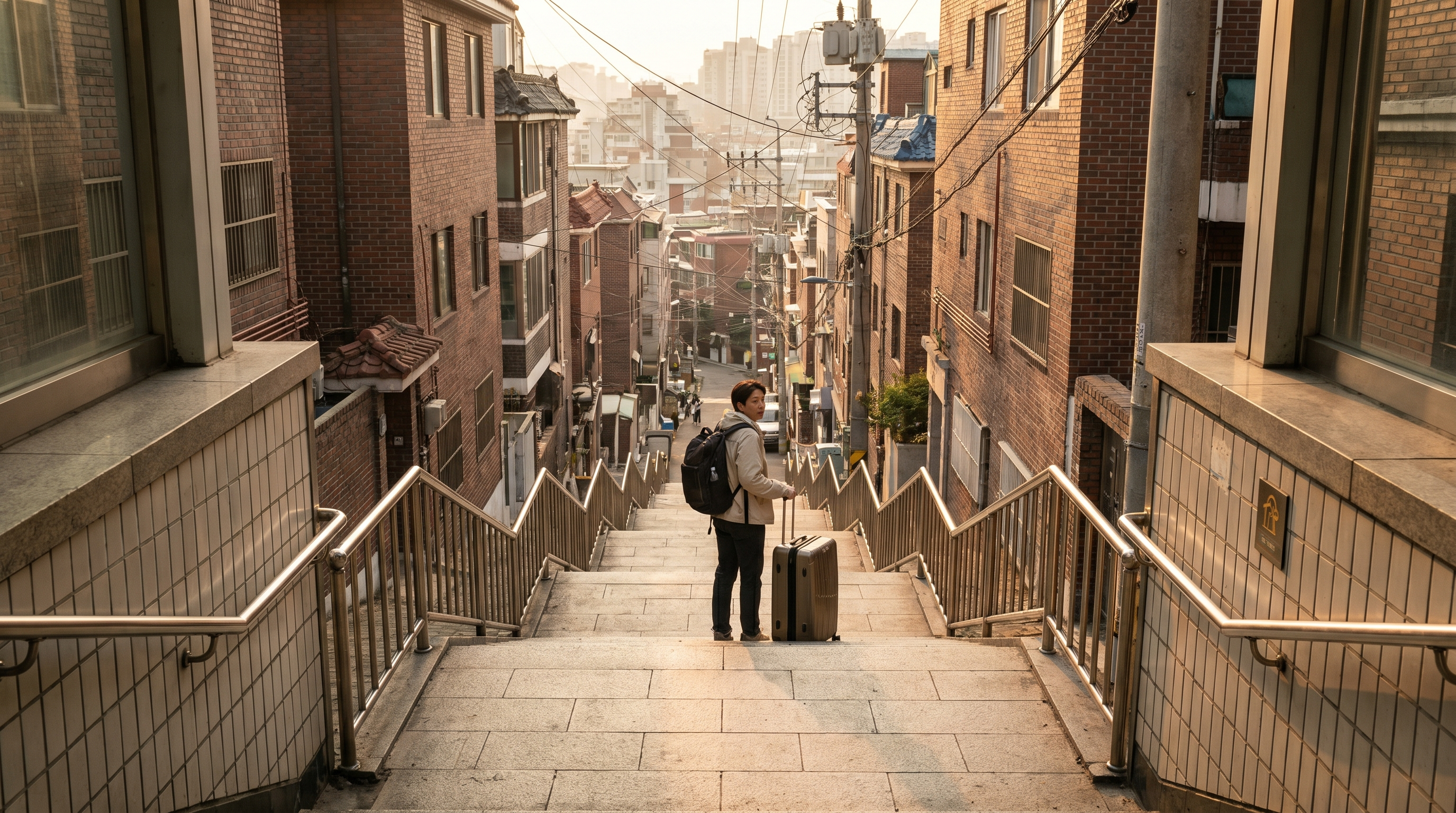
Our subway is excellent, but stations are often deep, and while lifts and escalators exist, the lift can sit at the far end of a long platform. With a heavy suitcase, that means stairs. This is exactly why I give every guest the same advice: do not haul your bags around. Let our luggage delivery service carry them between the airport, your hotel, and your next stop while you climb those hills unburdened.
The Weather Can Catch You Out
Korea has four genuinely distinct seasons, and we dress carefully for each. Spring (April to May) and autumn (September to October) are the sweet spots: mild, clear, and beautiful. Even a spring afternoon can climb past twenty degrees, so pack a little lighter than the calendar might suggest.
Two local realities are worth planning around. The summer monsoon, which we call 장마, brings heavy rain through late June and July before the humid heat peaks in August, so keep a compact umbrella handy. In spring, fine dust (미세먼지) can occasionally haze the sky; many locals check an air-quality app and wear a mask on the worst days. Winters, by contrast, are cold and dry, so layer up. Forget something? You will replace it in minutes here.
Eating Out: Menus, Naver Map and Fatty Cuts
Finding dinner is the one task that trips up newcomers. Away from tourist zones, many small restaurants list their menu only in Korean, taped to the wall, with no photos, so you often have to step inside to see your options. It feels awkward at first, but I promise it is completely normal, and the food is usually well worth the small leap of faith.
Here is how locals do it. Search the restaurant on Naver Map or Kakao Map, where you will find menus, prices, and customer photos you can translate on the spot. And about that ‘too fatty’ barbecue: the marbling is genuinely prized here, but if it is not to your taste, order leaner cuts such as 목살 (pork neck) rather than 삼겹살, and use the lettuce, perilla leaves, 쌈장, and a bowl of cold 냉면 to balance the richness. That is simply how we eat it.
Korea Is the Land of Convenience
If you forget something, please do not stress, because this is the land of convenience. Stores such as CU, GS25, 7-Eleven, and Emart24 sit on almost every corner, many open around the clock, selling everything from chargers and umbrellas to surprisingly good hot meals. Cafés are everywhere, and card payment works almost universally; just carry a little cash for traditional markets.
That same ease applies to souvenirs, cosmetics, and gifts, which pile up fast once you discover Korea’s beauty shops. If your suitcase is overflowing, our Korea shopping service can buy and consolidate purchases on your behalf. And should you leave something behind at a hotel or shop after flying home, our lost item return shipping can track it down and post it on to you.
Museums and Attractions Are Cheap and Easy
Sightseeing here is refreshingly affordable. Palaces, museums, galleries, and eco-parks are well signposted, easy to reach, and charge very modest fees, often just three to five thousand won, with some free of charge. Our national museums in particular rarely charge admission at all.
A favourite local tip: rent a 한복 (hanbok), the traditional dress available near the major palaces, and you enter Seoul’s grand palaces free. For opening hours and ideas, the national portal VisitKorea is reliable. One more thing locals know that visitors often do not: there is no tipping culture here, so the listed price is what you pay, in restaurants and taxis alike. Just keep those hills in mind when you decide how many stops to attempt in a day.
More Things to Know Before Visiting Korea: Travel Hands-Free
If you remember only one thing from this guide, let it be this, because it is the advice I give most often: travel as light as you possibly can. Between the staircases, the hills, the summer heat, and the long days on foot, a heavy suitcase is the surest way to wear yourself out and dull an otherwise wonderful trip.
So let your bags travel without you. Our luggage delivery service moves suitcases door to door, and our complete guide to luggage delivery in Seoul explains exactly how it works. Pair it with our shopping service for bigger hauls, and the most useful of all the things to know before visiting Korea becomes simple: arrive, hand us the heavy lifting, and explore with empty hands.
FAQ: Things to Know Before Visiting Korea
What are the most important things to know before visiting Korea?
Pack light and in layers, expect plenty of stairs and hills, use Naver Map or Kakao Map rather than Google Maps, and carry a translation app for Korean-only menus. Beyond that, relax: Korea is safe, friendly, card-friendly, and easy to navigate once you arrive.
Is Korea easy to travel without speaking Korean?
Yes. A few polite phrases are appreciated, but many locals switch to simple English and translation apps handle the rest. Signs and announcements on the subway and in major cities are widely available in English, so getting around is rarely a problem.
When is the best time to visit Korea?
Spring (April to May) and autumn (September to October) are the most comfortable and scenic. Expect the 장마 monsoon rains in late June and July, humid heat in August, and cold, dry winters, so pack for whichever season you choose.
How do I avoid carrying heavy luggage around Korea?
Use a luggage delivery service to move suitcases between the airport, your hotel, and your next destination. Paired with a shopping service for larger purchases, it lets you tackle the hills and stairs completely hands-free.
Explore Korea with empty hands
Skip the heavy suitcases on those famous stairs and hills. Our luggage delivery is tracked, insured, and multilingual, so you can enjoy Korea hands-free from the moment you land.