If you’re searching for the most authentic, untouristy destination in South Korea, the Andong travel guide you’re reading right now will show you exactly why this city is called the “capital of Korean spirit.” When Queen Elizabeth II visited South Korea and asked to be taken to the most traditionally Korean place in the entire country, she was brought to Andong. That single fact tells you everything you need to know about what awaits you here.
Andong sits in North Gyeongsang Province (Gyeongsangbuk-do), roughly 2–3 hours from Seoul by train or bus. It’s home to a UNESCO World Heritage village, Korea’s oldest wooden Buddhist temple, a 387-meter pedestrian bridge, a world-famous mask dance festival, and food you simply cannot find anywhere else. Yet somehow, most foreign tourists skip it entirely — which means you’ll have some of the most spectacular historical sites in Asia almost completely to yourself.
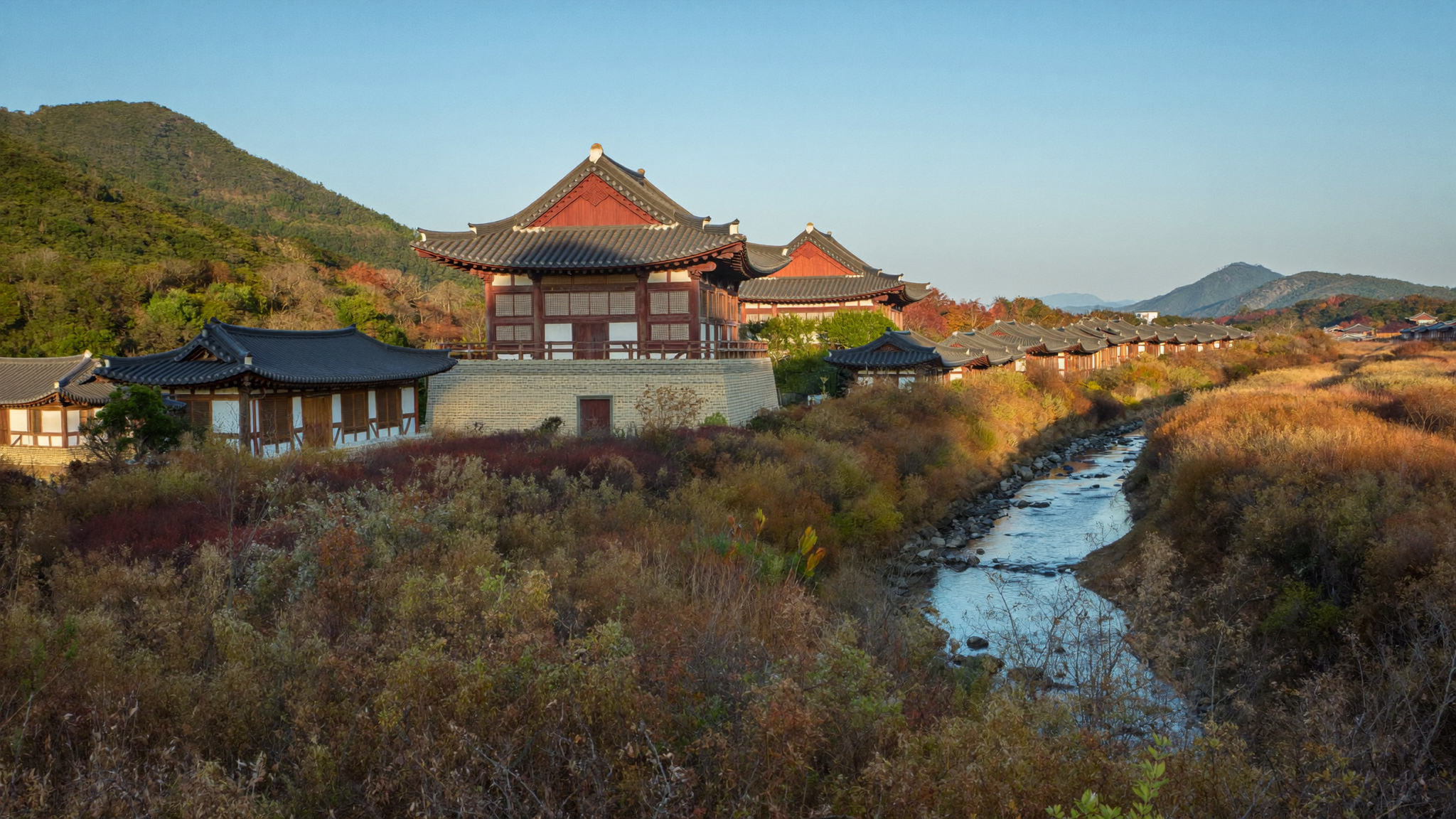
Table of Contents
- Why Visit Andong?
- 1. Hahoe Folk Village (UNESCO)
- 2. Bongjeongsa Temple
- 3. Woryeonggyo Bridge
- 4. Andong Mask Dance Festival
- 5. Byeongsan Seowon Confucian Academy
- 6. Hahoe World Mask Museum
- 7. Andong Soju & Food Museum
- 8. What to Eat in Andong
- 9. Imcheonggak Historic Estate
- Getting to Andong from Seoul
- Getting Around Andong
- Where to Stay
- Best Time to Visit
- Practical Travel Tips
Why Visit Andong? Korea’s Most Cultural City
Andong is the kind of place that changes how you think about Korea. While millions of tourists pour through Seoul, Busan, and Jeju each year, Andong sits quietly in the mountains of North Gyeongsang Province, preserving 600-year-old traditions that have almost vanished everywhere else. This is the heartland of Korea’s Confucian culture, and the city takes enormous pride in it.
The numbers are impressive: two UNESCO World Heritage sites (Hahoe Folk Village and the surrounding Joseon-era academies), one of Korea’s national intangible cultural heritages (the Hahoe Mask Dance), and a temple complex that houses the oldest wooden building in the country. For travellers who’ve already done Seoul and are wondering what comes next, Andong is the answer. Check our complete Korea travel tips guide before you go to make sure you’re fully prepared.
1. Hahoe Folk Village — A Living UNESCO Heritage Site
The star attraction of any Andong travel guide is the legendary Andong Hahoe Folk Village, a UNESCO World Heritage Site inscribed in 2010. The name “Hahoe” (河回) literally means “river turns back,” referring to the dramatic S-shaped bend of the Nakdong River that wraps around the entire village on three sides — a natural moat that has helped preserve this community almost perfectly for six centuries.
This is not a reconstructed theme park. Hahoe is an actual living village where families — many of them descendants of the original Ryu clan who settled here in the 14th century — still live and work. You’ll walk through alleyways lined with thatched-roof farmhouses (choga), Joseon-era aristocratic tile-roof mansions (giwa), and stone walls covered in moss and time. The effect is genuinely transporting.
Key things to do at Hahoe Folk Village:
- Wander the lanes — There are no tickets for entry to the village itself (free), though the shuttle bus from the parking area costs a small fee. Simply walking through is the main experience.
- Watch the Byeolsingut Tallori — Free traditional mask dance performances are held at the Open Air Theatre near the bus stop, usually in the afternoons (not in winter). This is one of Korea’s oldest theatrical traditions.
- Rent a bicycle — The village and surrounding area are perfectly flat and extremely bike-friendly. Cycling along the riverside is one of the best ways to see everything at a relaxed pace.
- Stay overnight — Several homestay guesthouses (minbak) operate within the village, giving you access to the magical early-morning calm before day-trippers arrive.
- Visit Buyongdae Cliff — A short hike above the village brings you to Buyongdae, a dramatic cliff with panoramic views of the river bend and the village below. This is the best spot for photos.
Hahoe is located about 30 kilometers from central Andong. Take local Bus 246 from Andong Bus Terminal (approx. 40 minutes, runs several times daily). A taxi from Andong city center costs around 20,000–25,000 KRW one way.
2. Bongjeongsa Temple — Korea’s Oldest Wooden Building
About 20 kilometers north of central Andong, Bongjeongsa Temple is one of the most important Buddhist sites in Korea — and one of the least crowded. Originally established during the Silla Dynasty (7th century), the temple complex is home to the Geungnakjeon Hall, which is recognized as the oldest wooden structure in Korea, dating back to the early 13th century (Goryeo Dynasty).
Walking through the temple grounds feels like stepping through a thousand years of Korean history. The architecture is austere and powerful — heavy wooden beams, flying eaves, painted ceilings faded by centuries of incense smoke. The surrounding mountain scenery adds another layer of beauty. Opening hours are daily from 9 AM to 6 PM; there is a small entrance fee.
3. Woryeonggyo Bridge — Korea’s Longest Wooden Pedestrian Bridge
At 387 meters long, Woryeonggyo Bridge (월영교) is the longest wooden pedestrian bridge in Korea — and it’s one of the most romantic spots in the entire country. The name means “reflection of the moon,” and the bridge lives up to it fully when night falls and the entire structure lights up, its glow reflecting in the dark water of the Andong Dam reservoir below.
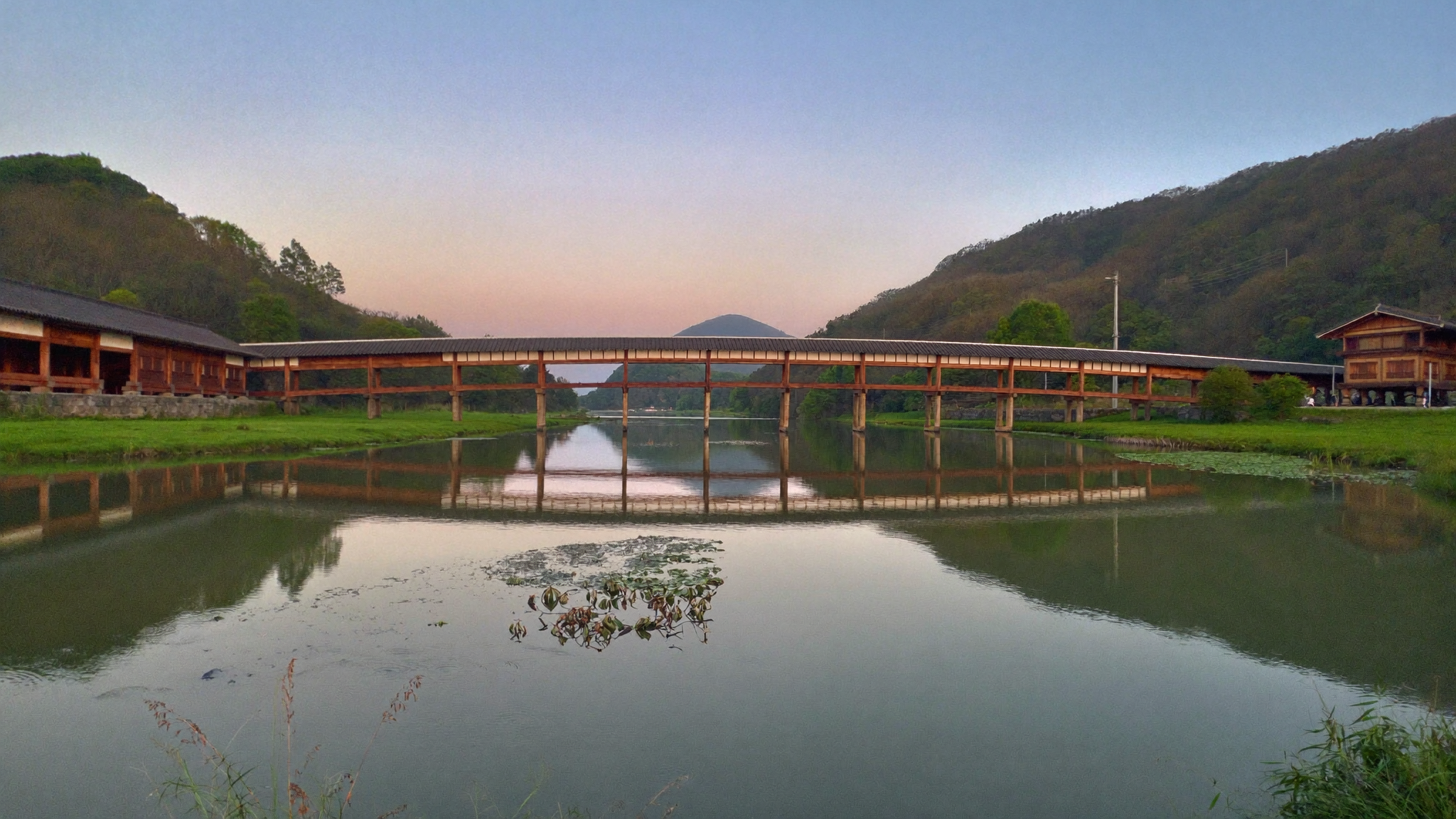
Visit at sunset for the best photos. After dark, the bridge and its surroundings become a gentle promenade popular with local couples and families. There’s also a moon boat station right at the bridge entrance where you can rent a traditional wooden boat and drift underneath the bridge for a uniquely peaceful experience. The bridge is located near Andong Dam, about 4 kilometers from the city center — an easy taxi ride or pleasant 20-minute walk along the lakeside path.
4. Andong Mask Dance Festival (안동국제탈춤페스티벌)
If your travel dates allow it, timing your Andong travel to coincide with the Andong Mask Dance Festival is an absolute must. Held annually in late September or early October at the Hahoe Folk Village grounds, this is one of Korea’s most celebrated traditional festivals and the world’s largest gathering of mask dance traditions.
The festival features performances not only of Korea’s own mask dance traditions — including the Hahoe Byeolsingut Tallori, a satirical theatrical art form recognized as an Intangible Cultural Heritage of Humanity — but also mask dance troupes from dozens of countries around the world. The Tallori Daedongnanjang Parade, where performers and audience members dance together through the streets wearing various masks, is a highlight that typically draws over 100,000 visitors over ten days.
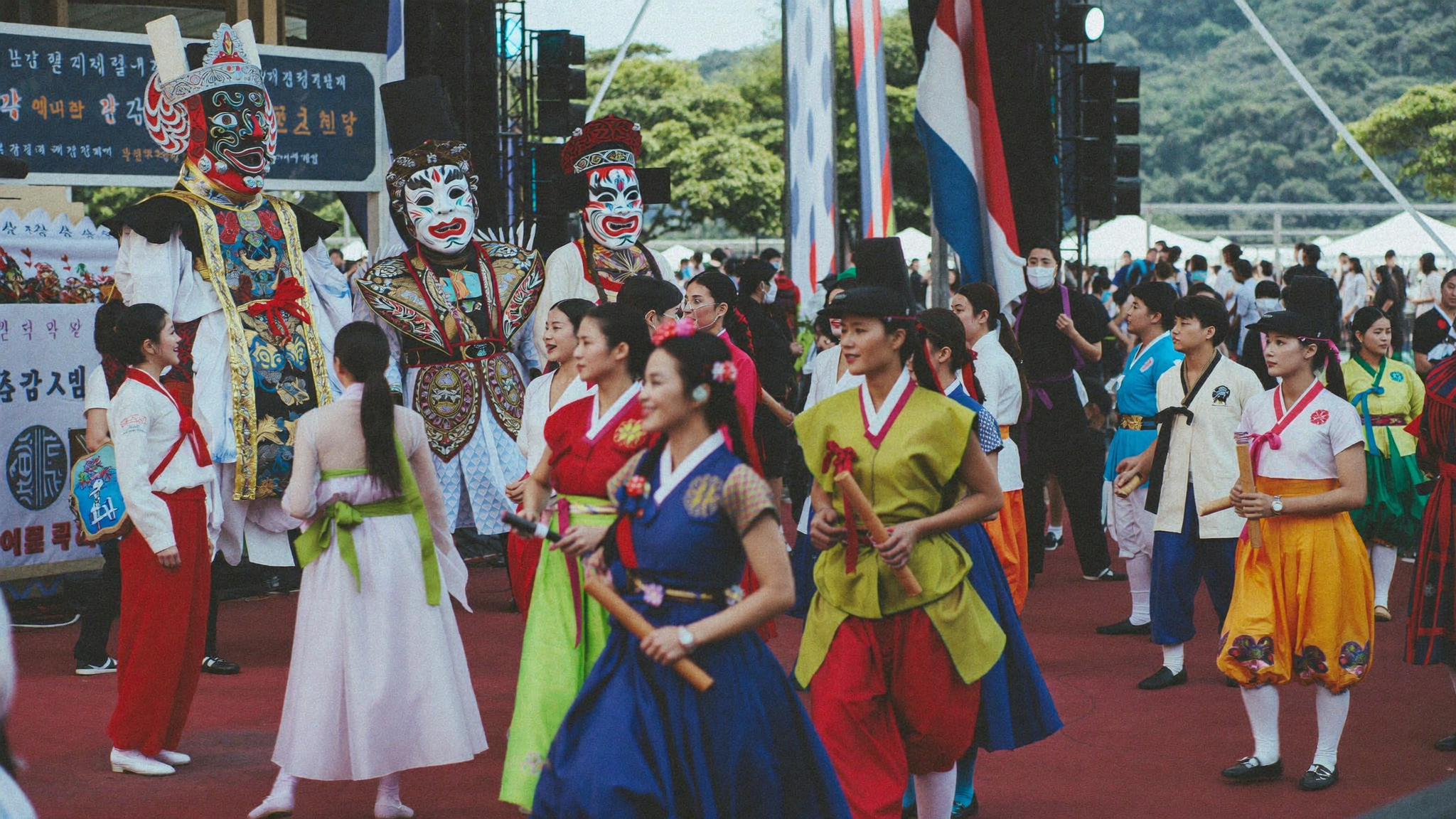
Even outside festival season, you can learn about the tradition at the Hahoe World Mask Museum (see below) and catch smaller daily performances at the village’s open-air theatre. The masks themselves — called tal (탈) — are iconic images of Andong that you’ll see everywhere in the city’s shops and restaurants.
5. Byeongsan Seowon — A Confucian Academy in the Wilderness
Only about 4 kilometers from Hahoe Village along a mountain road, Byeongsan Seowon is one of Korea’s finest Joseon-era Confucian academies (seowon), and it has been inscribed as a UNESCO World Heritage Site as part of the “Seowon, Korean Neo-Confucian Academies” serial heritage listing (2019). Built in the 17th century as a place of scholarship and ancestor veneration, the complex sits magnificently against a backdrop of wooded cliffs and the Nakdong River.
The academy is architecturally stunning — a long pavilion hall opens onto a sweeping view of the mountains and river, designed so that students studying here could draw inspiration from nature. It’s completely uncrowded (sometimes you’ll have it entirely to yourself), and the walk or drive from Hahoe Village takes only about 10 minutes. Combining both sites in a single half-day excursion is highly recommended.
6. Hahoe World Mask Museum
Located just outside the entrance to Hahoe Folk Village, the Hahoe World Mask Museum (하회세계탈박물관) is a surprisingly excellent museum that traces the tradition of mask performance from Korea across the world. Displays include traditional Andong tal masks — some of which are National Treasures — alongside masks from Japan, China, India, Africa, and beyond.
The museum is worth at least an hour, especially as an introduction before you walk through Hahoe Village itself. You’ll leave with a deeper appreciation for why the Hahoe Mask Dance tradition is considered so culturally significant, and why the masks’ expressions — ranging from comedy to tragedy to satire — were so subversive in Joseon-era society. Entry fee is modest; combined tickets with the shuttle bus to the village are available.
7. Andong Soju Museum & Folk Museum
Andong is arguably the birthplace of Korean soju — and the local variety, called Andong Soju (안동소주), is nothing like the mild commercial spirits sold everywhere in Seoul’s convenience stores. Traditional Andong Soju is distilled once from rice and has an alcohol content of around 45%, making it one of Korea’s most potent and historically authentic spirits.
The Andong Soju Museum (and the adjacent Andong Folk Museum) traces the history of this drink and its role in Joseon-era medicine, ritual, and daily life. You can sample the real thing on-site. The Folk Museum next door gives excellent context on traditional Andong life, including a scale model of a traditional noble household (yangban) and artifacts from the region’s long history.
8. What to Eat in Andong: The Essential Food Guide
Food is a huge part of any Andong travel experience. The city has two signature dishes that are famous across Korea, plus a drink that belongs on every serious food traveller’s list.
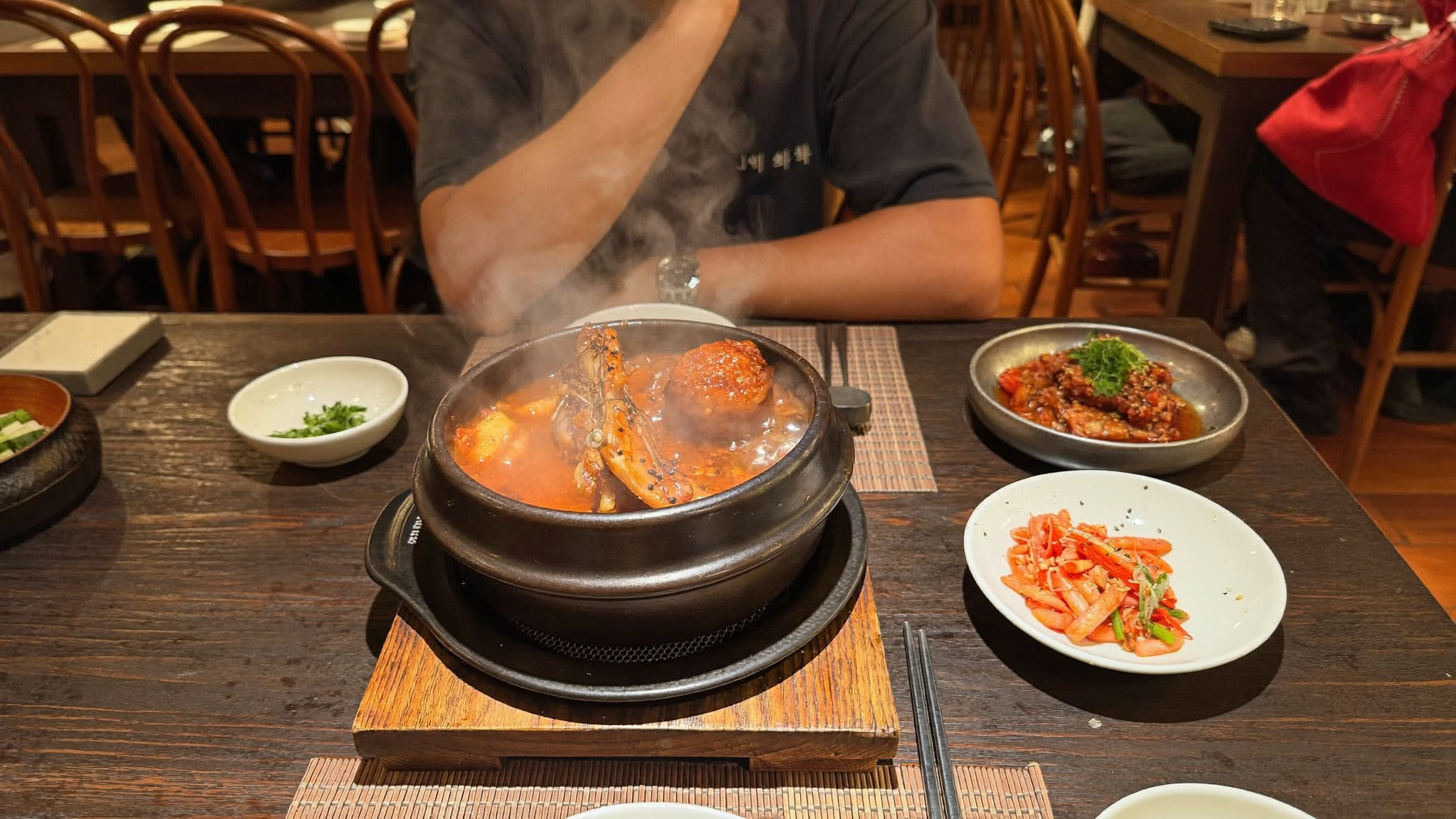
Andong Jjimdak (안동찜닭)
Jjimdak is Andong’s most famous dish and one of Korea’s beloved comfort foods. Made with bone-in chicken pieces, glass noodles (dangmyeon), potatoes, carrots, green onions, and dried red chilies, all braised together in a rich soy-based sauce, it’s deeply savory and satisfying. You can find jjimdak nationwide, but eating it in its hometown — in the traditional “jjimdak alley” (찜닭골목) in central Andong — is a very different and superior experience. Prices are typically 25,000–35,000 KRW for a serving that feeds 2–3 people.
Gangodeungeo (안동간고등어)
Andong salted mackerel (gangodeungeo) is Korea’s most famous salted fish, dating back to when fishermen from the coast would heavily salt mackerel to preserve it for the long journey inland to Andong. The intense salting process gives the fish a much firmer, more concentrated flavor than ordinary mackerel. Grilled and served with rice and banchan (side dishes), it’s one of those simple but deeply satisfying meals. Look for restaurants that specialize in this dish near the Andong bus terminal area.
Andong Naengmyeon (안동냉면)
Andong’s version of cold buckwheat noodles is subtly different from the Pyongyang style you may have tried elsewhere — firmer noodles, a more robust broth, and a different approach to garnishes. It makes an excellent lunch, especially in summer.
Andong Soju (안동소주)
As mentioned above, traditional Andong Soju is a world away from commercial Korean spirits. Even if you’re not a spirits drinker, trying even a small taste is a rite of passage. Local restaurants near Hahoe Village often serve it in small traditional ceramic cups alongside a meal.
9. Imcheonggak — The Ryu Clan’s Historic Estate
Imcheonggak (임청각) is a 500-year-old Joseon-era estate located near Andong Station, and it holds a special place in Korea’s modern history as well as its ancient one. The home of the Ryu clan, Imcheonggak is one of the largest surviving residential structures from the Joseon Dynasty. During the Japanese colonial period (1910–1945), nine members of the household fought in the Korean independence movement, making it a place of enormous national significance.
After decades of partial demolition (a railway line was built through part of the property during the colonial era), restoration of the estate has been ongoing in recent years. Walking through the extensive wooden halls and gardens gives a vivid sense of what upper-class life in Joseon Korea looked like. Entry is free.
Getting to Andong from Seoul
Andong is well-connected to Seoul by both train and bus, and the journey is straightforward.
By Train (Recommended)
Trains to Andong depart from Cheongnyangni Station (청량리역) in eastern Seoul — reachable via Seoul Metro Line 1 or Line 5 (Gyeongui-Jungang Line). The journey takes approximately 2 hours on the ITX-Saemaeul or Mugunghwa express trains. Trains run multiple times daily; book in advance on KORAIL’s website or app. From Andong Station, the city center is about a 10-minute walk or short taxi ride.
By Bus (Budget Option)
Express buses run frequently from two Seoul terminals:
- Gangnam Express Bus Terminal (강남고속터미널): Approximately 3 hours, buses run every 30–60 minutes
- Dong Seoul Bus Terminal (동서울버스터미널): Similar journey time and frequency
The bus drops you at Andong Bus Terminal, which is in the heart of the city. Buses are comfortable and often slightly cheaper than trains. This is a great option if you’re coming from anywhere in southern Seoul.
Getting Around Andong
Andong does not have a subway system, but the city is easy to navigate with a combination of taxis and local buses.
- Taxis are inexpensive (most rides within the city cost under 5,000 KRW) and drivers can usually navigate to major attractions without English. Save attraction names in Korean on your phone.
- Bus 246 runs from Andong Bus Terminal to Hahoe Folk Village (about 40 minutes). Check the schedule as departures are limited.
- Bicycle rental is available near Woryeonggyo Bridge and is excellent for exploring the lakeside area and the dam.
If you’re planning to visit multiple outlying sites (Bongjeongsa, Hahoe, Byeongsan Seowon), renting a car or booking a private taxi for the day is the most convenient option. Many local taxi drivers are happy to negotiate a half-day or full-day rate.
Where to Stay in Andong
Andong has two very different types of accommodation, and choosing between them depends on what kind of experience you want.
Hanok Guesthouses at Hahoe Village
Staying inside or immediately adjacent to Hahoe Folk Village is the most immersive option. Several traditional hanok buildings operate as homestays (minbak), letting you sleep in a heated ondol-floor room, wake up in the silence of a 600-year-old village, and experience morning before the day-trippers arrive. These are simple but atmospheric; facilities are basic but clean. Book well in advance, especially for September–October festival season.
Hotels in Andong City
Andong city center has a range of business hotels and mid-range options that are clean, comfortable, and very affordable by Korean standards. Staying in the city gives you easy access to jjimdak alley, the train station, and day trips to the surrounding attractions. Most budget rooms can be found for 50,000–80,000 KRW per night.
Best Time to Visit Andong
Andong is beautiful year-round, but there are two peak seasons worth planning around:
Autumn (September–November)
This is Andong’s most spectacular season. The hills surrounding Hahoe Village and Bongjeongsa Temple turn vivid shades of red, orange, and gold, and the famous Andong Mask Dance Festival falls in late September or early October. Crowds are at their peak during festival week, but shoulder weeks before and after offer autumn color with fewer visitors. October is often considered the single best month to visit.
Spring (April–May)
Cherry blossoms reach Andong in early April, and the surrounding countryside turns bright green through May. Spring is less crowded than autumn and offers pleasant walking weather. Hahoe Village looks particularly beautiful framed by the pale pink of spring blossoms.
Summer (June–August) is hot and can be humid, with some rain. Winter (December–February) is cold but peaceful, and the snowy landscape of Hahoe Village is genuinely beautiful — just dress warmly and check bus schedules, as some services run less frequently.
Practical Andong Travel Tips
- Language: English is limited outside the major tourist sites. Save key attraction names in Korean on your phone (하회마을 = Hahoe Village; 봉정사 = Bongjeongsa; 월영교 = Woryeonggyo Bridge).
- Cash: Carry some cash for buses, small restaurants, and market stalls. Most hotels and larger restaurants accept cards.
- How long to stay: Two nights is the sweet spot — one full day for Hahoe/Byeongsan Seowon/Mask Museum, and one for Bongjeongsa/Imcheonggak/Woryeonggyo and the city.
- Combine with other destinations: Andong pairs beautifully with Gyeongju (2 hours south by bus) for an epic Joseon + Silla history combo. From there, Jeonju or Sokcho make logical next stops if you’re doing a wider Korea itinerary.
- Hahoe Village shuttle: Private cars cannot enter the village. You must take the official electric shuttle from the parking area — this is included in some ticket bundles.
Final Thoughts: Why Andong Belongs on Your Korea Itinerary
The best Andong travel guide isn’t really about attractions and logistics — it’s about attitude. Andong rewards slow travel. It rewards curiosity about Korean history, Confucian philosophy, and traditions that have survived six centuries of change. It rewards getting up early to watch mist rise from the Nakdong River as it curves around Hahoe Village, or sharing a clay pot of jjimdak with strangers in a crowded alley restaurant.
Most foreign tourists will never make it here — and that’s exactly why you should. For the latest official visitor information, check the Andong City official tourism website.
Ready to start planning? Browse our complete Korea first-timer’s guide for everything you need to know before your trip.