If you’re planning a trip to Korea and want to step beyond Seoul, the Gyeongju travel guide you’ve been searching for starts right here. Gyeongju — once the magnificent capital of the Silla Kingdom for nearly 1,000 years — is often called Korea’s museum without walls. Every hill, every park, and every quiet street holds centuries of history. Whether you have one day or three, Gyeongju, Korea will leave you stunned.
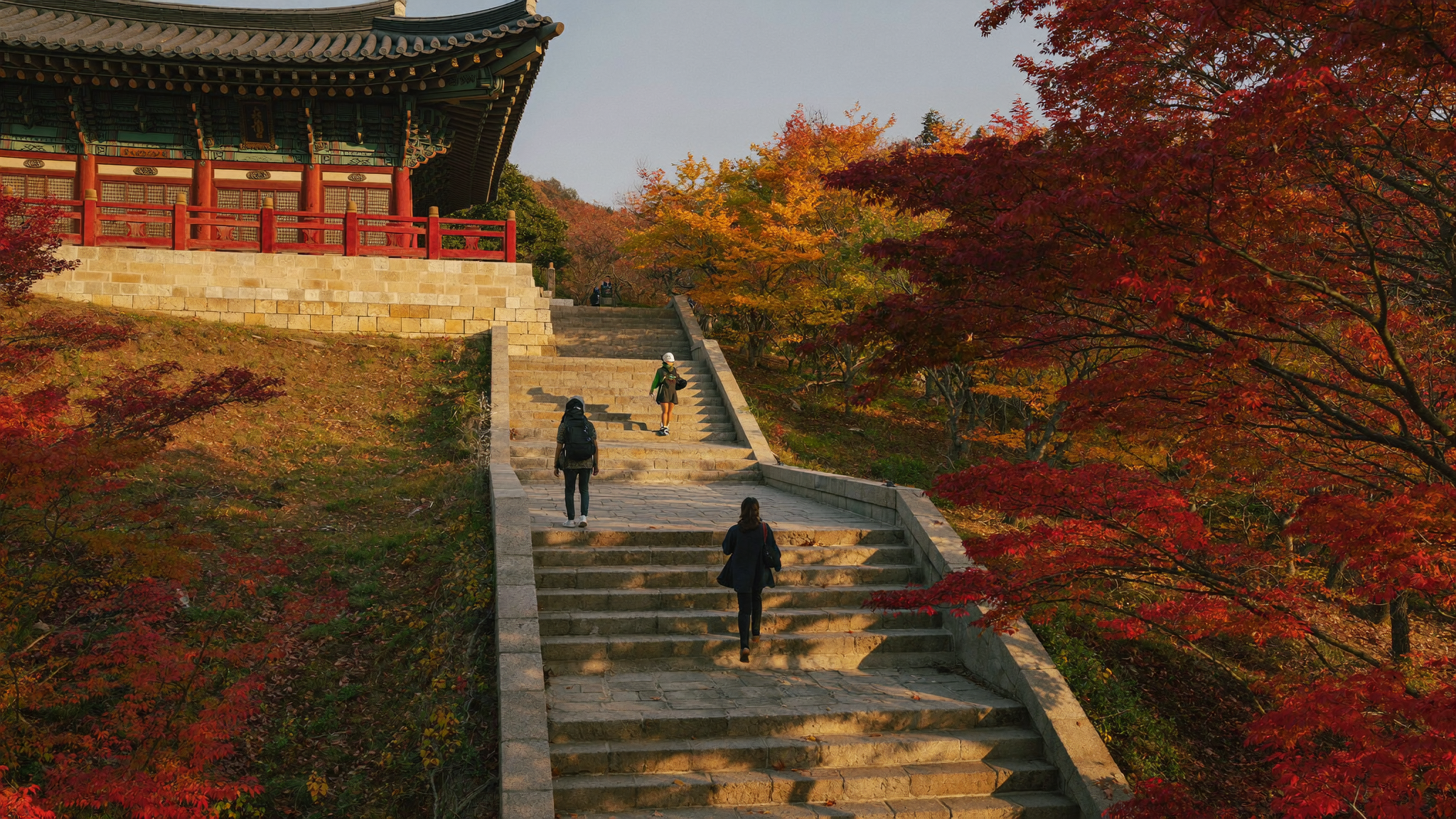
Table of Contents
- Why Visit Gyeongju?
- Top 9 Gyeongju Attractions
- Best Gyeongju Food and Restaurants
- How to Get to Gyeongju
- Best Time to Visit Gyeongju
- Gyeongju Travel Tips
- Day Trip vs. Overnight Stay
- Final Thoughts
Why Gyeongju, Korea Should Be on Every Traveler’s List
Gyeongju is unlike any other city in South Korea. While Busan dazzles with beaches and Seoul buzzes with modern energy, Gyeongju offers something rarer: authentic Korean history you can walk through. The city is home to three UNESCO World Heritage Sites and dozens of Silla-era monuments, tombs, and temples. For Japanese and Chinese visitors in particular, Gyeongju holds deep cultural resonance — the Silla Kingdom maintained active diplomatic and cultural exchange with Tang Dynasty China and Nara Period Japan.
The historic areas of Gyeongju were inscribed as a UNESCO World Heritage Site in 2000, recognizing the outstanding universal value of Silla civilization. Today, the city balances its ancient soul with charming cafes, excellent local cuisine, and a vibrant arts scene that makes it a joy to explore at any pace.
Top 9 Gyeongju Attractions You Cannot Miss
1. Bulguksa Temple – Korea’s Most Beautiful UNESCO Temple
No Gyeongju travel guide is complete without Bulguksa Temple. Built in the 8th century during the reign of King Gyeongdeok, Bulguksa (불국사) sits serenely on the slopes of Mount Toham, surrounded by ancient forest. Its stone staircases — Cheongungyo and Baegungyo — lead visitors up to the main hall in one of the most photogenic entrances in all of Asia. Inside, two iconic stone pagodas, Dabotap and Seokgatap, stand as masterpieces of Silla stonecraft. Allow at least two hours here.
Bulguksa is open daily from 7:00 AM to 6:00 PM. Admission is 6,000 KRW for adults. The temple is about 16 km from downtown Gyeongju — take bus 10 or 11 from the intercity bus terminal.
2. Seokguram Grotto – Sacred Stone Buddha of the Silla Kingdom
A short ride up the mountain from Bulguksa, the Seokguram Grotto houses one of the world’s finest examples of Buddhist stone art: a 2.5-meter granite Buddha gazing serenely toward the East Sea. Also a UNESCO World Heritage Site, the grotto was engineered with remarkable precision — the chamber maintains constant humidity and temperature even 1,300 years later. Photography inside is restricted to preserve the atmosphere. Reach it early to catch the misty morning light that makes Seokguram truly magical.
3. Tumuli Park (Daereungwon Tomb Complex) – Walking Among Ancient Kings
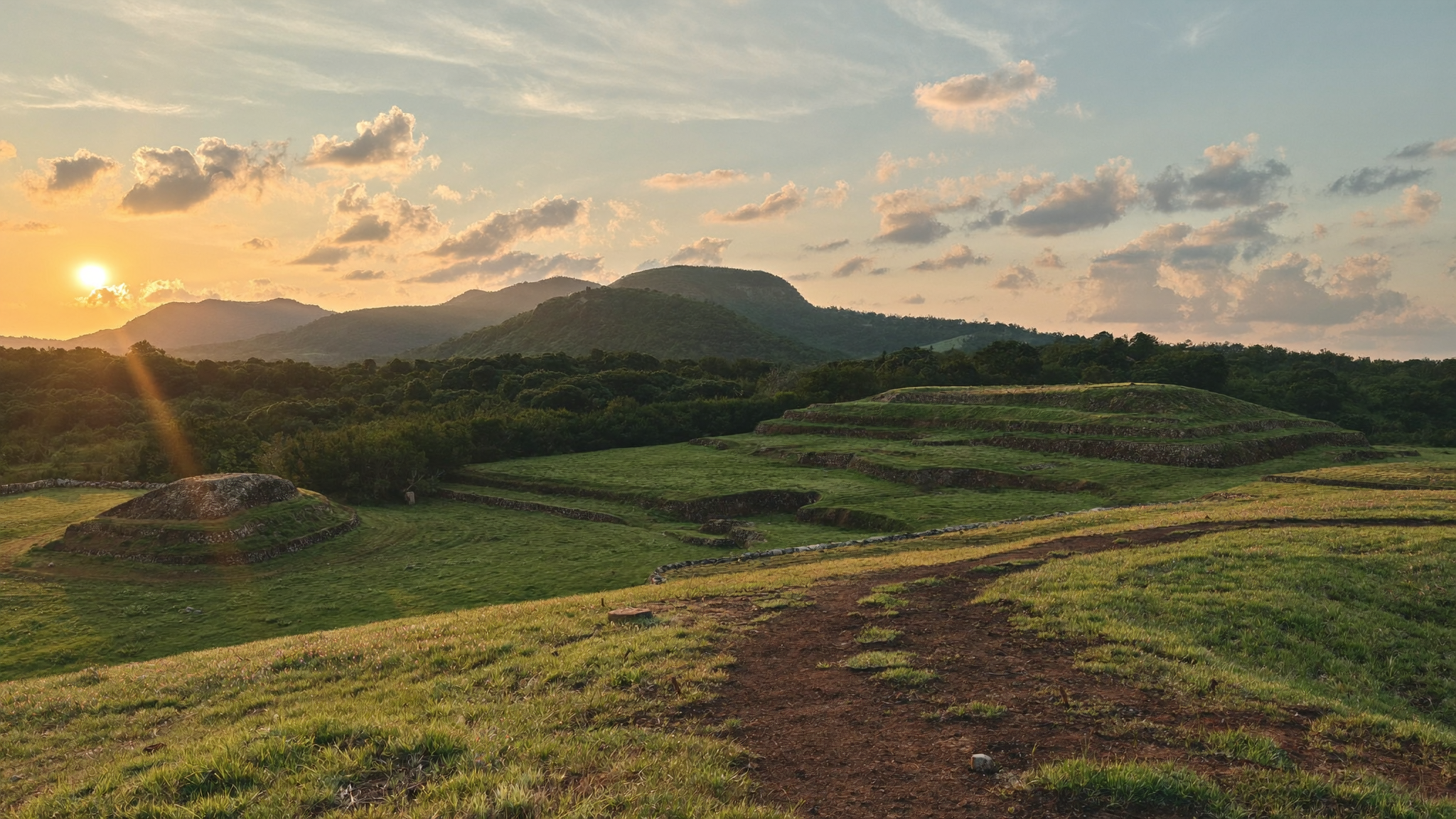
Right in the heart of Gyeongju, Tumuli Park is a serene green space dotted with 23 enormous grass-covered burial mounds containing the remains and treasures of Silla royalty. The most famous, Cheonmachong (Heavenly Horse Tomb), is open to visitors — step inside and see replicas of the gold crowns, jade ornaments, and the legendary painting of a heavenly horse that gave the tomb its name. Strolling through Tumuli Park at dusk, with the mounds silhouetted against a pink sky, is one of Gyeongju’s most memorable experiences.
4. Gyeongju National Museum – 3,000 Years of Silla Treasures
The Gyeongju National Museum is one of Korea’s finest, housing over 30,000 artifacts from the Silla Kingdom, including the legendary Emille Bell (Divine Bell of King Seongdeok) — the largest bell in Korea, cast in 771 AD. The museum is free to enter and offers excellent English-language signage throughout. The outdoor sculpture garden and the reconstructed Anapji Pond exhibit are also worth exploring. Budget two to three hours here if you’re a history enthusiast.
5. Hwangnidan-gil – Gyeongju’s Most Instagrammable Street
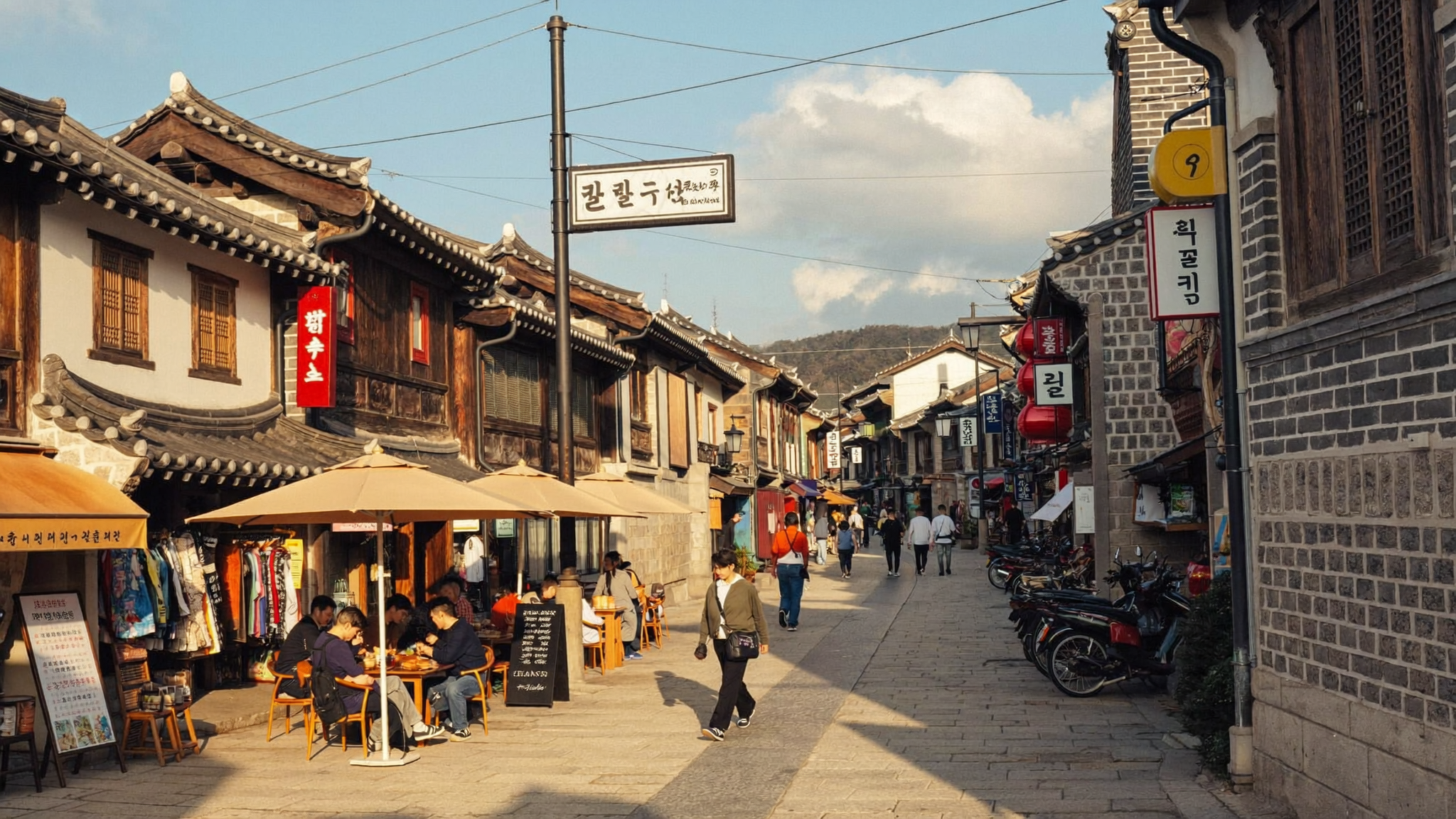
For a taste of contemporary Gyeongju, head to Hwangnidan-gil (황남동 황리단길). This charming strip of converted hanok buildings houses artisan cafes, Korean pottery shops, vintage clothing stores, and craft breweries. It is Gyeongju’s answer to Seoul’s Ikseon-dong — equally photogenic, but quieter and more relaxed. Try a traditional hwangnam bread (황남빵), a red bean pastry that has been made in Gyeongju since 1939. The street is most atmospheric in the late afternoon when golden light filters through the tiled roofs.
6. Woljeonggyo Bridge – Gyeongju’s Most Beautiful Photo Spot
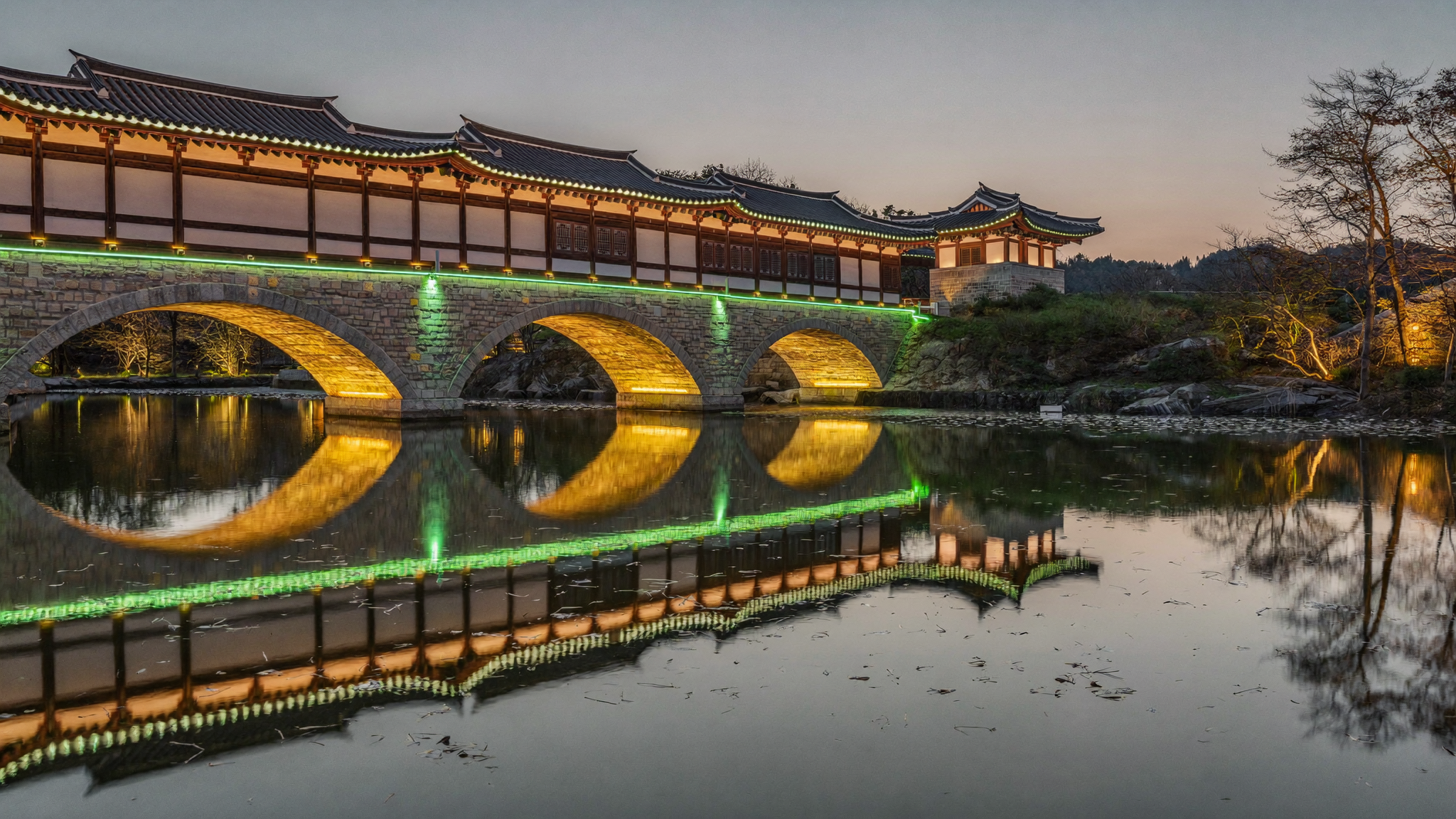
Reconstructed in 2018 based on historical records from the Silla period, Woljeonggyo Bridge spans the Muncheon Stream near the heart of Gyeongju. At 66 meters long, it is Korea’s largest traditional wooden bridge and becomes breathtakingly beautiful when illuminated at night. The bridge is flanked by lanterns and traditional pavilions, making it a top spot for evening photography. Visit during cherry blossom season in early April or the annual Gyeongju Cherry Blossom Festival for an unforgettable sight.
7. Donggung Palace and Anapji Pond – Silla’s Royal Garden
Built in 674 AD as a royal garden for the Silla crown prince, Anapji Pond (now officially renamed Wolji Pond) is one of Gyeongju’s most beloved attractions. The lotus pond perfectly reflects the surrounding pavilions, and thousands of artifacts discovered during excavation — including wooden boats, tiles, and daily utensils — revealed extraordinary details about Silla royal life. The site is equally stunning during the day and at night when the buildings are beautifully lit and mirrored in the still water. Entry is 3,000 KRW.
8. Yangdong Folk Village – A Living UNESCO Heritage Site
Located about 15 km north of downtown Gyeongju, Yangdong Folk Village (양동마을) is Korea’s largest and best-preserved traditional Joseon-era village, inscribed on the UNESCO World Heritage List in 2010. Around 160 tiled-roof and thatched-roof houses spread across hillsides and valleys, and remarkably, families still live here. Walking through Yangdong feels like stepping into a painting. Several homes are open to visitors, and you can try traditional tea and snacks in the village. It is a peaceful half-day escape that rewards those who venture beyond the main Gyeongju attractions.
9. Bomun Lake Resort – Gyeongju’s Lakeside Leisure District
For visitors who want to balance history with relaxation, the Bomun Lake Resort area is Gyeongju’s modern leisure district. Set around a beautiful man-made lake, Bomun offers cycling paths, swan boat rentals, luxury hotels, golf courses, and the annual Gyeongju World Culture Expo. It is a great place to base yourself if you’re spending two or more nights in Gyeongju. The 8.2-km lakeside cycling path is one of the most pleasant rides in all of Korea.
Best Gyeongju Food and Restaurants
Gyeongju has a rich food culture that goes well beyond tourist staples. Here are the must-try dishes and dining experiences for your Gyeongju travel guide:
Hwangnam bread (황남빵) is the city’s most iconic snack — a soft pastry stuffed with sweet red bean paste, made the same way since 1939. Buy a box at the original bakery on Hwangnidan-gil to take home as a souvenir.
Ssambap (쌈밥) is a full spread of rice and seasonal vegetables wrapped in fresh greens, often served in beautiful wooden bowls at hanok restaurants near Tumuli Park. It is hearty, healthy, and deeply satisfying.
Dakbal (닭발) — spicy braised chicken feet — is a beloved local specialty and Gyeongju’s version tends to be milder than Seoul’s, making it a great entry point for adventurous eaters. Plastic gloves are always provided.
For a full traditional Korean course meal (한정식, han-jeongsik), book one day in advance at Yoseokgung (요석궁) near Tumuli Park — a historic restaurant housed in a traditional estate, offering 12-plus course meals showcasing the finest Gyeongsang-do cuisine. Lunch runs 11:30 AM to 1:00 PM, and arriving early is essential to beat the tour groups. Vegetarian travelers should give 24-hour notice to request temple food menus.
A practical note for all visitors: cash is still widely preferred at smaller Gyeongju restaurants and market stalls. Carry some Korean won with you whenever you venture off the main tourist streets.
How to Get to Gyeongju from Seoul and Busan
Getting to Gyeongju is straightforward from anywhere in Korea.
From Seoul: Take the KTX high-speed train from Seoul Station to Singyeongju Station. Trains run every hour and take approximately 2 hours 10 minutes. The fare is around 50,000 to 60,000 KRW one way. From Singyeongju Station, take a local bus or taxi (about 15 minutes) to downtown Gyeongju.
From Busan: Gyeongju is only 30 minutes by KTX from Busan Station. Alternatively, intercity buses run frequently from Busan Nopodong Bus Terminal and take about 1 hour 20 minutes. Gyeongju makes an excellent day trip from Busan.
Getting around Gyeongju: The main attractions are spread across the city, so a combination of walking, local buses, and taxis works best. Renting a bicycle near Tumuli Park is a popular and enjoyable way to explore the downtown area. For Bulguksa Temple and Seokguram Grotto, take the direct tourist bus from the intercity terminal. You can also check Korea Tourism Organization’s Gyeongju page for updated transport schedules.
Pair your Gyeongju visit with a trip to nearby Andong for more traditional Korean culture, or use Gyeongju as a southern base before heading up to Sokcho for coastal mountain scenery.
Best Time to Visit Gyeongju
Gyeongju is beautiful in every season, but two periods stand out for foreign visitors:
Spring (late March to early May) brings cherry blossom season to Gyeongju’s parks and temples. The Gyeongju Cherry Blossom Festival in early April draws large crowds, so book accommodation well in advance — ideally 4 to 6 weeks ahead.
Autumn (mid-October to November) offers crisp air, stunning foliage around Bulguksa Temple, and the most comfortable temperatures for extensive sightseeing. The red maple leaves framing Bulguksa’s stone staircases are world-famous and well worth timing your visit around.
Summer (June to August) is hot and humid, but the Bomun Lake resort area provides a refreshing escape. Avoid major Korean public holidays such as Chuseok, when domestic tourism peaks sharply.
Winter (December to February) is quiet and cold, but occasional light snowfall on the burial mounds and temples creates magical, nearly crowd-free scenes that reward patient travelers.
Gyeongju Travel Tips for Foreign Tourists
Here are essential practical tips to make the most of your Gyeongju trip:
Buy a combined pass. The Gyeongju Historic Areas Integrated Ticket covers Tumuli Park, Anapji Pond, Gyeongju National Museum, and more at a discounted rate. Ask at any ticket booth near the attractions.
Hire a local guide. Many of Gyeongju’s stories are invisible without context. A half-day guided tour significantly enriches the experience, especially at Bulguksa and the National Museum.
Respect temple etiquette. Remove your shoes before entering main halls. Dress modestly. Do not touch Buddhist statues or religious objects. And never stick chopsticks upright in a rice bowl — in Gyeongju, this gesture mimics the incense offering at Silla ancestral tombs and is considered deeply inauspicious.
Language. English signage at major Gyeongju attractions is excellent. At smaller restaurants and shops, bring a translation app with camera mode for menus.
For more general Korea travel planning, our Korea travel tips for first-time visitors is the perfect starting point before diving into regional destinations like Gyeongju.
Gyeongju Day Trip vs. Overnight Stay
You can do Gyeongju as a day trip from Busan — but staying overnight is strongly recommended if your schedule allows.
Day trip (from Busan): Feasible and popular. Focus on Bulguksa plus Seokguram in the morning, then Tumuli Park and Hwangnidan-gil in the afternoon. Skip Yangdong Folk Village and Bomun Lake on a day trip.
One night: Ideal for most travelers. See all the main Gyeongju attractions at a relaxed pace, stay near Hwangnidan-gil for the best restaurant and cafe access, and visit Anapji Pond at night for the stunning illuminated reflection.
Two nights: Recommended for history lovers and those combining Gyeongju with a side trip to Yangdong Folk Village, a full Bomun Lake cycling day, or nearby Pohang’s coastline. Also pairs beautifully with Jeonju as a twin-city cultural tour of Korea’s heritage towns.
Final Thoughts: Gyeongju Is Korea’s Greatest Ancient Wonder
This Gyeongju travel guide only scratches the surface of what this extraordinary city offers. It is a place where history is not locked behind museum glass — it is woven into the streets, the hills, and the temples you walk through. Whether you are drawn by the UNESCO World Heritage Sites, the thriving cafe culture of Hwangnidan-gil, the quiet beauty of Anapji Pond at night, or simply the desire to experience a Korea beyond Seoul, Gyeongju will exceed every expectation.
Plan at least one night here. Wake up early to beat the crowds at Bulguksa. Eat hwangnam bread fresh from the oven. Watch the pavilions of Anapji shimmer in the evening light. That is what travel in Korea is truly about — and Gyeongju delivers it in full.
Ready to explore Gyeongju? Save this Gyeongju travel guide, share it with your travel companions, and leave your questions in the comments below. We answer every one.