KOREAN FOOD GUIDE · 2026
Bibimbap: Korea’s Beautiful Bowl of Mixed Rice
One bowl, endless color, and the friendliest first bite of Korean cuisine.
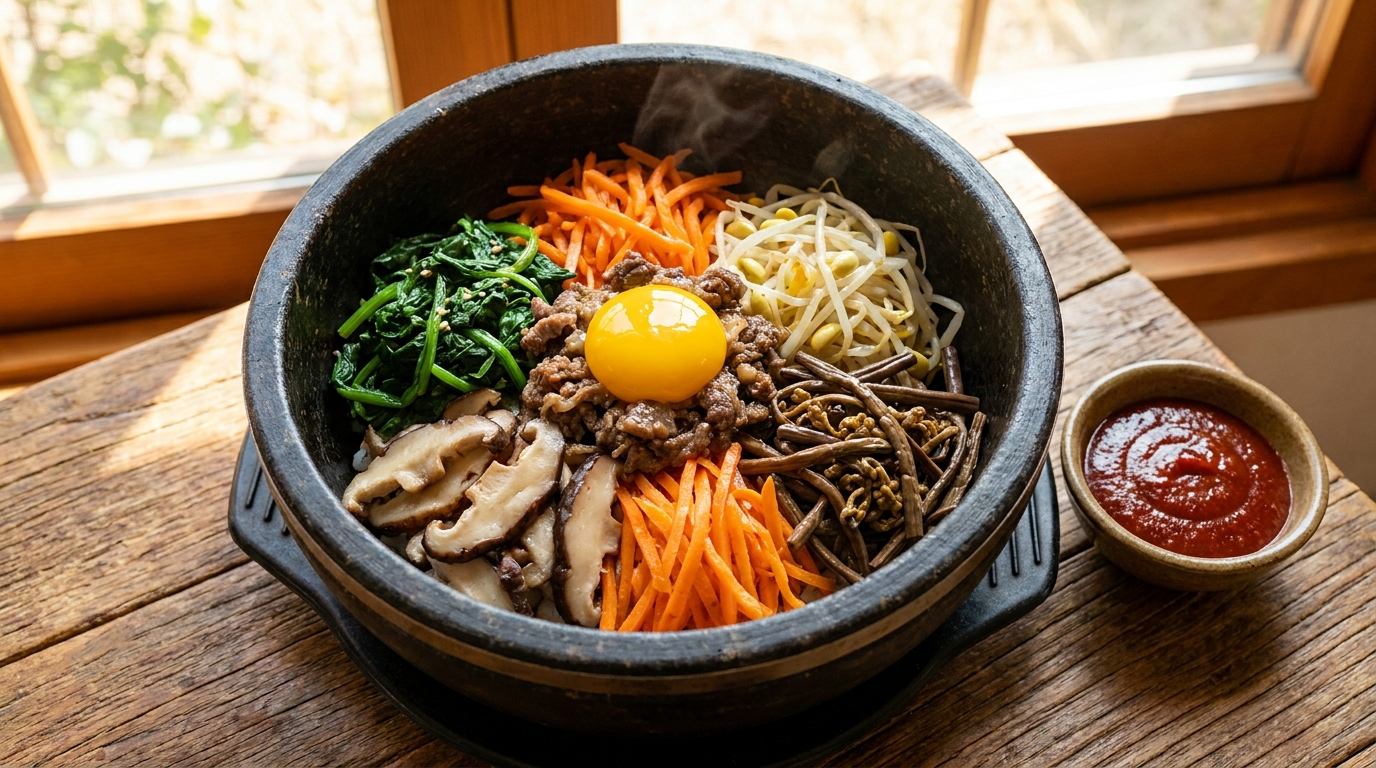
If there is one dish that turns first-time visitors into lifelong Korean food fans, it is bibimbap. The name (비빔밥) simply means “mixed rice,” and that humble description hides one of the most colorful, balanced, and beginner-friendly meals in the country. Warm rice, a rainbow of seasoned vegetables, a glossy egg, and a spoonful of chili paste all come together in a single bowl.
This guide walks you through what the dish actually is, the nine best types worth ordering, how to mix and eat it like a local, what it costs in Korea in 2026, and how to order even if you do not speak a word of Korean. We will keep it practical, honest, and easy to follow.
In This Guide
- What Is Bibimbap? The Korean Mixed-Rice Bowl
- The Building Blocks of the Bowl
- 9 Best Types of Bibimbap to Try
- Bibimbap vs. Korea’s Other Rice Bowls
- How to Eat Bibimbap Like a Local
- What Does It Cost in Korea? (2026 Prices)
- How to Order as a Non-Korean Speaker
- Where to Eat the Best Korean Bibimbap
- Eat Your Way Around Korea, Hands-Free
- Bibimbap FAQ
What Is Bibimbap? The Korean Mixed-Rice Bowl
Bibimbap is a bowl of warm white rice topped with namul (seasoned sautéed or blanched vegetables), often a little meat, a fried or raw egg, and a dollop of gochujang (red chili paste). You stir everything together just before eating, so every spoonful carries rice, vegetables, protein, and sauce at once.
The word breaks into bibim (mixing) and bap (cooked rice). That is the whole idea: mix it up. Because the flavors are gentle and customizable, many travelers find it far less intimidating than spicy stews or strongly fermented dishes. You control the heat by adding as little or as much chili paste as you like.
The dish has deep roots. According to historical records, the first known written recipe appears in the Siuijeonseo, an anonymous Korean cookbook from the late 19th century. One popular theory ties it to using up leftover side dishes before the Lunar New Year, mixing them with rice so nothing went to waste.
Today it is a national icon. Korean tourism and cultural agencies love to feature the dish abroad precisely because it is approachable, healthy-looking, and beautiful, as travel outlets like National Geographic have noted. It has even flown around the world for decades as a popular in-flight meal on Korean airlines.
The Building Blocks of the Bowl
Once you know the parts, you can read any menu. A classic bowl is built from a few simple layers, and almost every regional version is a variation on this theme.
Rice and seasoned vegetables (namul)
The base is steamed short-grain rice. On top sit several kinds of namul: spinach, bean sprouts, carrots, zucchini, mushrooms, and mountain ferns (fernbrake) are common. Each vegetable is seasoned separately with sesame oil, garlic, and salt, which is why a good bowl tastes layered rather than flat.
Protein and egg
The most common protein is thinly sliced seasoned beef (bulgogi-style), though pork, chicken, seafood, raw beef, or tofu all appear. A fried egg with a runny yolk usually crowns the bowl. The yolk melts into the rice and softens the chili heat beautifully.
Gochujang, the signature sauce
Gochujang is the soul of the dish. This fermented red chili paste, made from chiles, rice, soybeans, and salt, gives the bowl its spicy, savory, slightly sweet edge. Some versions instead use a soy-based (ganjang) seasoning for a milder, non-spicy result, which is perfect for kids or anyone avoiding heat.
Free side dishes (banchan)
Like most Korean meals, your order arrives with complimentary banchan: small plates of kimchi, pickled radish, seasoned greens, and often a light soup. They are free and usually refillable. Nibble them between bites, or stir a little kimchi into your bowl for extra tang and crunch.
9 Best Types of Bibimbap to Try
This is not one fixed recipe but a whole family of bowls. Korean cities such as Jeonju, Jinju, Tongyeong, and Andong each have their own signature style. Here are nine worth seeking out on your trip.
1. Dolsot Bibimbap (Sizzling Stone Pot)
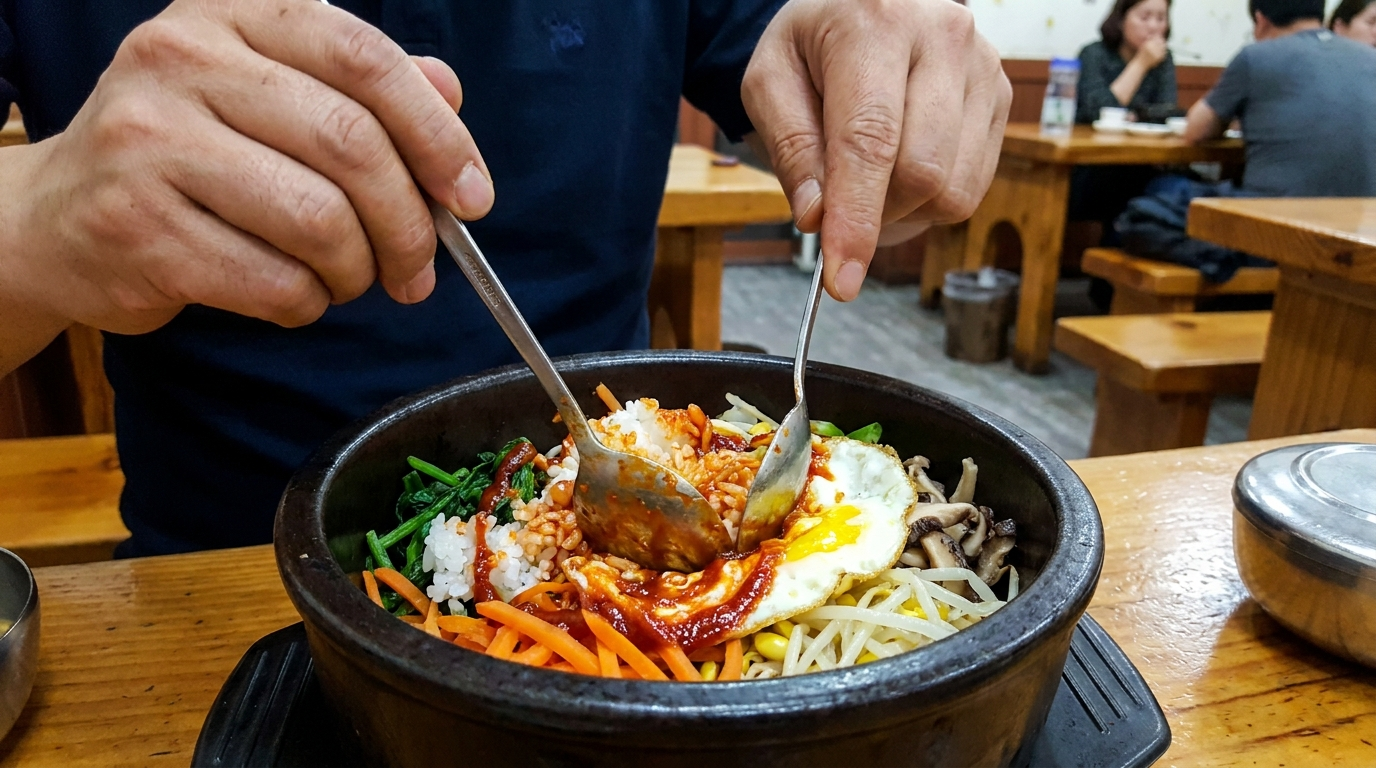
Dolsot bibimbap is served in a scorching stone bowl (dolsot means “stone pot”). The hot bowl keeps cooking as you eat and crisps the rice at the bottom into a golden, crunchy layer called nurungji. That contrast of soft and crispy is why many people consider it the most satisfying version. Mind the bowl — it stays hot for a long time.
2. Jeonju Bibimbap (The Original Royal Style)
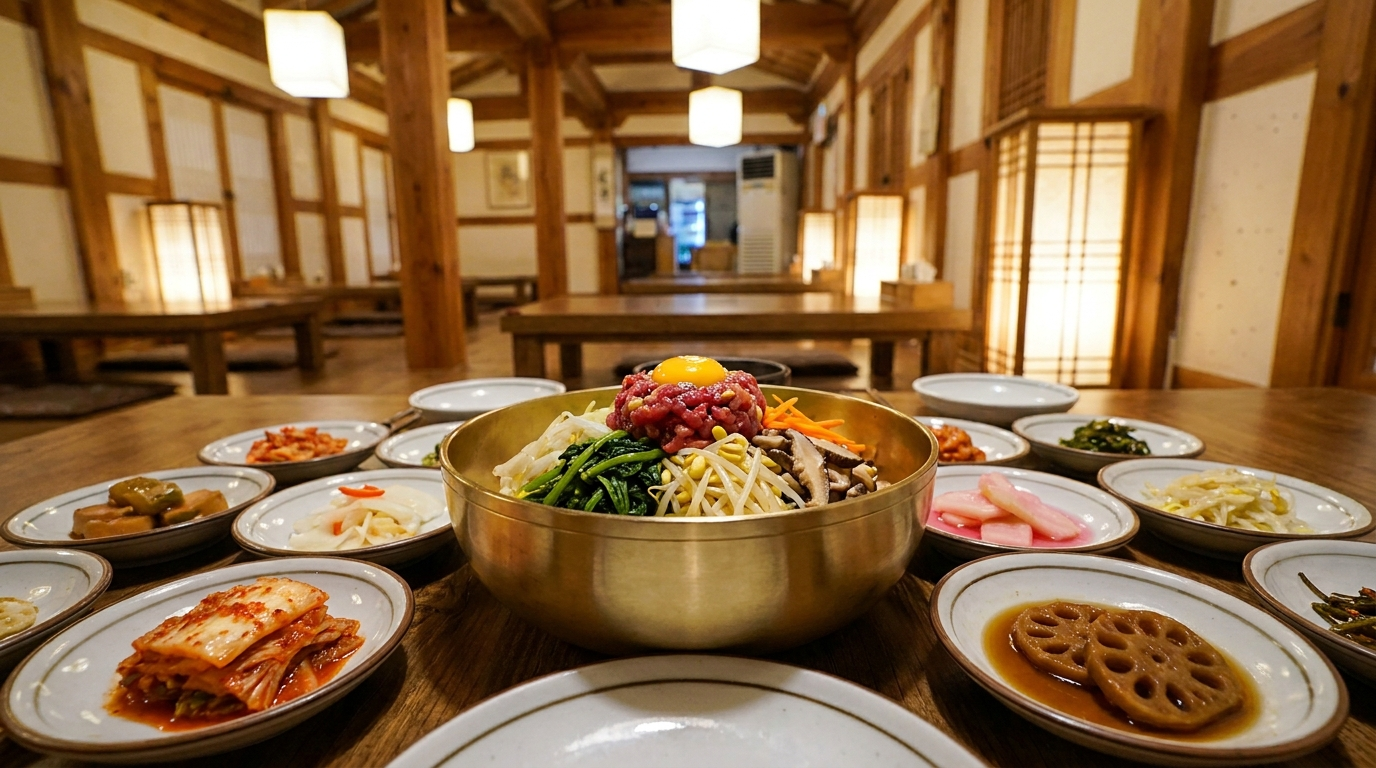
Jeonju bibimbap comes from Jeonju, the dish’s spiritual home in Jeolla Province. Here the rice is cooked in a savory bean-sprout or beef broth, and the bowl can carry as many as 30 toppings. It is often crowned with yukhoe (seasoned raw beef) and is widely regarded as the most refined version of all.
3. Yukhoe (Raw Beef)
This version tops the rice with yukhoe, silky seasoned raw beef, usually with a raw egg yolk. It is a delicacy often paired with the Jeonju style and prized for its tender texture. If raw beef is new to you, this is a safe, restaurant-controlled way to try it.
4. Sanchae (Mountain Vegetables)
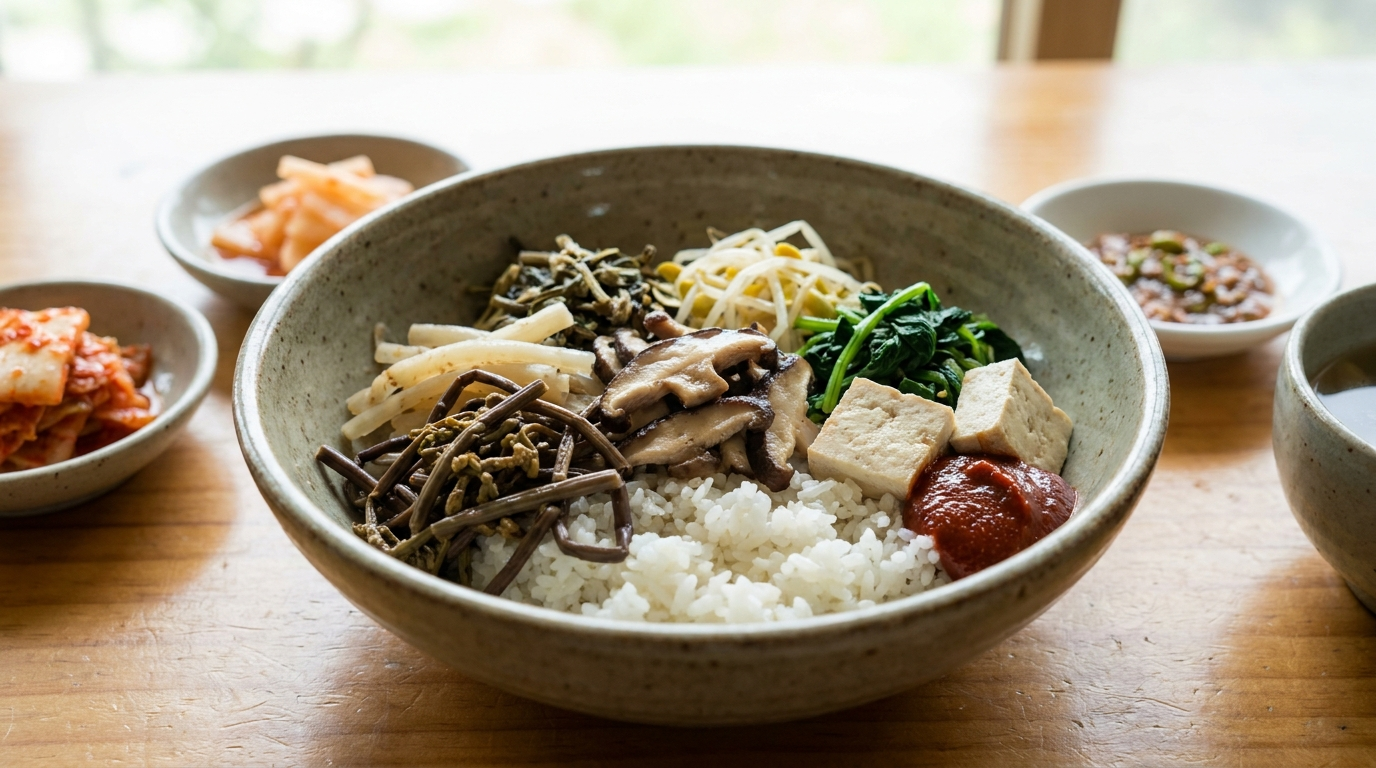
The sanchae style comes from Korea’s mountain regions, where foraging shaped everyday cooking. It is built almost entirely from wild greens, fernbrake, bellflower root, and mushrooms. Earthy and light, it is a favorite around national parks and temple towns, and naturally near-vegetarian.
5. Temple-Style Vegetarian
Korean Buddhist temple cuisine (sachal eumsik) is entirely plant-based and skips strong aromatics like garlic and onion. Its version uses mountain vegetables, mushrooms, and tofu, seasoned gently with soy sauce and sesame oil. It is one of the best choices for vegans, though you should still confirm no egg or fish sauce is used.
6. Tongyeong (Coastal Seafood)
On the south coast, the port city of Tongyeong makes a version brimming with the sea: shrimp, clams, seaweed, and sea squirts. It is briny, fresh, and a fun change of pace if you have already had the meat-and-vegetable classic.
7. Andong (Northern Style)
In the inland city of Andong, pan-fried and steamed fish often join the bowl, served with a side soup of sea cucumber, seaweed, octopus, and radish. It reflects the region’s ritual-food traditions and is heartier than the lighter mountain styles.
8. Haemul (Seafood)
Found widely on the coast and in seafood restaurants, this version loads the bowl with mixed seafood — octopus, squid, shrimp, and sometimes raw fish. It is a great pick in port cities like Busan, where the catch is local and fresh.
9. Jeyuk (Spicy Pork)
For spice lovers, the jeyuk style swaps in spicy stir-fried pork marinated in gochujang. It is bolder and hotter than the beef classic, and a satisfying, filling lunch. If you enjoy heat, this one rewards you.
Bibimbap vs. Korea’s Other Rice Bowls
Korea loves a good rice bowl, so it helps to know how bibimbap differs from its cousins on the menu. The key difference is that this dish is meant to be mixed, and it leans on raw and seasoned vegetables for freshness and color.
A deopbap is rice with a topping (such as spicy squid or stir-fried pork) ladled over it, eaten as-is rather than stirred. A gukbap is rice served in or beside a hot soup. And hoedeopbap is essentially a seafood-sashimi cousin: raw fish over rice with the same chili-paste mixing ritual.
One more relative worth knowing is bibim-guksu, a chilled noodle dish tossed in the same sweet-spicy gochujang sauce. It shares the “bibim” mixing idea but swaps rice for thin wheat noodles, and it is a refreshing summer favorite. If you fall for the flavor profile of your rice bowl, this is a natural next order on a hot day.
If you like the build-your-own, mix-it-yourself experience, this colorful bowl is your best entry point. From there, branching out to the others is easy.
How to Eat Bibimbap Like a Local
Eating it is half the fun, and there is a simple ritual to it. Get this right and your bowl will taste exactly as intended.
Add sauce gradually, then mix thoroughly
Start with about half the gochujang, especially if you are unsure about spice. Then mix energetically with your spoon, folding rice up from the bottom so the sauce, egg, and sesame oil coat every grain. Taste, then add more chili paste if you want extra heat.
Use the spoon, not chopsticks
Koreans eat rice dishes with a spoon, and this one is no exception. The spoon lets you scoop rice, vegetables, and sauce together in one bite. Chopsticks are handy for picking at the side dishes that come free with your meal.
For dolsot, mix fast
With a stone pot, mix quickly at first so the rice against the hot surface crisps without burning. Some people leave a little rice pressed to the bottom to deepen that crunchy nurungji layer. Pour in a little tea or water at the end and it loosens into a tasty scorched-rice porridge.
Eat your way across Korea, hands-free
Chasing the best bibimbap from Seoul to Jeonju to Busan? Do not drag your suitcase from restaurant to restaurant. Unboxing Korea delivers your luggage hotel-to-hotel or airport-to-hotel so you can spend the day eating, not lugging bags.
What Does It Cost in Korea? (2026 Prices)
Prices vary by city, restaurant, and ingredients, but here is a realistic 2026 snapshot. Note that menus and prices change often, so always confirm at the restaurant before ordering. Approximate USD figures use a rough rate of about ₩1,330 per US dollar.
- Standard bowl in Seoul: around ₩8,000–₩11,000 (about $6–$8 USD) at a casual restaurant.
- Dolsot (stone pot): typically ₩9,000–₩13,000 (about $7–$10 USD).
- Authentic Jeonju bibimbap: roughly ₩12,000–₩18,000 (about $9–$14 USD) at a reputable Jeonju restaurant.
- Yukhoe (raw beef): often ₩16,000–₩18,000 (about $12–$14 USD).
The Jeonju version costs more for a reason: the rice is cooked in a rich broth, the toppings are more numerous, and the preparation is more elaborate. For an everyday lunch, a standard or dolsot bowl is excellent value and very filling.
Almost everywhere, your bowl arrives with free side dishes and often a small soup, so a single order is usually a complete meal. Tipping is not customary in Korea, so the menu price is what you pay.
How to Order as a Non-Korean Speaker
You do not need Korean to order well. Many restaurants in tourist areas have English or picture menus, and the words below cover almost every situation.
- Bibimbap — 비빔밥 — the standard mixed-rice bowl.
- Dolsot bibimbap — 돌솥비빔밥 — the sizzling stone-pot version.
- Yachae bibimbap — 야채비빔밥 — vegetable bibimbap, usually meat-light.
- Gochujang ppaego juseyo — “without chili paste, please,” for a non-spicy bowl.
- Gogi ppaego juseyo — “without meat, please,” to make it closer to vegetarian.
If you are vegetarian or vegan, be aware that some bowls use beef broth in the rice or a tiny amount of fish-based seasoning. Ask, or seek out temple-cuisine restaurants where the food is reliably plant-based. A translation app pointed at the menu solves most uncertainties in seconds.
Hungry for more dishes to try? Pair your research with our guides to Korean BBQ and samgyeopsal and to tteokbokki, Korea’s spicy rice cakes.
Where to Eat the Best Korean Bibimbap
You can find a solid bowl of Korean bibimbap almost anywhere in the country, but a few places are especially worth planning around.
Jeonju, the home of the dish
Jeonju’s Hanok Village is the pilgrimage site for this dish. The city’s official tourism board even maintains a guide to its signature style; you can read about it on the Jeonju city tourism site. A day trip from Seoul by KTX is very doable.
Seoul restaurants and markets
In Seoul, you will find good bowls in Insadong, Myeongdong, and traditional markets like Gwangjang. Many specialize in the Jeonju style for visitors. For a broader food plan, see our Seoul food guide covering markets and must-try eats.
Department-store food courts and casual sit-down chains are reliable, beginner-friendly options too. They almost always have photo menus, English labels, and air conditioning, which makes a relaxed first try very easy. Lunch sets are often a few thousand won cheaper than the same dish at dinner.
Book ahead at popular spots
The most famous houses can have lines at lunch. If you want a guaranteed table, our overview of Korean restaurant reservation options explains the easiest ways to book as a foreign visitor.
Eat Your Way Around Korea, Hands-Free
A great food crawl means moving between neighborhoods, and sometimes between cities. The last thing you want is a suitcase rolling behind you through a busy market or up the steps of a traditional hanok restaurant.
That is where a luggage-delivery service makes your trip easier. Unboxing Korea moves your bags from the airport to your hotel, or hotel to hotel, while you explore hands-free. Drop your bags in the morning, eat your way across town, and find them waiting at your next stop. You can arrange a delivery here.
Bibimbap FAQ
Is bibimbap spicy?
Only as spicy as you make it. The heat comes from the gochujang you add yourself, so you control it. Add a little for mild, more for hot, or ask for the chili paste on the side or left out entirely.
Is it healthy?
It is one of the more balanced meals you can order in Korea: a serving of rice, several vegetables, a modest amount of protein, and a little healthy fat from sesame oil and egg. The portion of vegetables is generous, and you can ask for less rice if you prefer.
Can vegetarians and vegans eat it?
Yes, with a quick check. Order the vegetable (yachae) or temple-style bowl and ask them to leave out meat and egg. Confirm the rice is not cooked in beef broth and that no fish-based seasoning is used. Temple-cuisine restaurants are the safest reliably plant-based option.
Plain vs. dolsot bibimbap: what’s the difference?
Regular bibimbap is served in a normal bowl at a comfortable temperature. Dolsot bibimbap arrives in a sizzling stone pot that keeps cooking the food and crisps the rice into a crunchy bottom layer. The dolsot version stays very hot, so handle the bowl with care.
Where did bibimbap originate?
The exact origin is unknown, but it is firmly tied to Korean home cooking and the city of Jeonju, which is considered its spiritual home. The earliest written recipe dates to a late-19th-century cookbook, the Siuijeonseo.
Is it eaten hot or cold?
Both exist. The everyday bowl is served warm, and the stone-pot version arrives sizzling hot. There are also chilled versions, and the noodle cousin is served cold, so you can enjoy the same flavors year-round whatever the weather.
What is it usually served with?
Expect a few free side dishes, often kimchi and pickled radish, plus a light soup such as a soybean-paste broth. Water or barley tea is typically self-serve. Together it makes a complete, satisfying meal from a single order.
Final Thoughts
Bibimbap is the perfect introduction to Korean food: colorful, balanced, customizable, and welcoming to first-timers. Try a sizzling dolsot bowl, make the trip to Jeonju for the original, and do not be shy about asking for it mild or meat-free. Whichever version you choose, mix it well and dig in.
And when you are ready to eat your way across the country, let us carry the bags. Book your luggage delivery with Unboxing Korea and explore Korea hands-free, one beautiful bowl at a time.