- What’s Happening in Korea Right Now?
- The Background: Why Did This Start?
- What Are Koreans Actually Saying?
- What This Reveals About Korean Culture
- How Does This Compare Internationally?
- Conclusion
What’s Happening in Korea Right Now?
Today, Korea broke ground on one of the most ambitious science infrastructure projects in its history: the Korea Light Source (한국새빛가속기, KLS). The Ministry of Science and ICT and the Korea Basic Science Institute (KBSI) held the official groundbreaking ceremony at the Ochang Technopolis site in Cheongju, North Chungcheong Province, marking the start of construction on a 1.1643 trillion won (roughly $840 million USD) multipurpose synchrotron radiation facility. After years of delays, the project is now officially underway, with completion targeted for the end of 2029.
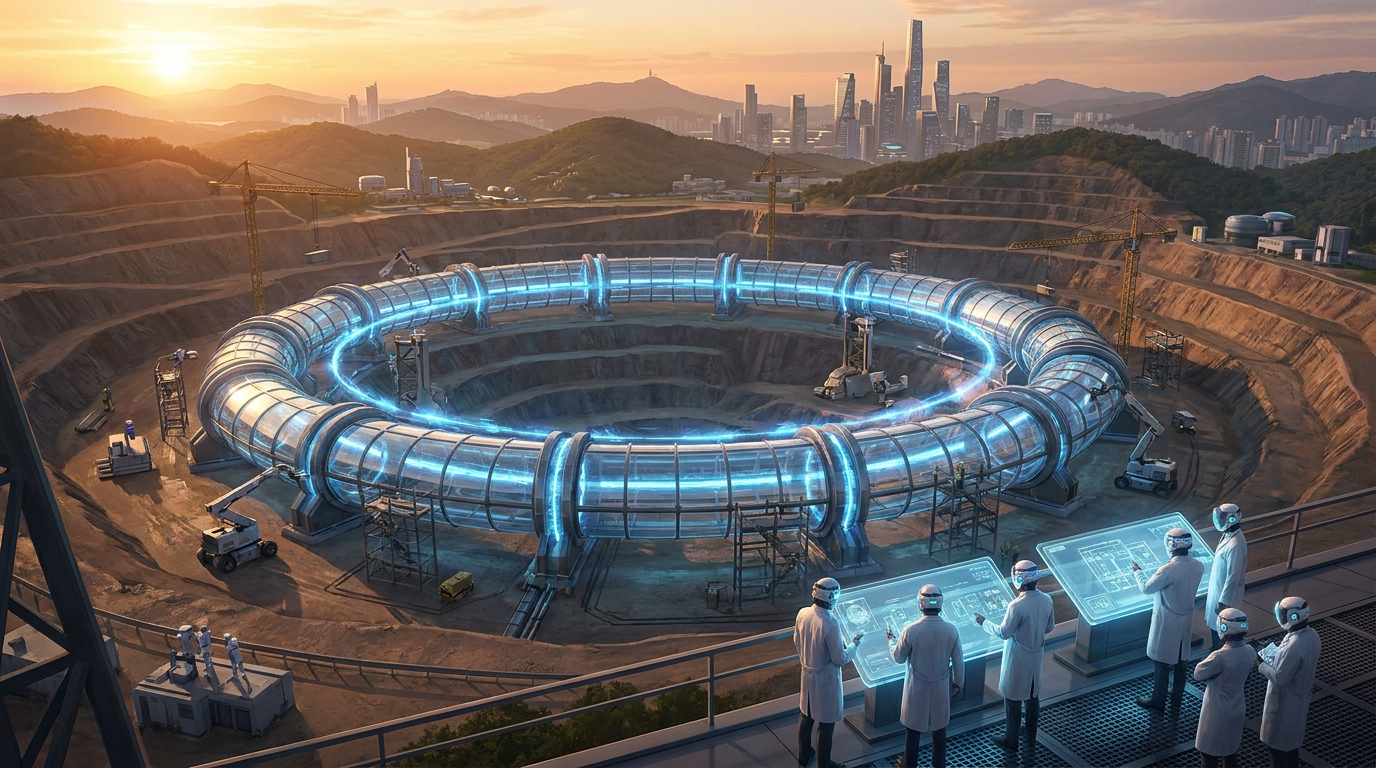
The name itself was chosen deliberately: “Korea Light Source” uses the internationally recognized “Light Source” terminology from synchrotron science, while its Korean name, roughly translating to “Korea’s New Light Accelerator,” is meant to evoke a new light illuminating the country’s scientific future.
The Background: Why Did This Start?
A synchrotron light source works by accelerating electrons to near light-speed around a circular ring, producing extremely bright X-ray and ultraviolet light that scientists use to see the atomic-level structure of materials, proteins, and chemical reactions in real time. Korea already operates a third-generation synchrotron at Pohang (PAL), which has been a workhorse for the country’s semiconductor and materials research for decades — but it’s aging, oversubscribed, and no longer bright enough for the cutting edge of nanotechnology and drug discovery. The Korea Light Source is a fourth-generation circular accelerator, engineered to produce light more than 100 times brighter than Korea’s existing third-generation ring, putting it in the same technical class as the newest light sources being built or upgraded worldwide.
The project has been in planning for years, repeatedly delayed by site selection disputes, budget negotiations, and feasibility reviews. Today’s groundbreaking is the culmination of that long process — which is exactly why Korean science media has been covering it not just as a construction milestone, but as a hard-won national achievement.
What Are Koreans Actually Saying?
Korean tech and business outlets have covered the groundbreaking with a mix of pride and relief. ZDNet Korea highlighted the newly finalized “Korea Light Source” name as a point of national branding, noting it was chosen specifically so the facility could be referenced easily in international scientific literature. Regional media in North Chungcheong Province have framed the project as transformative for the local economy, with headlines emphasizing that the facility will anchor the province’s future as a hub for semiconductor and biotech research. At the same time, some science commentators have pointed out the years of delay with a note of “finally” — relief that a project long discussed in policy circles is now physically underway, with dirt actually being moved.
What This Reveals About Korean Culture
The Korea Light Source groundbreaking is a window into how deeply Korea ties its national identity to technological leadership. This is a country that transformed itself from a post-war agrarian economy into one of the world’s top semiconductor, display, and battery producers within a few generations — and that history shapes how ordinary Koreans read a story like this one. A trillion-won accelerator isn’t just abstract science funding; it’s understood as an investment in the country’s next industrial advantage, the same logic that powered Korea’s earlier bets on chips and displays. The naming process itself, choosing a name meant to sound both distinctly Korean and internationally credible, reflects a very Korean instinct: pride in homegrown achievement paired with an eye firmly on how the rest of the world will perceive it.
It also reflects regional development politics that shape a lot of Korean infrastructure news: siting a mega-project like this in Cheongju rather than the Seoul metropolitan area is part of a broader national push to build scientific and industrial hubs outside the capital, similar to how Korea’s SK Hynix and other semiconductor milestones have become sources of regional as well as national pride.
How Does This Compare Internationally?
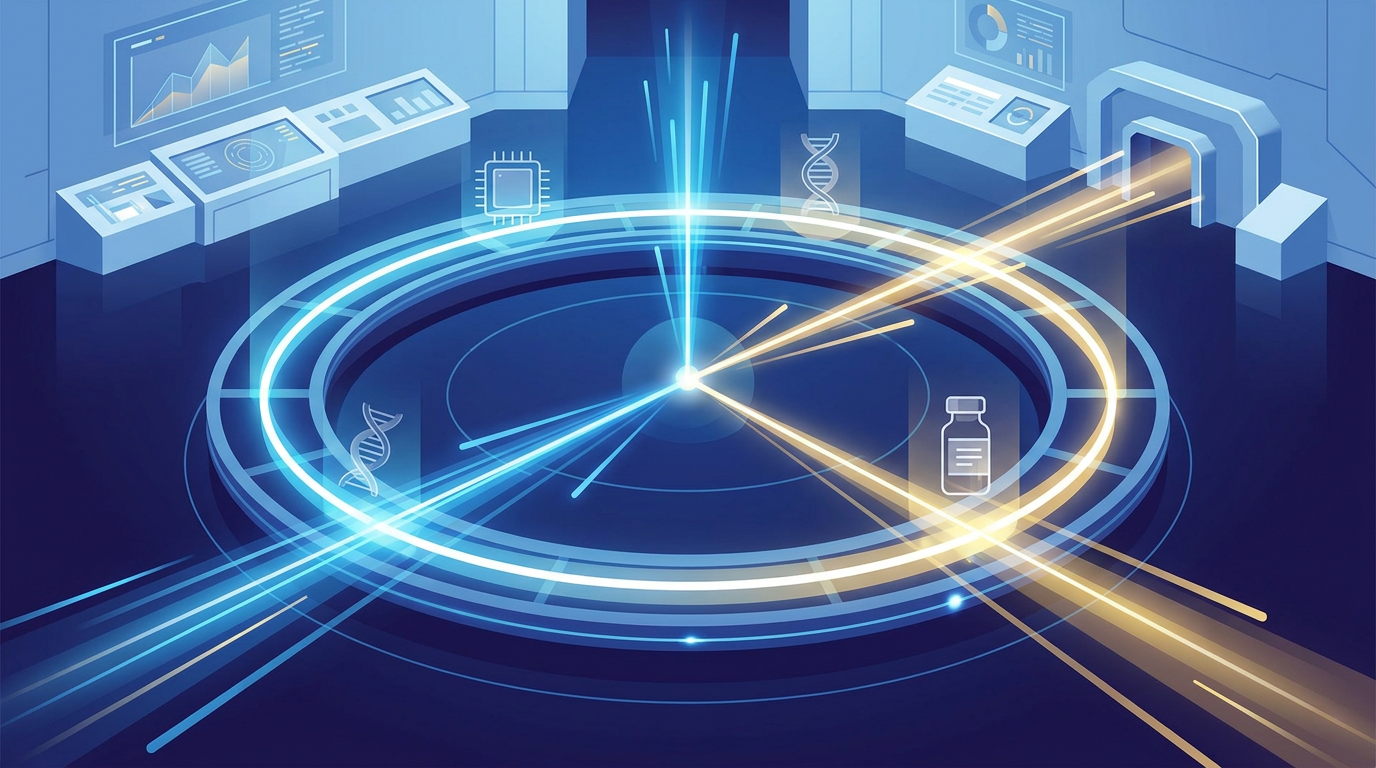
Korea is joining an exclusive club. Fourth-generation synchrotrons are currently only operating or under construction in a handful of countries: the European Synchrotron Radiation Facility in France pioneered the modern “multi-bend achromat” design that makes these ultra-bright rings possible; the United States’ Advanced Photon Source completed its upgrade to fourth-generation status in 2025; and China’s High Energy Photon Source (HEPS), a roughly $665 million facility outside Beijing, was the first high-energy fourth-generation machine built entirely from scratch. Germany’s PETRA-IV is following a similar path. In technical literature, Korea’s project is already referred to as “Korea-4GSR” alongside these peers — meaning the Korea Light Source isn’t just a domestic upgrade, it’s Korea formally entering the small group of nations racing to build the world’s brightest research instruments, a race with direct implications for who leads the next generation of semiconductor and pharmaceutical breakthroughs.
Conclusion
The Korea Light Source groundbreaking is easy to overlook next to K-pop headlines and viral trends, but it may end up being one of the most consequential stories of 2026: a trillion-won bet that Korea’s next wave of semiconductor, materials, and drug discoveries will be made at home, on Korean-built equipment as bright as anything else in the world. Construction is expected to run through 2029 — worth watching for anyone curious how Korea keeps reinventing its economic edge.
Want more stories about the trends and milestones shaping modern Korea? Browse Unboxing Korea’s latest culture and news coverage.