KOREAN FOOD GUIDE
Korea’s Most Loved Spicy Rice Cakes
Chewy rice cakes, a fiery red sauce, and the one snack every visitor remembers.
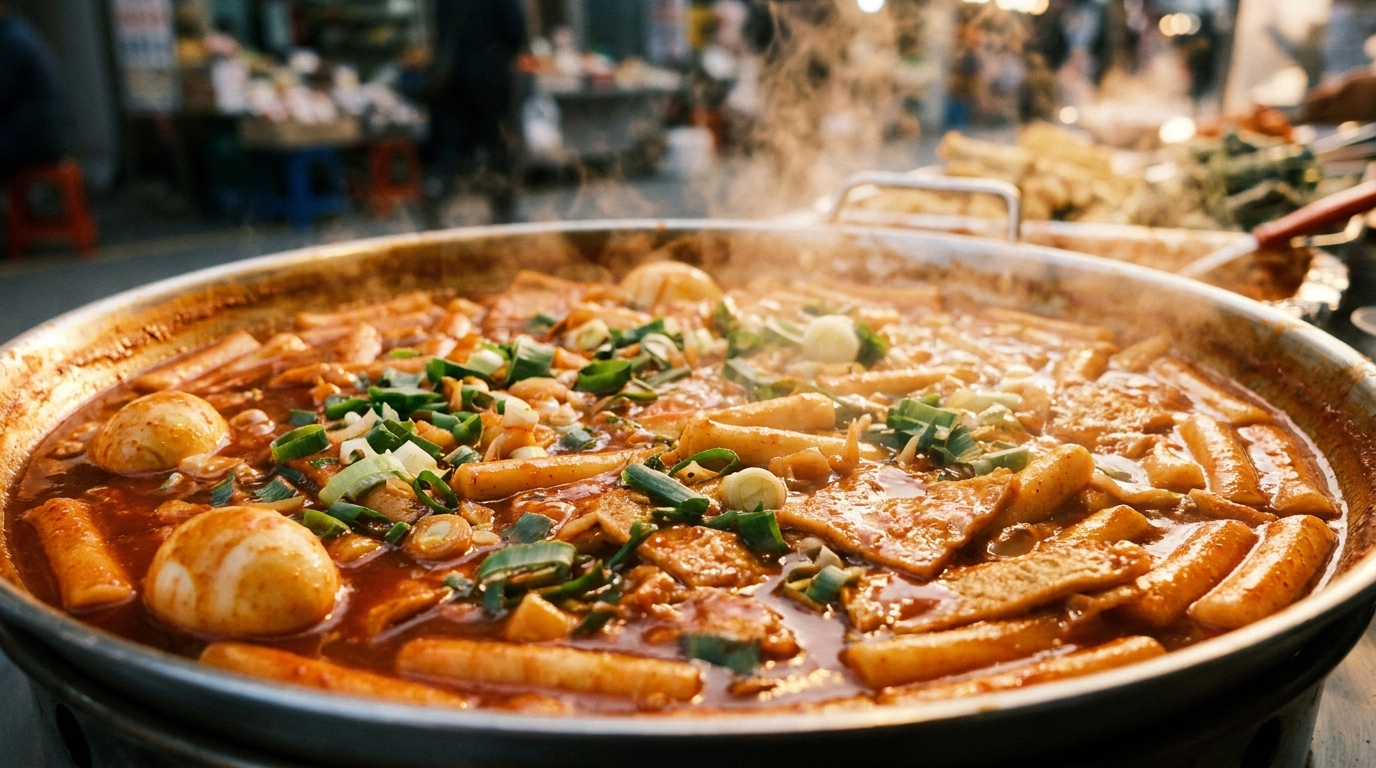
If one snack defines Korean street food, it is tteokbokki (떡볶이) — chewy, cylinder-shaped rice cakes simmered in a glossy, sweet-and-spicy red sauce. You will smell it before you see it, bubbling away in wide pans at market stalls, bus-stop carts, and tiny shops all over Seoul. It is cheap, filling, comforting, and gloriously messy.
This 2026 guide is written for visitors who have never tried it. We will explain what the dish actually is, walk through seven types worth ordering, decode the heat levels, show you how to order without speaking Korean, point you to the best places to eat, and give you honest 2026 prices. By the end, you will be able to walk up to any stall and order with confidence.
Shopping more than your suitcase can hold? We deliver a new suitcase to your Seoul hotel within 2 hours — from $89, open 24/7.
In This Guide
- What Is Tteokbokki? Korea’s Favorite Snack
- 7 Best Types of Korean Rice Cakes to Try
- How Spicy Is It? Spicy Rice Cakes and Heat Levels
- How to Order Tteokbokki Without Speaking Korean
- Where to Eat: Sindang-dong and Famous Chains
- What Does Tteokbokki Cost in 2026?
- Smart Tips Before You Dig In
- Frequently Asked Questions
What Is Tteokbokki? Korea’s Favorite Snack
At its heart, tteokbokki is a simple dish. Long white rice cakes called garae-tteok (가래떡) are cut into bite-sized cylinders, then cooked in a sauce built on gochujang (고추장, fermented red chili paste) and gochugaru (고춧가루, chili flakes), balanced with sugar and a savory broth. The result is chewy, springy, sweet, and spicy all at once.
The rice cakes rarely come alone. Most versions include eomuk (어묵, flat fish cakes), boiled eggs, and chopped scallions. Stalls often serve it alongside twigim (튀김, assorted fritters) and sundae (순대, blood sausage), and locals love to dip the fritters straight into the leftover sauce.
It is comfort food with deep roots. Today’s fiery red version became popular in the mid-20th century, but a far older, non-spicy soy-sauce style was once served in the royal court. That history is part of why this humble snack carries so much affection across generations of Koreans.
A snack with royal roots
The story is a nice one to know while you eat. Centuries ago, the soy-sauce rice cakes of the royal kitchens were a refined dish for the elite. Chili peppers only reached Korea a few hundred years ago, and the spicy red style most people picture today is far more recent — popularised in post-war Seoul, when affordable rice cakes and chili paste turned a court delicacy into the people’s snack.
That journey from palace to street cart is why the dish feels both nostalgic and everyday. Ask a Korean about it and you will often get a childhood memory: after-school stalls, a favourite auntie’s pan, or a cup shared with friends on a cold evening. It is food with feeling, not just flavour.
7 Best Types of Korean Rice Cakes to Try
One of the joys of these Korean rice cakes is how many forms they take. The classic red version is just the start. Here are seven styles worth seeking out, from the everyday to the indulgent.
1. Classic street-style (길거리 떡볶이)
This is the original you will find at carts and markets: rice cakes and fish cakes in a thick, sweet-spicy gochujang sauce. It is the benchmark every other style is measured against, and the best place to start your rice-cake journey.
2. Rose tteokbokki (로제 떡볶이)
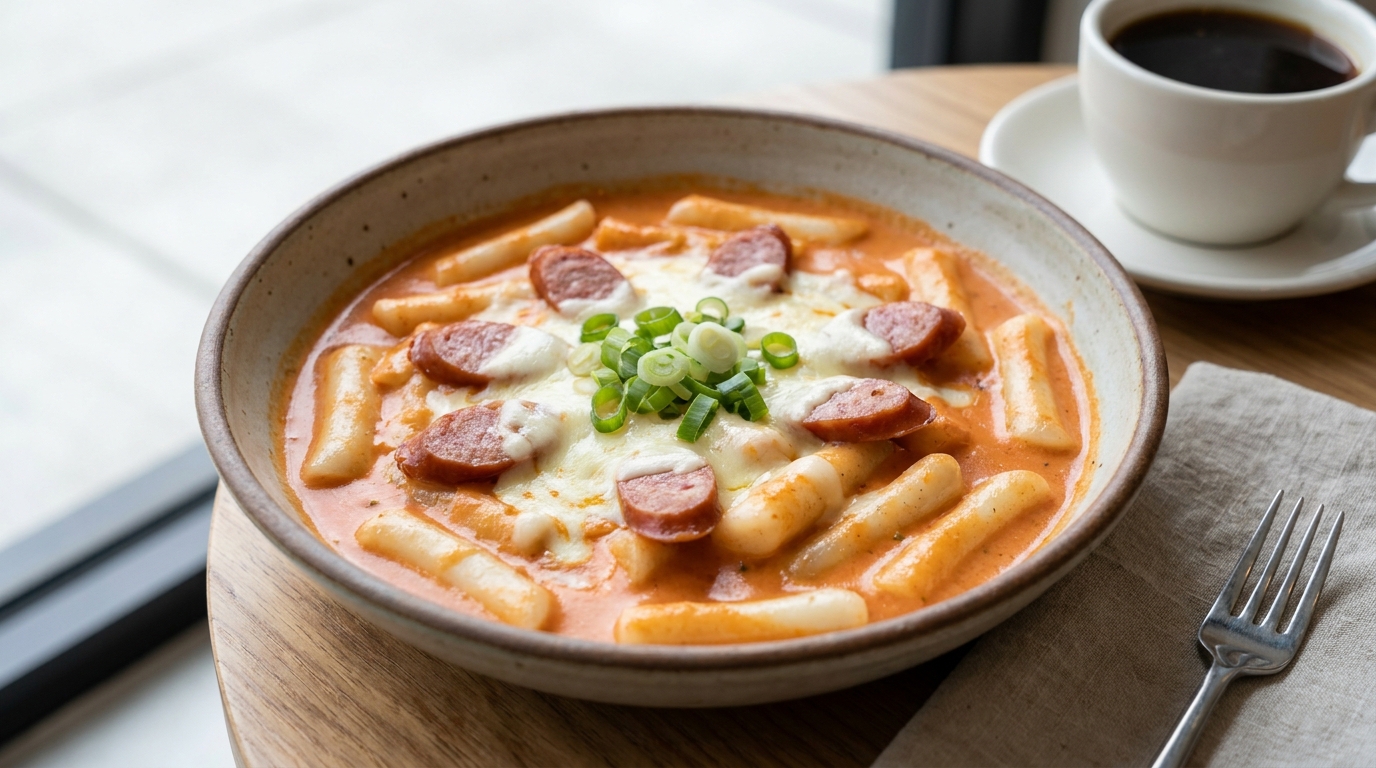
There is no rose in it. “Rosé” describes the pink, creamy sauce, made by blending the spicy base with milk or cream. It is milder, richer, and far gentler on the palate, which is exactly why it became a nationwide craze and a perfect entry point for spice-shy travelers.
3. Rabokki (라볶이)
Combine ramen (ramyeon) with tteokbokki and you get rabokki. Springy instant noodles soak up the sauce and add volume, turning a snack into a proper, satisfying meal. If you arrive hungry, this is the order.
4. Gukmul tteokbokki (국물떡볶이)
Gukmul means “broth.” This soupy version serves the rice cakes in a generous pool of spicy liquid rather than a thick coating. It is especially popular in cold weather, when the warm, drinkable sauce is half the appeal.
5. Cheese tteokbokki (치즈 떡볶이)
A blanket of melted mozzarella over the spicy sauce tames the heat and adds a stretchy, indulgent pull. Many shops let you add cheese to any order for a small surcharge, and it pairs beautifully with the chewy rice cakes.
6. Gungjung tteokbokki (궁중떡볶이)
This is the royal-court ancestor: a non-spicy, soy-sauce-based stir-fry with rice cakes, beef, sesame oil, and vegetables. It predates the arrival of chili peppers in Korea and is a wonderful, savory choice for anyone who cannot handle heat at all.
7. Jjajang and curry styles (짜장 / 카레 떡볶이)
Swap the red sauce for black-bean jjajang or mild Korean-style curry and you get two kid-friendly, low-spice alternatives. They show just how flexible these rice cakes are — the chewy texture works with almost any sauce.
How Spicy Is It? Spicy Rice Cakes and Heat Levels
Here is the honest truth about these spicy rice cakes: the classic version has a real kick, but it is more sweet-and-warm than punishing. The sugar in the sauce softens the chili, so most first-timers find the standard street version very manageable. The burn builds gently rather than hitting all at once.
That said, heat varies enormously by shop. A neighborhood stall might be mild, while a specialist chain can push the spice to genuinely intense levels. If you are unsure, start with rose, cheese, or gungjung styles, all of which dial the heat down without sacrificing flavor.
A few simple tricks help: order a sugary drink or banana milk to cool your mouth, add cheese to mellow the sauce, and pair the dish with plain fritters or a boiled egg. And remember — the sauce is where the heat lives, so you can always eat the rice cakes with a lighter coating.
Traveling with children? The non-spicy styles make it easy. Gungjung, jjajang, and curry versions are gentle enough for young palates, and a side of plain fritters keeps everyone happy. Korean families eat this dish together all the time, so kids are welcome at almost every stall and shop you will visit.
Eat your way across Seoul — hands-free
Tteokbokki tastes best when you are wandering markets and alleys, not dragging a suitcase between hotels. Let us move your bags ahead so you can hop from stall to stall with empty hands.
How to Order Tteokbokki Without Speaking Korean
Good news: ordering tteokbokki is one of the easiest things you will do in Korea. Many stalls and chains use picture menus or tablet kiosks, and pointing works perfectly. You can simply gesture at the pan, hold up one finger, and you are halfway there.
If you want to try a few Korean phrases, these go a long way. Don’t worry about perfect pronunciation — vendors are used to visitors and appreciate the effort.
- 1인분 (il-inbun) — “one portion.”
- 덜 맵게 해주세요 (deol maepge hae-juseyo) — “please make it less spicy.”
- 안 맵게 해주세요 (an maepge hae-juseyo) — “not spicy, please.”
- 치즈 추가 (chijeu chuga) — “add cheese.”
- 포장이요 (pojang-iyo) — “to go / takeout.”
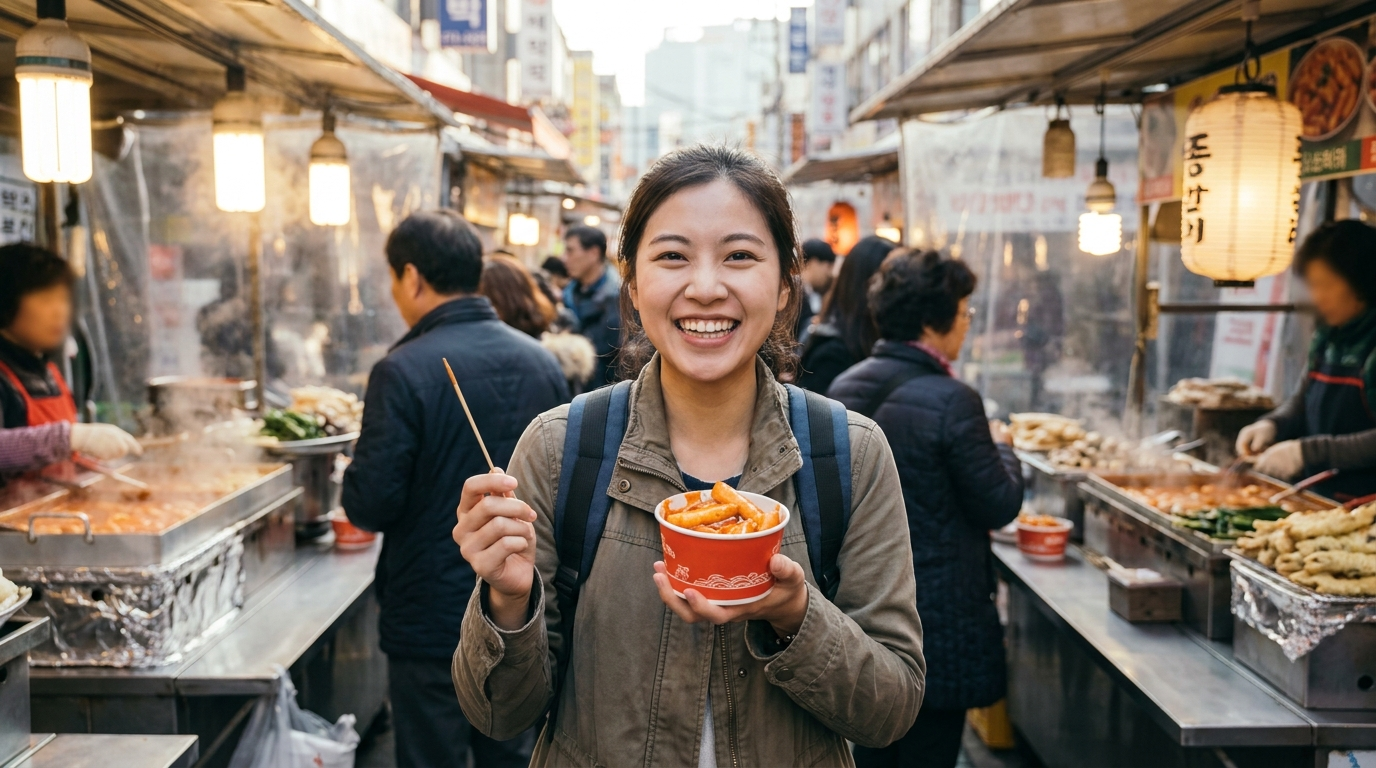
At street carts, the simplest move is to order a paper cup serving, eat it standing with a wooden skewer, and pay in cash or by tapping a card. At sit-down shops and chains, you will usually choose your style, spice level, and add-ons on a tablet, then the staff bring everything to your table. Either way, knowing how to order tteokbokki takes about two minutes to master.
Where to Eat: Sindang-dong and Famous Chains
You can find tteokbokki on almost any busy street in Korea, but a few places are worth a special trip. Whether you want history, a buffet, or a late-night fix, there is an option for you.
Sindang-dong Tteokbokki Town (신당동 떡볶이 골목)
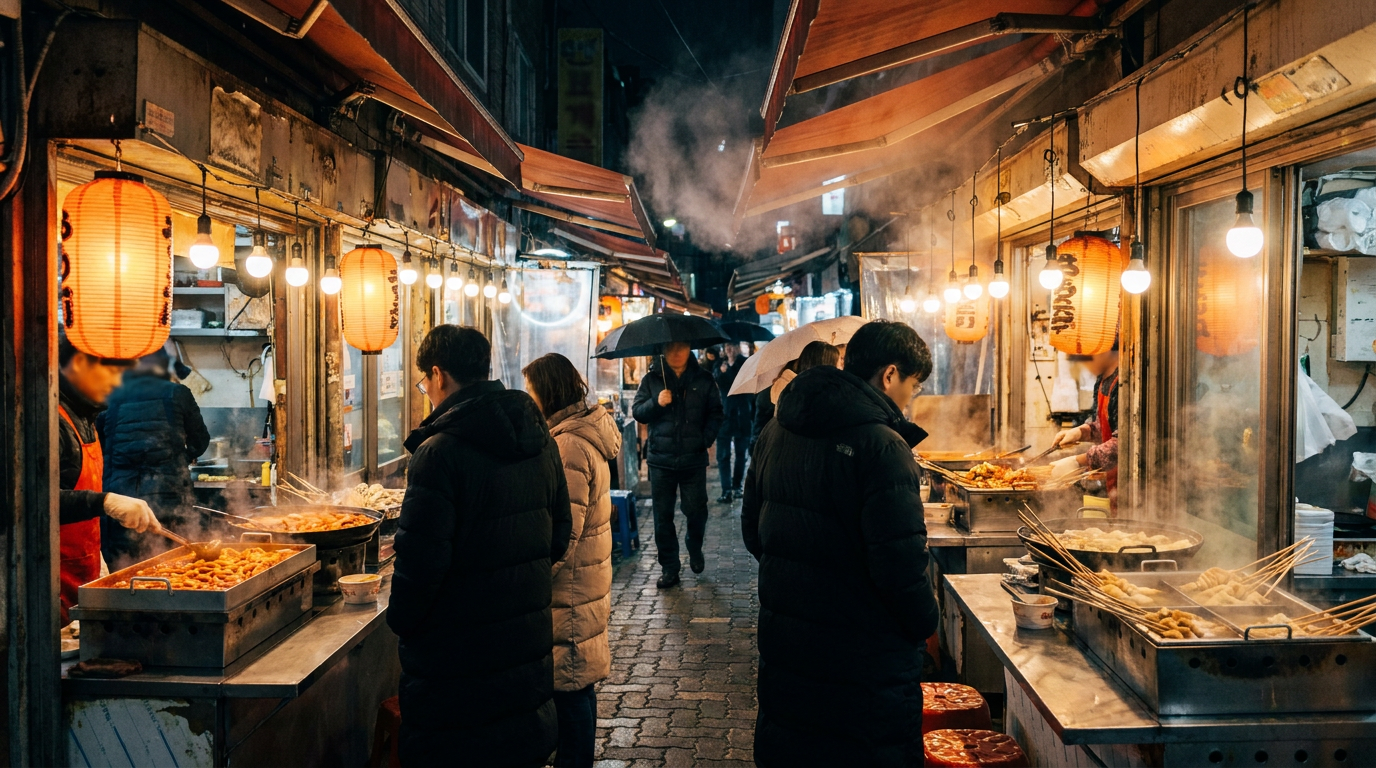
This is the dish’s spiritual home: an alley near Sindang Station (Seoul Subway Lines 2 and 6) lined with long-running restaurants. The area gained fame for rice cakes from the late 1970s, and one shop, founded by Ma Bok-lim in the 1950s, is widely credited as the pioneer of the street.
The signature style here is jeukseok (instant) tteokbokki: a big pan is cooked at your table, and you load it with rice cakes, fish cakes, ramen, dumplings, and vegetables. Older shops even kept DJ booths, a nostalgic touch from the era when this was a teenage hangout. For official details, see the Visit Seoul guide to Sindang-dong.
Famous chains worth knowing
If you would rather have a tablet menu and air conditioning, Korea’s tteokbokki chains are reliable and visitor-friendly. A Korea Times round-up highlights three of the best known:
- Sinjeon Tteokbokki (신전떡볶이) — budget-friendly and everywhere, with a small range of spice levels. A great safe choice.
- Dongdaemun Yupdduk / Yeopgi Tteokbokki (엽기떡볶이) — famous for serious heat across several intensity tiers, plus a milder rosé option for the cautious.
- Dookki (두끼) — an all-you-can-eat tteokbokki buffet where you build your own pan and refill noodles, toppings, and fried rice.
Convenience stores (편의점)
Don’t overlook the humble convenience store. CU, GS25, and 7-Eleven all sell cup and tray rice cakes you heat in the in-store microwave — a perfect cheap, no-pressure way to taste them for the first time, any hour of the day.
Markets worth a detour
Traditional markets are some of the most atmospheric places to try the dish. Gwangjang Market (광장시장) in central Seoul is a street-food legend, and the lanes around Myeongdong and Namdaemun are packed with carts each evening. The fun is in the bustle: you point, you eat standing up, and you watch the pans being topped up all night long.
Markets are also the easiest place to graze. Order a small cup, wander to the next stall for fritters or hotteok, then circle back. Because portions are cheap, you can taste widely without committing to a full sit-down meal — ideal when you want to try a little of everything.
What Does Tteokbokki Cost in 2026?
Tteokbokki is one of the most affordable hot meals in Korea, which is a big part of its charm. Prices below are typical 2026 ranges in Korean won (KRW) with rough US-dollar equivalents. Menus and prices change often, so always confirm at the stall or on the menu before you order.
- Street stall portion: about ₩4,000–5,000 (roughly $3–4).
- Convenience-store cup or tray: about ₩2,000–4,000 (roughly $1.50–3).
- Sit-down restaurant portion: about ₩6,000–9,000 (roughly $4.50–6.50).
- All-you-can-eat buffet (e.g. Dookki): a fixed per-person price, usually in the mid-teens of thousands of won, for a set time.
Add-ons are cheap, too: an extra egg, a slice of cheese, or a portion of fish cakes usually costs only a few hundred to a thousand won each. For two people, a generous feast with toppings and drinks rarely climbs past ₩20,000 (about $14–15) — excellent value for a memorable meal.
One more thing that surprises visitors: there is no tipping in Korea, so the price you see is the price you pay. Most stalls and shops now accept tap cards and mobile payments, though tiny carts may still prefer cash. Either way, you will spend very little for one of the most satisfying snacks the country has to offer.
Smart Tips Before You Dig In
A few small habits make the experience smoother and tastier. None of these are rules — just friendly local wisdom to help a first visit go well.
- Carry a little cash. Many carts take cards now, but small stalls can be cash-only, and having a few thousand won ready saves fuss.
- Share and graze. Portions are generous and cheap, so split one and leave room for fritters, blood sausage, or hotteok nearby.
- Dip the twigim. Locals dunk fried fritters into the leftover sauce — it is the unofficial best part of the meal.
- Mind the heat slowly. The spice builds as you eat, so pace yourself and keep a cold drink within reach.
- Eat it fresh. The rice cakes are best hot and chewy; once they cool they firm up, so dig in while it is steaming.
Above all, treat your first plate as an experiment. Try a mild style, then a spicier one on another day, and notice how different each shop’s sauce can be. Half the pleasure is discovering your own favourite version as you travel.
Frequently Asked Questions
Is tteokbokki vegetarian?
Often not, even when it looks meat-free. The sauce and broth are frequently made with fish cakes or anchovy stock, and most servings include eomuk fish cakes. If you are vegetarian, ask whether the broth contains fish, and look for shops that advertise a vegetable or vegan version.
Is it gluten-free?
Usually no. Although the rice cakes themselves are made from rice, many are blended with wheat flour, and the fish cakes and some sauces contain wheat as well. Travelers with celiac disease should treat the standard dish as not gluten-free unless a shop states otherwise.
What is the best non-spicy version for beginners?
Start with rose, cheese, or gungjung (royal) styles. Rose and cheese soften the heat with dairy, while gungjung uses a savory soy-based sauce with no chili at all. Any of the three lets you enjoy the famous chewy rice cakes without the burn.
Where can I eat it late at night?
Convenience stores sell microwave rice cakes around the clock, and many street stalls and chains stay open late, especially in nightlife districts like Hongdae, Myeongdong, and Dongdaemun. It is a classic post-drinks snack, so you will rarely struggle to find a pan after dark.
How is tteokbokki different from other rice cakes?
“Tteok” simply means rice cake, and Korea has dozens of kinds, from sweet versions for holidays to savory soup styles. This dish specifically uses the cylindrical rice cakes stir-fried or simmered in sauce. You can read more background on the tteokbokki overview on Wikipedia.
Taste More of Korea, Hands-Free
This dish is the perfect introduction to Korean street food — cheap, friendly, and everywhere. Once you are hooked, keep exploring with our Korean street food guide, our wider Seoul food guide, and, for a cool contrast, our guide to Korean cold noodles.
And when you would rather chase street food than lug suitcases, let Unboxing Korea deliver your bags hotel-to-hotel or from the airport. Empty hands, full stomach — that is the right way to eat your way across Seoul.