If you are planning a Gangneung travel guide for your next trip to South Korea, you have picked one of the most rewarding detours on the entire East Coast. Just under two hours from Seoul by KTX, Gangneung pairs a 500-meter coffee strip facing the open sea with a 600-year-old lakeside pavilion, a Joseon-era scholar’s childhood home, and a sunrise park with an hourglass the size of a small building. Most foreign visitors skip straight from Seoul to Busan and never see any of it, which is exactly why this city rewards the travelers who slow down.
This guide walks through nine places worth building a Gangneung itinerary around, how to get there from Seoul, what to eat, and the mistakes first-time visitors tend to make. Whether you have a single day or a full weekend, you will leave knowing exactly where to go and why.
Table of Contents
- 1. Getting to Gangneung from Seoul
- 2. Anmok Beach Coffee Street
- 3. Gyeongpo Lake and Gyeongpodae Pavilion
- 4. Ojukheon Historic Village
- 5. Jeongdongjin Sunrise Park and Hourglass Park
- 6. Chodang Sundubu Village
- 7. Haslla Art World
- 8. Gangneung Coffee Festival and Best Cafes
- 9. Where to Stay and Practical Tips
- Best Time to Visit Gangneung
- Sample Gangneung Itineraries
- Common Mistakes to Avoid
- Frequently Asked Questions
- Final Thoughts
1. Getting to Gangneung from Seoul
The easiest way to reach Gangneung is the KTX high-speed line from Seoul Station, which covers the 229-kilometer route in about 1 hour and 49 minutes with more than 14 daily departures operated by Korail. Economy seats typically start around $34 USD one-way, while first class runs closer to $65 USD, and prices shift with the day of the week and how early you book. Tickets can be bought online through Korea Trains, at station kiosks, or at the ticket counter, though booking a few days ahead on weekends and holidays is worth it since seats do sell out fast during cherry blossom season and summer break.
Once you arrive at Gangneung Station, most of the sights in this Gangneung travel guide are reachable by local bus or a short taxi ride, and the city itself is compact enough that a car isn’t essential if you’re comfortable with a bit of walking. City buses connect the station to Anmok Beach, Gyeongpo, and Jeongdongjin, though schedules can be infrequent outside of peak hours, so budget extra time or default to a taxi if you’re short on it. Taxis are metered, inexpensive by international standards, and the easiest way to string together three or four stops in a single afternoon without wasting time waiting for a bus that only runs once every 30 to 40 minutes.
If you’re coming from Sokcho or Chuncheon rather than Seoul, intercity buses run regularly along the coast and through the Gangwon Province interior, making it easy to combine Gangneung with a wider regional loop instead of a single out-and-back day trip.
2. Anmok Beach Coffee Street
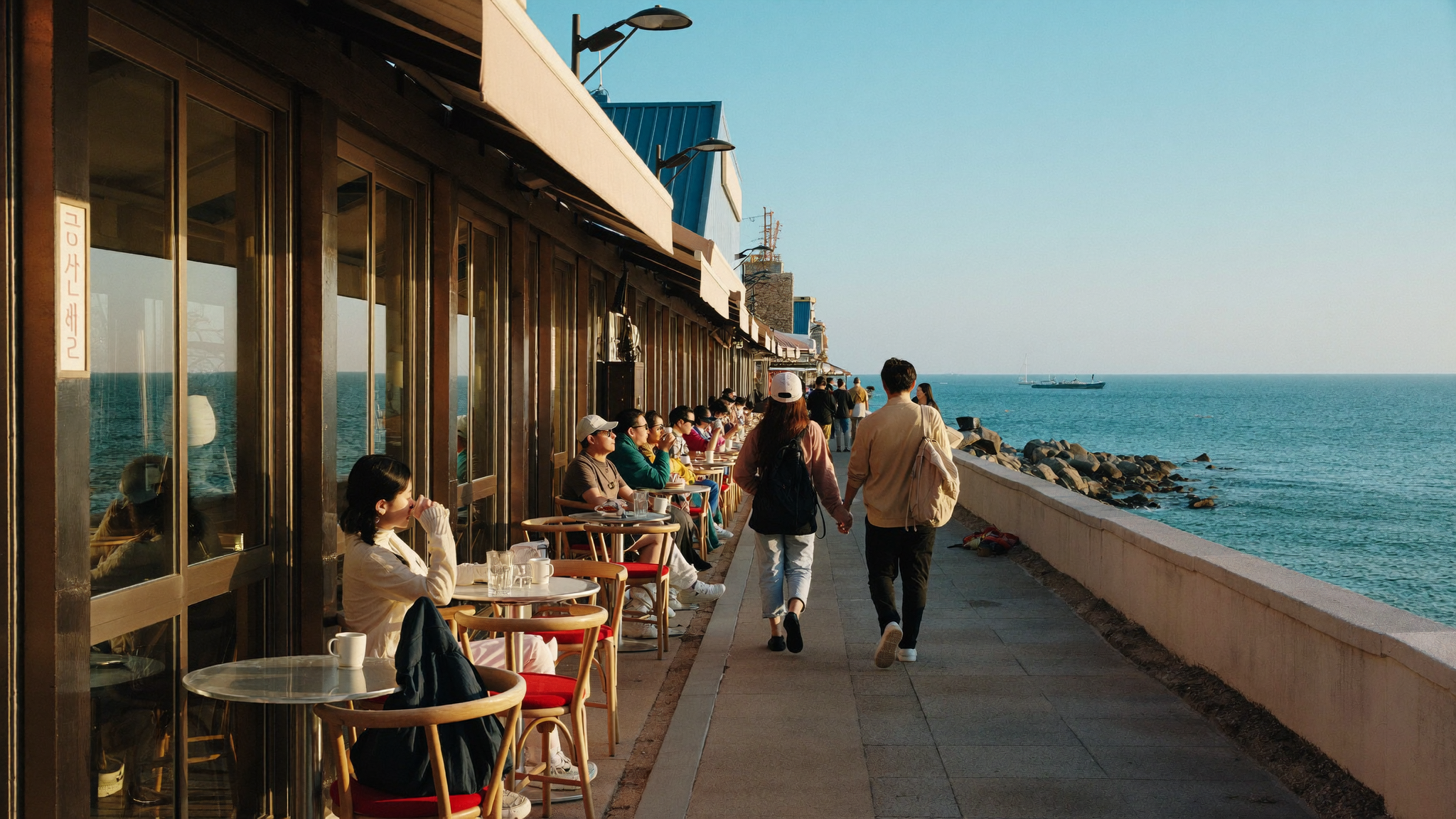
Gangneung’s identity as Korea’s unofficial coffee capital starts at Anmok Beach Coffee Street, a stretch of more than 500 meters along the sand lined with over 30 independent roasters and cafes. The obsession traces back to the 1980s, when coffee vending machines first appeared along this beach; after 2000 they were gradually replaced by proper cafes, and the area has since produced multiple national barista champions.
What makes the street worth a dedicated stop rather than a quick coffee run is the setting itself: floor-to-ceiling windows facing the East Sea, rooftop terraces for watching the waves, and a walkable promenade that turns golden at sunrise. Order a hand-drip coffee from one of the first-generation roasters here and you’ll understand why locals treat this stretch of sand as seriously as any beach in the country.
The best time to walk the street is right after sunrise, before the tour buses arrive around mid-morning. Many of the original roasters — the ones that trace back to the 1980s vending-machine era — sit slightly off the main strip in quieter side lanes, and they’re worth seeking out over the flashier chain cafes closer to the beach entrance. If you only have time for one, look for a shop advertising a national barista championship placement; Gangneung has produced more competition winners than any other city in Korea, and it shows in the quality of the pour-over menu.
3. Gyeongpo Lake and Gyeongpodae Pavilion
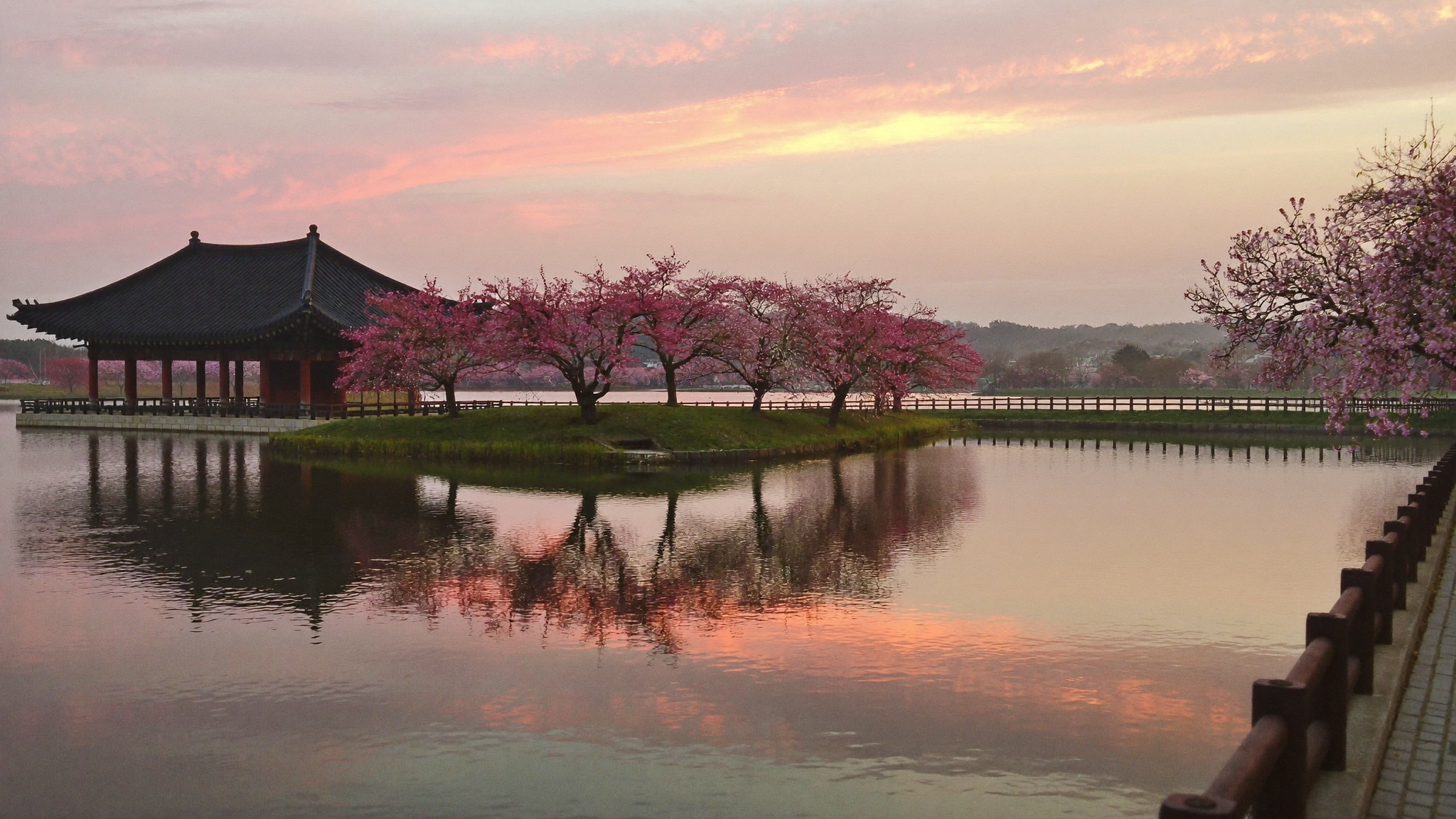
A five-minute drive from the coffee street, Gyeongpo Lake pairs a wide freshwater lake with Gyeongpodae, a seaside pavilion first built in the Goryeo dynasty and rebuilt several times since. Locals come here to picnic, cycle the lakeside path, and watch cherry blossoms bloom in spring or catch the sunrise reflected on the water any time of year.
The full loop around the lake takes about an hour on foot or twenty minutes by rental bike, and it connects directly to Gangneung’s beach area, so it pairs naturally with a coffee-street visit earlier in the day.
Rental bikes are available near the main entrance for a small hourly fee, and the paved path circling the lake is flat enough for almost anyone to manage. Photographers tend to favor the late afternoon, when the light hits Gyeongpodae Pavilion from across the water, but the sunrise view from the eastern shore is arguably the better payoff if you’re willing to get there early. Spring brings cherry blossoms along nearly the entire loop, while autumn turns the surrounding hills a deep red and gold that photographs just as well.
4. Ojukheon Historic Village
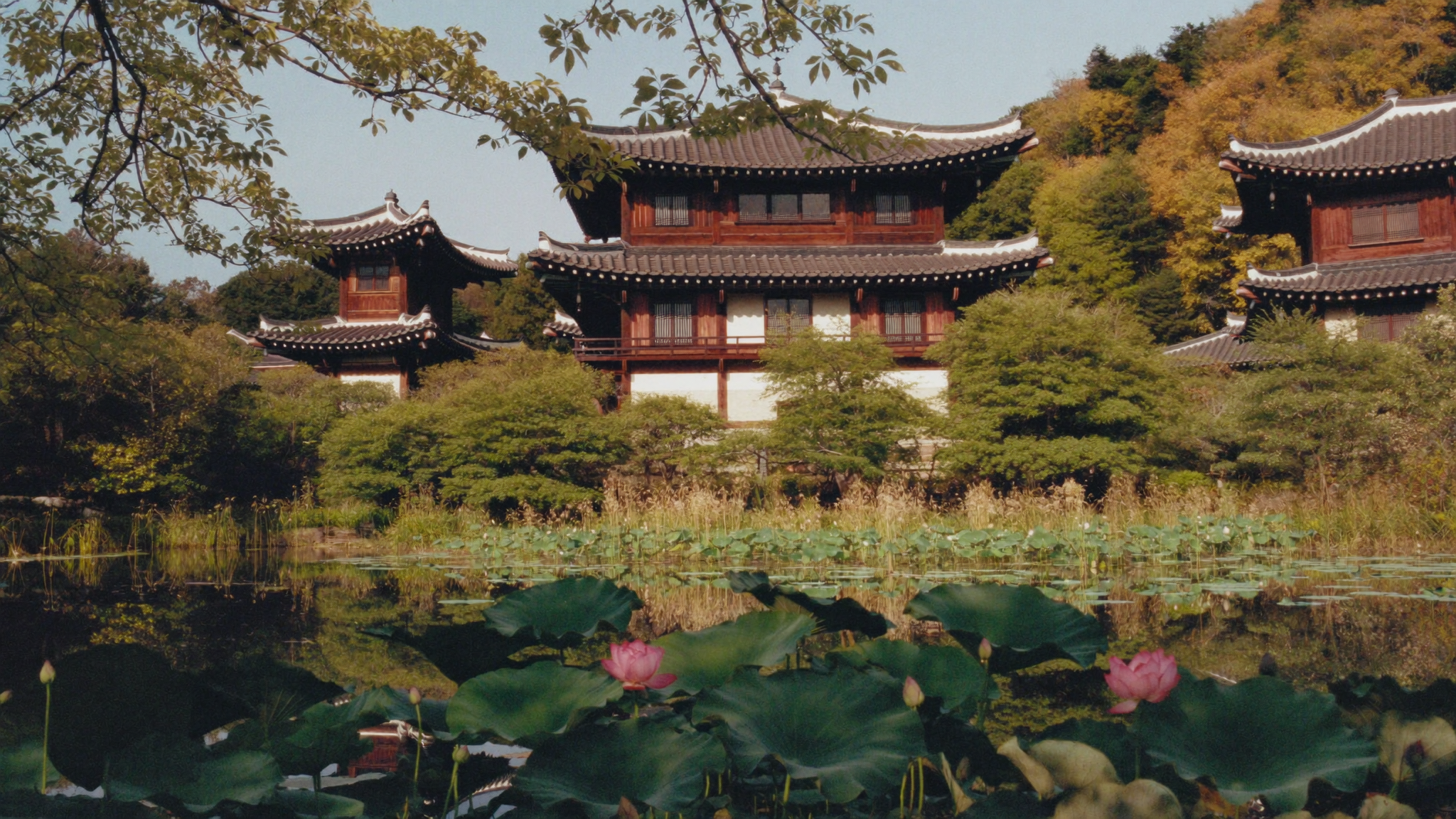
Ojukheon is the childhood home of Yulgok Yi I, one of Korea’s most respected Confucian scholars, and the main house is considered one of the oldest surviving wooden buildings in the country. The complex includes the colorful Munseongsa Shrine, lotus-filled ponds, and a small museum explaining the family’s history and Yulgok’s philosophical legacy.
It’s a quieter, slower stop compared to the coffee street and beaches, but it’s the single best place in this Gangneung travel guide to understand the region’s identity as a center of Joseon-era scholarship, not just a coastal getaway.
The grounds are small enough to see fully in 45 minutes to an hour, and English-language signage explains the layout and history of each building, so a guide isn’t strictly necessary. Yulgok’s mother, the artist and scholar Shin Saimdang, is honored in the same complex and appears on the Korean 50,000-won banknote, which makes Ojukheon a rare stop where you can connect a historical figure directly to the currency in your wallet. Entry is inexpensive, and the complex rarely feels crowded even on weekends, making it a calm counterpoint to the more touristed coffee street.
5. Jeongdongjin Sunrise Park and Hourglass Park
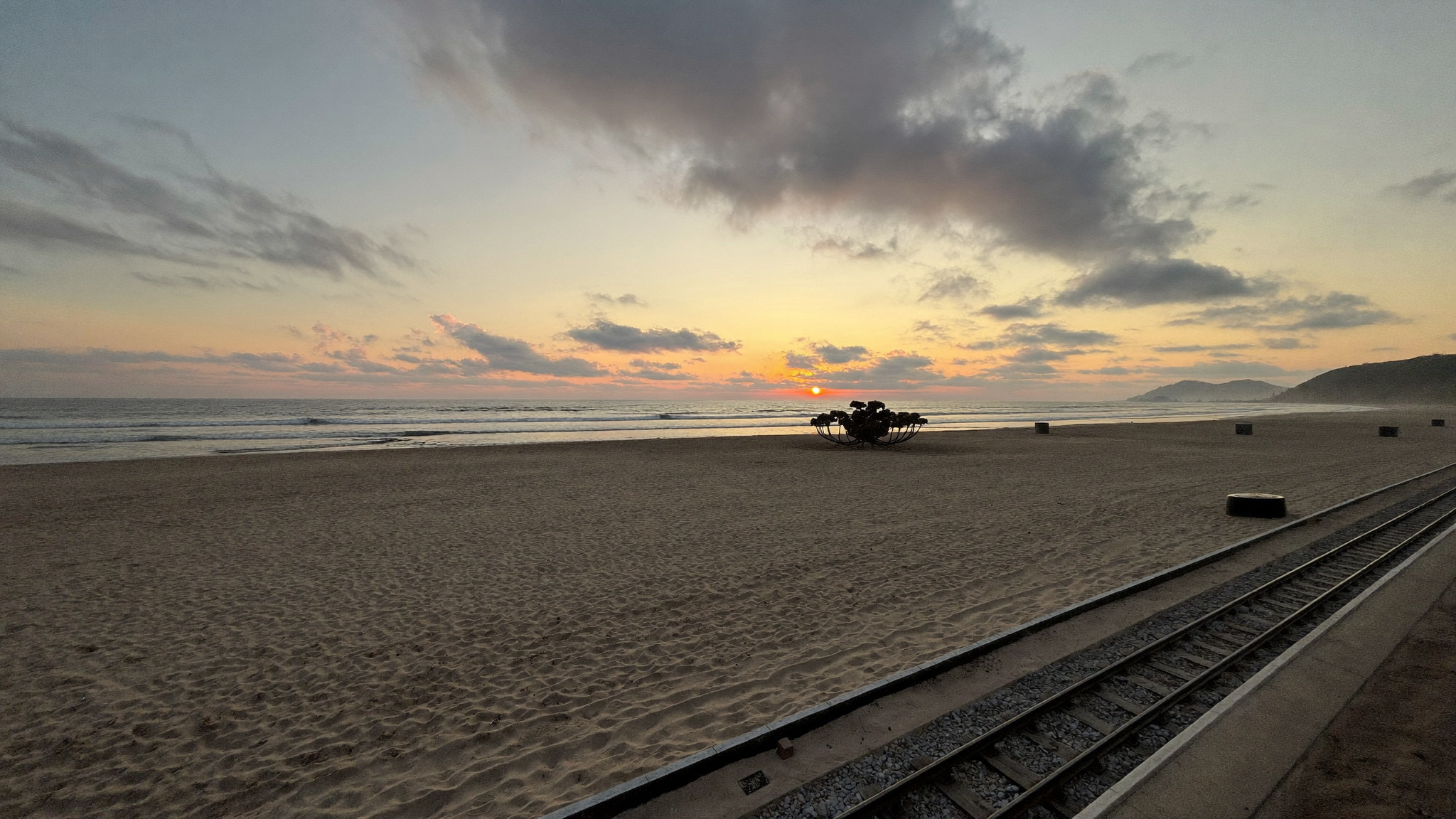
Jeongdongjin holds the Guinness-recognized title for the railway station closest to a beach, and the surrounding sunrise park has become one of Korea’s most photographed New Year’s sunrise-watching spots. Hourglass Park sits right beside it, home to a massive sand-filled hourglass that takes a full year to empty and is flipped in a public ceremony every December 31st.
Even outside of New Year’s, the combination of train tracks running along the sand, the open horizon, and the giant hourglass makes this one of the more surreal photo stops on the East Coast.
The area gained international fame decades ago as a filming location for a popular Korean drama, and it has remained a favorite backdrop for both local and foreign visitors ever since. A small cafe built directly on old train cars sits nearby, letting you have a coffee while looking out at the same stretch of track and sea. It’s roughly a 20-minute drive south of central Gangneung, making it an easy add-on to a Gyeongpo Lake or Anmok Beach itinerary if you start your day early enough to catch the sunrise itself.
6. Chodang Sundubu Village
Chodang-dong has been making soft tofu, or sundubu, for more than a century using a technique unique to this neighborhood: seawater drawn directly from the East Sea is used as the coagulant instead of standard chemical additives, producing a silkier texture with a subtle mineral sweetness. The neighborhood is now lined with dozens of small restaurants serving sundubu jjigae and plain sundubu with dipping sauce, most run by families who have been doing this for generations.
It’s an easy, inexpensive lunch stop between the coffee street and Gyeongpo Lake, and one of the few food experiences in Korea that is genuinely tied to a single neighborhood’s water source.
Most restaurants in Chodang offer a simple two-option menu — sundubu jjigae (spicy, in a bubbling stone pot) or plain sundubu with a soy-based dipping sauce on the side — so ordering is straightforward even without much Korean. Portions are generous and prices are noticeably lower than what you’d pay for a comparable meal in Seoul, making this one of the better value stops on this entire Gangneung travel guide.
7. Haslla Art World
Perched on a cliff south of the city center, Haslla Art World is a sculpture park, museum, and boutique hotel complex overlooking the East Sea. The outdoor sculpture garden alone is worth the trip, with pieces scattered across terraced cliffside paths that frame the ocean behind them, and the museum inside rotates contemporary exhibitions throughout the year.
It’s a bit further from the city center than the other stops on this list, but it pairs naturally with a coastal drive and makes for one of the most photogenic viewpoints in the entire region.
The site is split into an outdoor museum on one side of the coastal road and an indoor gallery plus hotel on the other, connected by a short walkway, so budget at least 90 minutes if you want to see both halves properly. Sunset is arguably the best time to visit, when the cliffside sculptures are backlit by the fading light over the East Sea, though it does mean planning your route back to central Gangneung in the dark.
8. Gangneung Coffee Festival and Best Cafes
Every October, the Gangneung International Coffee Festival takes over Anmok Beach and the surrounding area with roasting demonstrations, cupping competitions, and pop-up stalls from cafes across the country. If your trip lines up with the festival, it’s worth building your whole visit around it.
Outside of festival season, look for the small independent cafes tucked just off the main coffee street rather than the largest storefronts directly on the sand; several are run by baristas who have placed in national competitions, and the smaller shops tend to be less crowded with better seating by the window.
9. Where to Stay and Practical Tips
Most travelers base themselves near Gangneung Station or along the Anmok Beach area, both of which put you within a short taxi ride of everything in this guide. Budget guesthouses and mid-range hotels cluster near the station, while the beachfront near Anmok and Gyeongpo has a mix of pensions and larger hotel chains with sea views.
A day trip from Seoul is doable if you start early, but an overnight stay lets you catch sunrise at Anmok or Jeongdongjin without rushing back for the last KTX. Cash is still useful for smaller cafes and family-run restaurants in Chodang, though card payment is now standard almost everywhere else.
Best Time to Visit Gangneung
Gangneung works as a year-round destination, but each season changes the character of the trip. Spring (April) brings cherry blossoms around Gyeongpo Lake and mild sea breezes that make walking the coffee street comfortable for hours. Summer (July–August) is peak beach season, with Anmok and the nearby coastline packed with domestic tourists, so book accommodation early and expect higher prices and bigger crowds. Autumn (October) is arguably the best all-around window: the Gangneung International Coffee Festival runs, the weather is cool and clear, and the hills around Ojukheon and Gyeongpo turn shades of red and gold. Winter brings fewer crowds and dramatic, moody sunrises at Jeongdongjin, plus the December 31st hourglass-flipping ceremony at Hourglass Park, though sea winds can be sharp, so pack accordingly.
Sample Gangneung Itineraries
One day from Seoul: Take an early KTX, arrive by mid-morning, and head straight to Anmok Beach Coffee Street for coffee and a walk along the water. From there, taxi to Gyeongpo Lake for a short loop, grab lunch in Chodang Sundubu Village, and spend the afternoon at Ojukheon before catching an evening train back to Seoul. This covers four of the nine stops in this Gangneung travel guide comfortably.
Two days, overnight: Follow the same first-day route, but stay overnight near Anmok Beach so you can catch sunrise on the coffee street before the crowds. On day two, start early at Jeongdongjin Sunrise Park and Hourglass Park, then work your way to Haslla Art World for the cliffside sculpture garden before heading back to Gangneung Station for your return KTX. This pace lets you see all nine highlights without feeling rushed at any single stop.
Combined with a Gangwon Province loop: If you’re already planning stops in Sokcho or Chuncheon, Gangneung slots naturally into the middle of an East Coast route by intercity bus, letting you experience three very different sides of Gangwon Province — mountains, coastal cliffs, and this city’s coffee-and-scholarship combination — in a single multi-day trip.
Frequently Asked Questions
Is Gangneung worth visiting as a day trip from Seoul? Yes — the KTX makes it possible to see three or four major sights in a single day, though an overnight stay lets you catch sunrise at Anmok Beach or Jeongdongjin without rushing.
How many days do you need in Gangneung? One full day covers the highlights; two days lets you see all nine stops in this guide at a relaxed pace, including the coffee festival if your dates line up.
Is Gangneung good for solo travelers? Very much so. The coffee street, Gyeongpo Lake path, and Ojukheon are all easy to navigate independently, with English signage at most major sights and a compact enough layout that getting lost is difficult.
Common Mistakes to Avoid
The most common mistake is treating Gangneung as a single half-day stop tacked onto a Sokcho or Chuncheon itinerary. The city rewards at least one full day, and ideally an overnight, since the coffee street is best experienced in the early morning before the crowds arrive. Another common misstep is skipping Ojukheon entirely in favor of only beach and cafe stops — it takes less than an hour and adds real historical context that the coastal spots don’t provide on their own. Finally, travelers who visit in peak summer weekends should expect the coffee street and Gyeongpo Lake path to be genuinely crowded, so arriving right at opening time makes a noticeable difference.
Final Thoughts
Gangneung earns its reputation the moment you step off the KTX and smell the coffee drifting off Anmok Beach. Between the cafes, the lake, Ojukheon’s quiet history, and Jeongdongjin’s strange, beautiful hourglass, this Gangneung travel guide covers a city that rewards an unhurried pace far more than a rushed checklist. If you’ve already explored nearby Sokcho or the lakeside charm of Gapyeong, Gangneung is the natural next stop on Korea’s East Coast — pack a jacket for the sea breeze, book your KTX ticket early, and give yourself at least one full day to do it right.
For official transit updates and event schedules, check the Gangneung Tourism Organization site, and see the Wikipedia entry on Gangneung for a deeper regional history before you go.