Table of Contents
- What’s Happening in Korea Right Now?
- The Background: Why Did This Start?
- What Are Koreans Actually Saying?
- What This Reveals About Korean Culture
- How Does This Compare Internationally?
- Conclusion
What’s Happening in Korea Right Now?
Of all the unlikely pairings in Korean pop culture right now, Korean traditional craft and video games might be the most surprising. South Korea’s biggest gaming companies are suddenly investing heavily in ceramics, woodworking, hanji paper, mother-of-pearl inlay, and hanbok-inspired design, treating centuries-old artisan traditions as fresh creative material for their game universes. It is quickly becoming, as one industry report put it, the Korean gaming industry’s newest obsession.
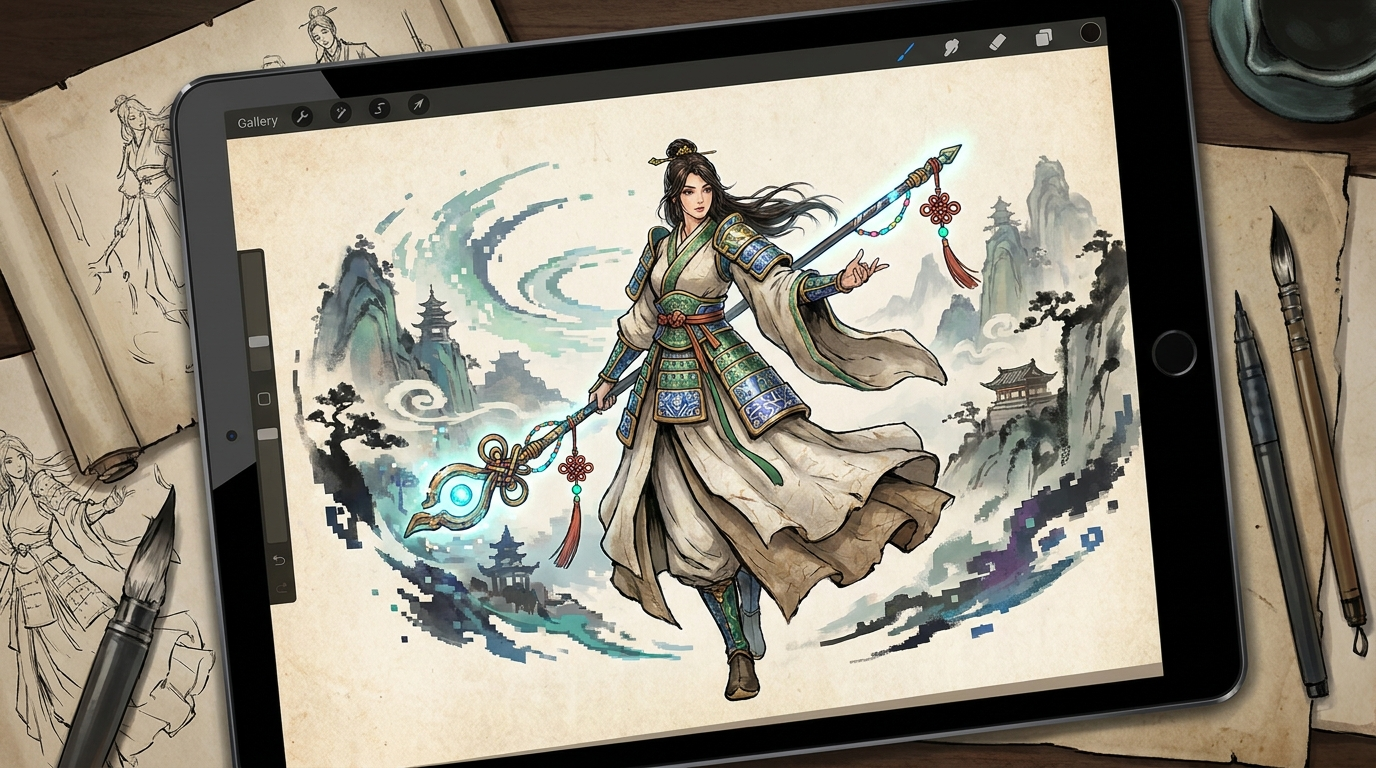
Nexon Games recently signed a memorandum with the Nexon Foundation and the Korea Ceramic Foundation to commission six artists working in ceramics, metalwork, woodworking, glass, mother-of-pearl inlay, and textiles to create original pieces inspired by its hit game Blue Archive, debuting at the 2026 Gyeonggi Craft Festa this October. Devsisters, the studio behind CookieRun, staged an exhibition in Seoul’s Insa-dong district that turned CookieRun: Kingdom characters into traditional craftwork, including Korean lantern installations, hwagak (ox-horn inlay), gold-leaf printing, and sand art. Krafton, the publisher behind the global hit PUBG: Battlegrounds, unveiled a separate collaboration with Korean craftspeople reimagining the battle royale game through traditional design language.
The Background: Why Did This Start?
Korea’s gaming industry is enormous and increasingly confident about its cultural weight. In 2024, the country’s gaming sector exported $5.13 billion in intellectual property, more than the combined exports of Korean music, film, television, animation, and advertising. That scale gives studios both the budget and the incentive to invest in prestige cultural projects that go beyond typical merchandise tie-ins.
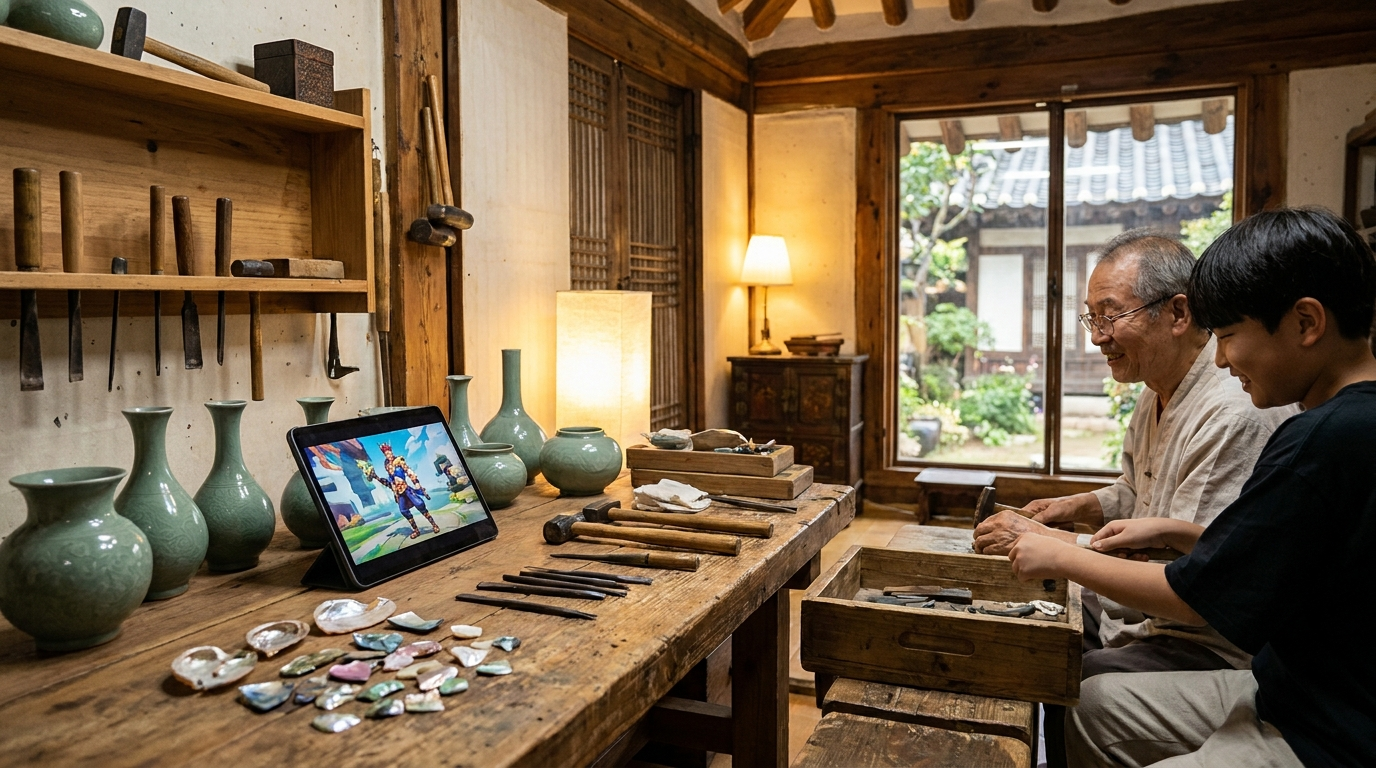
At the same time, traditional Korean craft has faced a familiar problem: a shrinking, aging population of master artisans and limited public interest in preserving techniques like hanji papermaking or mother-of-pearl lacquerware. Gaming companies, flush with younger audiences hungry for aesthetic novelty, offer these crafts a new distribution channel and, notably, a new generation of admirers who might never otherwise encounter them. Industry officials describe it as a genuinely two-way exchange: games introduce younger audiences to traditional crafts, while game artists draw fresh creative inspiration from techniques and motifs centuries older than the medium itself. If you’re interested in how Korea’s entertainment industries increasingly intersect with cultural heritage, our coverage of G-Dragon’s UNESCO ambassador role covers a similar dynamic in K-pop.
What Are Koreans Actually Saying?
Reception has been largely enthusiastic, particularly among younger gamers who say the collaborations make traditional craft feel relevant rather than museum-bound. Craft communities and cultural preservation advocates have welcomed the funding and exposure, though some traditionalists have voiced quiet concern that pairing centuries-old techniques with commercial game IP risks flattening their cultural weight into just another skin or collectible. Gaming press has largely framed the trend as smart soft-power strategy, noting that it lets studios differentiate their brands in a crowded global market while genuinely supporting a domestic craft economy that badly needs younger practitioners.
What This Reveals About Korean Culture
This trend captures something distinctly Korean: an ease with blending the ultra-traditional and the ultra-modern without treating them as contradictory. The same cultural instinct that lets a five-star hotel reinterpret centuries-old stamina food, or lets K-pop idols headline UNESCO cultural diplomacy events, is at work here — Korean institutions have become remarkably comfortable using contemporary global platforms to carry traditional content forward, rather than preserving it in a separate, untouched category.
It also reflects how central intellectual property and soft power have become to Korean industrial strategy. Government and quasi-government cultural foundations partnering directly with private gaming companies on craft preservation is a notable model, treating cultural heritage and commercial entertainment as complementary rather than competing priorities.
How Does This Compare Internationally?
Video game collaborations with traditional art are not unheard of elsewhere — Japanese games have long drawn on ukiyo-e aesthetics and traditional crafts, and Western games occasionally partner with museums for historically inspired content. What distinguishes Korea’s version is the direct, funded institutional partnership between craft foundations and major studios, rather than a one-off aesthetic homage. It mirrors Korea’s broader soft-power playbook, seen in K-pop and K-drama’s global rise, of pairing state-linked cultural institutions with commercial entertainment brands to maximize international visibility for domestic tradition.
Conclusion
Whether this becomes a lasting model for craft preservation or a passing marketing trend, the Nexon, Devsisters, and Krafton collaborations show a gaming industry confident enough in its cultural standing to fund traditional artisans rather than simply borrow their aesthetics. For a country whose exports increasingly run through pop culture, that confidence says a lot about where Korea sees its cultural future heading.
Curious about more of Korea’s cultural crossovers? See our coverage of G-Dragon’s UNESCO ambassador appointment for another look at how Korean entertainment and heritage are increasingly intertwined.