Let’s not dress it up: gopchang (곱창) is grilled small intestines — usually beef, sometimes pork — charred over a flame until the outside crisps and the inside stays rich, chewy, and unapologetically fatty. It is one of Korea’s most beloved drinking foods, the anchor of entire restaurant alleys, and a genuine love-it-or-hate-it experience that Koreans treat as a badge of honor. This decoder page tells you exactly what you’re signing up for: the taste and the texture, the gopchang-makchang-daechang family tree, honest halal and vegetarian answers, 2026 prices, and how to order like you’ve done this before.
Table of Contents
- Gopchang Quick Facts
- What Is Gopchang, Exactly?
- What Does Gopchang Taste Like?
- Gopchang vs Makchang vs Daechang
- Dietary Guide: Vegetarian, Vegan, Halal & Allergens
- How to Order Gopchang in Korean (+ 2026 Prices)
- How to Eat Gopchang Like a Local
- Where to Try Gopchang
- Gopchang FAQ
Gopchang Quick Facts

| Item | Details |
|---|---|
| Korean name | 곱창 (gopchang) — grilled small intestines |
| Pronunciation | GOP-chahng |
| Type | Grilled offal / shared table BBQ / drinking dish (anju) |
| Spice level | 🌶️ 1–2 / 5 — salt-grilled is mild; spicy stir-fried versions exist |
| Price (2026) | ₩15,000–₩20,000 per serving; tables usually order 2+ servings |
| Vegetarian | ❌ No — it is literally intestines |
| Vegan | ❌ No |
| Halal-friendly | ❌ No — beef versions are uncertified, and pork gopchang is common |
| Main allergens | Beef/pork offal, soy, sesame |
| Best for | Texture adventurers, soju enthusiasts, BBQ graduates seeking level two |
What Is Gopchang, Exactly?
Gopchang refers to the small intestines of cattle (or pigs), cleaned, cut into finger-length tubes, and grilled — usually over charcoal or on a gas grill at your table, often finished with scissors, garlic, and salt. The name comes from gop (곱), the rich fatty substance inside the intestine, plus chang (창), intestine. That interior fat is the entire point of the dish: bite through the crisp casing and it releases a wave of savory, buttery juice that Koreans consider the reward.
Like many of Korea’s greatest dishes, gopchang started as thrift. Offal was cheap protein for laborers around slaughterhouses and markets, grilled simply and washed down with soju. Somewhere along the way the working-class staple became a cult obsession — today’s gopchang restaurants charge more per serving than many BBQ joints charge for pork belly, and dedicated gopchang alleys in Seoul and Daegu stay packed past midnight. There’s even a saying that gopchang tastes best on someone else’s credit card.
Should a first-timer order it? Here’s our honest take: gopchang is a dare with a real payoff. If chewy textures bother you, this dish will test you — there is no version of gopchang that isn’t chewy. But if you’re the traveler who orders the thing you can’t get at home, salt-grilled beef gopchang with a shot of soju is one of Korea’s most memorable nights out. It routinely converts skeptics; it also routinely creates lifelong avoiders. You’ll know which one you are within three pieces.
Koreans also credit gopchang with virtues beyond flavor: it’s rich in iron and collagen, and generations of drinkers swear by it as the food that “protects the stomach” on a long soju night. Take the science loosely and the sentiment seriously — gopchang is fuel for staying at the table, and the portion sizes, sides, and pacing of a gopchang restaurant are all built around exactly that.
What Does Gopchang Taste Like?
Beef gopchang done well tastes clean, savory, and deeply rich — closer to browned butter and beef fat than to anything “organ-y.” A properly cleaned and grilled piece has almost no funk; what hits you instead is char, garlic, salt, and that molten gop center. Pork gopchang is earthier and cheaper, with more assertive flavor — most first-timers should start with beef.
The texture is the whole conversation. The casing is springy and chewy — noticeably more resistance than squid, less than cartilage — and the inside is soft and fatty. Koreans prize exactly this contrast; Western palates sometimes need a few pieces to recalibrate. Restaurants grill gopchang until the outside blisters and crisps, which is both a flavor and a texture decision: more char, less chew.
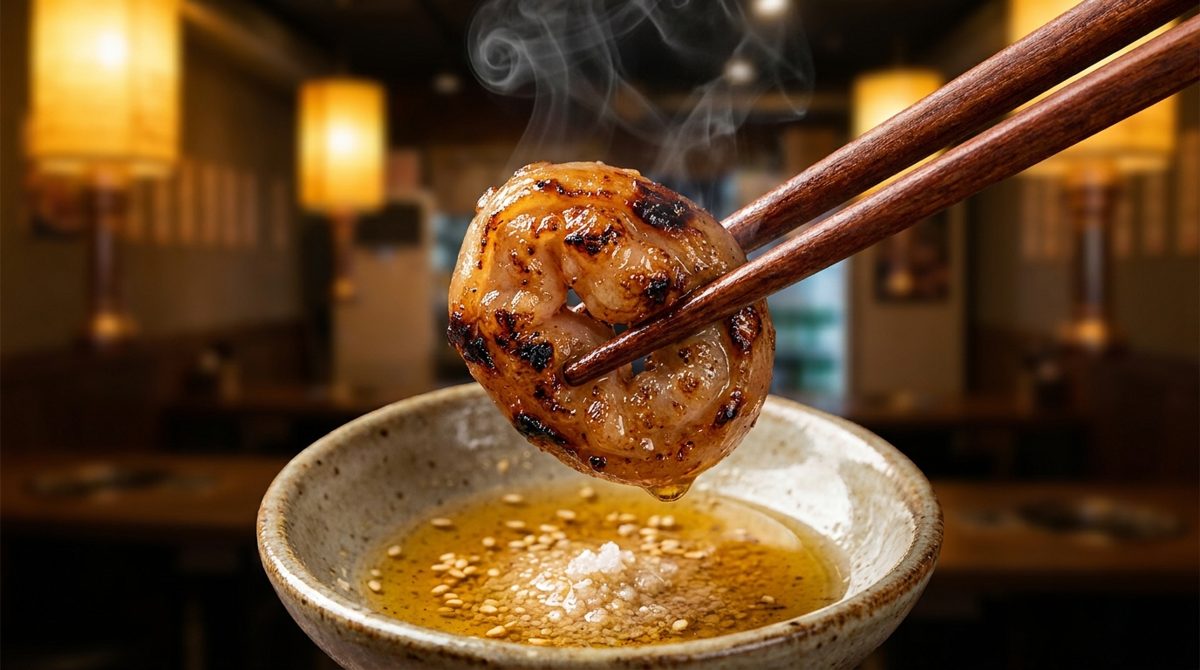
Useful benchmarks from other cuisines: if you’ve enjoyed Japanese horumon-yaki, Mexican tripas tacos, or Filipino isaw, gopchang will feel like the deluxe Korean expression of the same idea. If your offal experience is zero, that’s fine too — beef gopchang at a top shop is honestly one of the gentlest introductions, because the charcoal and garlic do most of the talking.
Is Gopchang Spicy?
Usually not. The classic order — sogeum-gui (salt-grilled) — is a 1 out of 5 at most: salt, garlic, sesame oil, no chili. Heat enters the picture with gopchang-bokkeum (spicy stir-fried gopchang) and gopchang jeongol (hot pot), which run 2–3 out of 5 with gochujang-based sauces. Dipping sauces at the table (seasoned salt, sesame oil, ssamjang) are all mild. If you want the pure experience with zero heat, order salt-grilled and you’re safe.
Gopchang vs Makchang vs Daechang: Know Your Order
Gopchang menus assume you know the offal family tree. You will, in thirty seconds:
| Name | What it is | Character |
|---|---|---|
| Gopchang (곱창) | Small intestine | The classic: chewy tube with rich gop inside |
| Daechang (대창) | Large intestine | The indulgence: thicker, lined with pure fat — melts like beef butter |
| Makchang (막창) | Cattle’s fourth stomach (or pork rectum in some regions) | The Daegu favorite: chewiest of the three, dipped in fermented bean sauce |
| Yang (양) | Rumen (first stomach) | The gateway: meatier, less fatty; yang-gopchang shops grill both |
| Yeomtong (염통) | Heart | The sleeper hit: firm, clean, tastes like lean beef |
Most gopchang restaurants sell a modum (모둠, assorted) platter with several of these on one grill — the smartest first order, because you’ll discover whether you’re a gopchang person, a daechang person, or (most dangerous for your wallet) both.
A two-person ordering strategy that never fails: one serving of gopchang, one of daechang, split the difference, and save room for the fried rice. Groups of four should simply order the largest modum platter on the menu and add whatever wins the first round — the table will reach consensus faster than you’d think.
Gopchang Dietary Guide: Vegetarian, Vegan, Halal & Allergens
No sugarcoating available here — gopchang is one of the least dietary-friendly dishes in Korea.
| Ingredient concern | In standard gopchang? | Notes |
|---|---|---|
| Beef offal | Yes (beef gopchang restaurants) | Small/large intestine, stomach, heart |
| Pork offal | Common | Pork gopchang and makchang shops are everywhere; always ask which animal |
| Soy | Yes | Marinades, dipping sauces, ssamjang |
| Sesame | Yes | Sesame oil dip is standard; salads dressed with sesame |
| Wheat / gluten | Sometimes | Via sauces (ssamjang, spicy bokkeum sauce); salt-grilled is essentially wheat-free |
| Egg / dairy / nuts / seafood | No | Not part of the standard spread; steamed egg side dishes exist |
| Alcohol | Not in the food | But this is soju’s home turf — tables without a green bottle are rare |
Is Gopchang Vegetarian or Vegan?
No, in the most complete way possible — gopchang is animal organ meat, and there is nothing to subtract. The restaurants themselves offer little refuge for vegetarian companions: sides are typically salad, steamed egg, and fried rice made on the meat grill. If your group is heading to a gopchang alley and you don’t eat meat, eat first — or steer the group to a standard BBQ place with mushroom and vegetable options, like the ones covered in our Korean BBQ guide.
Is Gopchang Halal?
No. Even the all-beef version fails halal requirements: the cattle are not slaughtered to halal standards, no gopchang restaurant in Korea carries certification as of 2026, and cross-contamination with pork is a real concern since many shops grill both animals. Pork gopchang and makchang are, of course, categorically out. Muslim travelers craving the Korean grill-at-your-table experience should head to Seoul’s halal-certified Korean BBQ restaurants instead — the Korea Tourism Organization’s VisitKorea maintains current Muslim-friendly listings.
How to Order Gopchang in Korean (+ 2026 Prices)
Gopchang restaurants are loud, casual, and used to pointing. A few phrases upgrade the experience:
| What you want | Say this | Romanized |
|---|---|---|
| Assorted platter, please | 모둠 하나 주세요 | modum hana juseyo |
| Two servings of gopchang | 곱창 이인분 주세요 | gopchang i-in-bun juseyo |
| Is this beef or pork? | 소곱창이에요, 돼지곱창이에요? | so-gopchang-ieyo, dwaeji-gopchang-ieyo? |
| Fried rice at the end, please | 볶음밥 주세요 | bokkeumbap juseyo |
| One bottle of soju, please | 소주 한 병 주세요 | soju han byeong juseyo |
What it costs in 2026: expect ₩15,000–₩20,000 per serving for beef gopchang or daechang in Seoul, with most restaurants requiring or expecting a two-serving minimum — so a realistic gopchang night for two runs ₩40,000–₩60,000 with drinks and the closing fried rice. Pork gopchang and Daegu-style makchang are gentler, around ₩10,000–₩14,000 per serving. Yes, it’s offal priced like premium meat; demand, cleaning labor, and cult status did that.
How to Eat Gopchang Like a Local
Let the staff run the grill — at most gopchang restaurants, servers tend, flip, and scissor-cut everything to perfect doneness, and interfering is genuinely counterproductive. Gopchang must be thoroughly cooked and well-crisped; when the pieces are blistered and golden, they’re handed over. Dip in the sesame-oil-and-salt dish, or wrap in a perilla leaf with grilled garlic and onion. Chew with commitment — that’s the dish.
The rhythm is Korean drinking culture at its purest: a piece of gopchang, a shot of soju, conversation, repeat. Fat and soju are considered natural partners — locals will tell you each cleanses the other, which is medically dubious and socially undeniable. Our Korean dining etiquette guide covers the pouring rituals; the short version is never pour your own shot and receive with two hands.
Then the mandatory finale: bokkeumbap. When the meat is done, the staff scrape the glorious fat-slicked grill, add rice, kimchi, seaweed, and sesame oil, and press it into a crackling fried rice that many people secretly rank above the gopchang itself. Skipping the fried rice at a gopchang restaurant is like leaving a concert before the encore. Budget stomach space accordingly.

Practical notes for the night: wear clothes you don’t mind smelling like smoke (many shops provide aprons and coat bags — use them), expect floor seating or low stools at older alleys, and don’t plan a quiet dinner afterward. Gopchang is a destination meal, not a stop. Cold months add another option to the menu: gopchang jeongol, a bubbling intestine hot pot with vegetables and noodles that converts the grill experience into stew form.
Where to Try Gopchang
Seoul’s gopchang geography is a pub crawl in itself. The Wangsimni gopchang alley is the historic heartland — decades-old beef gopchang specialists in the city’s east. Majang-dong, next to Seoul’s largest meat market, grills the freshest offal in the country, sourced meters from the table. Sindang-dong and Jongno 3-ga fill in the map, and every university district has a cheaper pork-gopchang strip for students. In Daegu, the Anjirang Gopchang Alley is a national landmark: fifty-plus makchang and gopchang joints on one smoky street, one of Korea’s great eating experiences. Whichever city you’re in, follow two rules — go where it’s crowded and smoky, and go in the evening when turnover peaks. If you’re doing a broader meat pilgrimage, fold it into the itinerary from our Korean BBQ guide 2026.
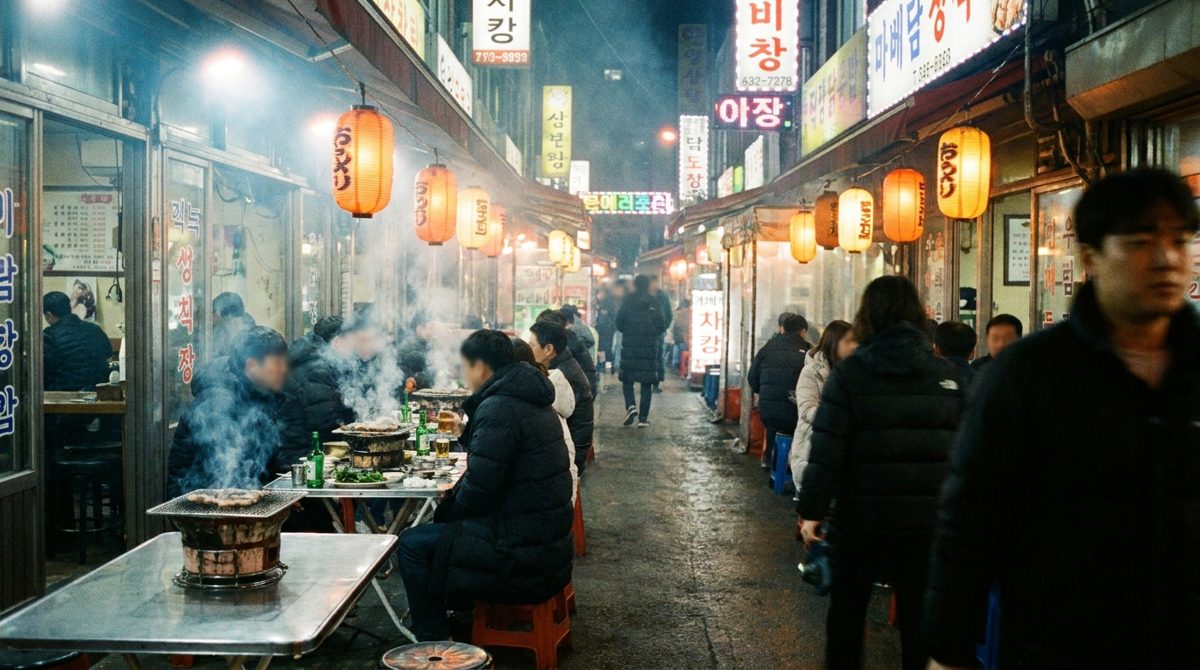
One more calibration note for the adventurous: if you handled sundae (Korean blood sausage) and enjoyed it, gopchang is the natural next rung on the ladder — same offal family, bigger texture, bigger reward. If sundae already pushed your limits, order the modum platter with friends so the commitment is shared.
Gopchang FAQ
What is gopchang made of?
Grilled small intestines of cattle or pigs, cleaned and cut into pieces, typically grilled at the table with salt, garlic, and sesame oil. The “gop” is the rich fatty substance inside the intestine — the prized part. Related cuts include daechang (large intestine) and makchang (fourth stomach).
Does gopchang taste gamey?
At a good restaurant, no. Properly cleaned beef gopchang tastes rich and buttery with char and garlic, not organ-like. Quality of cleaning is everything — which is why locals eat gopchang at busy specialists, not random menus. Pork versions are earthier than beef.
What’s the difference between gopchang, daechang, and makchang?
Gopchang is small intestine (chewy, fatty center), daechang is large intestine (thicker, lined with melting fat), and makchang is the cattle’s fourth stomach — or pork rectum in some regions — with the chewiest bite, famously eaten in Daegu with fermented bean dipping sauce.
How much does gopchang cost in Korea in 2026?
₩15,000–₩20,000 per serving for beef gopchang in Seoul, and most tables order at least two servings. A full night out with drinks and the closing fried rice typically runs ₩40,000–₩60,000 for two people. Pork versions cost less.
Is gopchang halal?
No. Beef gopchang is not halal-certified anywhere in Korea, many shops also grill pork offal on shared equipment, and pork gopchang is common. Muslim travelers should choose halal-certified Korean BBQ restaurants instead.
The Verdict: Should You Order It?
Gopchang is the boldest dare in this series, and we’ll be straight with you: it is not for everyone, and Koreans wouldn’t want it to be. But if you meet it on its own terms — beef, salt-grilled, at a packed alley restaurant, with soju and the fried rice finale — you’ll experience one of the most Korean nights Korea has to offer. Order the modum platter, commit to the chew, and decide for yourself which camp you’re in. Ready for the next dish? Decode the whole menu with our Korean Food Decoder — every major Korean dish explained with spice levels, allergens, and ordering phrases.