Waking up in Korea after a long night of soju and want to know what everyone’s slurping at the diner next door? Haejangguk (해장국) isn’t one dish — it’s an entire category of Korean soups built specifically to cure a hangover, from fiery pork-bone stews to mild, clear fish and bean-sprout broths. Because the category spans so many different broths and proteins, its taste, price, and — critically — its halal and vegetarian status change dramatically depending on which variant lands in front of you. This guide breaks down every major type so you order the right bowl for your body and your beliefs.
Table of Contents
- Haejangguk Quick Facts
- What Is Haejangguk, Exactly?
- What Does Haejangguk Taste Like?
- Dietary Guide: Vegetarian, Vegan, Halal & Allergens
- How to Order Haejangguk in Korean (+ 2026 Prices)
- How to Eat Haejangguk Like a Local
- Types of Haejangguk You’ll See on Menus
- Where to Try Haejangguk
- Haejangguk FAQ
Haejangguk Quick Facts
| Item | Details |
|---|---|
| Korean name | 해장국 (haejangguk) — literally “soup that chases away the hangover” |
| Pronunciation | heh-JAHNG-gook |
| Type | Category name for hangover-recovery soups (not one fixed recipe — variants differ hugely) |
| Spice level | 🌶️ 1–4 / 5 — depends entirely on the variant, from mild bugeoguk to fiery pork-bone versions |
| Price (2026) | ₩10,000–₩14,000 in Seoul, most bowls around ₩11,000 |
| Vegetarian | ⚠️ Variant-dependent — most versions contain meat, fish, or animal-based broth |
| Vegan | ❌ Generally not — nearly every variant uses meat or fish stock, plus egg is common |
| Halal-friendly | ⚠️ Depends heavily on which variant and broth — always ask before ordering |
| Main allergens | Pork, fish/seafood, egg, soy — varies by variant |
| Best for | Morning-after recovery, 24-hour diners, Jeonju food tourism, understanding broth variants before ordering |
What Is Haejangguk, Exactly?
Haejangguk translates roughly to “soup to chase away the drink,” and it works exactly like it sounds: a hot, savory bowl designed to rehydrate you, replace lost salt and nutrients, and settle a stomach still processing last night’s soju. It isn’t a single recipe — it’s an entire family of soups that share one job description. What unites them is timing and purpose, not ingredients. You’ll see haejangguk on menus at dedicated hangover-soup restaurants, at 24-hour diners, and folded into breakfast menus across the country.
The category grew out of Korea’s centuries-old drinking culture, where communal after-work drinking (hoesik) is deeply woven into social and office life. Restaurants near nightlife districts and business quarters historically stayed open all night specifically to serve haejangguk to drinkers heading home at dawn — a tradition that’s why so many gukbap houses still operate 24 hours today. Some historians trace early versions back to the Joseon dynasty, when workers and travelers ate hearty soups before long, cold journeys.
What makes haejangguk tricky for travelers is that the name tells you nothing about what’s actually in the bowl. Order “haejangguk” blindly at a random restaurant and you might get a fiery pork-bone stew, or you might get a delicate, nearly clear bean-sprout soup. Regional identity matters too — Jeonju built its reputation partly on kongnamul-gukbap, its signature mild variant, while Seoul’s late-night districts lean toward the spicier pork-bone styles.
There’s also a folk-science logic behind the category. Many haejangguk variants are heavy on amino acids and salt — bean sprouts, dried pollack, and simmered bones are all traditionally believed to help the body process alcohol and replace electrolytes lost to a long night of drinking. Modern nutritionists are more cautious about the specific “cure” claims, but the basic idea holds up: a hot, salty, protein-rich soup with plenty of liquid is a genuinely sensible thing to eat after drinking, whether or not you believe in the folklore.
What Does Haejangguk Taste Like?
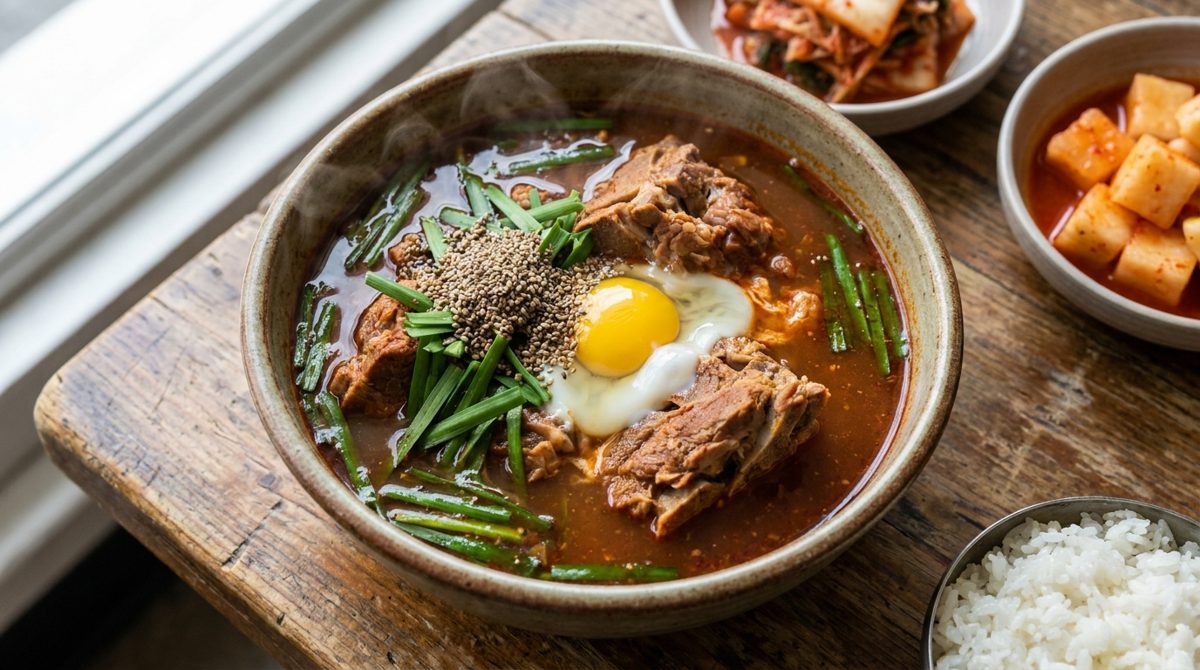
There’s no single answer — and that’s the whole point of this guide. The spicy pork-bone style (ppyeo-haejangguk) tastes deep, funky, and rich, with tender meat falling off bone-in cuts, perilla seeds adding a nutty edge, and a red chili broth that’s savory more than blistering. The mild versions taste completely different: bugeoguk (dried pollack) is clean, briny, and light, almost like a delicate Japanese-style fish broth, while kongnamul-gukbap (bean sprout soup) is crisp, faintly sweet, and barely seasoned beyond garlic and salt.
Is Haejangguk Spicy?
It depends entirely on which bowl you order, and this is the single most important thing to know before sitting down. Bugeoguk and kongnamul-gukbap sit around 0–1 out of 5 — clear, mild, almost soothing. Sundaeguk (blood sausage soup) is a mid-range 2 out of 5, savory but not fiery. Ppyeo-haejangguk and other pork-bone, gamjatang-style versions run 3–4 out of 5, built on a red gochugaru chili broth that’s genuinely spicy. If your stomach is fragile, lead with the mild versions — ironically, they’re also the ones actual hangover-recovery folklore recommends most.
Haejangguk Dietary Guide: Vegetarian, Vegan, Halal & Allergens
This is the section to actually read carefully, because “haejangguk” hides four very different dishes with four very different dietary profiles. Never assume — ask which variant is being served before you order.
| Ingredient concern | Which variants have it? | How to handle |
|---|---|---|
| Pork | Ppyeo-haejangguk / gamjatang-style (pork spine) | “Dwaeji ppaego juseyo” won’t work here — the broth itself is pork-based, so avoid this variant entirely if you don’t eat pork |
| Fish / seafood | Bugeoguk (dried pollack) | Ask “saengseon deul-eogayo?” (생선 들어가요? — does it contain fish?) if unsure |
| Beef / beef broth | Kongnamul-gukbap (often beef or anchovy stock) | Ask specifically — some versions use anchovy broth, others beef |
| Blood sausage / offal | Sundaeguk | Visibly distinct — dark sausage slices are easy to spot and avoid |
| Egg | Many versions, raw or poached on top | “Gyeran ppaego juseyo” (계란 빼고 주세요) = no egg |
| Soy | Most variants (soy sauce, soybean sprouts) | Hard to remove entirely — core seasoning across the category |
| Alcohol | None in the soup itself | Haejangguk is the cure, not the cause — no alcohol is added |
Is Haejangguk Vegetarian or Vegan?
Almost never, and this is genuinely one of the harder Korean dish categories for vegetarians. Every major variant leans on animal-based stock or protein: ppyeo-haejangguk is pork through and through, bugeoguk is fish-based (so it’s pescatarian-adjacent at best, never vegetarian), sundaeguk contains blood sausage, and even kongnamul-gukbap — the closest thing to a “plant-forward” option since it’s mostly bean sprouts and rice — is frequently made with beef or anchovy broth rather than a vegetable stock. If you’re vegetarian, ask specifically: “chae-sik-i-eyo?” (채식이에요? — is this vegetarian?) before ordering kongnamul-gukbap, since broth practices vary by restaurant. Vegans should skip the haejangguk category altogether and look toward temple-style vegetable dishes instead.
Is Haejangguk Halal?
This is the single most important thing to understand before ordering, because the answer swings from “absolutely not” to “reasonably workable” depending entirely on which variant you choose. Ppyeo-haejangguk and gamjatang-style pork-bone versions are not halal — the broth is built from pork bones, full stop, and there’s no substitution that fixes that. Bugeoguk (dried pollack soup) is the more halal-friendly option if the fish is properly sourced and no pork-derived seasonings (like certain fermented pastes) are used — worth confirming with staff. Kongnamul-gukbap can also be halal-friendly if the broth is beef-based from halal-sourced beef, though many restaurants use standard (non-halal) beef or anchovy stock by default, so it isn’t automatic.
The practical rule for Muslim travelers: always ask which broth type is used before ordering any haejangguk, since the name alone tells you nothing. A simple, useful question is “i-geo dwaeji-ppyeo-e-yo?” (이거 돼지뼈예요? — is this made with pork bone?). For a safer default, check the Korea Tourism Organization’s Muslim-friendly restaurant listings on VisitKorea, or choose a restaurant that explicitly advertises halal-certified broth. When in doubt, skip haejangguk and order samgyetang (ginseng chicken soup) instead — a soup with a much simpler, chicken-based halal profile.
How to Order Haejangguk in Korean (+ 2026 Prices)
Because “haejangguk” covers so many different soups, naming the specific variant is the single most useful thing you can do at the counter. Staff will understand exactly what you want, and you’ll avoid dietary surprises.
| What you want | Say this | Romanized |
|---|---|---|
| Spicy pork-bone version | 뼈해장국 주세요 | ppyeo-haejangguk juseyo |
| Mild dried pollack soup | 북어국 주세요 | bugeoguk juseyo |
| Blood sausage soup | 순대국 주세요 | sundaeguk juseyo |
| Bean sprout rice soup | 콩나물국밥 주세요 | kongnamul-gukbap juseyo |
| Does this have pork bone? | 이거 돼지뼈예요? | i-geo dwaeji-ppyeo-e-yo? |
| No egg, please | 계란 빼고 주세요 | gyeran ppaego juseyo |
What it costs in 2026: most haejangguk variants run ₩10,000–₩14,000 in Seoul, with the average bowl landing around ₩11,000. Ppyeo-haejangguk and gamjatang-style versions tend toward the higher end because of the bone-in meat, while kongnamul-gukbap and bugeoguk are usually the cheapest, often ₩9,000–₩11,000. Prices are slightly lower outside Seoul. Rice and a few simple banchan side dishes are typically included — see our Korean dining etiquette guide if the side-dish setup looks unfamiliar.
How to Eat Haejangguk Like a Local
Haejangguk is a spoon dish, eaten hot, usually first thing in the morning or straight after a night out — locals often go directly from the bar to the soup counter rather than sleeping first. If a raw or soft-poached egg comes on top, stir it into the hot broth so it gently cooks into the soup rather than eating it separately. Rice is either served on the side or already submerged in the broth (gukbap-style); either way, spoon rice and broth together in the same bite.
Locals commonly add a spoonful of the provided saeu-jeot (salted shrimp) or extra chopped chili to bugeoguk and kongnamul-gukbap for extra depth, and a dash of extra gochugaru to ppyeo-haejangguk if they want more heat. Don’t be surprised to see people quietly eating alone at 6 a.m. — haejangguk culture is functional and unpretentious, not a social meal.
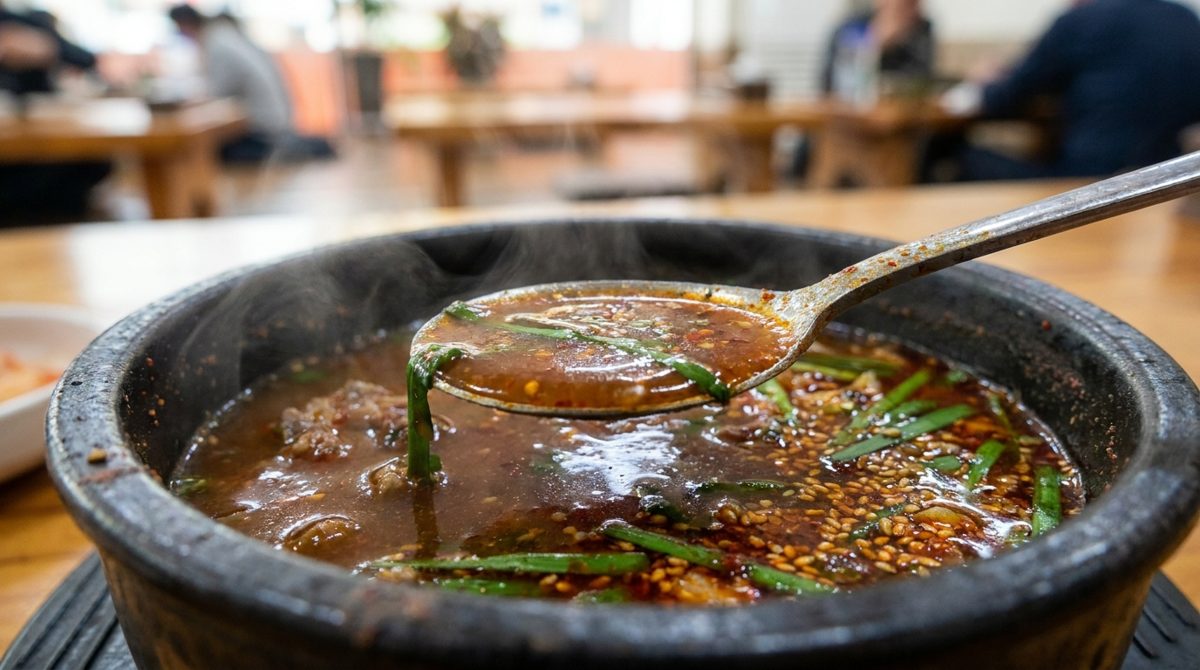
Many versions arrive in a ttukbaegi, a thick earthenware pot that keeps boiling at the table long after it’s served. Treat it like a dolsot bowl: don’t touch the sides, and let it cool for a minute before diving in with your spoon. If rice is served separately in a small metal bowl rather than already mixed into the broth, that’s your cue to spoon it in gradually rather than dumping it all in at once, which keeps the texture from turning mushy.
Types of Haejangguk You’ll See on Menus
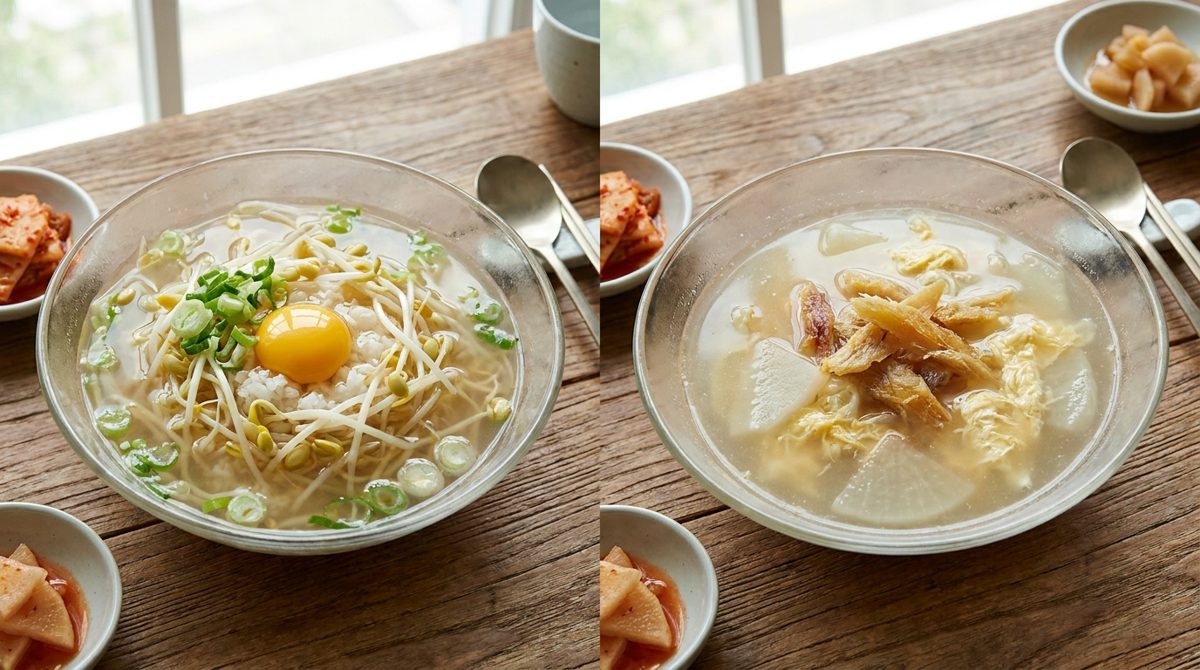
Ppyeo-haejangguk / gamjatang-style (뼈해장국) — the iconic spicy version, built on simmered pork spine bones in a red chili broth with potatoes and perilla leaves; closely related to gamjatang and shares its pork-heavy, not-halal profile. Bugeoguk (북어국) — dried pollack soup, clear and mild, often with radish, egg strands, and bean sprouts; the gentlest option and the closest to pescatarian. Sundaeguk (순대국) — blood sausage soup, savory and mid-spice, a close cousin of Korean sundae. Kongnamul-gukbap (콩나물국밥) — bean sprout soup with rice, a Jeonju specialty, very mild and the most commonly recommended “safe” option — though always confirm the broth base for dietary reasons.
Other soups sometimes marketed as haejangguk-adjacent recovery food include dwaeji-gukbap (pork rice soup, Busan-style) and yukgaejang (spicy shredded beef soup) — both hearty, warming bowls that Koreans reach for after heavy drinking even if they aren’t always labeled “haejangguk” on the menu.
Where to Try Haejangguk
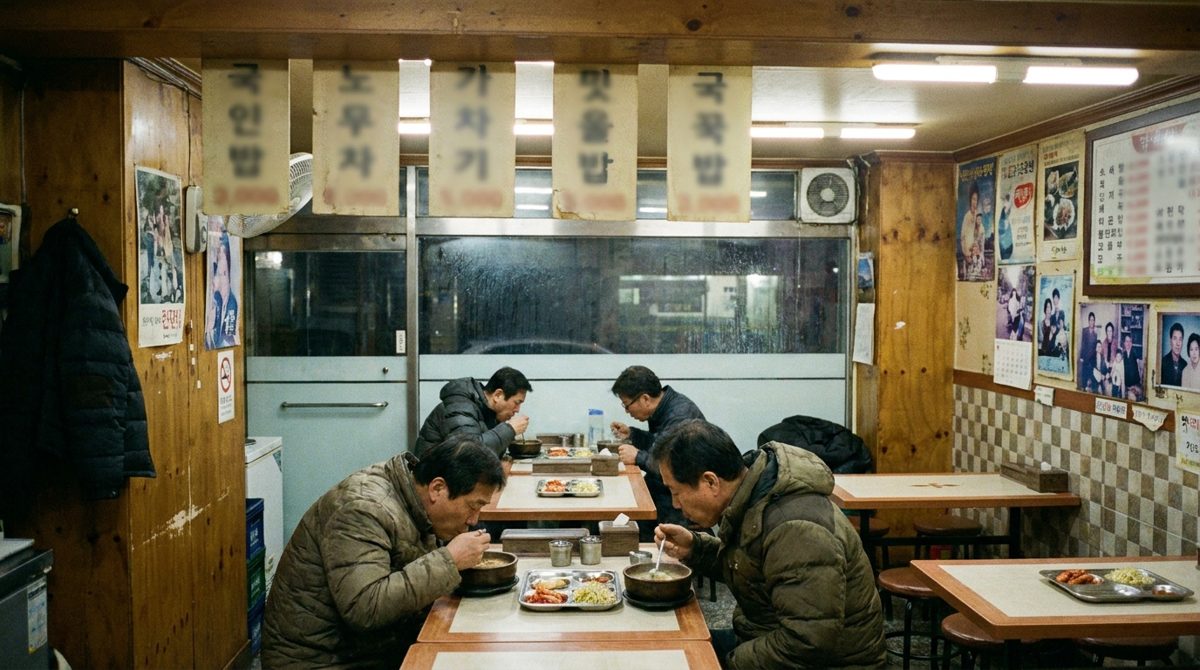
Seoul’s 24-hour gukbap houses are the classic setting — many neighborhoods have at least one diner that’s been serving the same ppyeo-haejangguk recipe for decades, often near nightlife and business districts where after-work drinking runs late. Areas like Jongno and Euljiro, historic office and drinking districts in central Seoul, are known for old-school haejangguk institutions that have operated around the clock for generations, some run by the same family for three generations or more. For the mild, bean-sprout version, Jeonju is the destination — kongnamul-gukbap is a genuine point of civic pride there, served in dedicated specialist restaurants near the hanok village. If you’re exploring Seoul’s markets and street food scene more broadly, our Seoul food guide can point you toward neighborhoods with strong gukbap culture. And if the night that led you here involved soju or makgeolli, you’re exactly the customer haejangguk was invented for.
Haejangguk FAQ
What does haejangguk mean in English?
“Soup that chases away the hangover” or “soup to dissolve the drink.” Haejang refers to relieving the effects of alcohol, and guk means soup. It’s a functional name describing the soup’s job, not its ingredients.
Is haejangguk one specific dish?
No — it’s a category. Ppyeo-haejangguk (spicy pork bone), bugeoguk (dried pollack), sundaeguk (blood sausage), and kongnamul-gukbap (bean sprout) are all considered haejangguk, and they taste, cost, and fit dietary needs very differently.
Is haejangguk halal?
It depends entirely on the variant. Ppyeo-haejangguk and gamjatang-style pork-bone versions are not halal. Bugeoguk (fish-based) is more halal-friendly if properly sourced, and kongnamul-gukbap can be halal-friendly if the broth uses halal-sourced beef — but this isn’t automatic, so always ask which broth is used before ordering.
Is haejangguk vegetarian?
Almost never. Every major variant relies on pork, fish, beef, or anchovy-based broth. Kongnamul-gukbap is the closest to plant-forward, but the broth is frequently beef or anchovy based, so vegetarians should ask specifically before ordering rather than assuming.
How much does haejangguk cost in Korea in 2026?
Most variants run ₩10,000–₩14,000 in Seoul, averaging around ₩11,000. Kongnamul-gukbap and bugeoguk tend to be the cheapest, while bone-in pork versions run slightly higher.
The Verdict: Should You Order It?
Yes — but order the right variant for you. Haejangguk is a genuinely useful, culturally rich category once you understand it isn’t a single recipe. Mild bugeoguk and kongnamul-gukbap are gentle, easy first tries for most travelers; ppyeo-haejangguk rewards spice-lovers with real depth of flavor; and dietary-conscious travelers simply need to ask which broth is in the bowl before ordering. Ready to decode more of the menu? Explore the full Korean Food Decoder for every major Korean dish explained with spice levels, allergens, and ordering phrases.