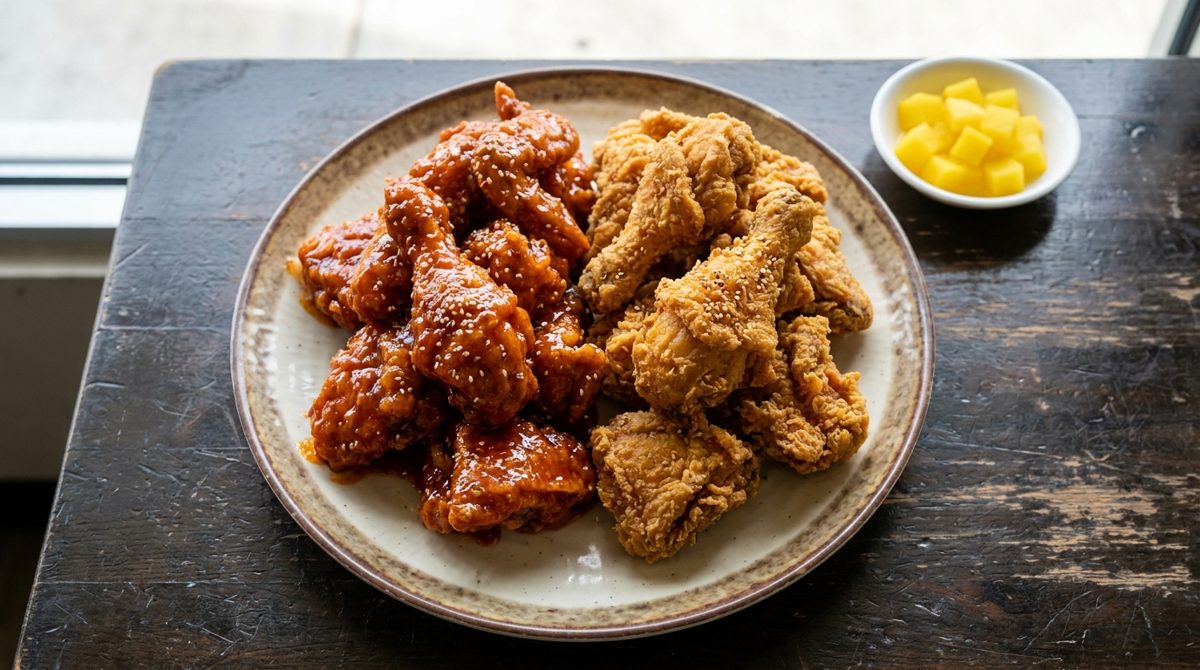
Smelling that unmistakable double-fried aroma drifting out of a Korean delivery bag and wondering what Korean fried chicken actually is? Korean fried chicken (치킨, chikin) is twice-fried chicken with a thin, ultra-crisp shell, served plain (후라이드, huraideu) or coated in a sweet-spicy red sauce (양념, yangnyeom), soy-garlic glaze, or cheese powder. It’s lighter and crunchier than Western fried chicken and central to “chimaek” — chicken paired with cold beer. This decoder page covers taste, spice, allergens, halal and vegetarian answers, real 2026 prices, and exactly how to order it in Korean.
Table of Contents
- Korean Fried Chicken Quick Facts
- What Is Korean Fried Chicken, Exactly?
- What Does Korean Fried Chicken Taste Like?
- Dietary Guide: Vegetarian, Vegan, Halal & Allergens
- How to Order Korean Fried Chicken in Korean (+ 2026 Prices)
- How to Eat Korean Fried Chicken Like a Local
- Types of Korean Fried Chicken
- Where to Try Korean Fried Chicken
- Korean Fried Chicken FAQ
Korean Fried Chicken Quick Facts
| Item | Details |
|---|---|
| Korean name | 치킨 (chikin) — general term; 후라이드 치킨 (huraideu chikin) plain, 양념치킨 (yangnyeom chikin) sauced |
| Pronunciation | chee-KIN / hoo-RYE-duh chee-KIN / yahng-nyum chee-KIN |
| Type | Double-fried chicken, whole or half-and-half, plain or sauced |
| Spice level | 🌶️ 0–4/5 — plain huraideu is mild, yangnyeom is medium-hot (~3/5), some fire-sauce versions hit 4–5/5 |
| Price (2026) | ₩20,000–₩26,000 for a whole chicken order in Seoul; delivery apps often add ₩3,000–₩4,000 delivery fee |
| Vegetarian | ❌ It’s fried chicken — no meat-free version exists |
| Vegan | ❌ Not possible; batter and most sauces also contain egg or dairy |
| Halal-friendly | ⚠️ Chicken is halal-compatible in principle, but mainstream chains are NOT halal-certified; a handful of dedicated halal chicken restaurants exist in Itaewon |
| Main allergens | Wheat (batter), soy, egg (some batters), dairy (cheese/cream sauces) |
| Best for | Chimaek (chicken + beer) nights, late-night delivery, group sharing, watching sports or K-dramas |
What Is Korean Fried Chicken, Exactly?
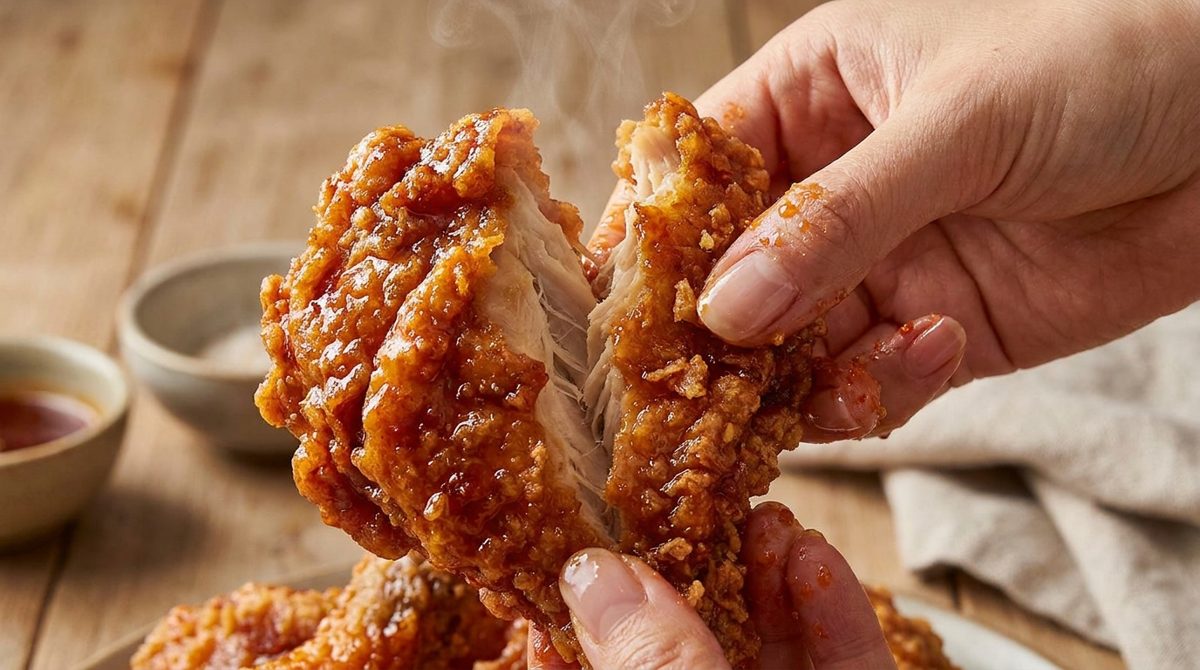
Korean fried chicken isn’t just “fried chicken made in Korea” — it’s a distinct cooking method. The chicken is fried once at a lower temperature to cook it through, rested, then fried again at a higher temperature. That second fry blasts moisture out of the crust, leaving a shell that’s thinner, shatteringly crisp, and far less greasy than American Southern-style fried chicken. It stays crunchy for hours, which is exactly why it survives a 30-minute scooter delivery ride without going soggy.
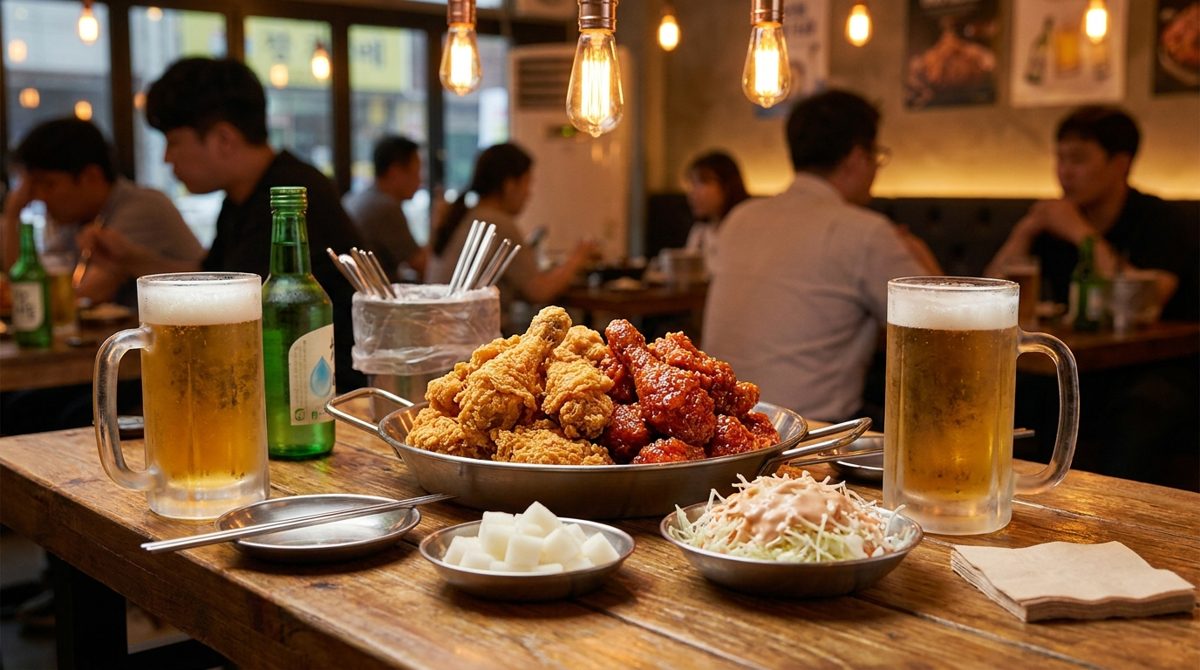
The dish exploded in popularity after the Korean War, when American army base culture introduced fried chicken to Korea, and it was reinvented through the 1970s–80s as pubs and street vendors adapted it with Korean frying techniques and sauces. The real turning point was the 2002 World Cup, when Korea’s run to the semifinals turned “chicken and beer” into a national viewing-party ritual — the word “chimaek” (치맥, chicken + maekju/beer) was born soon after and stuck permanently.
Today Korean fried chicken is a $6+ billion industry with thousands of specialist chains, and it has spread globally — you’ll now find Korean fried chicken shops in New York, London, and Bangkok. In Korea itself, it’s less a restaurant dish and more a delivery-app phenomenon: ordering chicken to your door is one of the most common Friday-night rituals in the country.
Competition between chains has been fierce for decades, which is part of why quality stays consistently high even at small neighborhood shops — Korean consumers are famously picky about crust texture and sauce balance, and a chain that slips gets called out immediately on social media. That competitive pressure is also why new variants (cheese powders, fruit-based sauces, garlic-soy glazes) keep appearing on menus every year rather than the format staying frozen in time.
What Does Korean Fried Chicken Taste Like?
Plain huraideu chicken tastes clean and savory — a light, crackly batter around juicy meat, seasoned simply with salt and sometimes garlic powder, meant to let the chicken itself shine. Yangnyeom chicken is a different experience entirely: sticky, glossy red sauce built from gochujang, ketchup, sugar, and garlic, delivering sweet-spicy-tangy flavor in every bite, with sesame seeds sprinkled on top for nuttiness. Soy-garlic (ganjang) versions are savory-sweet without heat, closer to a teriyaki profile.
Is Korean Fried Chicken Spicy?
Depends entirely on which one you order. Plain huraideu is essentially spice-free — 0 out of 5. Yangnyeom sits around a medium 3 out of 5: noticeable heat, but balanced by sugar so it reads as sweet-spicy rather than punishing. Some chains push further with “fire chicken” (불닭, buldak) style sauces that hit 4–5 out of 5 and are genuinely hot even for spice-tolerant travelers. If you’re unsure, order half-and-half (반반, banban) — half plain, half sauced — so you can test your tolerance without committing.
Korean Fried Chicken Dietary Guide: Vegetarian, Vegan, Halal & Allergens
This is one dish where honesty matters more than optimism — there’s no meat-free workaround here, and mainstream chains are not certified halal. Here’s exactly what to expect.
| Ingredient concern | In standard Korean fried chicken? | How to handle |
|---|---|---|
| Chicken (meat) | Always — it’s the entire dish | No substitution exists; skip this dish if you don’t eat meat |
| Wheat / gluten | Yes, in the batter | No reliable gluten-free option at mainstream chains |
| Egg | Often, in the batter mix | Ask staff, but batter recipes vary and aren’t always disclosed |
| Soy | Yes | Soy sauce base in ganjang chicken and many yangnyeom sauces |
| Dairy | Yes, in cheese/cream/snow-cheese variants | Order huraideu or yangnyeom to avoid dairy |
| Nuts | Occasionally, as garnish on specialty sauces | Ask “gyeonkwaryu deureo isseoyo?” (nuts inside?) if allergic |
| Alcohol | No, in the chicken itself | Beer/soju are the traditional pairing, served separately |
| Shellfish / fish | Rare | A few specialty sauces use shrimp or anchovy paste — ask if unsure |
Is Korean Fried Chicken Vegetarian or Vegan?
No, and there’s no honest workaround. Korean fried chicken is, by definition, deep-fried chicken meat — there is no plant-based version on mainstream menus, unlike bibimbap or tteokbokki where you can simply remove meat. If you’re vegetarian or vegan and craving the chimaek experience, look instead at Korean fried tofu or mushroom dishes at specialty vegan restaurants, or enjoy the beer-and-side-dish half of chimaek culture with vegetable pajeon (Korean pancake) instead.
Is Korean Fried Chicken Halal?
This needs a direct answer: mainstream Korean fried chicken chains are not halal-certified. Chicken itself is a halal-compatible meat in principle, but almost no major chain in Korea sources halal-slaughtered chicken or uses separate, dedicated fryer oil — the same fryers are typically used across all menu items, and sourcing isn’t verified. A small number of dedicated halal Korean fried chicken restaurants do exist, concentrated in Seoul’s Itaewon district near the central mosque, and some are certified by Korean halal authorities. Muslim travelers should specifically seek out those certified restaurants rather than assume any chicken shop qualifies — check current listings on VisitKorea before ordering.
One more honest note for allergy sufferers: most Korean fried chicken shops fry everything — plain, sauced, and cheese-coated pieces — in the same shared oil, and batter recipes are rarely posted in English. If you have a severe wheat, egg, or dairy allergy, treat every chicken shop as a moderate cross-contamination risk rather than assuming any single “safe” order exists, and carry your usual precautions.
How to Order Korean Fried Chicken in Korean (+ 2026 Prices)
Chicken delivery apps (Baemin, Coupang Eats) dominate ordering in Korea, but dine-in chicken-and-beer pubs (호프집, hopjip) are everywhere too, and these phrases help either way:
| What you want | Say this | Romanized |
|---|---|---|
| Plain fried chicken, please | 후라이드 치킨 주세요 | huraideu chikin juseyo |
| Sweet-spicy sauced chicken | 양념치킨 주세요 | yangnyeom chikin juseyo |
| Half plain, half sauced | 반반 주세요 | banban juseyo |
| Soy-garlic chicken | 간장치킨 주세요 | ganjang chikin juseyo |
| Not too spicy, please | 덜 맵게 해주세요 | deol maepge haejuseyo |
What it costs in 2026: a whole chicken order at most Seoul chains runs ₩20,000–₩26,000, whether plain, yangnyeom, or half-and-half — premium variants like snow cheese or specialty sauces sit at the top of that range. Delivery apps add a ₩3,000–₩4,000 delivery fee plus a small service charge, so a delivered order typically lands around ₩24,000–₩30,000 total. Dine-in hopjip pubs charge similarly for the chicken but add drinks separately — a large draft beer runs ₩4,000–₩6,000. This is one of the pricier everyday Korean meals, largely because it’s designed for 2–3 people to share, not a solo portion — see our Korean dining etiquette guide for group-ordering norms.
Many chains also sell combo sets pairing half a chicken with rice cakes in sauce (this mashup is called “rabokki” when tteokbokki is involved) or with french fries, usually for a small upcharge over the plain chicken price. Apps often show English menus and photos, so even without reading Korean you can usually tell sauce color and spice level before confirming your order.
How to Eat Korean Fried Chicken Like a Local
Chicken almost never arrives alone. It comes with pickled white radish cubes (치킨무, chikinmu) — cold, sweet-sour, and essential for cutting the grease between bites. Order the beer or soju alongside it; the pairing is so ingrained that solo chicken orders without a drink genuinely look unusual to locals.
If you order half-and-half, eat the plain huraideu first while it’s hottest and crispiest, then move to the sauced yangnyeom — the sauce softens the crust slightly over time, so sequence matters. Use the small paper gloves often provided, and don’t be shy about eating with your hands; it’s the expected method, even in nicer pubs.
Sharing etiquette matters too: a whole chicken is meant for the table, not one person, so wait for everyone before diving in and let the group work through pieces together rather than claiming favorites. Tipping isn’t expected anywhere in Korea, including chicken pubs, so don’t leave extra cash on the table — it can actually confuse staff.
Types of Korean Fried Chicken You’ll See on Menus
Huraideu chikin (후라이드 치킨) — the plain double-fried original; crispiest, mildest, best for tasting the technique itself. Yangnyeom chikin (양념치킨) — the iconic sweet-spicy red-sauced version and Korea’s most famous export. Ganjang chikin (간장치킨) — soy-garlic glaze, savory-sweet, no heat. Snow cheese chikin (스노윙 치즈 치킨) — huraideu chicken buried under a snowfall of powdered parmesan-style cheese; rich and popular with kids. Padak (파닭) — fried chicken topped with a mountain of julienned scallions in vinegar dressing, cutting the richness. Buldak-style fire chicken — extra-hot gochujang-and-chili sauce for serious spice fans. Many chains also offer boneless (순살, sunsal) versions of any sauce, popular for easier eating. Dakgangjeong (닭강정) — bite-sized nuggets in a stickier, thicker sweet-soy glaze, closer to a snack than a shareable platter and common at markets. Honey butter chicken — a milder, kid-friendly glaze built on honey and butter instead of chili, popular as a gateway flavor for spice-averse travelers.

Where to Try Korean Fried Chicken
You don’t need to hunt — chicken shops outnumber almost every other restaurant type in Korean neighborhoods, and delivery apps put a huge selection at your door within 30–40 minutes even in a hotel room. For a proper chimaek night out, look for a hopjip pub with outdoor plastic-chair seating, common near university areas and busy nightlife strips. If you want a curated rundown of the specific big-name chains — bhc, BBQ, Kyochon, Goobne, and more — and how they differ, see our dedicated Korean fried chicken chains guide. Pair the night with a Korean street food guide crawl beforehand, or follow chicken with tteokbokki for the classic late-night double order.
Neighborhoods worth knowing: Hongdae and Konkuk University areas cluster dozens of hopjip pubs within walking distance, ideal for chicken-crawl comparisons between chains. Gangnam and Itaewon skew toward polished, brighter chicken-and-craft-beer spots aimed at a slightly older or international crowd. If you’re traveling outside Seoul, don’t worry — the same major chains operate nationwide with near-identical menus and pricing, so a good order in Busan or Jeonju is just as reliable.
Korean Fried Chicken FAQ
What is Korean fried chicken called in Korean?
치킨 (chikin), borrowed from English “chicken,” is the general term. Specific styles have their own names: 후라이드 (huraideu) for plain, 양념 (yangnyeom) for sweet-spicy sauced.
Why is Korean fried chicken crispier than American fried chicken?
It’s double-fried: once at a lower temperature to cook the meat through, then again at a higher temperature to shatter out moisture from the crust. That second fry is what makes the shell thin, glass-crisp, and able to survive a 30-minute delivery ride without going soggy.
Is Korean fried chicken very spicy?
Only if you order a sauced version. Plain huraideu chicken has zero spice; yangnyeom sauce is a medium 3 out of 5; some “fire chicken” specialty sauces reach 4–5 out of 5. Order banban (half-and-half) if you want to test your tolerance safely.
Is Korean fried chicken halal?
Mainstream chains are not halal-certified — chicken is halal-compatible as a meat, but sourcing and shared fryer oil aren’t verified or separated at regular shops. A handful of dedicated halal-certified chicken restaurants exist in Seoul’s Itaewon district; Muslim travelers should seek those out specifically rather than assume any chicken shop qualifies.
How much does Korean fried chicken cost in 2026?
₩20,000–₩26,000 for a whole chicken order at most Seoul chains, whether plain or sauced. Delivery apps add roughly ₩3,000–₩4,000 in delivery fees, bringing a typical delivered order to ₩24,000–₩30,000 total, usually meant to feed 2–3 people.
The Verdict: Should You Order It?
Yes — Korean fried chicken is one of the most essential food experiences in the country, not just because of the crispiness but because of the culture wrapped around it. Order half-and-half your first time, get a cold beer, and understand why “chimaek” is basically its own national pastime. Just know upfront that this isn’t a dish you can adapt for vegetarian, vegan, or casually halal needs — plan around that honestly rather than hoping for exceptions. Meat-eaters, though, have no reason to hesitate: this is arguably the single easiest “wow” dish to order in the entire country, requiring zero Korean beyond pointing at a menu photo, and it rarely disappoints even at an unfamiliar neighborhood spot. Hungry for the next dish? Decode the whole menu with our Korean Food Decoder — every major Korean dish explained with spice levels, allergens, and ordering phrases.