What’s Happening in Korea Right Now?
The first Korea heat wave advisory of the season has officially arrived. This week, the Korea Meteorological Administration placed all of Seoul under its first heat wave advisory of 2026 — the alert issued when apparent temperatures are forecast to stay at or above 33°C (91°F) for at least two consecutive days. Daytime highs are climbing past 30°C across most inland regions, near-tropical nights are keeping the city warm after dark, and forecasters warn there’s little relief in sight for the coming week.
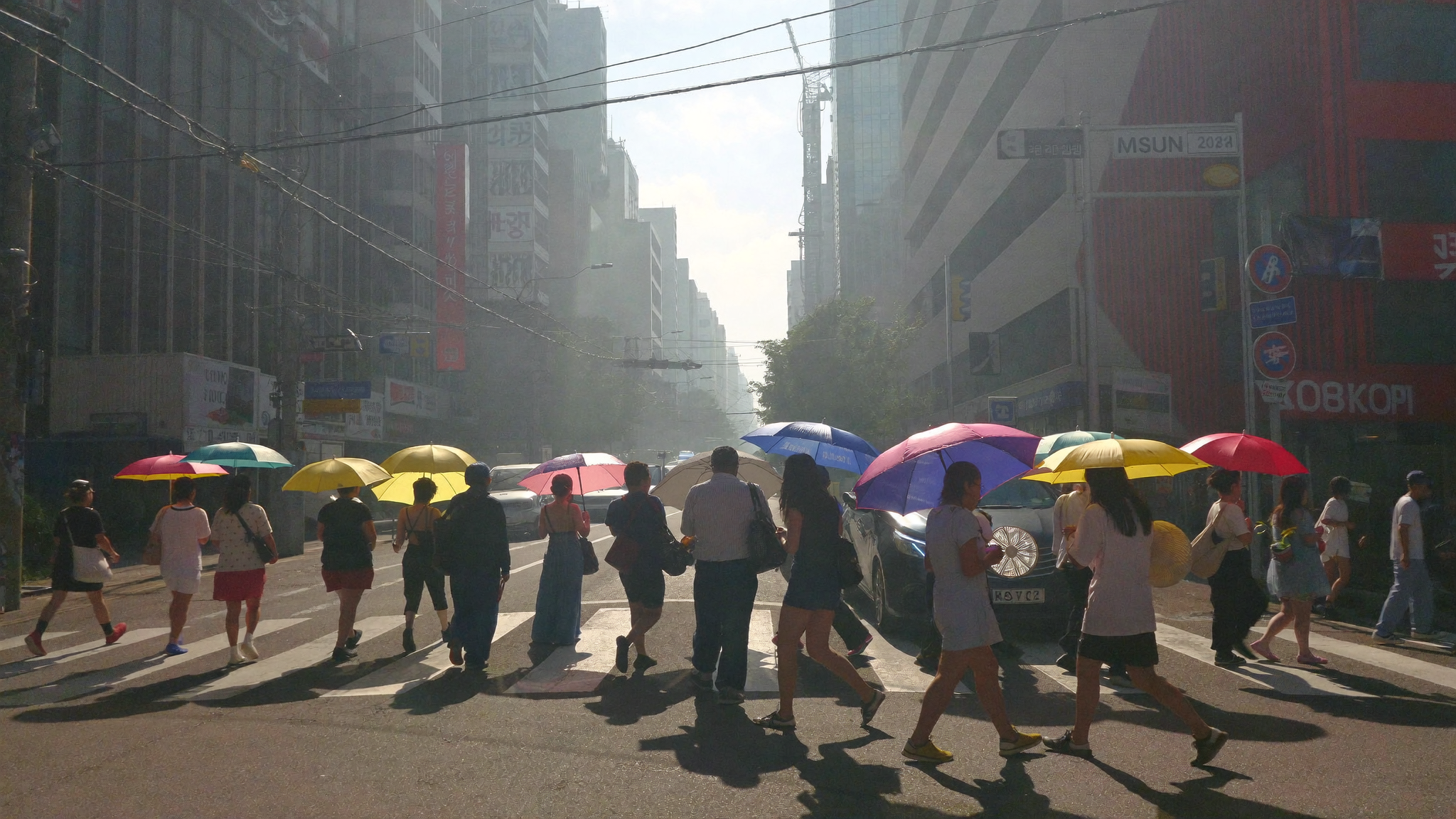
For travelers, the timing matters: July marks the start of Korea’s most intense summer stretch, when humidity, monsoon bursts, and heat advisories overlap. But here’s the good news — few countries have turned summer survival into an art form quite like Korea has.
The Background: Why the Korea Heat Wave Hits So Hard
Korean summers are a double punch of heat and humidity. After the East Asian monsoon (jangma) passes through, high-pressure systems trap hot, moist air over the peninsula. Seoul’s dense concrete landscape amplifies the effect — the urban heat island keeps nighttime temperatures above 25°C, the threshold Koreans call a “tropical night” (yeoldaeya). When that happens, the whole country starts talking about sleep strategies, electricity bills, and where to find the coldest bowl of noodles.
The government takes it seriously too: heat wave advisories trigger public cooling centers, adjusted outdoor work schedules, and constant phone alerts. According to the Korea Meteorological Administration, apparent temperatures in the greater Seoul area are exceeding 33°C this week, and Korea JoongAng Daily reports the scorching pattern is expected to persist through the week.
What Are Koreans Actually Saying?
Korean social media in early July is a familiar mix of despair and dark humor: screenshots of phone weather apps, complaints that “the outside is an oven,” and debates about the office air conditioning. One perennial argument — the “AC war” between colleagues who freeze and colleagues who melt — trends every single summer.
At the same time, summer commerce explodes. Convenience stores stock towers of ice cups, neck fans sell out at Daiso, and naengmyeon restaurants post lunchtime lines around the block. Reservations at valley resorts and beaches spike the moment the first advisory drops. The first Korea heat wave alert of the year functions almost like a starting gun for summer culture.
Beating the Heat, Korean Style: Food, Boknal, and Gadgets
Here are the seven local strategies worth stealing. First, naengmyeon — buckwheat noodles in icy broth, the undisputed king of summer lunches. Second, patbingsu, the mountain of shaved ice, red beans, and fruit that doubles as dessert and air conditioning. Third, boknal: on the three hottest “dog days” of the lunar calendar, Koreans eat steaming samgyetang (ginseng chicken soup) — the philosophy of iyeol chiyeol, “fight heat with heat.” Fourth, portable neck fans and handheld fans, carried by everyone from students to grandmothers. Fifth, parasols — once considered old-fashioned, now standard issue for all ages. Sixth, the jjimjilbang ice room or a “mall-cation” in places like COEX. Seventh, simply surrendering to the schedule: Koreans move early morning and after sunset, leaving the 1–5 p.m. furnace hours to the brave.
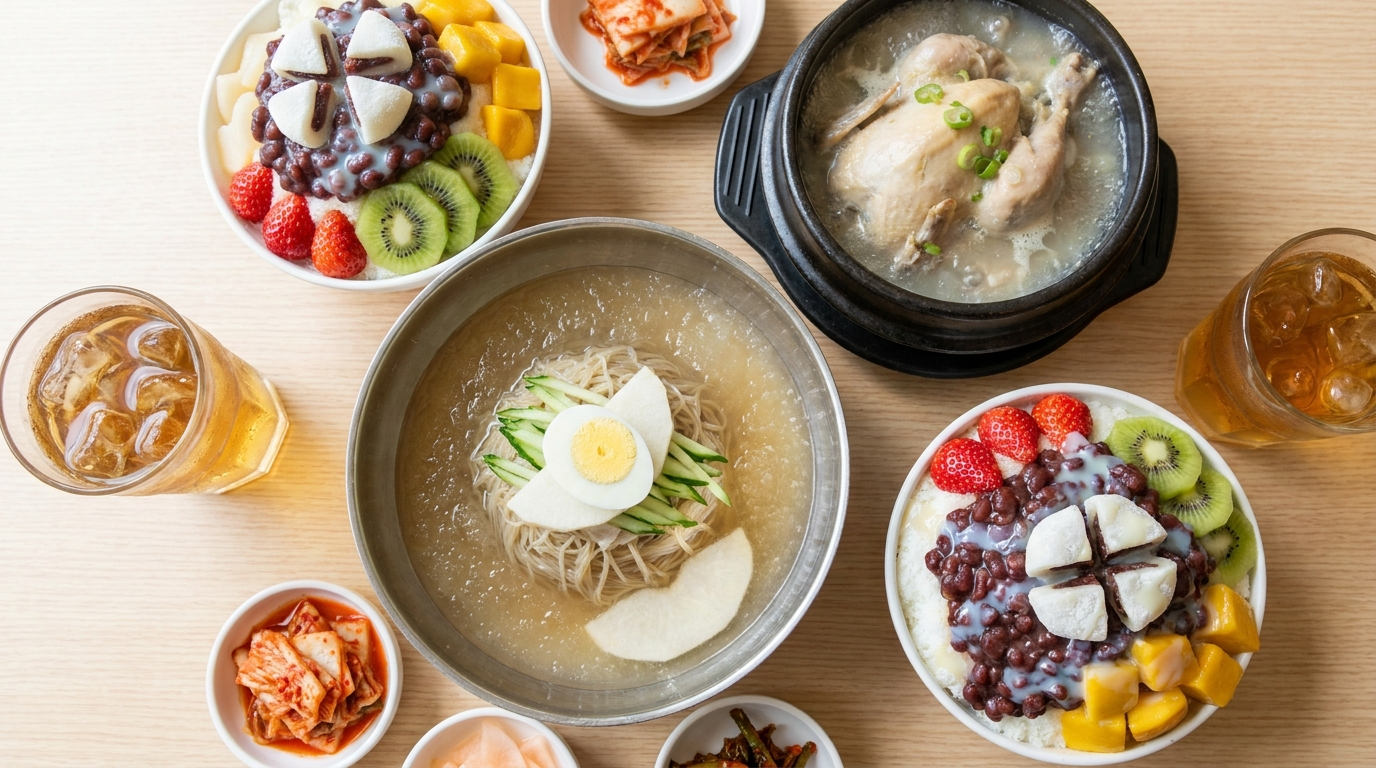
If you’re visiting during the Korea heat wave season, plan your itinerary around these rhythms — our Seoul summer travel guide breaks down exactly how to structure a July day, and a side trip to lakeside Chuncheon offers a cooler escape just an hour from the capital.
How Does This Compare Internationally?
Heat waves are a global story — southern Europe, Japan, and the US all battle hotter summers each year. What sets Korea apart is the infrastructure of coping: nationwide alerts pushed to every phone, thousands of designated cooling shelters, and a food culture that has ritualized summer eating for centuries. Japan’s unagi day and Korea’s boknal are close cousins; Spain’s siesta and Korea’s “avoid 1–5 p.m.” rule follow the same logic. The difference is how commercial and social the season is here — summer survival is practically a national pastime, tracked in convenience store sales charts and trending hashtags.
Conclusion: Survive Summer Like a Local
The first Korea heat wave advisory of 2026 is less a warning than a cultural calendar event: naengmyeon season is open, boknal is coming, and every neck fan in the country just switched on. Respect the heat, copy the locals, and July in Korea becomes not just survivable but delicious.
Planning a summer trip to Korea? Browse our neighborhood guides, food deep-dives, and practical tips on Unboxing Korea — and check the KMA forecast before you pack. Your naengmyeon bowl is waiting.