If there is one place in South Korea that photographs better than it sounds on paper, it is the Suncheon Bay travel guide destination every Korean nature lover already knows about: Suncheonman Bay National Garden and its neighboring wetland reserve. Golden reed fields that ripple like waves, an S-shaped tidal creek carved into the mud, and a sprawling international garden with pavilions from a dozen countries make this one of the most photogenic day trips outside Seoul. This guide walks you through everything you need, how to get there, what to see, when to go, and how to avoid the rookie mistakes that trip up first-time visitors.
Table of Contents
- What Is Suncheon Bay National Garden?
- Getting to Suncheon Bay from Seoul
- Exploring the National Garden
- The Suncheon Bay Wetland Reserve
- Yongsan Observatory Sunset Views
- Best Time to Visit Suncheon Bay
- Where to Eat Near Suncheon Bay
- Sample One-Day Suncheon Bay Itinerary
- Essential Travel Tips
- Frequently Asked Questions
What Is Suncheon Bay National Garden?
Suncheonman National Garden was built for the 2013 Suncheon Bay International Garden Expo and later designated South Korea’s first National Garden. It sits directly beside the Suncheon Bay Wetland Reserve, one of the five largest coastal wetlands in the world and a UNESCO-listed Ramsar site. Together the garden and wetland cover well over a million square meters of manicured flower beds, forest, and tidal mudflats, home to more than 790,000 trees and roughly 3.15 million flowering plants across 113 species. For anyone researching a Suncheon Bay travel guide, the key thing to understand upfront is that this is really two attractions in one: a cultivated international garden zone, and a wild, protected reed wetland right next door, connected by a short cable car called the Sky Cube.
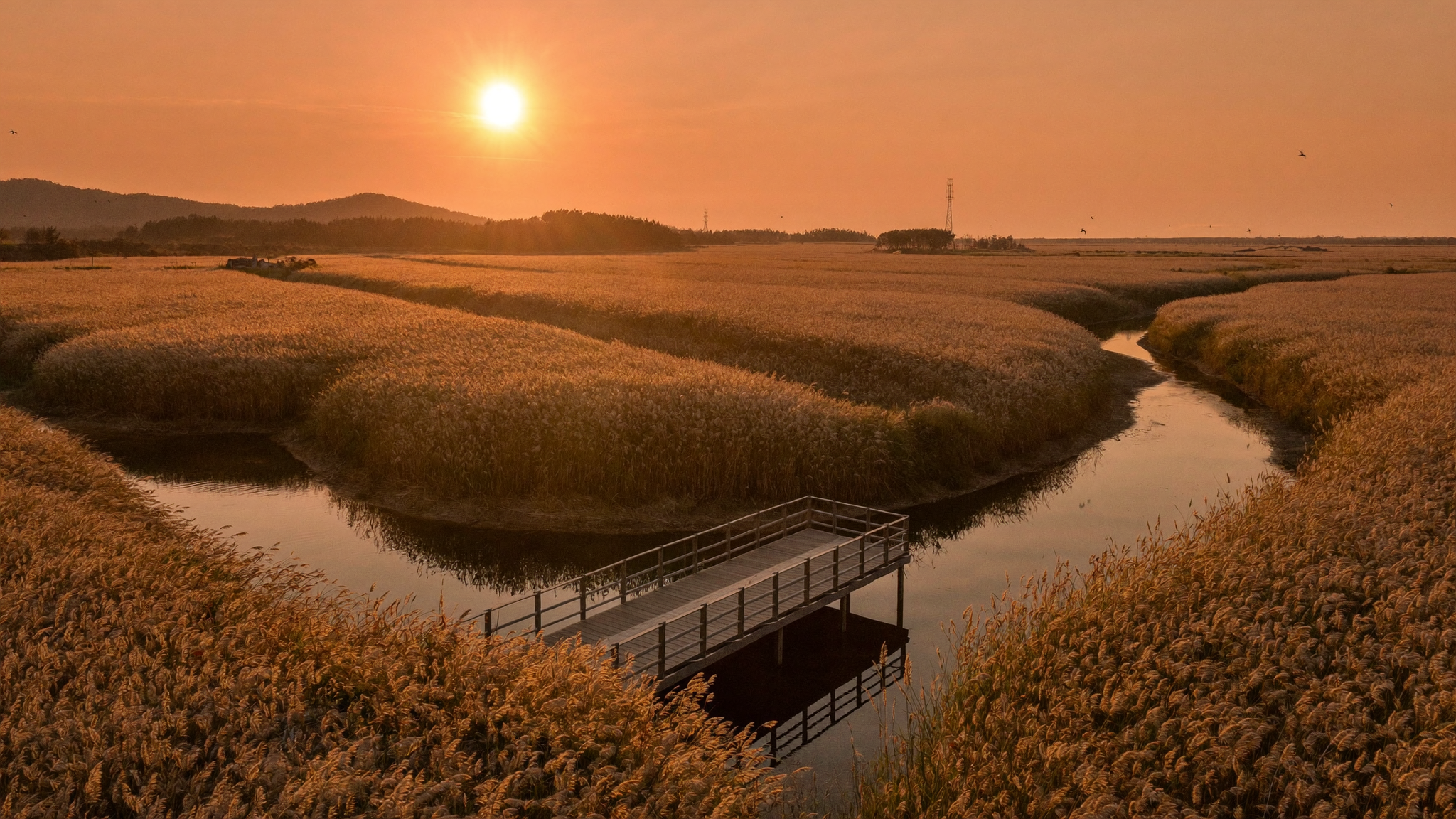
The wetland portion is famous across Korea for its endless fields of common reed (called galdae in Korean), which turn a deep gold in autumn and shelter thousands of migratory birds each winter, including hooded cranes and various species of duck and heron. The garden portion, by contrast, is a riot of seasonal color: tulips and royal azaleas in spring, roses and sunflowers in summer, and chrysanthemums alongside the golden reeds in autumn.
Getting to Suncheon Bay from Seoul
Every good Suncheon Bay travel guide starts with transportation, since this is a regional destination roughly 300 km south of Seoul in Jeollanam-do province. The easiest and fastest option is the KTX high-speed train from Yongsan Station or Seoul Station to Suncheon Station, which takes about 2.5 to 3 hours depending on the service. From Suncheon Station, local city bus number 66 or 67 runs directly to the National Garden entrance in around 20-30 minutes, or you can take a taxi for roughly 15,000-20,000 KRW.
If you prefer not to deal with train transfers, intercity express buses also run from Seoul’s Central City Terminal (Express Bus Terminal) to Suncheon Bus Terminal in about 3.5 to 4 hours, which can actually be cheaper than the KTX, though slightly slower. Travelers coming from Busan can reach Suncheon by train or bus in around 1.5 to 2 hours, making it an easy add-on if you are already touring the southern coast. Renting a car is another solid option if you plan to combine Suncheon with nearby Yeosu or Boseong, since public transit between smaller towns in Jeollanam-do can be infrequent.
For travelers building a longer southern Korea itinerary, our Boseong Green Tea Fields guide covers a destination less than an hour away by car, and pairs naturally with a Suncheon Bay day trip if you have a rental car or are willing to take local buses.
Exploring the National Garden
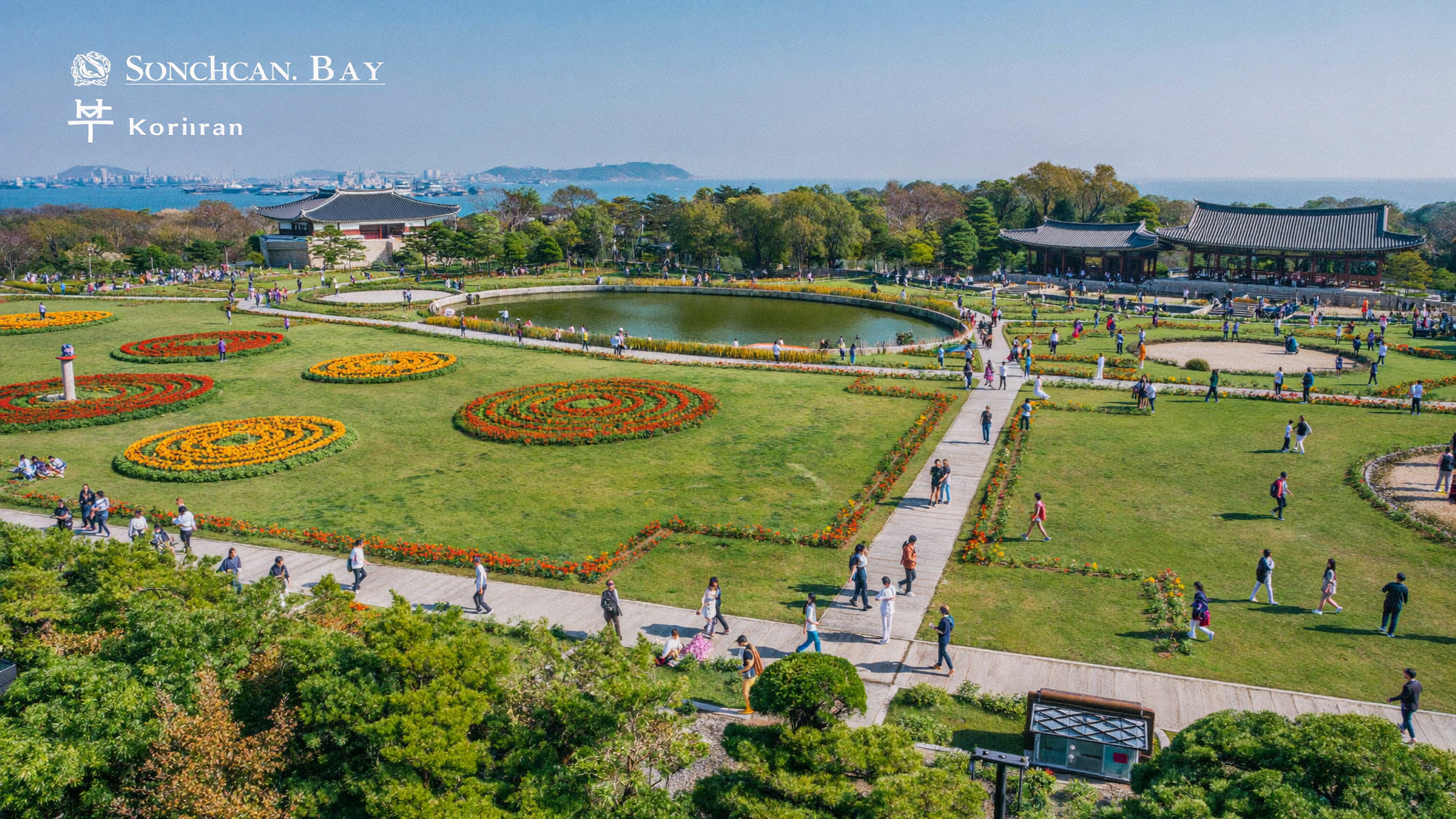
The National Garden itself is divided into several themed zones, and easily takes half a day to explore properly. The World Garden Zone is the headline attraction: landscape designers from more than a dozen countries, including the Netherlands, Germany, Japan, France, and the United States, each created a garden reflecting their own national style. Walking through this zone in under an hour feels like a mini world tour, with Dutch tulip fields giving way to a Japanese zen garden and then a French formal parterre within a few hundred meters.
Near the Forest of Sharing, a huge canola flower field blooms bright yellow in mid-spring, a favorite spot for family photos. The Dream Bridge, an undulating pedestrian bridge connecting the two halves of the garden across the Dongcheon River, is another popular photo stop, especially lit up after dark during seasonal night illumination events. Children’s play areas, a large greenhouse with tropical plants, and several cafes make the garden comfortable for a full day even with young kids in tow.
Entrance to the National Garden costs approximately 8,000-9,000 KRW for adults, with discounts for students, seniors, and groups. Combined tickets that include the wetland reserve and the Sky Cube ride are usually the best value if you plan to see both sides in one visit.
The Suncheon Bay Wetland Reserve
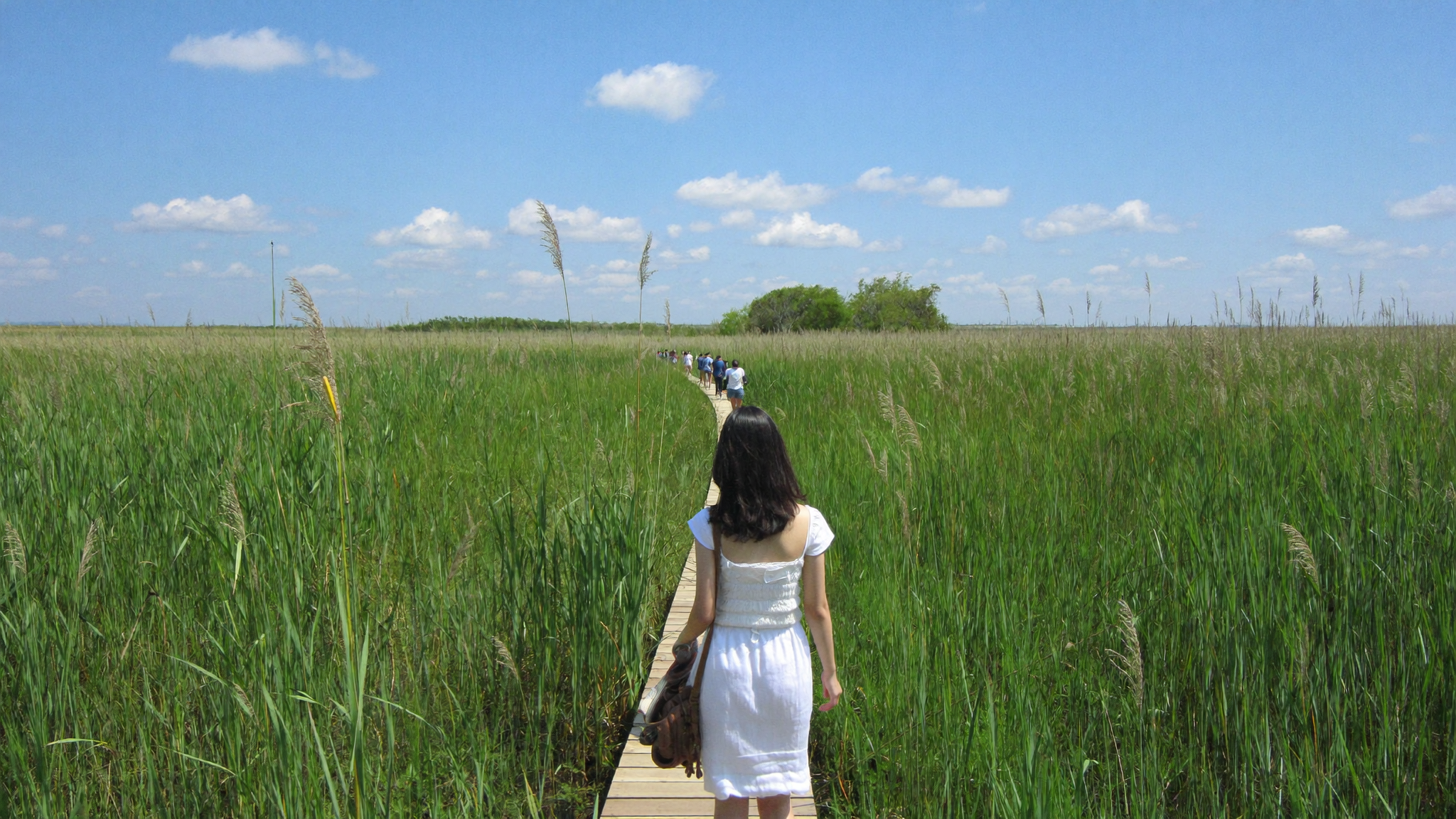
The wetland side of the Suncheon Bay travel guide experience is the reason most photographers make the trip. Suncheon Bay Wetland Reserve protects one of the best-preserved tidal flat and reed marsh ecosystems on the planet, and it’s recognized as a Ramsar Wetland of International Importance. Long raised wooden boardwalks let you walk directly into the reed fields without damaging the fragile mudflat ecosystem, winding for several kilometers past bird-watching platforms and small observation decks.
Depending on the season, you might spot black-faced spoonbills, various herons, and, in winter, the endangered hooded crane, which migrates here in large numbers. Bring binoculars if birdwatching interests you, since the reserve is one of the most important wintering sites in East Asia for several threatened species. Even without binoculars, the sheer scale of the reed fields, some sections stretch as far as the eye can see, makes the boardwalk walk worthwhile on its own.
Wear comfortable, flat shoes for this section; the boardwalks are long, and gravel paths connect different parts of the reserve. A small tram service is available for visitors who prefer not to walk the full distance.
Yongsan Observatory Sunset Views
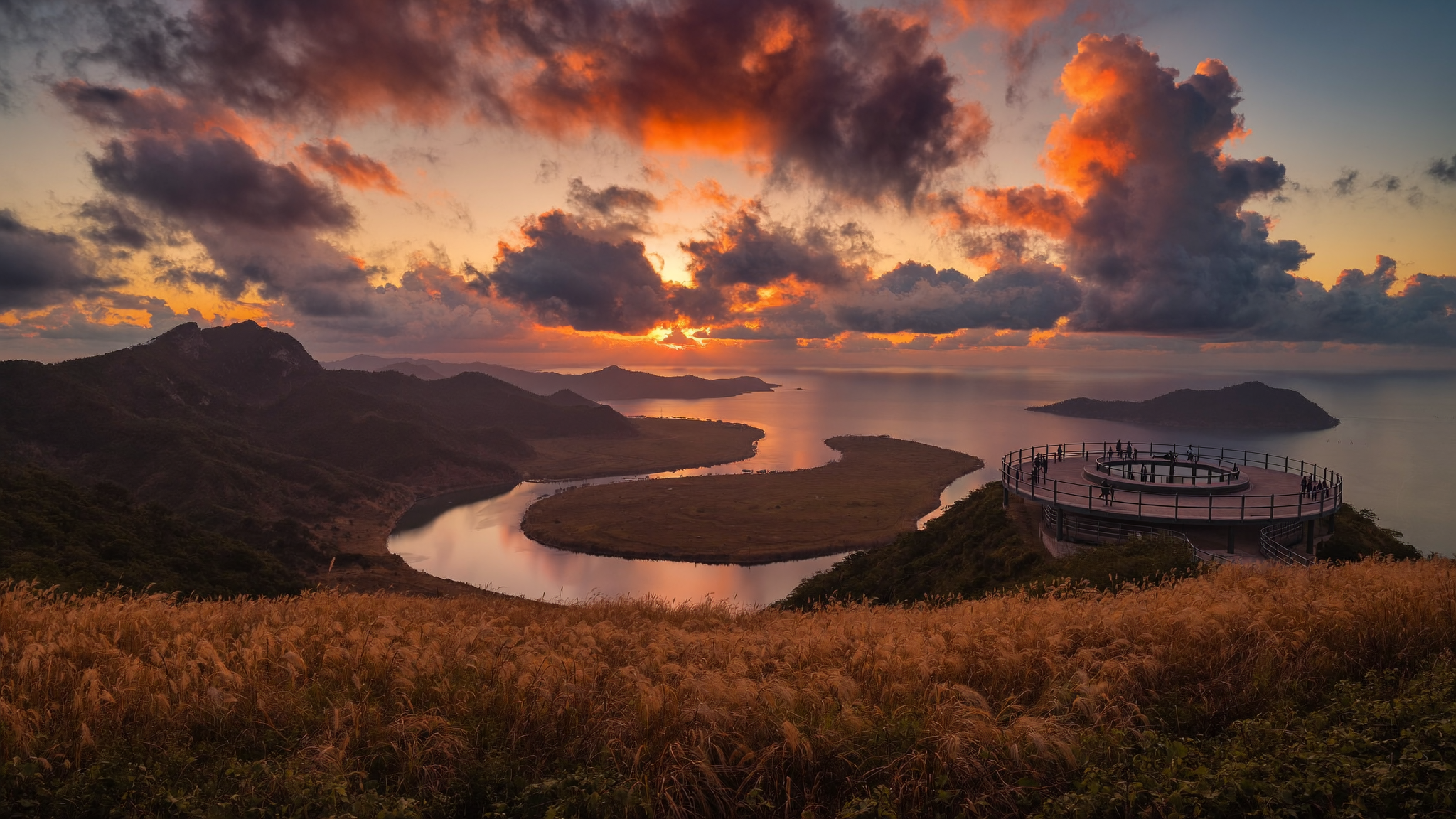
No Suncheon Bay travel guide is complete without mentioning Yongsan Observatory, the hillside viewpoint that produces the single most iconic photo of the entire destination: the S-shaped tidal channel snaking through the golden reed fields below, especially dramatic at sunset. The hike up takes about 30-40 minutes from the wetland reserve entrance along a well-maintained trail, and the observation platform gets crowded in the final hour before sunset, so arrive early to claim a good spot along the railing.
Many experienced visitors suggest exploring the boardwalks first in the late afternoon, around 3:00 PM, then making the climb to the observatory by around 5:00 PM (adjust for the season’s actual sunset time) to catch the golden hour light hitting the water. Bring a headlamp or phone flashlight for the walk back down, since the trail lighting is limited after dark.
Best Time to Visit Suncheon Bay
Suncheon Bay rewards visitors nearly year-round, but the character of the trip changes dramatically by season. Spring (April to May) brings tulips, royal azaleas, and the canola flower field into bloom across the National Garden. Summer (June to August) is lush and green, though hot and humid, with fewer crowds on weekdays. Autumn (October to November) is widely considered peak season: the reed fields turn a deep golden-brown, chrysanthemums bloom in the garden, and the combination of autumn foliage and golden reeds under a clear sky is what fills most Instagram feeds. Winter (December to February) is quieter and colder, but rewards visitors with migratory bird sightings, including the hooded crane, and a starker, more atmospheric landscape.
If your schedule is flexible, aim for a weekday in late October or early November for the best balance of good weather, golden reeds, and manageable crowds. Weekends during peak autumn weeks can be very busy, especially around the Sky Cube and observatory trail.
Where to Eat Near Suncheon Bay
Suncheon and the wider Jeollanam-do region are considered by many Koreans to have the country’s best regional cuisine, so don’t rush your meals. Near the wetland reserve entrance, small restaurants specialize in fresh seafood and eel dishes using catch from the bay itself, particularly grilled or seasoned jang-eo (freshwater eel), a local specialty. Suncheon is also known for its version of ggomak (cockle) dishes and hearty banchan spreads typical of Jeolla-do’s reputation for generous, flavorful home-style cooking.
In downtown Suncheon, look for restaurants serving baekban-style set meals, a full table of small side dishes similar in spirit to the spreads covered in our Busan baekban restaurant guide, though Jeolla-do’s version is famous for being even more generous. If you have time before or after your visit, Suncheon’s traditional market near the train station is a good spot for cheap, authentic street food.
Sample One-Day Suncheon Bay Itinerary
- 9:00 AM – Arrive via KTX at Suncheon Station, take bus 66/67 or a taxi to the National Garden.
- 9:30 AM – 12:00 PM – Explore the World Garden Zone, Dream Bridge, and greenhouse.
- 12:00 PM – 1:00 PM – Lunch near the garden or take the Sky Cube toward the wetland side.
- 1:00 PM – 3:30 PM – Walk the wetland reserve boardwalks, watch for birds.
- 3:30 PM – 5:00 PM – Hike up to Yongsan Observatory ahead of sunset.
- 5:00 PM – 6:00 PM – Watch sunset over the reed fields, then descend.
- Evening – Dinner in downtown Suncheon before heading back by KTX or bus.
If you want to slow the pace down, an overnight stay in Suncheon lets you combine this itinerary with a half-day trip to nearby Naganeupseong Folk Village, a walled traditional town about 30 minutes away by car.
Essential Travel Tips for Suncheon Bay
- Buy combined tickets covering the National Garden, wetland reserve, and Sky Cube for the best value.
- Wear proper walking shoes – the boardwalks and observatory trail add up to several kilometers of walking.
- Check bird migration season if wildlife watching is a priority; winter is best for cranes.
- Bring a portable charger; you will take far more photos than you expect.
- Arrive early on weekends, especially during peak autumn reed season, to beat tour bus crowds.
- Check the tide schedule if you want to see water flowing through the tidal channel from the observatory, since the effect is more dramatic at certain tide levels.
For general first-time visitor advice that also applies here, our Korea travel tips guide covers transit cards, etiquette, and connectivity basics worth reviewing before any regional trip.
Frequently Asked Questions
How long does it take to see Suncheon Bay National Garden and wetland?
Plan for a full day if you want to see both the National Garden and the wetland reserve, including the Yongsan Observatory hike. A rushed half-day visit is possible but you will miss the sunset views.
Is Suncheon Bay worth visiting compared to other Korean gardens?
Yes. Unlike most Korean gardens, Suncheon Bay pairs a cultivated international garden with an adjacent wild wetland ecosystem, giving it a genuinely unique dual character that destinations like Gyeongju or Jeonju don’t offer.
Can I visit Suncheon Bay as a day trip from Seoul?
Yes, though it makes for a long day. The KTX takes roughly 2.5-3 hours each way, so many travelers prefer combining it with an overnight stay in Suncheon or a stop in nearby Yeosu or Boseong.
What should I know about K-drama filming locations at Suncheon Bay?
The reed fields and Dream Bridge have appeared in numerous Korean dramas and films, and fans regularly visit specifically to recreate famous scenes, particularly around the golden hour reed field views.
Final Thoughts on Your Suncheon Bay Travel Guide
Suncheon Bay National Garden and its wetland reserve reward visitors who are willing to travel a little further off Seoul’s beaten path. Between the cultivated beauty of the World Garden Zone, the wild, golden expanse of the reed wetlands, and the postcard sunset views from Yongsan Observatory, this is one of the most rewarding day trips in South Korea, especially for photographers and nature lovers. Pair it with nearby Boseong or Gyeongju for a longer southern Korea itinerary, book your KTX tickets in advance during autumn peak season, and give yourself the full day this destination deserves. Start planning your Suncheon Bay trip today, and check out more of our regional Korea travel guides for what to see next.
For authoritative background on the site’s ecology and Ramsar status, see the official Visit Korea page on Suncheonman National Garden, and for general wetland conservation context, the Ramsar Convention on Wetlands website.