Wondering what makes buldak so notorious? Buldak (불닭, “fire chicken”) is Korea’s extreme-spice chicken dish — chicken grilled or stir-fried in a blazing-red, capsaicin-heavy sauce — and the name behind the world-famous instant noodle export, Buldak Bokkeum-myeon (“Fire Noodles”). It’s less a food than a challenge: viral, punishing, and strangely addictive. This decoder covers taste, real spice level, allergens, halal status (restaurant vs. the certified export noodles), 2026 prices, and how to order it without regretting your life choices.
Table of Contents
- Buldak Quick Facts
- What Is Buldak, Exactly?
- What Does Buldak Taste Like?
- Dietary Guide: Vegetarian, Vegan, Halal & Allergens
- How to Order Buldak in Korean (+ 2026 Prices)
- How to Eat Buldak Like a Local
- Types of Buldak
- Where to Try or Buy Buldak
- Buldak FAQ
Buldak Quick Facts
| Item | Details |
|---|---|
| Korean name | 불닭 (buldak) — literally “fire chicken”; globally known via 불닭볶음면 (Buldak Bokkeum-myeon, “Fire Noodles”) |
| Pronunciation | bool-DAHK |
| Type | Extreme-spice grilled/stir-fried chicken (restaurant); also a globally exported instant ramen line (convenience store) |
| Spice level | 🌶️ 5 / 5 — genuinely extreme, built for the “spicy challenge” crowd |
| Price (2026) | ₩9,000–₩15,000 for restaurant buldak; ₩1,800–₩3,000 for instant noodle cups/packs at convenience stores |
| Vegetarian | ❌ Restaurant version is chicken-based; some instant noodle flavors (cheese, carbonara) skip meat topping but aren’t formulated as vegetarian — check labels |
| Vegan | ❌ Not realistic in either form (dairy, egg-derived, or animal-based seasoning bases are common) |
| Halal-friendly | ⚠️ Restaurant buldak: rarely halal-certified in Korea. Instant noodle brand: some internationally-exported versions ARE officially halal-certified — but domestic Korean-market packs typically are not. Check the pack, not the name. |
| Main allergens | Wheat (noodles/batter), soy, sesame, dairy (cheese/carbonara variants), egg (some batters) |
| Best for | Spice-challenge content, budget noodle souvenirs, travelers chasing Korea’s most famous food export |
What Is Buldak, Exactly?
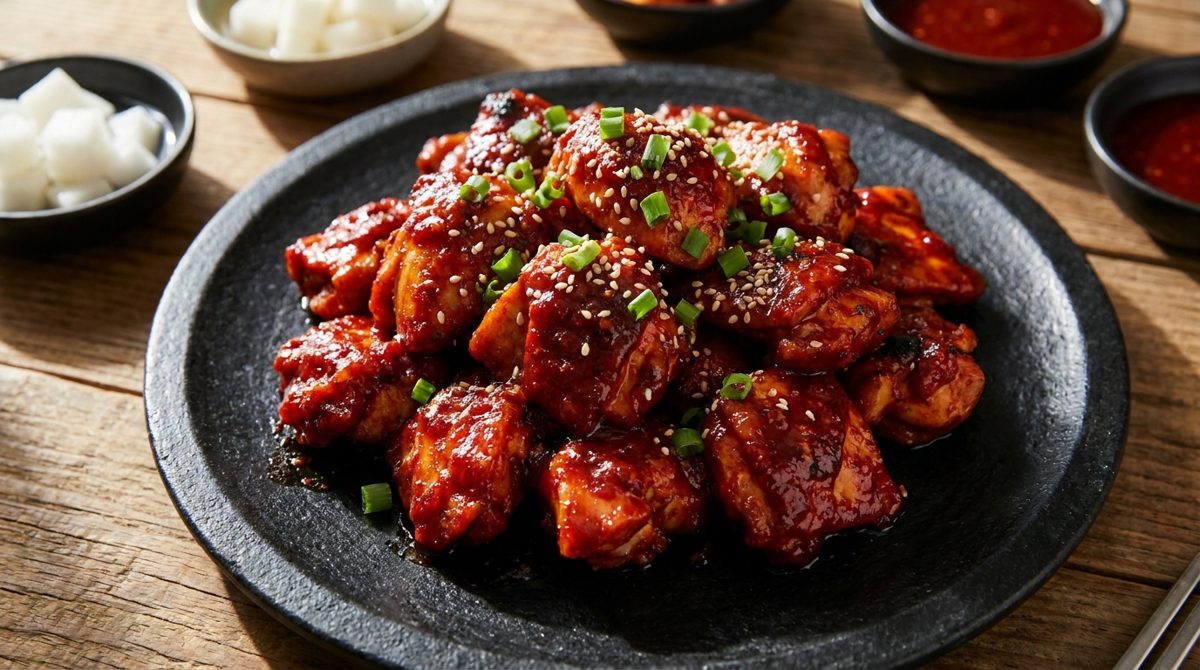
Buldak means exactly what it sounds like: bul (fire) + dak (chicken). It started as a restaurant dish in the mid-2000s near Sinchon in Seoul, invented as a bit of a stunt — Korean diners wanted something so punishingly spicy it would burn away everyday stress, and word spread fast among university students looking for a dare-food night out. Boneless chicken thigh is marinated and grilled or pan-fried in a sauce built from an aggressive concentration of Cheongyang chili, gochugaru, and often pure capsaicin extract, then served sizzling on a hot plate, sometimes finished under a blowtorch for extra char and smoky bite.
The dish stayed a domestic novelty for years until 2012, when Samyang Foods launched Buldak Bokkeum-myeon — instant “fire noodles” that packaged the same intensity into a cheap, shelf-stable convenience-store cup. What happened next surprised even Samyang: the noodles became a global phenomenon almost entirely through spicy-noodle-challenge videos on YouTube and later TikTok, with people worldwide filming their reactions to the burn. Today Samyang’s fire noodle line is one of Korea’s single biggest food exports by volume, sold in well over 100 countries, and for a huge share of international fans, the instant noodles were their introduction to Korean food entirely — often years before they ever tried kimchi or bibimbap.
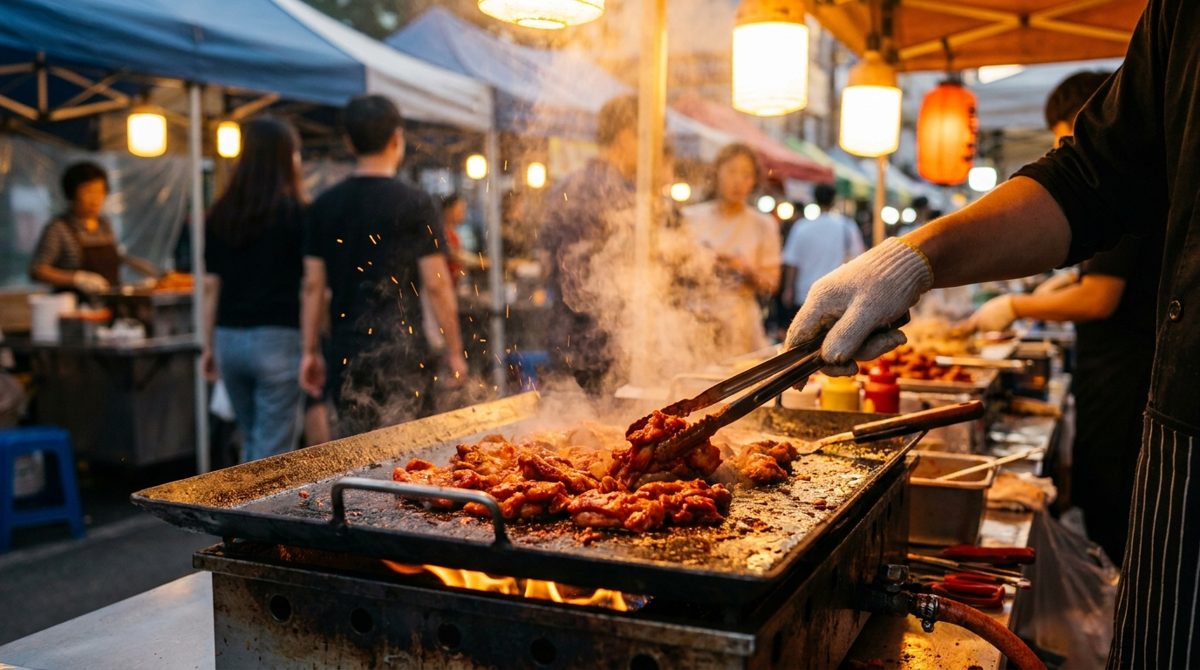
So when someone says “buldak” today, they usually mean one of two things: the original restaurant chicken dish (still widely served at Sinchon and Hongdae-style buldak specialty restaurants popular with students and spice-challenge tourists), or the instant noodle brand that made the word famous worldwide. Both share the same DNA — Korea’s boldest, most aggressively spiced comfort food — but they’re genuinely different eating experiences with different textures, price points, and shopping locations. This guide covers both clearly so you know exactly what you’re getting into before you order or buy.
What Does Buldak Taste Like?
Buldak tastes like sweet-savory chicken wrapped in a wall of heat: the sauce is built on gochugaru, garlic, soy, and sugar for balance, but the dominant sensation on first bite is pure capsaicin burn that climbs fast and lingers for several minutes afterward. Underneath the fire there’s real umami depth — caramelized marinade, toasted sesame oil, char from the grill or pan — but most first-timers are too busy reaching for milk to notice any of that nuance on the first bite. Give it a second and third bite once your mouth adjusts, and the actual savory-sweet flavor underneath becomes much easier to appreciate.
Is Buldak Spicy?
Yes — buldak is the spiciest mainstream dish in Korea, a genuine 5 out of 5. This isn’t gochujang-mild theater; commercial buldak sauces often measure in the tens of thousands of Scoville units, and some noodle variants (“2x Spicy” or “핵불닭”) push past 10,000+ SHU with added capsaicin oil layered on top of the base sauce. Expect sweating, watering eyes, a runny nose, and a burn that outlasts the meal itself by a good ten or fifteen minutes. Keep milk, a yogurt drink, or plain steamed rice on hand — water only spreads capsaicin oil around your mouth and actively makes the burn worse rather than better. If you have any doubt at all about your spice tolerance, order the milder yangnyeom fried chicken instead and work your way up to buldak on a later trip.
Buldak Dietary Guide: Vegetarian, Vegan, Halal & Allergens
Buldak is one of the least accommodating Korean Food Decoder dishes for dietary restrictions of any kind — know this clearly before you order at a restaurant or grab a pack off a convenience-store shelf.
| Ingredient concern | In standard buldak? | How to handle |
|---|---|---|
| Chicken / meat | Yes, always in the restaurant dish | No meat-free version exists at buldak restaurants — skip if avoiding meat entirely |
| Wheat / gluten | Yes — batter (restaurant) and noodles (instant) | Not gluten-free in either form; no reliable substitute is offered anywhere |
| Soy | Yes | Soy sauce and soybean-based paste are core to the marinade base |
| Sesame | Yes | Sesame oil and toasted seeds are a standard garnish and flavor base |
| Dairy | In cheese and carbonara noodle variants only | Check the pack — original and plain flavors are typically dairy-free |
| Egg | Sometimes, in restaurant batter | Ask “gyeran ppaego juseyo” (계란 빼고 주세요) at restaurants; not applicable to instant noodles |
| Alcohol | No | Not a standard ingredient in either the restaurant marinade or the noodle sauce |
Is Buldak Vegetarian or Vegan?
No, and this is one to be clear-eyed about rather than hopeful. Restaurant buldak is built entirely around chicken — there is no standard vegetarian version on any menu, and asking a buldak specialty restaurant to swap in vegetables would defeat the entire point of the dish. The instant noodle line offers some flavors (cheese, carbonara) that ship without a meat topping, but they are not formulated or labeled as vegetarian: the sauce base can include animal-derived flavoring compounds, and cross-contact with meat seasoning packets on the same factory production lines is common industry practice. If you’re vegetarian, treat buldak as a pass rather than a “probably fine” gamble — Korea has far friendlier spicy options, like tteokbokki, for a chili hit without any meat involved.
Is Buldak Halal?
This is the fact most travelers get wrong, so here’s the precise, non-hedged answer. Restaurant buldak in Korea is essentially never halal-certified — the chicken isn’t slaughtered to halal standard, and the marinade commonly includes soy sauce and rice-wine derivatives with no certification process behind them at all. Treat any domestic buldak restaurant as non-halal by default, with no exceptions worth assuming.
The instant noodle brand tells a genuinely different story, and it’s worth knowing precisely. Samyang has released officially halal-certified versions of its Buldak Bokkeum-myeon for certain export markets, notably parts of Southeast Asia and the Middle East, produced under separate, certified manufacturing lines specifically for those regions. However, the packs sold inside Korea at domestic convenience stores are generally the standard, non-certified formula — the halal-certified version is manufactured for and distributed to specific overseas markets, not stocked on the Korean shelf. Muslim travelers visiting Korea should not assume a Buldak pack found in a Seoul GS25 or CU is automatically halal just because a certified version exists somewhere in the broader product line; always check the packaging for an explicit halal certification logo before buying. If you specifically want the certified version, it may genuinely be easier to buy it at home after your trip than to find it inside Korea itself. For verified halal dining options across the country, the Korea Tourism Organization maintains listings at VisitKorea.
How to Order Buldak in Korean (+ 2026 Prices)
At a restaurant, staff will often warn you how spicy the dish is before serving it — take that warning seriously, since it’s usually not exaggerated for tourists. At a convenience store, you’re largely on your own to read the packaging, so these phrases help in either setting:
| What you want | Say this | Romanized |
|---|---|---|
| One buldak, please | 불닭 하나 주세요 | buldak hana juseyo |
| Fire noodles (instant) | 불닭볶음면 주세요 | buldak-bokkeummyeon juseyo |
| Cheese version (milder) | 치즈불닭 주세요 | chijeu-buldak juseyo |
| Extra spicy / 2x spicy | 더 맵게 해주세요 | deo maepge haejuseyo |
| Is this very spicy? | 이거 많이 매워요? | igeo mani maewoyo? |
What it costs in 2026: restaurant-grilled buldak runs ₩9,000–₩15,000 per portion in Seoul, often served for two people to share alongside rice and lettuce leaves for wrapping. The instant noodle version is a budget souvenir hero: single cups or packs cost ₩1,800–₩3,000 at any GS25, CU, or 7-Eleven, making it one of the cheapest genuinely “famous Korea” experiences a visitor can buy on a whim. Multi-packs at larger supermarkets like Homeplus or Emart are even cheaper per unit — worth grabbing a box if you’re planning to bring snacks home for friends who’ve seen the challenge videos.
How to Eat Buldak Like a Local
For restaurant buldak: it’s typically a shared, sizzling hot-plate dish. Use tongs or chopsticks to keep mixing the chicken into the sauce as it continues cooking tableside, wrap individual pieces in lettuce leaves to help cut the heat, and keep steamed rice or a sweet drink nearby at all times — never rely on plain water, which spreads capsaicin oil around rather than washing it away. Milk or a yogurt drink like Yakult is the classic local go-to spice antidote, and most buldak restaurants keep it on hand precisely for this reason.
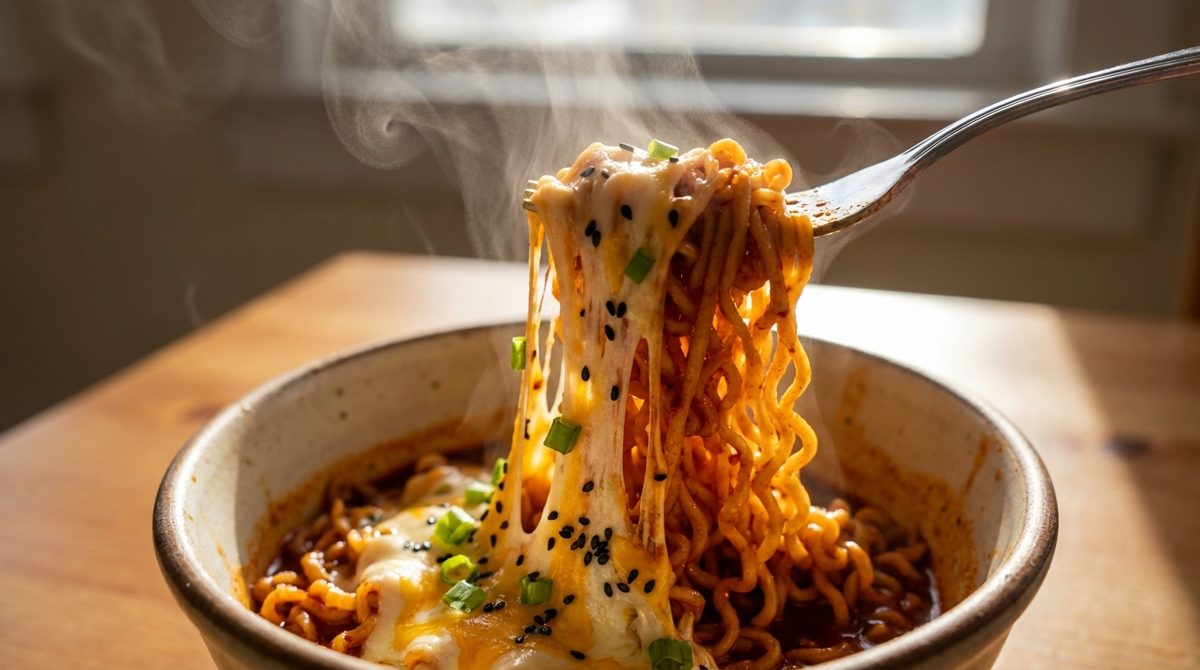
For the instant noodles: drain almost all of the cooking water before adding the seasoning packet — this is a thick stir-fried noodle dish, not a soup, and too much leftover water dilutes the sauce badly. Add the sauce packet and any cheese or topping packets, toss everything hard until every strand is evenly coated in red, and eat immediately while still hot for the best texture. Many convenience stores have free hot water dispensers and microwaves on-site, so you can prepare and eat it right there, ramen-shop style, without needing a kitchen at all.
Types of Buldak You’ll See
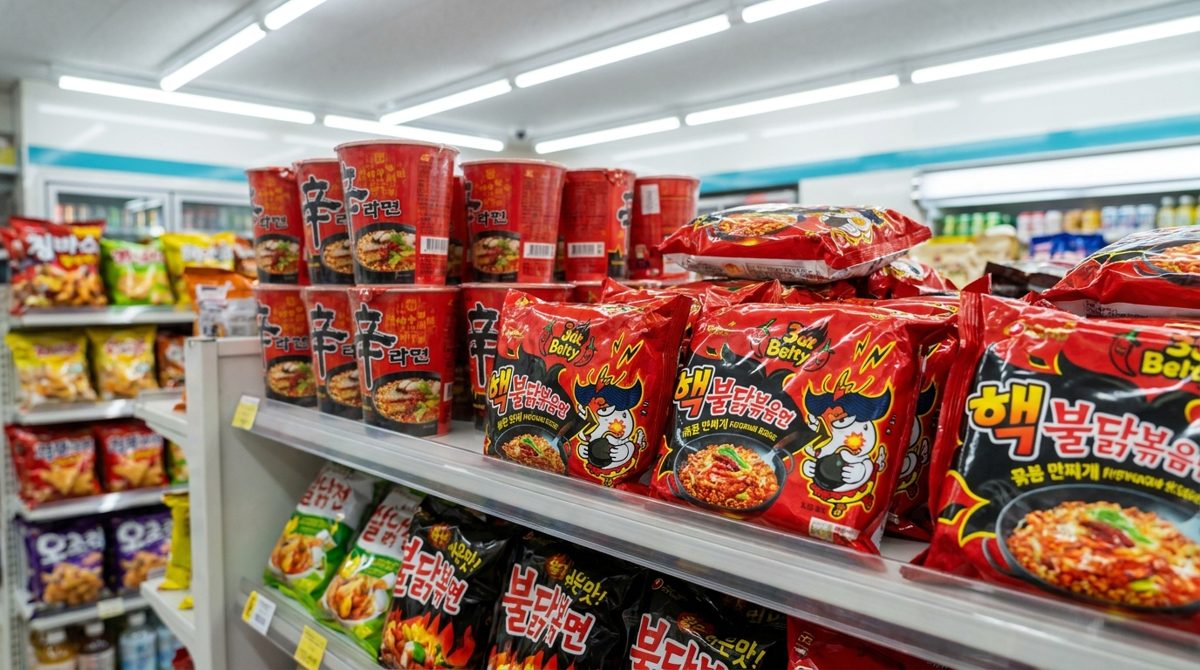
Original buldak (오리지널 불닭) — the baseline extreme-spice formula, no dairy relief and no mercy. Cheese buldak (치즈불닭) — melted cheese blankets the heat slightly, making it the most beginner-friendly entry point into the line. Carbonara buldak (까르보불닭) — a creamy, noticeably milder instant noodle spin-off that dials down the burn significantly with dairy fat, a good bridge flavor for cautious first-timers. 2x Spicy (핵불닭) — for people who found the original underwhelming; genuinely not recommended as a first attempt for anyone. Buldak-galbi and buldak-bokkeum — restaurant variations that swap in pork or mix in rice cakes and glass noodles, similar in spirit to tteokbokki but built around the same fire-chicken sauce base. Limited-edition instant flavors also rotate seasonally, from curry to jjajang, always keeping the same punishing heat as the anchor.
Where to Try or Buy Buldak
For the restaurant experience, Sinchon and Hongdae in Seoul have long-running buldak specialty restaurants aimed at students and spice-challenge tourists — expect communal hot plates, paper bibs, and a genuinely fun, loud atmosphere. For the instant version, literally any Korean convenience store stocks multiple Buldak flavors on the noodle shelf; larger branches of GS25 or CU near tourist areas often carry limited-edition flavors that haven’t been exported internationally yet, which makes for a more interesting souvenir than the versions already sold at home. If chicken in general is your focus rather than the extreme-spice angle specifically, our Korean fried chicken guide and fried chicken chains guide cover the milder, crispier side of Korea’s national chicken obsession in more detail.
Buldak FAQ
What does buldak mean in English?
“Fire chicken.” Bul means fire, dak means chicken — a literal warning label built directly into the dish’s name.
Is buldak the same as the fire noodles?
Related but not identical. Buldak is the original restaurant grilled-chicken dish from the mid-2000s; Buldak Bokkeum-myeon is Samyang’s 2012 instant noodle product inspired by the same flavor profile. Most people outside Korea know the noodles first, often years before trying the restaurant original.
How spicy is buldak compared to other Korean food?
It’s the spiciest mainstream Korean dish, rated 5 out of 5 on our scale. It’s noticeably hotter than tteokbokki or kimchi jjigae, and even Korean diners often order it as a deliberate challenge rather than a casual everyday meal.
Is buldak halal?
Restaurant buldak in Korea is generally not halal-certified. The instant noodle brand has released halal-certified versions for specific export markets, but standard packs sold in Korean convenience stores are not certified — check the packaging rather than assuming based on the brand name alone.
How much does buldak cost in Korea in 2026?
Restaurant buldak runs ₩9,000–₩15,000 per portion. Instant noodle cups or packs cost ₩1,800–₩3,000 at convenience stores, making it one of the cheapest famous Korean foods available to try.
The Verdict: Should You Try It?
If you enjoy spicy food and want a genuine Korea-famous experience, yes — but go in with realistic expectations and milk within arm’s reach. Start with the cheese or carbonara version before attempting the original, and know clearly that neither the restaurant dish nor most Korean-market instant noodle packs are vegetarian, vegan, or reliably halal-certified. Buldak earned its global fame honestly: it’s loud, uncompromising, and unmistakably Korean in its refusal to compromise on heat. Ready to decode more of the menu? Browse the full Korean Food Decoder for every major dish explained with spice levels, allergens, and ordering phrases.