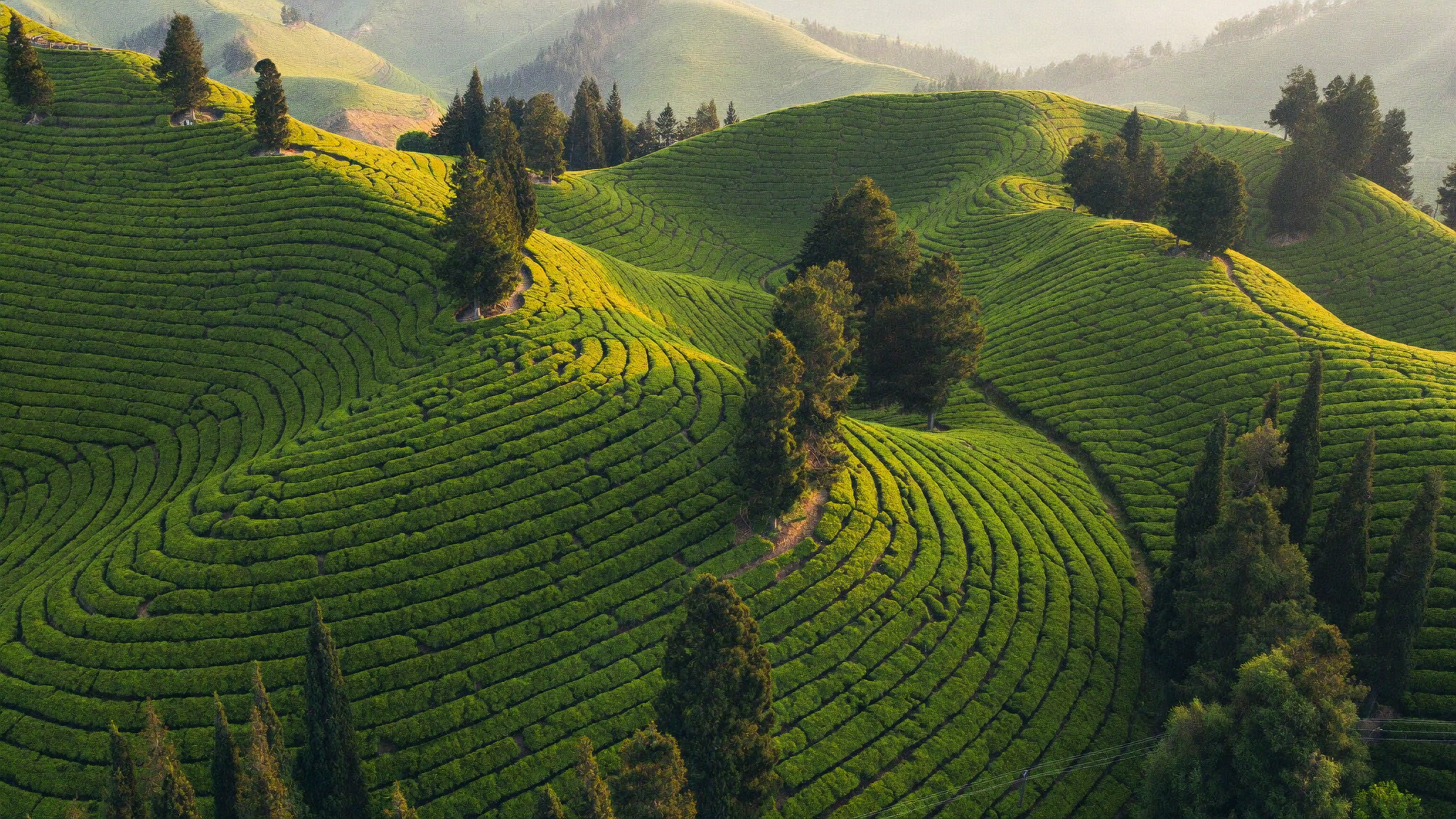
The Boseong Green Tea Fields in South Korea’s Jeollanam-do province are one of the most photographed landscapes in the country — endless terraced rows of emerald tea bushes climbing over rolling hills, framed by tall cedar-lined paths that look almost too perfect to be real. If you’ve seen a Korean drama, a K-pop music video, or a travel influencer’s feed with rows of curving green hills in the background, there’s a good chance it was filmed at Boseong. This Boseong Green Tea Fields travel guide covers exactly how to get there from Seoul or Busan, what to do once you arrive, when to visit for the best photos, and how to combine the trip with nearby Suncheon Bay and Beolgyo for a full day (or weekend) outside the capital.
Boseong County produces roughly 40% of all green tea grown in Korea, making it the country’s undisputed tea capital, and its flagship plantation, Daehan Dawon, has been recognized by CNN as one of the most beautiful places to visit in Korea. Despite that reputation, Boseong still sees a fraction of the foreign tourist traffic that Seoul, Busan, or Jeju get — which means quieter paths, better photos, and a much more relaxed pace.
Table of Contents
- Why Visit the Boseong Green Tea Fields
- How to Get to Boseong from Seoul and Busan
- Daehan Dawon: The Main Green Tea Plantation
- 9 Things to Do at the Boseong Green Tea Fields
- Photography Tips at the Boseong Green Tea Fields
- Best Time to Visit Boseong
- Nearby Day-Trip Spots: Suncheon Bay & Beolgyo
- Where to Stay Near the Boseong Green Tea Fields
- Boseong Budget Guide
- Practical Tips for Japanese and Chinese Travelers
- Sample 1-Day Boseong Itinerary
- Frequently Asked Questions
Why Visit the Boseong Green Tea Fields
Boseong has produced tea for close to 1,600 years, but it wasn’t until the 1930s and especially the 1970s that the terraced plantations we see today were carved into the hillsides on a large scale. Today, Boseong accounts for around 40% of Korea’s total tea production, and nearly half of the country’s green tea comes from this single county in South Jeolla Province. The Korea Tourism Organization has named Boseong one of Korea’s top vacation spots — the only pick from Jeollanam-do — and CNN has separately listed the Boseong tea fields among the most beautiful places in the country.
The industry as it exists today really took shape in the 1970s, when huge terraced farms — some as large as 250 acres — began appearing across the hillsides around town. A downturn in demand during the 1980s briefly threatened the region’s tea economy, but local government subsidies and partnerships with universities and research institutes helped modernize production and rebuild Boseong’s reputation as Korea’s tea capital. That history is part of why a visit here feels different from a typical scenic stop: the fields aren’t just a backdrop, they’re a working agricultural landscape that locals have spent decades cultivating and protecting.
Compare that to Korea’s other well-known tea-growing area, Hadong in Gyeongsangnam-do, which specializes in wild tea grown on steep mountain slopes. Boseong’s plantations, by contrast, are cultivated in the neat, photogenic rows most travelers picture when they imagine a “Korean tea field,” which is exactly why it has become the country’s most Instagrammed and TikTok’d tea destination rather than a niche stop for tea connoisseurs only.
What makes the Boseong Green Tea Fields so visually striking is the combination of manicured tea rows with tall, arrow-straight cedar and metasequoia trees planted as windbreaks along the paths. The result is a landscape that photographs beautifully in every season: bright green in summer, misty and moody in early spring, and gold-lit in autumn. It’s a completely different side of Korea from the neon streets of Seoul or the beaches of Busan, and it’s a favorite stop for Japanese and Chinese travelers looking for the quieter, more scenic Korea they’ve seen on social media.
How to Get to Boseong from Seoul and Busan
Boseong doesn’t have its own train station connected to the KTX network, so the two main ways to reach the Boseong Green Tea Fields are by intercity bus or by a train-plus-bus combination through Suncheon.
From Seoul
Direct intercity buses run several times a day from Seoul’s Central City Terminal (Express Bus Terminal) to Boseong Bus Terminal. The ride takes roughly 4 to 5.5 hours depending on traffic and the number of stops, and tickets cost approximately ₩25,000–₩30,000 one way. Booking through the Kobus or T-Money BUS app in advance is recommended during the spring Green Tea Festival and the winter Light Festival, when seats sell out quickly.
From Busan
From Busan, take a KTX or intercity bus to Suncheon first (around 1–1.5 hours), then transfer to a local bus or intercity bus bound for Boseong (about 1 hour). This route is also the easiest way to combine Boseong with a stop at Suncheon Bay National Garden on the same trip.
From Boseong Bus Terminal to the Tea Fields
Once you’re at Boseong Bus Terminal, hop on a local bus heading toward Yulpo and get off at the Nokcha-bat (green tea field) stop — it’s a short 5-minute walk from there to the entrance of Daehan Dawon. If you’re short on time or traveling with luggage, a taxi from the terminal costs around ₩10,000–₩12,000 and takes about 15 minutes, which is worth it if you’re doing Boseong as part of a longer day trip.
By Rental Car or Private Tour
Driving gives you the most flexibility, especially if you plan to combine the Boseong Green Tea Fields with Suncheon Bay, Beolgyo, and Yulpo Beach in a single loop. The drive from Seoul takes about 4 hours via the Seohaean and Namhae expressways, and parking at Daehan Dawon is inexpensive. If you’d rather not drive, several day-tour operators run guided trips from Seoul or Gwangju that bundle Boseong with Suncheon Bay National Garden, which is worth considering if your schedule is tight and you don’t want to manage multiple bus transfers in a single day.
Daehan Dawon: The Main Green Tea Plantation
Daehan Dawon, established in 1957, is the oldest and most famous commercial tea plantation in Boseong and the centerpiece of almost every Boseong green tea fields itinerary. Admission is inexpensive — around ₩4,000 for adults, with discounts for children and seniors — and the plantation is open daily from roughly 9:00 a.m. to 6:00 p.m., with shorter hours in winter.
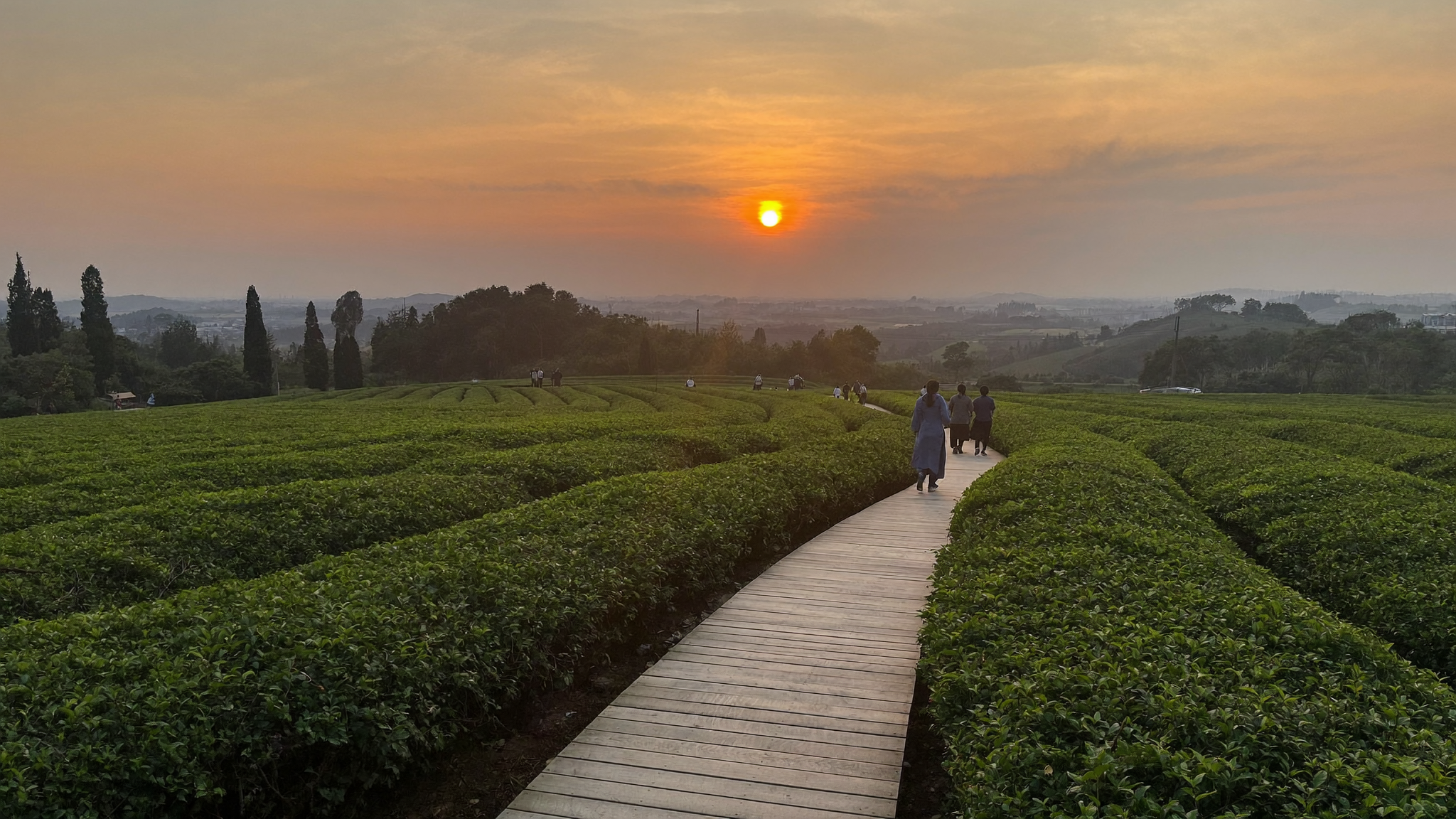
Inside, three separate observation decks give panoramic views over the tea rows and, on clear days, all the way out to the coast near Yulpo Beach. The famous cedar-lined entrance path — the one you’ve probably seen in photos — leads up through the plantation toward the main viewing area, and it’s worth budgeting at least 90 minutes to walk the full loop, stop at each viewpoint, and take photos without feeling rushed.
9 Things to Do at the Boseong Green Tea Fields
1. Walk the Cedar-Lined Entrance Path
This is the single most iconic photo spot in Boseong — a straight avenue of tall cedar trees that leads visitors from the entrance up into the plantation. Go early morning or late afternoon for softer light and fewer people in your shots.
2. Climb to the Observation Decks
Each of the three decks at Daehan Dawon offers a different angle over the curving tea rows. The highest deck gives the classic wide shot used in almost every Boseong postcard and Instagram post.
3. Take a Green Tea Foot Bath
Several small shops near the plantation entrance offer green tea foot baths (녹차 족욕), where you soak your feet in warm water infused with tea leaves for about 20 minutes. Sessions typically run ₩5,000–₩8,000 and are a relaxing way to rest after walking the hills.
4. Sample Green Tea Ice Cream and Snacks
Boseong is famous for green tea-flavored everything — ice cream, noodles, rice cakes, even pork belly marinated in tea. Stalls near the entrance sell fresh green tea soft-serve, which is one of the best-value snacks in the area.
5. Visit During the Boseong Green Tea Festival
Held every spring (typically May), the festival coincides with the year’s first tea harvest. Visitors can pick fresh leaves, try tea-making demonstrations, and shape their own tea bowls.
6. See the Boseong Tea Plantation Light Festival
From mid-November through early January, the same paths that are green by day are strung with thousands of LED lights for a winter light festival, with admission around ₩5,000 and hours from 5:00 p.m. to 10:00 p.m.
7. Browse the Tea Museum and Shops
Small tea museums and gift shops near Daehan Dawon sell locally grown loose-leaf tea, tea sets, and cosmetics made with green tea extract — a good source for souvenirs that are actually made in the region you visited.
8. Photograph the Yulpo Coastline
Yulpo Beach and its seawater swimming pool are just a short drive from the tea fields, giving you a rare combination of mountain tea terraces and coastline in the same afternoon.
9. Try Boseong’s Beolgyo Cockle Clams
The nearby town of Beolgyo is Korea’s most famous cockle clam (꼬막) region. A bowl of steamed cockles or cockle bibimbap is the local specialty and a favorite among Korean and Japanese visitors who make the detour.
Photography Tips at the Boseong Green Tea Fields
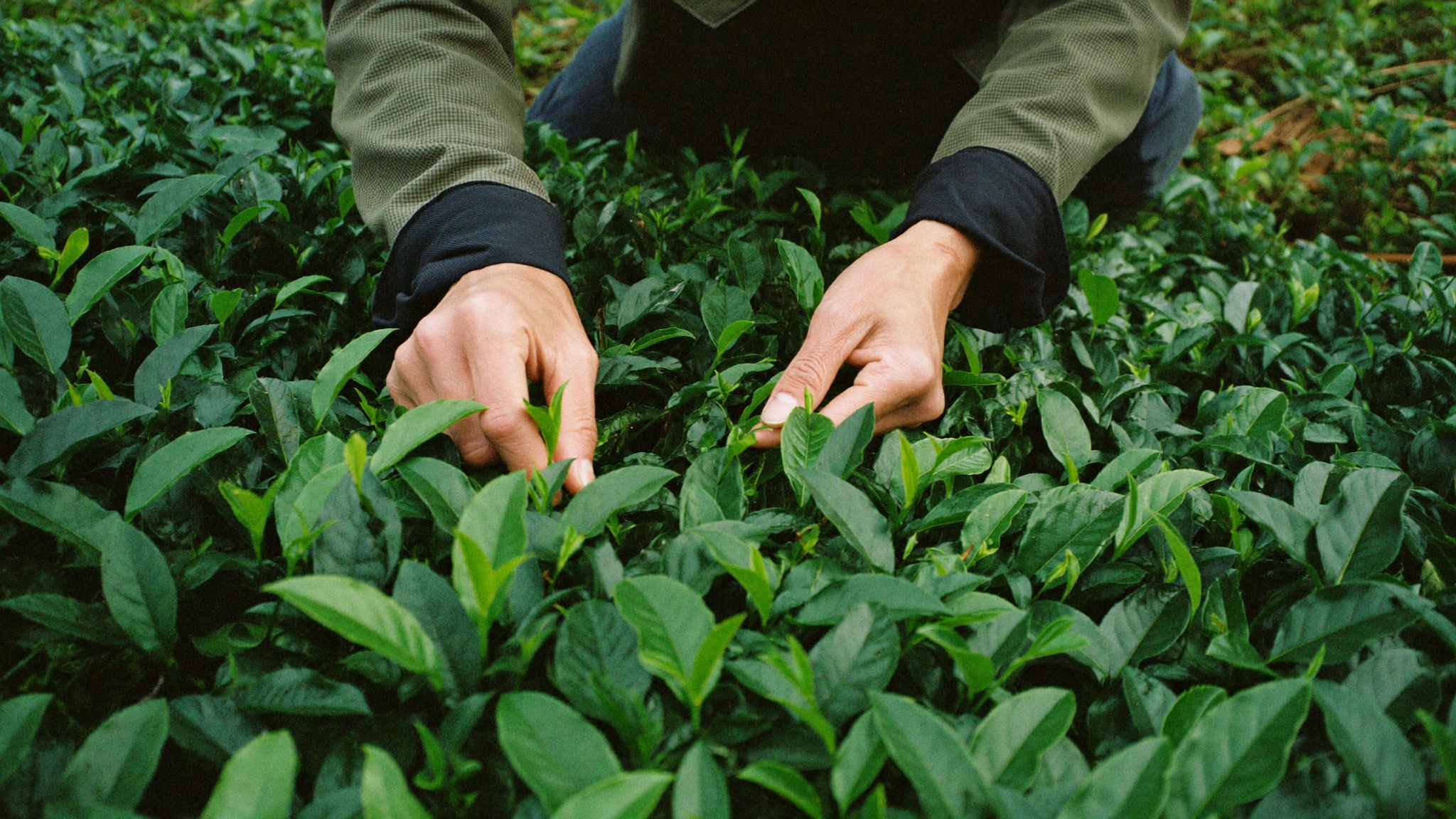
Because the Boseong Green Tea Fields are one of Korea’s most photographed landscapes, timing and angle make a bigger difference than gear. Arrive right at opening (9:00 a.m.) on a weekday to get the cedar-lined path without other visitors in frame — by mid-morning on weekends, it can get crowded with tour groups. Shoot the terraced rows from the highest observation deck using a wide-angle lens or your phone’s ultra-wide mode to capture the curving lines that make the plantation famous. Overcast days actually produce more saturated greens than harsh midday sun, so don’t write off a cloudy forecast. If you’re visiting in early spring, look for pickers working the rows in traditional straw hats — a classic, respectful shot that captures Boseong’s living tea culture rather than just the scenery.
Best Time to Visit Boseong
April and May bring the year’s first tea harvest and the Boseong Green Tea Festival, when the fields are at their most vivid green and the whole region feels alive with events. Summer offers the deepest, richest green color but also higher heat and humidity. Autumn brings cooler, more comfortable walking weather, while winter transforms the plantation into a completely different attraction with the Tea Plantation Light Festival running from mid-November through early January. There isn’t really a bad season to visit the Boseong Green Tea Fields — it genuinely looks different, and worth photographing, in all four.
Nearby Day-Trip Spots: Suncheon Bay & Beolgyo
Because Boseong sits roughly halfway between Suncheon and the southern coast, most travelers pair it with Suncheon Bay National Garden, one of the largest coastal wetlands in the world and famous for its golden reed fields in autumn. Beolgyo, known for its cockle clams and as a filming location for the novel-turned-drama “The Taebaek Mountains,” is another easy stop on the same route. Travelers who enjoyed our Andong travel guide or the Jeonju hanok village guide will find Boseong fits the same “slow travel” niche — small-city Korea, away from the crowds, with its own distinct identity.
Where to Stay Near the Boseong Green Tea Fields
Most visitors treat the Boseong Green Tea Fields as a day trip from Seoul, Busan, or Suncheon, but staying overnight lets you catch the plantation at sunrise before the tour buses arrive. Boseong town itself has a handful of budget motels and guesthouses within walking distance of the bus terminal, generally priced from ₩40,000–₩70,000 a night. For more comfort, several pension-style stays and tea-themed guesthouses sit closer to Yulpo Beach, some with their own small tea gardens and ocean views. Travelers building a longer South Jeolla itinerary often prefer to base themselves in Suncheon instead, since it has more hotel options, better food variety, and easy onward bus connections to both Boseong and Beolgyo.
Boseong Budget Guide
Boseong is one of the more affordable regional destinations in Korea. A rough daily budget per person looks like this:
- Bus from Seoul (round trip): ₩50,000–₩60,000
- Daehan Dawon admission: ₩4,000
- Green tea foot bath: ₩5,000–₩8,000
- Green tea ice cream or snacks: ₩3,000–₩5,000
- Lunch (green tea set meal or cockle bibimbap): ₩10,000–₩15,000
- Local bus or taxi within Boseong: ₩2,000–₩12,000
All told, a full day trip to the Boseong Green Tea Fields, including transportation, food, and activities, typically runs ₩80,000–₩110,000 per person (roughly $60–$85 USD) — inexpensive compared to a day in central Seoul once you factor in the scenery and the novelty of the experience.
Practical Tips for Japanese and Chinese Travelers
Public safety in Boseong is excellent, consistent with the rest of rural Korea — solo travelers, including women traveling alone, generally report feeling very safe walking around even in the early evening. For transportation, buy intercity bus tickets in advance through the Kobus app during festival season, since seats to smaller regional terminals like Boseong sell out faster than routes to major cities. For dining, most restaurants near the tea fields have Korean-only menus, so it helps to have a translation app ready or to look for the standard “green tea set meal” (녹차정식), which is popular with both Japanese and Chinese visitors. Card payment is widely accepted at official venues like Daehan Dawon and larger restaurants, but smaller street stalls near the entrance may be cash-only, so carrying some Korean won is a good idea. For the best photos, aim for morning light on the cedar path and avoid weekends and festival dates if you want the fields to yourselves.
Sample 1-Day Boseong Itinerary
- Morning: Bus or KTX + bus from Seoul/Busan to Boseong, arriving by late morning.
- Midday: Explore Daehan Dawon — the cedar path, the three observation decks, and a green tea foot bath.
- Lunch: Try a green tea set meal or Beolgyo cockle bibimbap near the plantation.
- Afternoon: Short taxi or bus to Yulpo Beach for coastal views, or head toward Suncheon Bay if continuing the trip.
- Evening: Return bus to Seoul or Busan, or stay overnight in Suncheon for a two-day loop.
Frequently Asked Questions
How do I get to the Boseong Green Tea Fields without a car?
Take an intercity bus from Seoul’s Central City Terminal or a KTX-plus-bus route via Suncheon from Busan, then a local bus or taxi from Boseong Bus Terminal to Daehan Dawon.
How much time should I budget for Boseong?
A half-day (2–3 hours) is enough to see Daehan Dawon and take photos, but a full day lets you add Yulpo Beach, a foot bath, and lunch in the area.
Is Boseong worth visiting outside festival season?
Yes — the tea fields are green and photogenic year-round, and visiting outside the spring festival or winter light festival often means smaller crowds.
Can I visit Boseong as a day trip from Seoul?
Yes, though it’s a long day — expect roughly 4–5.5 hours of bus travel each way. Many travelers prefer to combine it with an overnight stay in Suncheon to avoid rushing.
Is English signage available at the Boseong Green Tea Fields?
Daehan Dawon has basic English signage at major viewpoints, but most surrounding restaurants and shops are Korean-only, so a translation app is genuinely useful here.
Can I combine Boseong with a longer South Jeolla trip?
Yes — many travelers link the Boseong Green Tea Fields with Suncheon Bay National Garden, Beolgyo, and even Yeosu’s coastal night views into a 2–3 day South Jeolla itinerary by bus or rental car, using Suncheon as a convenient overnight base between stops.
Final Thoughts
The Boseong Green Tea Fields reward travelers willing to go a few hours outside Seoul or Busan for something genuinely different: rolling green terraces, cedar-lined paths, coastal views, and a slower pace than Korea’s big cities. Whether you’re chasing the perfect photo, curious about Korean tea culture, or just want a quiet day away from the usual tourist trail, Boseong delivers. Pair it with our guides to Gyeongju, Sokcho, or first-time Korea travel tips to plan the rest of your trip, and start mapping your route to South Jeolla’s tea capital today.
Sources: Korea Tourism Organization — Boseong Green Tea Festival, Wikipedia — Boseong County, TripAdvisor — Boseong Green Tea Field Daehan Dawon.


