If you have already covered Seoul, Busan, and even Gyeongju, this Buyeo travel guide introduces the last forgotten capital of ancient Korea. Buyeo is a small riverside city in South Chungcheongnam-do that once ruled the Baekje Kingdom, one of Korea’s Three Kingdoms, and it still holds UNESCO World Heritage sites, a lotus-covered royal pond, and a fortress cliff with a legend dark enough to rival any K-drama. In 2026 it remains one of the most underrated day-or-overnight trips from Seoul, especially for Japanese and Chinese visitors curious about the deep historical ties between Baekje and early Japan.
Table of Contents
- Why Visit Buyeo
- Busosanseong Fortress: Buyeo’s Hilltop Icon
- Nakhwaam Rock and the Baengmagang River Cruise
- Jeongnimsa Temple Site: The Surviving Baekje Pagoda
- Buyeo National Museum
- Gungnamji Pond and the Seodong Lotus Festival
- Baekje Cultural Land
- Baekje Royal Tombs
- Baekje Cultural Festival
- The Baekje-Japan Historical Connection
- What to Eat in Buyeo
- Best Time to Visit
- Budget Guide
- Where to Stay
- How to Get to Buyeo from Seoul
- Practical Travel Tips
- 2-Day Buyeo Itinerary
- FAQ
Why Visit Buyeo
Buyeo served as the final royal capital of Baekje from 538 to 660 CE, and the historic sites scattered around the modern town are collectively inscribed as a UNESCO World Heritage City under the “Baekje Historic Areas” listing. Unlike Gyeongju, which can feel packed with tour buses, Buyeo stays quiet even in peak season, which is exactly why this Buyeo travel guide keeps coming up as a favorite among travelers chasing history without the crowds. The town sits on the Geum River (locally called the Baengmagang here), roughly two hours from Seoul, and its compact layout means most major sites are within walking or short-taxi distance of each other.
For Japanese travelers in particular, Buyeo carries extra meaning: Baekje maintained close cultural and diplomatic ties with the Yamato court in ancient Japan, sending scholars, monks, and craftsmen who helped shape early Japanese Buddhism, architecture, and writing. Chinese visitors, meanwhile, often connect with Buyeo through the shared East Asian Buddhist temple heritage and the dramatic river-and-cliff scenery that photographs beautifully year-round.
Busosanseong Fortress: Buyeo’s Hilltop Icon
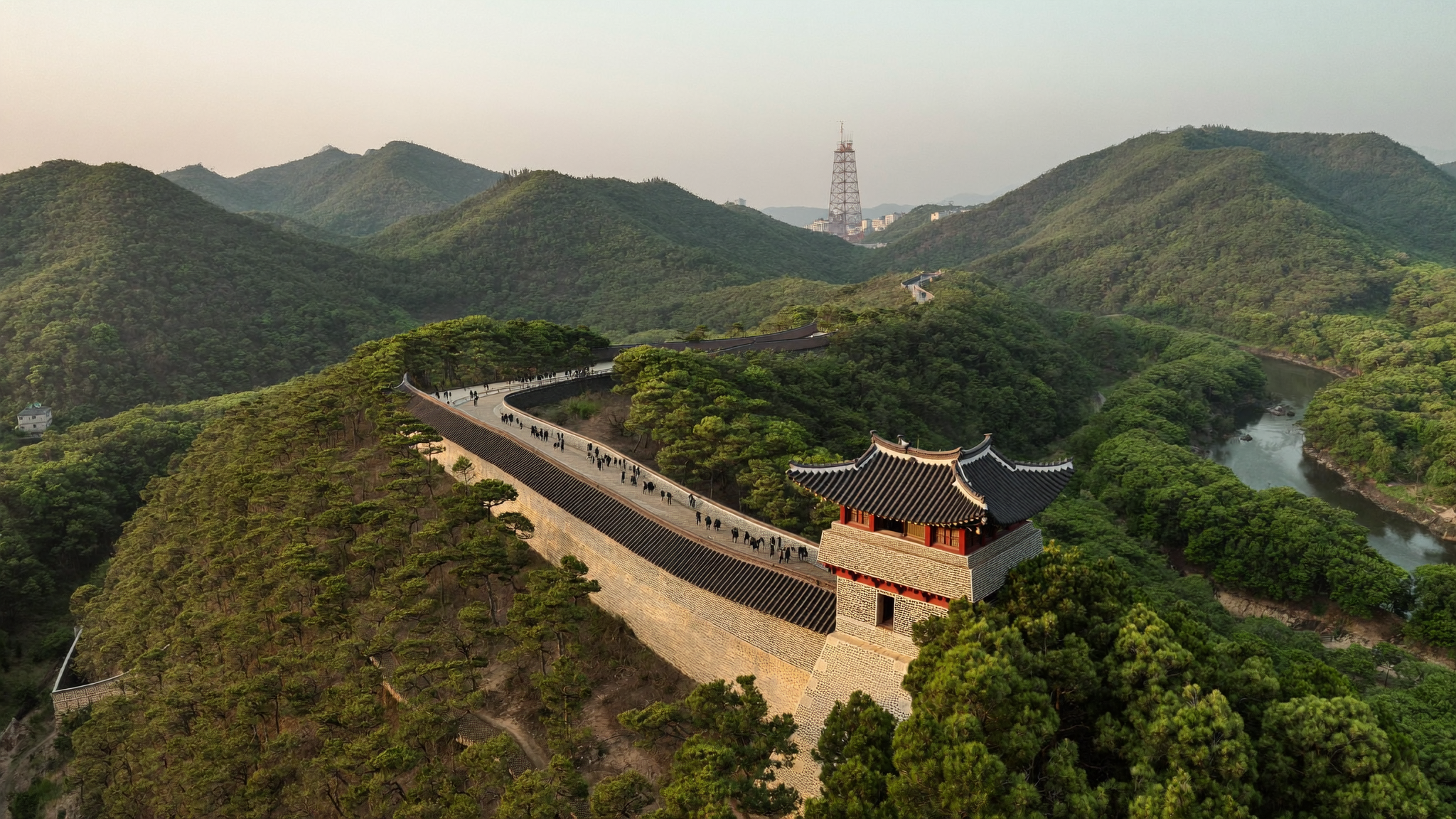
Any Buyeo travel guide has to start at Busosanseong Fortress, the hilltop earthen fortress that protected the royal palace during the final century of Baekje rule. The wooded park covers the low mountain behind the old palace grounds, and shaded trails wind past pavilions, old fortress walls, and a small pond before opening onto sweeping views of the Geum River valley below. Admission is inexpensive (around 2,000 won for adults) and the walk from the entrance to Nakhwaam Rock takes about 40 minutes at an easy pace.
Along the way you will pass Samchungsa Shrine, dedicated to three loyal Baekje generals, and Yeongilru Pavilion, a spot locals recommend for sunrise. The forest here is dense enough to feel cool even in summer, making it a pleasant escape compared to the open plazas at other historic sites around the country.
Nakhwaam Rock and the Baengmagang River Cruise
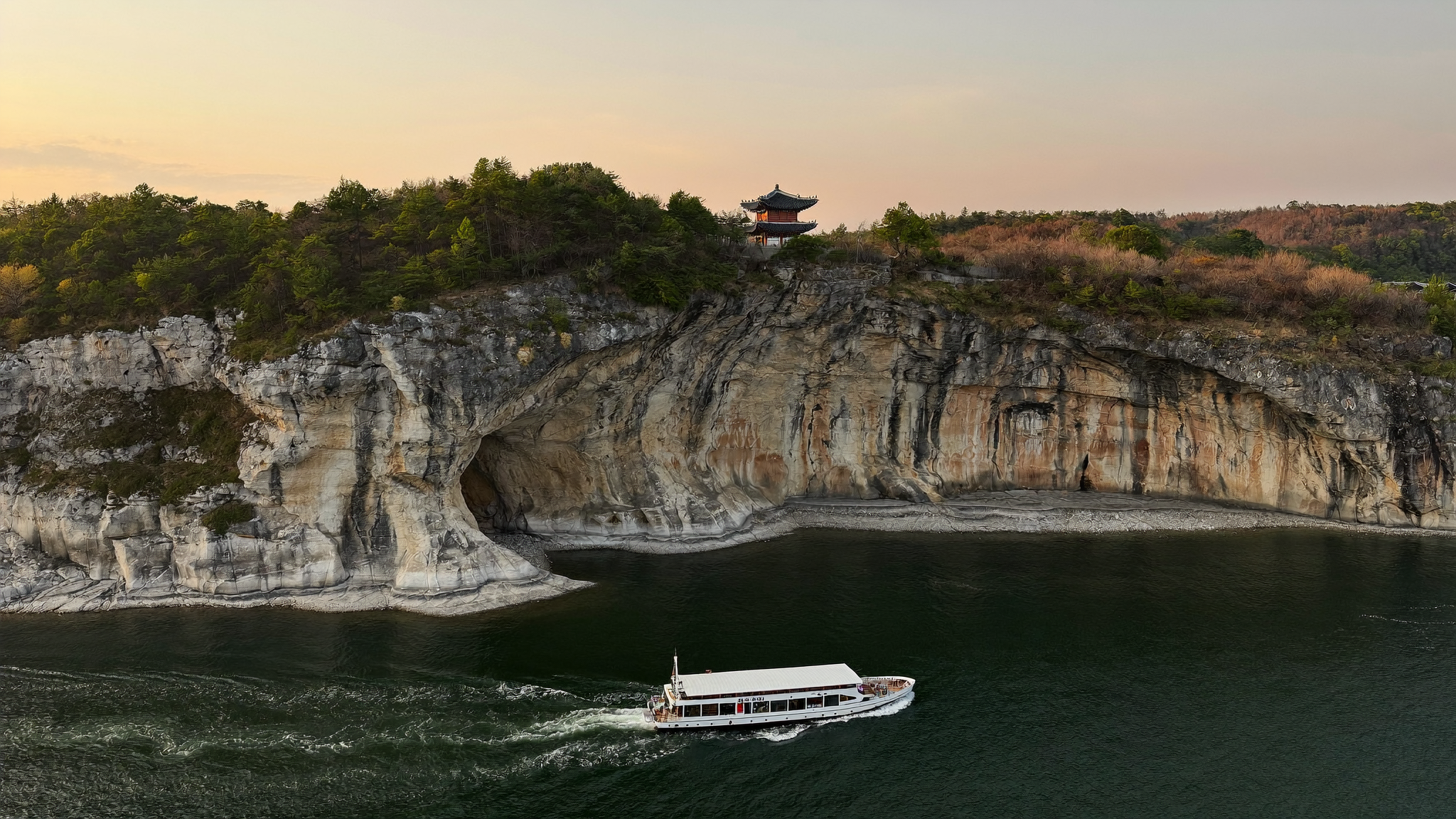
At the far end of Busosanseong sits Nakhwaam Rock, a cliff with one of the most poignant legends in Korean history. According to tradition, when Baekje fell to the combined Silla-Tang forces in 660 CE, palace women threw themselves from this cliff into the river below rather than face capture, and the rock’s name literally translates to “Rock of the Falling Flowers.” A small pavilion, Baekhwajeong, marks the spot today, and Goransa Temple sits just below on the riverbank, famous for a natural spring said to grant an extra year of life with every sip.
From the pier near Goransa Temple, short river cruises run along the Baengmagang, giving a different angle on the cliff and fortress that most first-time visitors miss entirely. Sunset departures are the most popular, when the cliff face turns gold and the water traffic thins out.
Jeongnimsa Temple Site: The Surviving Baekje Pagoda
A short walk from the town center, the Jeongnimsa Temple Site holds one of only two stone pagodas from the Baekje period still standing in Korea. The five-story granite pagoda is a masterclass in restrained proportion, and its survival through 1,400 years of wars, invasions, and weather is part of what earned it UNESCO recognition as part of the Baekje Historic Areas. A small on-site museum explains the temple’s layout and displays a seated stone Buddha added during the Goryeo era.
Because the surrounding grounds are mostly open grass, this is one of the easiest spots in town to photograph without other visitors in frame, especially on a weekday morning.
Buyeo National Museum
The Buyeo National Museum houses the excavated treasures of the Baekje Kingdom, including gilt-bronze incense burners, roof tiles with distinctive lotus motifs, and everyday objects recovered from tombs and temple sites around the region. The showpiece is the Baekje Incense Burner (Baekje Geumdong Daehyangno), a gilt-bronze masterpiece considered one of the finest works of ancient East Asian metalwork, decorated with mythical animals, mountains, and a phoenix perched on top. Admission is free, and English, Japanese, and Chinese signage makes the collection accessible to international visitors.
Gungnamji Pond and the Seodong Lotus Festival
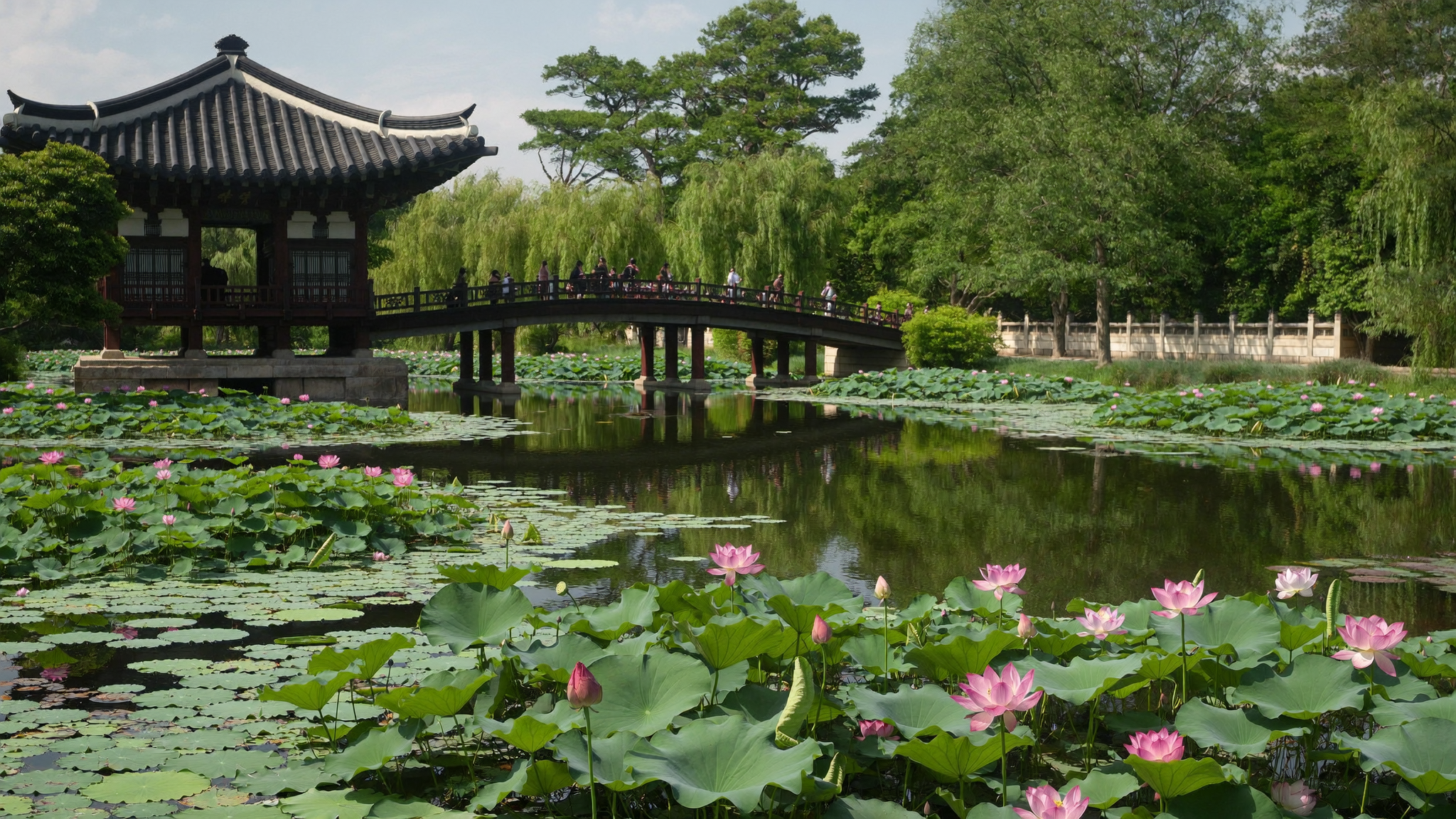
Gungnamji is widely considered the oldest man-made pond in Korea, originally built as a royal garden during the Baekje period. A traditional pavilion sits on a small island connected by a wooden bridge, and in July the entire pond fills with blooming lotus flowers as part of the Seodong Lotus Festival, named after a Baekje-era folk tale about a poor boy who became king. The festival features night illuminations, lotus-themed food stalls, and boat rides through the flowers, and it is one of the most photogenic events anywhere in Chungcheongnam-do.
Baekje Cultural Land
A little outside the city center, Baekje Cultural Land is a large open-air historical park built to recreate the look and feel of the Baekje capital, including a reconstructed royal palace, a fortress wall, residential quarters, and a Buddhist temple complex modeled on historic records. It is significantly larger and more built-out than the actual archaeological sites in town, which makes it especially good for travelers who want a vivid, photogenic sense of what Baekje architecture looked like without relying only on their imagination at the ruins. Hanbok rental is available on-site for visitors who want the full photo experience.
Baekje Royal Tombs
The Royal Tombs of Neungsan-ri hold seven burial mounds believed to be the resting places of Baekje kings and royal family members from the final capital period. The tombs themselves are sealed for preservation, but a full-scale replica of the interior mural chamber lets visitors see the painted ceiling and wall decorations that would otherwise be inaccessible. The surrounding hillside park is quiet and grassy, and it pairs naturally with a visit to the nearby Neungsan-ri Temple Site, where the Baekje Incense Burner now on display at the national museum was originally excavated.
Baekje Cultural Festival
Every year in late September or early October, Buyeo and neighboring Gongju co-host the Baekje Cultural Festival, one of Korea’s longest-running cultural festivals. Expect torch-lit parades, historical reenactments of the Baekje royal court, traditional music and dance performances, and nighttime light shows along the Baengmagang River. If your trip lines up with the festival dates, it is worth building an extra day into your itinerary, since the town’s usually quiet streets fill with vendors and performers for the occasion.
The Baekje-Japan Historical Connection
Few Korean regional cities carry as much resonance for Japanese travelers as this one. During the sixth and seventh centuries, the Baekje royal court maintained an unusually close relationship with the Yamato rulers of ancient Japan, sending Buddhist monks, temple builders, potters, and scholars across the sea. Historical records credit Baekje envoys with introducing Buddhism to Japan in the mid-6th century, along with Chinese characters, calendar systems, and temple construction techniques that shaped early Japanese architecture at sites like Asuka. When the kingdom finally fell in 660 CE, thousands of Baekje nobles and craftspeople fled across the strait and settled in Japan, and several Japanese shrines and family lineages still trace their origins back to Baekje refugees today.
That shared history is part of why the incense burner at the national museum, the temple ruins, and the fortress cliff all carry extra weight for Japanese visitors tracing the roots of early Japanese Buddhist art back to their source. Local guides and museum placards often highlight this connection directly, and it is one of the more meaningful undercurrents running through a visit here, well beyond the photogenic pond and pagoda.
What to Eat in Buyeo
The signature local dish is yeonipbap, rice steamed and served inside a lotus leaf, often paired with small side dishes and sometimes hanu (Korean beef) patties; it is the natural food pairing for a visit to Gungnamji Pond. Restaurants around the pond and along the riverside also serve fresh river fish dishes and seasonal vegetable banchan reflecting Chungcheong-do’s farming traditions. Street stalls near Gungnamji sell lotus-based snacks and teas during lotus season, and the town’s small market area is a good spot to try local rice cakes and produce.
Nearby Destinations to Combine With Buyeo
Buyeo pairs naturally with other historic stops in the region. History-focused travelers often combine it with the ancient Silla capital at Gyeongju or the Confucian heritage village at Andong for a broader look at Korea’s three ancient kingdoms. For food and hanok culture, Jeonju is roughly two hours away and makes a logical next stop on a wider Chungcheong-Jeolla itinerary.
Because the town’s historic core is so compact, first-time visitors often pair it with nearby Gongju, the earlier Baekje capital before the court relocated south, or extend the trip toward the west coast port city of Gunsan for a wider look at Chungcheong-do’s layered history. Rail passes covering multiple regional stops can make sense if you plan to visit three or more cities on a single trip through the west-central provinces.
Best Time to Visit
Spring (April-May) and autumn (late September-November) offer the most comfortable temperatures and the clearest skies for photographing the fortress and river. July brings the Seodong Lotus Festival at Gungnamji, though the weather is hot and humid. Early October is festival season thanks to the Baekje Cultural Festival, making it arguably the single best window to visit if crowds do not bother you. Winter is quiet and cold but the historic sites are nearly empty, which some photographers actually prefer.
Budget Guide
Buyeo is one of the most affordable regional destinations in Korea. Entrance fees to Busosanseong, Jeongnimsa, and the Royal Tombs are all in the 2,000-3,000 won range, and the national museum is free. A day covering the major historic sites plus a yeonipbap lunch typically runs 40,000-60,000 won per person excluding accommodation. Budget guesthouses near the bus terminal start around 40,000-50,000 won per night, while mid-range hotels closer to the river run 80,000-130,000 won.
Where to Stay
Most travelers base themselves near the Buyeo Intercity Bus Terminal or along the riverside near Gungnamji, both within easy walking or short-taxi distance of the main historic sites. The bus terminal area has the widest range of budget guesthouses and is convenient if you are day-tripping by bus. Staying near Gungnamji is worth the slightly higher price for the atmosphere alone, especially if you want to see the pond lit up at night without a long walk back.
How to Get to Buyeo from Seoul
The simplest option is a direct express bus from Seoul Nambu Bus Terminal, with departures roughly every 30-60 minutes and a journey time of around two hours ten minutes to Buyeo Intercity Bus Terminal. Alternatively, take the KTX high-speed train to Nonsan Station, then transfer to a local bus for the remaining stretch into Buyeo, a combined journey of about two hours fifteen minutes. Once in town, the historic core is compact enough to explore on foot, though renting a bicycle or taking short taxi rides is useful for reaching Baekje Cultural Land, which sits a bit further out.
Practical Travel Tips
Most restaurants, cafes, and larger shops accept credit cards, but small market stalls, some street food vendors, and river cruise ticket booths may be cash-only, so it is worth carrying some Korean won in small bills. A T-money transit card works on local buses in town, though most visitors get around on foot or by taxi since distances between sites are short. Naver Map or Kakao Map are far more reliable for walking and transit directions than Google Maps within Korea, so download one before you arrive, and consider renting a pocket WiFi or eSIM in advance since signage, while multilingual at major sites, is not always available at smaller restaurants. Major historic sites post information in English, Japanese, and Chinese, but a translation app is handy for ordering food at family-run restaurants around the bus terminal.
2-Day Buyeo Itinerary
Day 1: Arrive by bus and check into your accommodation, then walk through Busosanseong Fortress to Nakhwaam Rock, stopping at Goransa Temple. Take an afternoon river cruise on the Baengmagang, then visit Jeongnimsa Temple Site before dinner. In the evening, walk around Gungnamji Pond, especially beautiful when lit up after dark.
Day 2: Start at the Buyeo National Museum to see the Baekje Incense Burner, then visit the Royal Tombs of Neungsan-ri and the Neungsan-ri Temple Site. In the afternoon, head to Baekje Cultural Land for the reconstructed palace and hanbok photos before catching your bus or train back to Seoul.
FAQ
Is Buyeo worth visiting?
Yes, especially for travelers interested in Korean history who want to skip the crowds found at more famous historic sites. This guide covers enough UNESCO-listed sites, museums, and scenery to fill a full day or a relaxed two-day trip.
How many days do you need in Buyeo?
One full day covers the core sites (Busosanseong, Nakhwaam Rock, Jeongnimsa, Gungnamji), while two days allows time to add the national museum, Royal Tombs, and Baekje Cultural Land without rushing.
How do you get from Seoul to Buyeo?
The most direct route is an express bus from Seoul Nambu Bus Terminal (about 2 hours 10 minutes). Alternatively, take the KTX to Nonsan Station and transfer to a local bus.
Is Buyeo safe for tourists?
Yes. Like the rest of Korea, Buyeo has very low crime rates, and the historic sites have signage in English, Japanese, and Chinese.
What is Buyeo famous for?
Buyeo is famous for being the last royal capital of the Baekje Kingdom, its UNESCO-listed Baekje Historic Areas, the Gungnamji lotus pond, and the annual Baekje Cultural Festival.
When is the best time to see the lotus flowers in Buyeo?
Lotus flowers at Gungnamji Pond peak in July, coinciding with the Seodong Lotus Festival.
Final Thoughts
From a cliffside legend to a UNESCO-listed pagoda and a pond that has bloomed with lotus flowers for over a thousand years, this Buyeo travel guide should give you everything needed to plan a smooth trip to one of Korea’s most underrated historic cities. Check out the other regional guides linked above to build out a wider itinerary through Korea’s ancient kingdoms.
Sources: Visit Korea — Buyeo, Wikipedia — Buyeo County, UNESCO — Baekje Historic Areas.