Every few weeks, a single photo of aespa’s Karina walking through Incheon International Airport becomes the biggest fashion story in Korea. In July 2026 it happened again: a photo of Karina swapping her heels for flats and layering on a cardigan right after arriving went instantly viral, with fans dissecting every detail of what’s become known as Karina airport fashion. If you’ve never lived somewhere with a dedicated “celebrity airport style” news beat, the whole phenomenon can look bizarre. In Korea, it’s a serious, highly organized part of pop culture.
Table of Contents
- What’s Happening in Korea Right Now?
- The Background: Why Did This Start?
- What Are Koreans Actually Saying?
- What This Reveals About Korean Culture
- How Does This Compare Internationally?
- Conclusion
What’s Happening in Korea Right Now?
On July 16, 2026, aespa left for an overseas schedule, and Karina was photographed at the airport in a pure white dress and black heels — a polished, camera-ready look. But a second set of photos taken moments later, after she’d gone through security, showed a completely different Karina: same dress, but now paired with comfortable flats and a soft cardigan thrown over her shoulders. Fans immediately noticed the transformation, and the images spread across X, TikTok, and Korean portals within hours. It followed a string of other Karina airport moments in 2026, including an all-white oversized-shirt-and-shorts look in June, and a “modern classic” outfit worn en route to Milan Fashion Week in January, where she attended Prada’s menswear show.
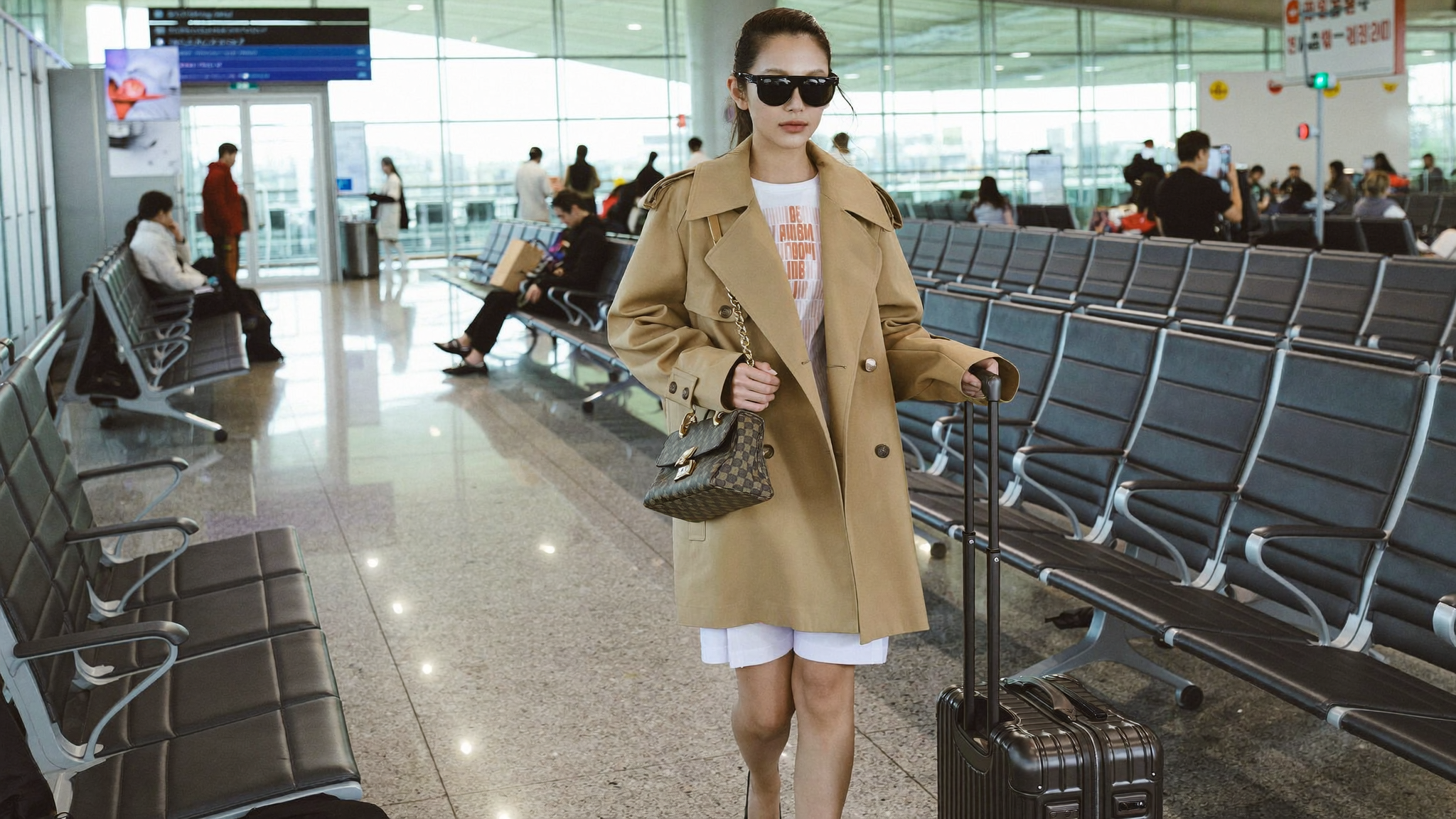
What made this particular sighting go viral wasn’t a daring outfit — it was the opposite. Fans loved seeing an idol swap a stiff, styled-for-cameras look for something that reads as comfortable and human, and the comparison photos (heels next to flats, structured dress next to soft cardigan) became a genre of their own, shared and reposted specifically for that before-and-after contrast.
The Background: Why Did This Start?
Airport fashion, sometimes written as “gimpo-ppa” or “incheon-ppa” style in Korean fan communities, has been a fixture of K-pop culture since the 2010s, when dedicated paparazzi and fan photographers began stationing themselves at Incheon and Gimpo airports specifically to capture idols in transit. What began as a niche corner of fan culture has since become mainstream entertainment journalism: major Korean outlets like The Korea Times and fashion-focused sites run regular “airport fashion” roundups, complete with outfit breakdowns and brand credits.
Karina, as one of the most photographed members of aespa — one of Korea’s top-tier girl groups — has become something of the genre’s reigning figure. Because idols know they will be photographed at the airport almost every time they travel, airport departures function as a kind of unofficial, low-pressure runway: a way for idols, stylists, and their agencies to showcase both high fashion (loaned designer pieces before a show) and “relatable” fashion (the comfortable clothes worn on a long flight) without the formality of an actual event.
What Are Koreans Actually Saying?
Online reaction to the July sighting was overwhelmingly affectionate rather than critical. Comments on Korean portals and fan forums praised Karina for looking “comfortable and real” rather than performing for the cameras, with many fans specifically calling the flats-and-cardigan switch “relatable” and “down to earth.” Fashion-focused accounts, meanwhile, treated the sighting as free marketing material, quickly identifying the brands behind both looks and noting how quickly similar cardigans and flats sold out on Korean shopping platforms afterward.
A smaller number of comments took a more skeptical tone, noting that even a “comfortable, no-makeup” airport look is still carefully considered and often coordinated with a stylist — in other words, that the appearance of effortlessness is itself a kind of performance. That tension, between airport fashion as a genuine glimpse of an idol’s real personal style and airport fashion as another curated product, is a recurring debate every time one of these photo sets goes viral.
What This Reveals About Korean Culture
Airport fashion culture says a lot about how central image management is to the K-pop industry, and how much fans have come to value moments that feel unscripted. Korean entertainment agencies invest enormous resources into curating an idol’s public image across comebacks, interviews, and social media, so a transit photo — something not tied to an official promotion — reads to fans as a rare, more honest window into who an idol actually is off-duty.
It also reflects Korea’s uniquely dense fashion-media ecosystem, where brand identification, outfit pricing, and styling credits are treated with the same seriousness as runway journalism. That level of scrutiny is only possible because Korea’s celebrity culture, airport geography (two major airports serving Seoul, both easy for photographers to stake out), and social media habits all reinforce each other.
How Does This Compare Internationally?
“Airport style” as a paparazzi genre exists elsewhere too — Hollywood tabloids have covered celebrity airport looks for decades, and Japanese idol culture has its own version. But Korea’s version is distinct in its intensity and organization: dedicated fan photographers, sometimes called “dispatch” photographers after the outlet that popularized the format, treat airport arrivals and departures as scheduled events, complete with expected shot lists. It’s less like paparazzi catching someone off guard, and more like an unofficial but predictable part of an idol’s public schedule that both sides quietly understand and participate in.
If Karina’s style has you curious about the wider aespa fandom or K-pop visual culture, it’s worth reading about how CORTIS broke a major K-pop chart record, or why K-pop dating rumors still dominate Korean entertainment news. For a deeper dive into idol culture on the ground, Unboxing Korea’s K-pop tourism guide to Seoul covers where fans go to get close to the action.
Conclusion
Karina’s airport fashion moment is a small story with a big cultural footprint: it shows how thoroughly K-pop fandom has merged with fashion journalism, how much value Korean fans place on glimpses of authenticity, and how a single unscripted photo can move fashion trends and sell out clothing racks within a day. The next time an idol changes shoes after landing, expect the same cycle — viral photos, brand call-outs, and a fresh wave of “comfortable but chic” outfit inspiration — to start all over again.
Curious what else is trending in Korea today? Unboxing Korea publishes daily explainers on the culture, fashion, and entertainment stories shaping the country right now.