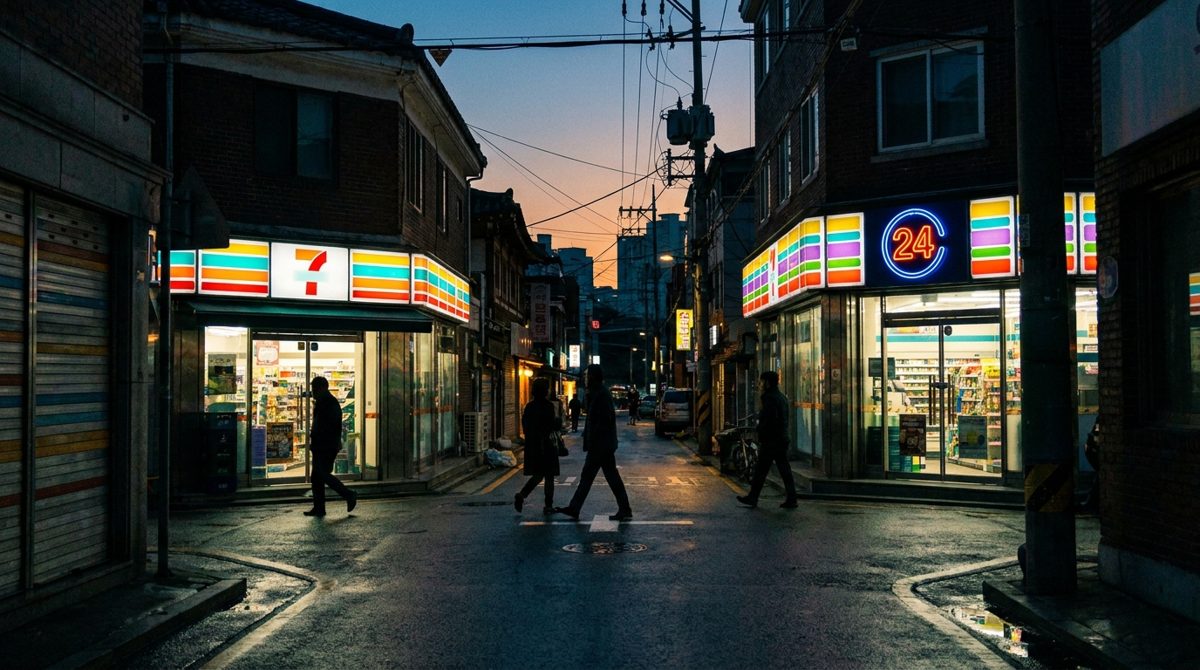
Standing between two glowing storefronts wondering which to enter? The GS25 vs CU question is Korea’s friendliest rivalry: two chains with nearly identical store counts (≈18,800 vs ≈18,700) but genuinely different strengths — GS25 wins fresh food and kimbap, CU wins desserts, meaty lunchboxes and tourist tech, while 7-Eleven and emart24 hold clever niches. This head-to-head tells you exactly which door to push for what you’re craving.
Table of Contents
- Chain Battle Quick Facts
- The Head-to-Head Comparison Table
- GS25: The Fresh Food Champion
- CU: Desserts, Dosirak & Tourist Tech
- 7-Eleven & emart24: The Niche Players
- How the Konbini War Got This Good
- App vs App: 우리동네GS vs 포켓CU
- Which Chain for Which Craving
- GS25 vs CU FAQ
Chain Battle Quick Facts
| Item | Details |
|---|---|
| The contenders | GS25 (≈18,800 stores), CU (≈18,700), 7-Eleven, emart24 |
| Combined density | ≈55,000 stores nationwide — you’re never more than a couple of minutes from one |
| Prices | Effectively identical and fixed nationwide; the battle is fought on products, not price |
| GS25 signature | Best kimbap & fresh food, strong app (우리동네GS), half-price parcel service |
| CU signature | Dessert hits (cream bread!), meat-heavy dosirak, AI translation kiosks at ~70 tourist stores |
| 7-Eleven / emart24 | Hot counter snacks & legacy locations / quiet stores, wine picks, minimalist PB goods |
| Payment | Foreign Visa/Mastercard accepted at all four, everywhere |
| Best for | Travelers deciding where to spend their konbini budget — which is all travelers |
The Head-to-Head Comparison Table
Ten rounds, scored honestly. “Winner” means the better average experience in 2026 — individual stores vary with size and location.
| Category | GS25 | CU | Winner |
|---|---|---|---|
| Store count (2026) | ≈18,800 | ≈18,700 | Tie — both are everywhere |
| Kimbap & triangle kimbap | Consistently better rice and fillings; premium lines | Good, occasionally great collabs | GS25 |
| Dosirak (lunchboxes) | Balanced, homestyle sets | Meat-stacked, hearty, famous value | CU |
| Desserts & bakery | Solid rotation | Legendary — the cream bread era started here | CU |
| Coffee (store-brand machines) | Cafe25 — cheap and reliable | GET Coffee — arguably tastier beans | Slight edge CU |
| PB (private brand) range | YOU US (유어스) — drinks & snack hits | HEYROO (헤이루) — meal-oriented icons | Tie, different personalities |
| App experience | 우리동네GS — deals, parcel, pickup in one | 포켓CU — slicker deal browsing & stamps | Tie — get the one for your neighborhood chain |
| Tourist friendliness | English self-checkout common | AI multilingual kiosks at ~70 tourist-area stores | CU |
| Services (parcel, ATM) | Half-price store-to-store delivery, ubiquitous ATMs | Equivalent parcel service, ubiquitous ATMs | Tie |
| 1+1/2+1 deal depth | Huge monthly lists | Huge monthly lists | Tie — check both apps monthly |
Scoreboard: CU takes desserts, dosirak and tourist tech; GS25 takes fresh food and kimbap; almost everything else is a photo finish. Which is exactly why Koreans don’t pick a chain — they pick per craving.
GS25: The Fresh Food Champion
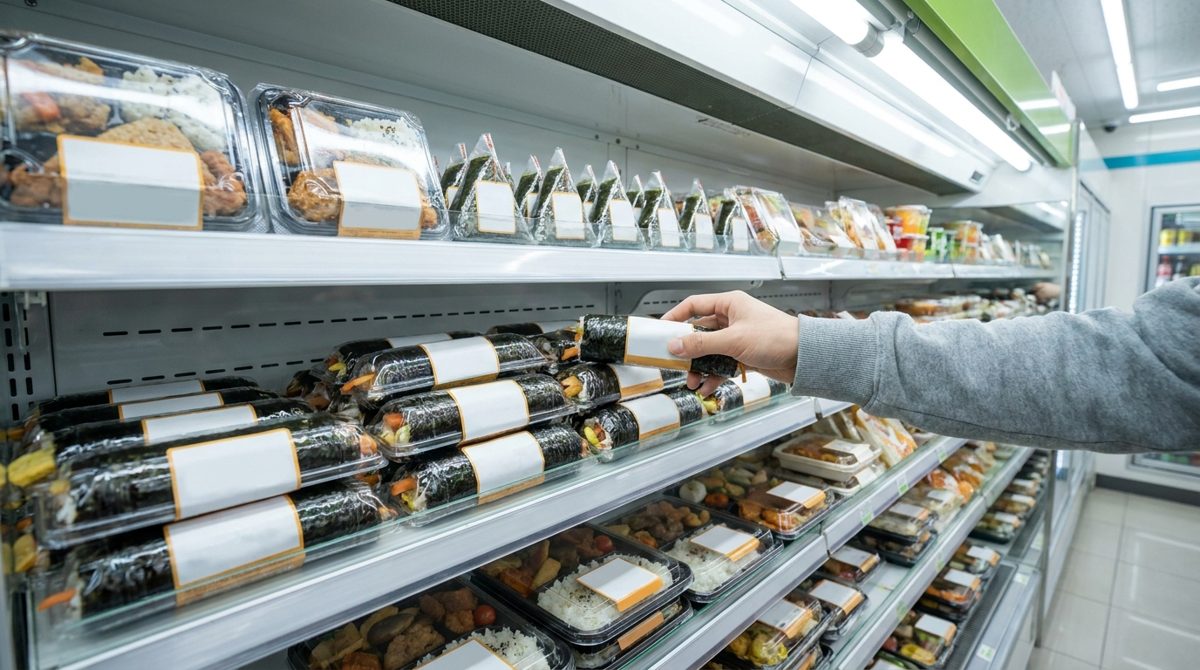
GS25 (run by GS Retail) edged past its rival to Korea’s largest store count, and its identity is fresh food quality. The kimbap bench — full rolls and triangles both — runs deeper and tastes fresher on average than anyone else’s; if a Korean tells you they only buy kimbap at one chain, it’s usually this one. The premium samgak kimbap lines (₩1,500–2,000) approach cheap restaurant quality, and our triangle kimbap guide leans heavily on GS25 picks.
The PB brand YOU US (유어스) owns some genuine national hits — collab drinks and snacks that sell out and trend online. Cafe25 machine coffee is the cheapest respectable americano in the country (₩1,500 or less), and the app, 우리동네GS, is the most functional of the store apps: monthly 1+1 lists, delivery/pickup, and the famous half-price parcel service in one place.
Weaknesses? Desserts are competent rather than iconic, and dosirak play it safe. GS25 is the chain you trust for a meal; it’s less often the chain that goes viral.
CU: Desserts, Dosirak & Tourist Tech
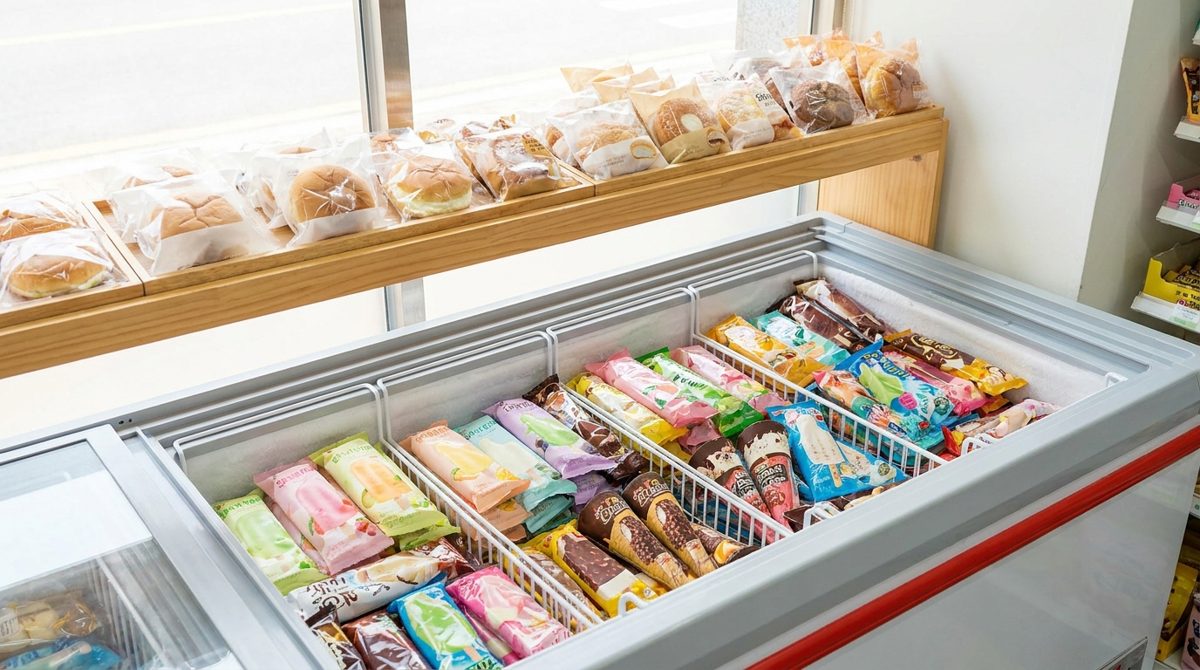
CU (run by BGF Retail) is the pop-culture chain. Its dessert shelf made national news when the Yonsei milk cream bread series triggered store-hopping pilgrimages and resale markets — and the hit factory hasn’t stopped since. If your konbini agenda is sweet, start here, then keep our desserts guide open in the other hand.
Second signature: dosirak for the hungry. CU’s lunchboxes historically pile on the meat — multi-protein boxes at ₩4,500–6,700 that outfeed some restaurant meals; the full tour lives in our dosirak guide. The PB brand HEYROO (헤이루) covers meal staples, and GET Coffee wins many blind taste preferences over rivals’ machines.
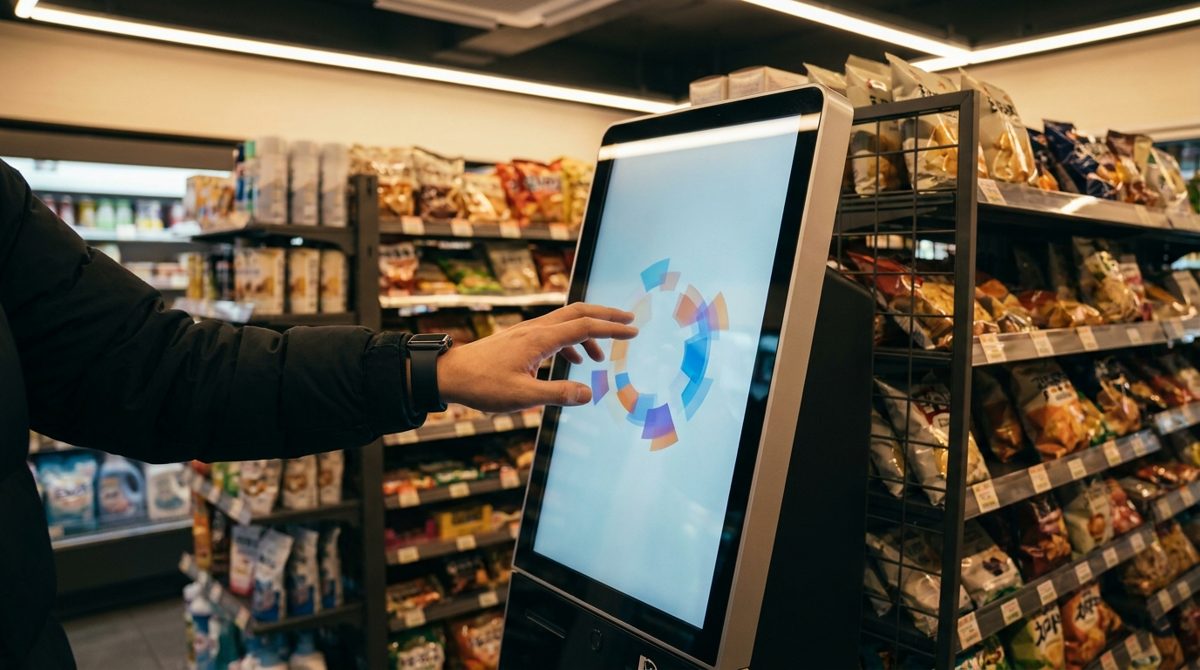
For travelers specifically, CU made the boldest move: AI multilingual translation kiosks at roughly 70 tourist-area stores (Myeongdong, Hongdae and friends), letting you ask product questions in English, Japanese, Chinese and more. Combined with the slick 포켓CU app, CU is arguably the easiest chain to navigate with zero Korean.
Weaknesses: fresh kimbap averages a notch below GS25, and non-dessert fresh food can be hit-or-miss at small branches.
7-Eleven & emart24: The Niche Players
7-Eleven Korea — the global name, locally run by Lotte — holds thousands of stores, many in legacy locations: older neighborhoods, subway-adjacent corners, tourist arteries. Its counter hot-food game (fried snacks, steamed buns) is strong, its own PB line (Seven Select) has cult items, and post-merger with Ministop it inherited larger-format stores with actual seating space. When it’s the nearest door at midnight, it does everything this site describes — including the 1+1 deals with its own monthly list.
emart24, the boutique of the four, runs quieter, often less crowded stores with a minimalist look. Its quirks reward attention: a surprisingly serious wine and craft alcohol selection (some stores have dedicated wine walls), tie-ins with E-mart’s famously cheap No Brand-style products, and calmer counters for a slow coffee. Fewer stores (≈6,700) means you find emart24 rather than rely on it — but travelers who like browsing rate it the most pleasant wander.
One more round worth judging: the alcohol wall. Beer and soju prices are fixed and identical everywhere (soju ≈₩2,000, 500ml beer cans ₩2,500–2,800, with rotating 4-for-₩11,000 can deals), so the differentiator is curation — emart24’s wine walls, CU and GS25’s highball and craft-can rotations, 7-Eleven’s collab drinks. Wherever you buy, the legal age is 19 and passports get checked; the full rules and somaek rituals live in our convenience store alcohol guide.
Neither will beat the big two on fresh food breadth, but both prove the same point: in Korea’s konbini war, every chain had to get good to survive. Even the country’s official tourism guides treat convenience stores as an attraction — see the Korea Tourism Organization for how deep the culture runs.
How the Konbini War Got This Good
A little context makes the comparison sweeter. Korea’s convenience store boom is a 40-year story: the first modern stores arrived in the late 1980s, and the format exploded alongside apartment living, late-night work culture and single-person households. Today’s ≈55,000 stores serve 51 million people — the highest convenience store density on the planet, ahead of even Japan.
Because franchise saturation made new locations scarce, the chains stopped competing on where and started competing on what: exclusive products, viral desserts, better fresh food, apps, services. That’s why a Korean convenience store in 2026 feels closer to a micro-supermarket-cafe-post-office than to a gas station shop — and why every chain in this comparison is, by global standards, excellent. The war’s loser doesn’t exist; it’s the customer who won.
App vs App: 우리동네GS vs 포켓CU
Both flagship apps are free, foreigner-usable with some patience, and worth it for stays of a week or more. 우리동네GS (GS25) is the Swiss-army option: the full monthly 1+1/2+1 catalog, discount coupons, GS&POINT loyalty points, parcel-service booking and even fresh-food pickup reservations. 포켓CU counters with the smoothest deal-browsing interface, a stamp system that converts snack runs into free items, and app-exclusive product drops that sell out in hours.
The honest tourist take: the interfaces are Korean-first, sign-up flows occasionally demand patience, and for a 3-day trip the shelf tags alone serve you fine — the deals apply with or without the app. But if you’re in Korea for two weeks and your hotel faces one chain, downloading that chain’s app pays for the effort in free drinks. Full mechanics in our 1+1 deals guide.
Which Chain for Which Craving
The cheat sheet, one line per craving:
| You want… | Go to | Order |
|---|---|---|
| The best kimbap / triangle kimbap | GS25 | Premium samgak lines, fresh rolls |
| A viral dessert haul | CU | Cream breads, collab ice creams |
| Maximum meat per won | CU | Double-protein dosirak |
| Cheapest decent coffee | GS25 (Cafe25) | ₩1,500-and-under americano |
| Help in English/Japanese/Chinese | CU tourist-area stores | Use the AI kiosk |
| Wine for the hotel room | emart24 | The wine wall |
| Hot counter snack while walking | 7-Eleven | Fried chicken bites, steamed buns |
| Sending a parcel cheaply | GS25 or CU | Store-to-store kiosk service |
| This month’s best 1+1 haul | Whoever’s list is hotter | Check both apps on the 1st |
The real pro move: since rival stores often face each other across a street, comparison shopping takes ninety seconds. Scan GS25’s fresh shelf, cross the road to CU’s dessert corner, and buy the best of both — the chains’ rivalry is your buffet. Start with the essentials in our 12 best convenience store eats, and remember every non-food emergency is covered identically at all four chains via the services counter.
GS25 vs CU FAQ
Which is bigger, GS25 or CU?
They’re neck and neck: roughly 18,800 GS25 stores versus 18,700 CU stores in 2026 — together nearly 70% of Korea’s ≈55,000 convenience stores. In practice you’ll usually see both within a block of each other.
Is GS25 or CU better for food?
Split decision: GS25 for kimbap, triangle kimbap and fresh meals; CU for desserts, cream breads and meat-heavy dosirak lunchboxes. Prices are effectively identical, so locals pick per craving, not per chain.
Which Korean convenience store is most tourist-friendly?
CU has the strongest tourist tech — AI multilingual translation kiosks at about 70 stores in tourist areas like Myeongdong and Hongdae. That said, all four chains accept foreign cards, have English-capable self-checkouts increasingly often, and stock the same survival services.
Are prices different between GS25, CU and 7-Eleven?
Essentially no — national brand products cost the same fixed nationwide price at every chain. Differences come from each chain’s private brand (PB) products and their separate monthly 1+1/2+1 promotion lists.
What are PB products at Korean convenience stores?
Private brand lines made exclusively for each chain: GS25’s YOU US (유어스), CU’s HEYROO (헤이루), 7-Eleven’s Seven Select. They’re 10–20% cheaper than name brands and include some of Korea’s most viral konbini items, especially drinks, snacks and desserts.
The Verdict: Don’t Pick a Side — Pick a Craving
GS25 vs CU has no loser, which is the best possible news for you: Korea’s convenience store war produced two 18,000-store networks competing on quality instead of price, with 7-Eleven and emart24 sharpening the edges. Kimbap at GS25, cream bread at CU, wine at emart24, hot snacks at 7-Eleven — the itinerary writes itself. For everything else these stores can do for your trip, the Korean Convenience Store Explorer is your full field guide.